 11
11
United Arab Emirates investors are demonstrating a resolute commitment to the artificial intelligence sector, actively increasing their holdings in software and AI infrastructure companies that experienced significant price drops in the first quarter. This "buy the dip" strategy, rather than a broad risk-off approach, indicates a strong belief in the long-term potential of AI and digital infrastructure themes, even as regional geopolitical tensions test the Gulf’s ambitions to become a global hub for these technologies.
New data from eToro, shared with Cointelegraph, reveals that UAE-based users significantly boosted their investments in AI-related equities during the first quarter. This trend suggests a strategic decision to leverage market downturns for asset accumulation, underscoring a conviction that the current volatility will not derail the region’s burgeoning AI ecosystem. This resilience is particularly noteworthy given the heightened risks the ongoing conflict poses to data centers, logistics, and cross-border technology initiatives within the Gulf.
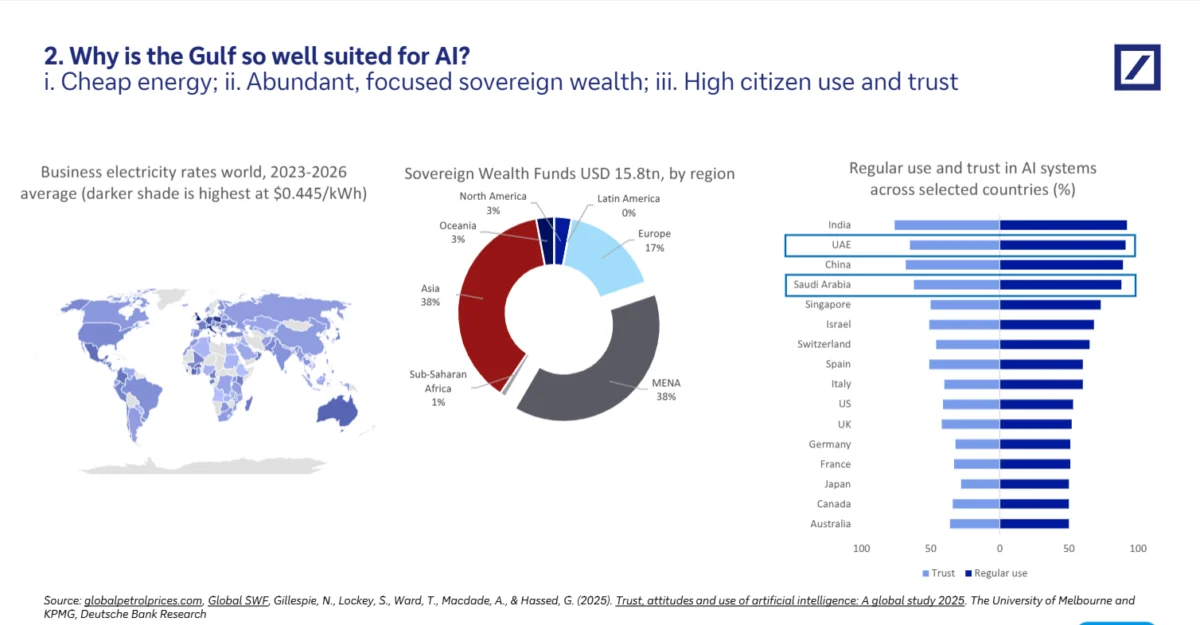
A report from Deutsche Bank released on April 13 supports this observation, suggesting that the current geopolitical shock is more likely to intensify, rather than diminish, the demand for AI, cybersecurity, and sovereign digital infrastructure in the region. The report highlights that the Gulf, and the UAE in particular, is strategically positioned to lead in AI development due to several key factors. These include access to cheap energy, a robust pipeline of data center projects, and the substantial financial backing of sovereign wealth funds, which collectively control approximately $5 trillion globally as of 2025. Abu Dhabi’s investment vehicles, in particular, are noted as aggressive supporters of global AI ventures.
Josh Gilbert, a market analyst at eToro, elaborated on the investor sentiment, stating that UAE investors adopted a more discerning approach to risk in the first quarter. He emphasized that their investment decisions were primarily driven by a focus on long-term thematic growth rather than a general inclination to reduce exposure to risk. Gilbert pointed to specific AI infrastructure and software companies that saw substantial increases in UAE investor interest, despite broader market pressures. These include ServiceNow, which experienced a remarkable 125% surge, Super Micro Computer (+65%), Adobe (+54%), and Oracle (+38%).

The data also indicated continued exposure to the cryptocurrency market through equities, with Strategy Inc. remaining the eighth-most-held stock by UAE investors, signaling an ongoing interest in crypto-linked financial instruments.
The resilience of UAE investors in the AI sector is occurring against a backdrop of increased geopolitical risk stemming from the US-Israeli conflict with Iran. This conflict has introduced new vulnerabilities for the Gulf’s technology infrastructure. Deutsche Bank’s report cited instances of reported strikes on Amazon Web Services data centers in the UAE and Bahrain, as well as threats directed at the planned 1GW Stargate campus in Abu Dhabi.
Gilbert acknowledged that the conflict is a significant driver of market volatility, leading to sharp fluctuations in oil prices, which can, in turn, impact technology valuations. He suggested that the strategy of maintaining core exposure to diversified mega-cap technology stocks while rotating within the sector represents a more sophisticated and risk-aware investment approach.
The crypto industry, despite the regional tensions, is also demonstrating a degree of resilience. In Dubai, prominent figures within the crypto space report that while operations have faced some disruptions, the city’s ambitions to become a digital asset hub remain largely intact. Ben El-Baz, managing director at HashKey MENA, indicated that operations are "broadly functional," largely due to the reliance on cloud-based trading and custody systems that are less dependent on a physical presence. While acknowledging unavoidable disruptions related to remote work and travel, El-Baz noted that the core infrastructure remains operational.
Major cryptocurrency exchanges, including Binance, have also reported continued normal operations, despite some contradictory reports. A spokesperson for Binance confirmed that employees were offered temporary relocation options as a precautionary measure, but the majority chose to remain in their current locations. However, the conflict has led to the postponement of significant industry events, such as the Token2049 conference in Dubai, which has been rescheduled for 2027.

Dubai-based investment firm Ento Capital views the current geopolitical situation as a "refining" process for the Gulf Cooperation Council (GCC) region’s investment narrative, rather than a fundamental derailment. Hayssam El Masri, senior executive officer at Ento Capital, stated that investors have transitioned from a "confidence-driven" to a "risk-aware" mindset. Despite this shift, he noted that investors are generally not exiting the region. El Masri suggested that the combination of war-tested resilience, coupled with sustained investment in AI, cloud, and crypto infrastructure, could ultimately strengthen the GCC’s long-term market positioning.
In parallel with these developments, Dubai’s regulators are actively working to provide a stable and predictable environment for digital assets. The Virtual Assets Regulatory Authority (VARA) has continued to implement its activity-based framework throughout the period of turmoil. This includes the release of detailed guidance on token issuance and formal rules governing crypto derivatives.
Sean McHugh, VARA’s head of market assurance, emphasized that during times of market stress, serious participants seek jurisdictions with clear regulatory frameworks rather than the most lenient ones. He highlighted that Dubai’s commitment to transparent licensing, visible supervision, and proactive enforcement is designed to encourage institutions to view the emirate as a strategic base for their operations, rather than merely an opportunistic location. This regulatory clarity is seen as a crucial factor in anchoring capital and fostering long-term investment in the region’s burgeoning digital economy.