 11
11
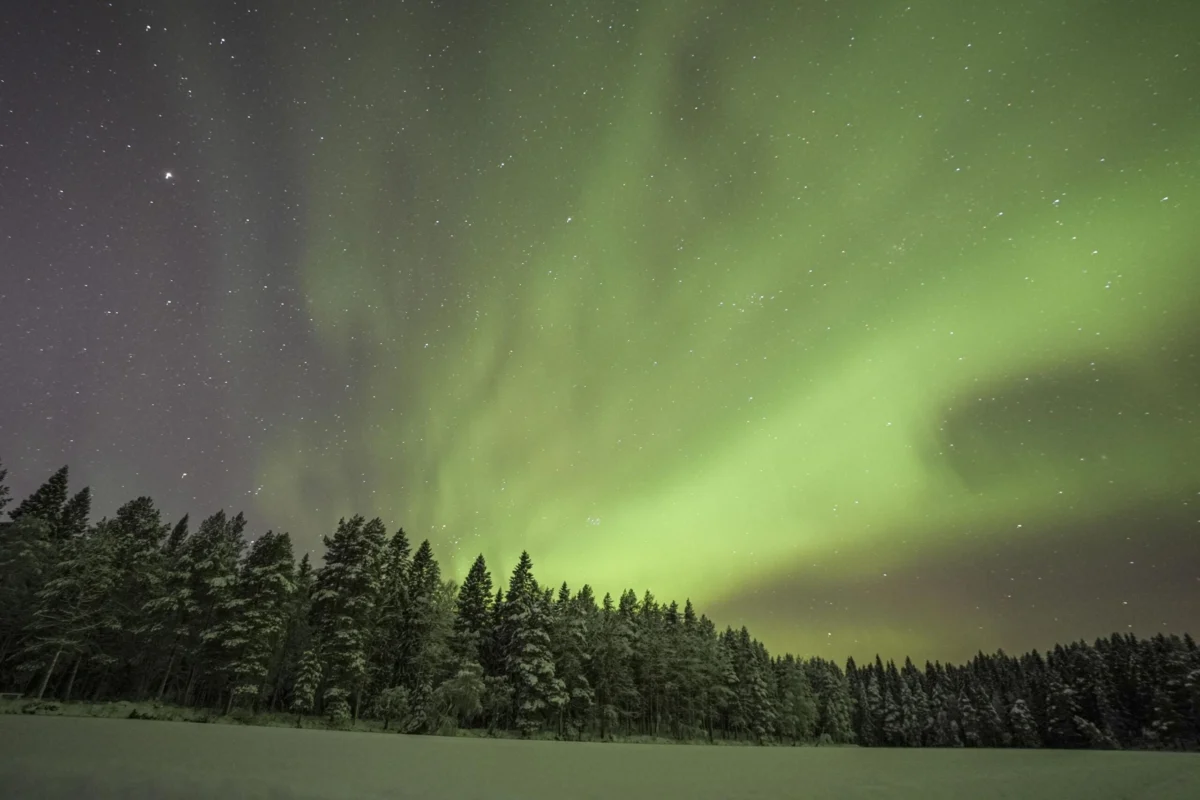
Up to 10 states across the northern United States may be treated to a captivating display of the Northern Lights, also known as the aurora borealis, on Saturday night, according to a recent forecast from the National Oceanic and Atmospheric Administration (NOAA). The agency predicts a period of mild auroral activity that is expected to persist through the entire weekend, offering skygazers in specific regions a unique opportunity to witness this ethereal natural phenomenon.
The aurora borealis is a stunning celestial light show, born from the intricate dance between charged particles emanating from the Sun and the Earth’s protective magnetic field. These interactions, occurring high in the Earth’s atmosphere, energize gases that then emit light, creating the vibrant reds, greens, blues, and purples that characterize the aurora. The forecast for Saturday night indicates conditions favorable enough for these lights to become visible further south than their usual polar haunts.
Understanding the Forecast: Kp Index and Auroral Activity
NOAA’s space weather forecasters utilize various tools and indices to predict auroral activity, with the Kp index being a crucial metric for public visibility. For Saturday night, NOAA issued a Kp index of five. The Kp index is a scale ranging from 0 to 9, which measures the disturbance of the Earth’s magnetic field by solar wind. A Kp index of five is classified as a G1 (minor) geomagnetic storm level, indicating a moderate level of activity that can push the aurora oval equatorward, making it visible from lower latitudes than usual. At this level, observers in the right geographic areas can expect the aurora to be "quite pleasing" to look at, potentially offering a memorable experience.
It is important to note that while a Kp index of five suggests good visibility, the forecast for Saturday does not include predictions of major geomagnetic storms. Geomagnetic storms are significant disturbances of the Earth’s magnetosphere that occur when there is an efficient exchange of energy from the solar wind into the space environment surrounding Earth. While minor storms, like the G1 level associated with Kp 5, can enhance northern lights showings, more powerful G2, G3, or even G4 and G5 storms are often responsible for the truly spectacular, widespread auroral displays that capture global attention. The absence of such higher-level storms for Saturday indicates that while the aurora will be present, it may not reach the intensity or widespread visibility of some of the most powerful displays seen in recent times.
For those who miss Saturday’s showing, or wish for another glimpse, Sunday may offer a second chance. The Kp index is expected to drop slightly to four on Sunday, signifying a decrease in geomagnetic activity. As the activity lessens, the aurora oval typically contracts and moves farther north. This means that while the chances might be slightly reduced for the southernmost reaches of Saturday’s visibility zone, observers in more northerly locations will still have an opportunity to witness the lights, albeit potentially with less intensity or a more restricted viewing area. A Kp index of four is considered unsettled to active conditions, still capable of producing visible aurora in favorable dark sky locations at higher latitudes.
Geographic Reach: Where to Look for the Aurora
The projected visibility map for Saturday night extends across a significant swathe of the northern United States. Residents and visitors in specific regions have the best prospects for witnessing the aurora borealis. These areas include:
As is almost always the case, much of Alaska will have the highest chance of seeing the Northern Lights. Alaska’s extreme northern latitude places it consistently within the auroral oval, making it one of the world’s premier destinations for aurora viewing. Even with mild activity, the Alaskan skies frequently glow with auroral displays. For Saturday night, while the continental U.S. states have a good chance, Alaska’s probability remains superior due to its geographical advantage.
The shift in Kp index to four on Sunday means that the auroral activity will recede somewhat towards the poles. This implies that the visibility window for states like Wyoming and South Dakota might narrow significantly, while states further north like Minnesota, North Dakota, Montana, and especially Alaska, would still retain a reasonable chance, albeit potentially requiring more optimal conditions or observation from even higher latitudes within those states.
Optimizing Your Viewing Experience: Best Practices for Aurora Hunting
To maximize your chances of witnessing the Northern Lights, strategic planning is essential. The aurora is a dynamic and often subtle phenomenon, requiring patience and adherence to certain best practices.
Seek High Vantage Points: Elevated locations provide an unobstructed view of the horizon. Hills, mountains, or even tall buildings (if they offer clear northern views away from city lights) can help eliminate foreground obstructions like trees and buildings, which might otherwise obscure a low-lying auroral arc. The aurora often appears low on the horizon, particularly at lower latitudes, so an expansive, unhindered view is critical.
Escape Light Pollution: This is perhaps the most crucial factor. Artificial light from cities, towns, streetlights, and even homes can severely diminish the visibility of the faint aurora. Even a Kp 5 aurora can be difficult to discern against a light-polluted sky. Observers should venture as far as possible from urban areas into designated dark sky parks, rural landscapes, or wilderness areas. Websites and apps that provide light pollution maps can be invaluable tools for identifying optimal viewing locations. The human eye takes time to adapt to darkness, so allowing at least 20-30 minutes in complete darkness before expecting to see anything can significantly enhance vision. Avoid looking at bright phone screens or car headlights during this adaptation period.
Time Your Observation: The period between 10 p.m. and 2 a.m. local time usually provides the best chances of seeing the Northern Lights. This timeframe corresponds to when the Earth’s rotation aligns favorably with the magnetic field lines that guide the charged particles into the atmosphere, often leading to more intense and visible displays. While aurora can occur at other times, this window is historically the most active. Patience is key, as the lights can appear and fade throughout the night.
Check Weather Conditions: Clear skies are paramount. Even the strongest aurora will be invisible through heavy cloud cover. Before heading out, consult local weather forecasts for cloud predictions. Temperatures can drop significantly at night, especially in northern regions, so dressing warmly in layers is highly recommended to ensure comfort during extended periods of outdoor observation.
Capturing the Spectacle: Tips for Photographing the Aurora
Photographing the Northern Lights can be challenging but incredibly rewarding. Cameras, especially modern digital ones, can often capture the aurora’s colors and details more vividly than the naked eye, particularly when the display is faint.
Low Apertures: Use a lens with a wide-open aperture, ideally f/2.8 or lower (e.g., f/2.0, f/1.4). A low f-number allows the maximum amount of light to enter the camera sensor, which is crucial for capturing faint light in dark conditions.
Wide-Angle Lenses: A wide-angle lens (e.g., 14mm to 24mm on a full-frame camera, or equivalent on a crop sensor) is highly recommended. These lenses allow you to capture a broad expanse of the sky, encompassing the full arc of the aurora and providing context with the landscape.
Tripod: A sturdy tripod is absolutely essential. Aurora photography requires long exposure times, typically ranging from 5 to 30 seconds, depending on the aurora’s brightness and your camera settings. Any camera movement during these long exposures will result in blurry images.
Manual Settings:
Smartphone Photography: While dedicated cameras offer superior results, modern smartphones can capture decent aurora photos, especially with strong displays.
The Science Behind the Spectacle: Solar Cycles and Earth’s Magnetism
The Northern Lights are a direct consequence of solar activity. The Sun constantly emits a stream of charged particles known as the solar wind. Occasionally, the Sun experiences more intense events, such as solar flares (sudden bursts of radiation) and coronal mass ejections (CMEs), which are massive expulsions of plasma and magnetic field from the Sun’s corona. These energy bursts travel through space and, upon reaching Earth, interact with our planet’s magnetic field.
Earth’s magnetosphere acts as a shield, deflecting most of the solar wind. However, at the magnetic poles, the field lines converge, allowing some of these charged particles to penetrate the upper atmosphere. As these electrons and protons collide with atoms and molecules of gases (primarily oxygen and nitrogen) in the Earth’s ionosphere (a layer of the upper atmosphere), they excite these gases. When the excited atoms and molecules return to their normal energy state, they emit photons of light, creating the mesmerizing auroral displays.
The color of the aurora depends on the type of gas being excited and the altitude at which the collisions occur:
The frequency and intensity of auroral displays are directly linked to the Sun’s 11-year solar cycle. This cycle is characterized by fluctuations in the Sun’s magnetic field, leading to periods of increased solar activity (solar maximum) and decreased activity (solar minimum). During solar maximum, the Sun exhibits more sunspots, solar flares, and CMEs, resulting in more frequent and powerful auroral displays on Earth.
The year 2024 has been particularly notable in this regard. The Sun has recently reached the peak of its current 11-year solar cycle, leading to a significant increase in solar activity. This period has seen several powerful solar storms and subsequent strong auroral showings across the globe. In fact, experts have characterized this period as marking a 500-year high in auroral activity, indicating an exceptionally active solar cycle compared to historical records. This heightened activity has provided numerous opportunities for aurora enthusiasts, even in locations far from the poles, to witness spectacular displays.
However, as the Sun moves past its peak activity, the frequency and intensity of solar storms are expected to gradually decrease. While auroral displays will certainly continue, the level of activity observed during the solar maximum of 2024 is not expected to persist indefinitely and will diminish as the Sun progresses towards its next solar minimum. This makes opportunities like the upcoming weekend’s forecast particularly valuable for those hoping to catch a glimpse of the lights before the activity wanes further.
For those interested in staying updated on space weather and aurora forecasts, NOAA’s Space Weather Prediction Center (SWPC) provides an invaluable resource. Their Aurora Dashboard, accessible via the link provided, offers real-time data, forecasts, and alerts, helping aurora chasers plan their expeditions with the most current scientific information available.