 11
11
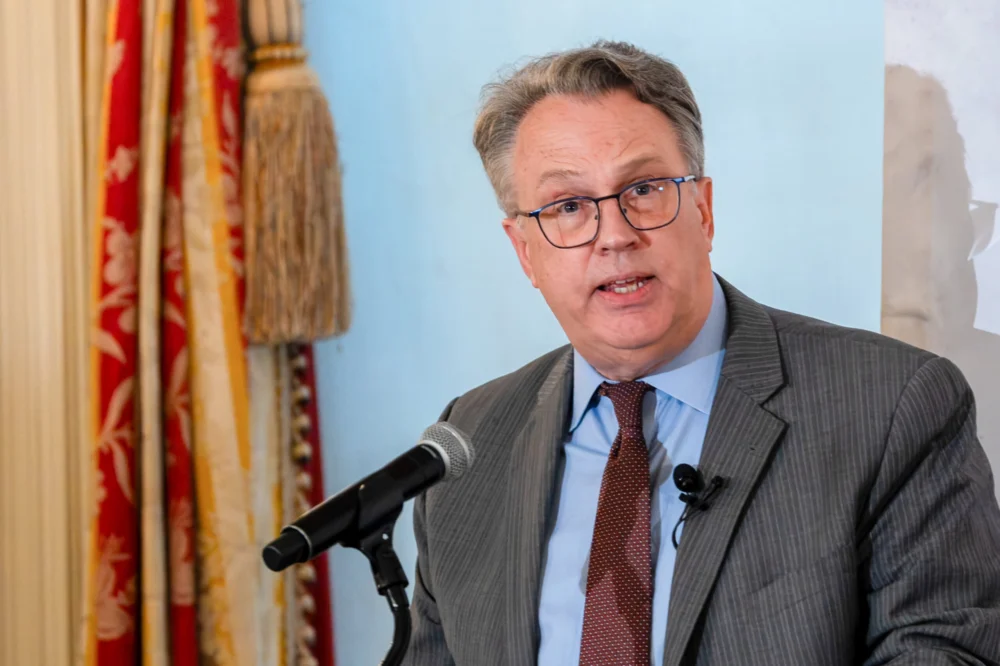
New York Federal Reserve President John Williams stated on Tuesday that American consumers and businesses are bearing the brunt of President Donald Trump’s tariffs, a perspective that directly challenges claims made by the White House. Williams’ remarks, delivered at a conference in Washington, D.C., emphasized the findings of a New York Fed analysis, which estimates that the majority of the cost associated with these tariffs has fallen domestically.
"The tariffs have overwhelmingly been borne domestically – a New York Fed analysis estimates that most of the burden has fallen on U.S. firms and consumers," Williams stated. He further elaborated that the tariffs have already led to a significant increase in the prices of imported goods within the United States, and the full impact of these price hikes has likely not yet been fully realized.
The study Williams referenced has been a source of considerable debate and controversy in recent weeks. A white paper published on the New York Fed’s website by a team of researchers concluded that as much as 90% of the additional costs imposed by tariffs have been passed on to domestic producers and consumers. This finding stood in stark contrast to the assertions from President Trump and other White House officials, who had maintained that foreign exporters would absorb the tariff costs rather than passing them on through higher prices.
The controversy surrounding the New York Fed’s research was amplified by National Economic Council Director Kevin Hassett during a CNBC appearance. Hassett strongly criticized the study, suggesting that the researchers responsible should face disciplinary action for what he described as "the worst paper I’ve ever seen in the history of the Federal Reserve system." While Hassett later softened his public criticism, the initial strong reaction highlighted the political sensitivity of the research.
Speaking publicly on the matter for the first time, President Williams not only affirmed that the economic impact of the tariffs is being felt within the U.S. but also indicated that these tariffs are hindering the Federal Reserve’s ability to achieve its inflation target of 2%.

"My current estimate is that, to date, the increase in tariffs has contributed around one half to three quarters of a percentage point to the current inflation rate of about 3 percent," Williams explained. He reiterated the Federal Open Market Committee’s (FOMC) definition of price stability as 2% inflation over the long run, noting that "progress toward that goal has temporarily stalled" due to the effects of the tariffs.
Despite these challenges, Williams expressed optimism regarding the temporary nature of the tariff’s impact on inflation. He anticipates that the Fed will reach its 2% inflation target by 2027. Furthermore, he characterized the U.S. economy as being "on a good footing," suggesting a resilient economic landscape.
Regarding current monetary policy, Williams stated that the Federal Reserve is "well positioned" to achieve its dual mandate of stable prices and maximum employment. He elaborated on the potential for future policy adjustments, indicating that if inflation continues to decline after the effects of the tariffs dissipate, "further reductions in the federal funds rate will eventually be warranted to prevent monetary policy from inadvertently becoming more restrictive." This suggests that if inflation undershoots the Fed’s target, interest rate cuts could be considered to stimulate the economy.
Market expectations, as reflected in current futures pricing, indicate that the Federal Reserve is anticipated to resume interest rate cuts later this year, with potential timing in July or September. As President of the Federal Reserve Bank of New York, John Williams holds significant influence within the Federal Open Market Committee, where he is a permanent voting member, giving his views considerable weight in policy deliberations. His direct commentary on the economic consequences of tariffs and their impact on inflation provides crucial insights into the Fed’s current economic assessment and potential future policy directions.
The New York Fed’s analysis, which suggests that domestic entities are absorbing the majority of tariff costs, has been a focal point of economic discussion. This finding challenges the narrative that foreign exporters are primarily shouldering the burden. The subsequent public exchange involving Kevin Hassett underscored the administration’s sensitivity to research findings that conflict with its stated policy positions.
Williams’ public address served to reinforce the New York Fed’s research findings and directly address the economic implications of the tariff policies. His assessment that tariffs are contributing to current inflation levels and delaying the achievement of the Fed’s price stability goals is a significant statement from a key figure within the central bank. The acknowledgment of the potential for future rate reductions, contingent on inflation trends and the fading impact of tariffs, also provides a forward-looking perspective on monetary policy. The strong performance of the U.S. economy, despite these headwinds, is a positive indicator, but the persistent influence of trade policy on inflation remains a central concern for the Federal Reserve. The coming months will be critical in observing whether the economy continues to exhibit resilience and whether inflation trends align with the Fed’s projections.