11
11
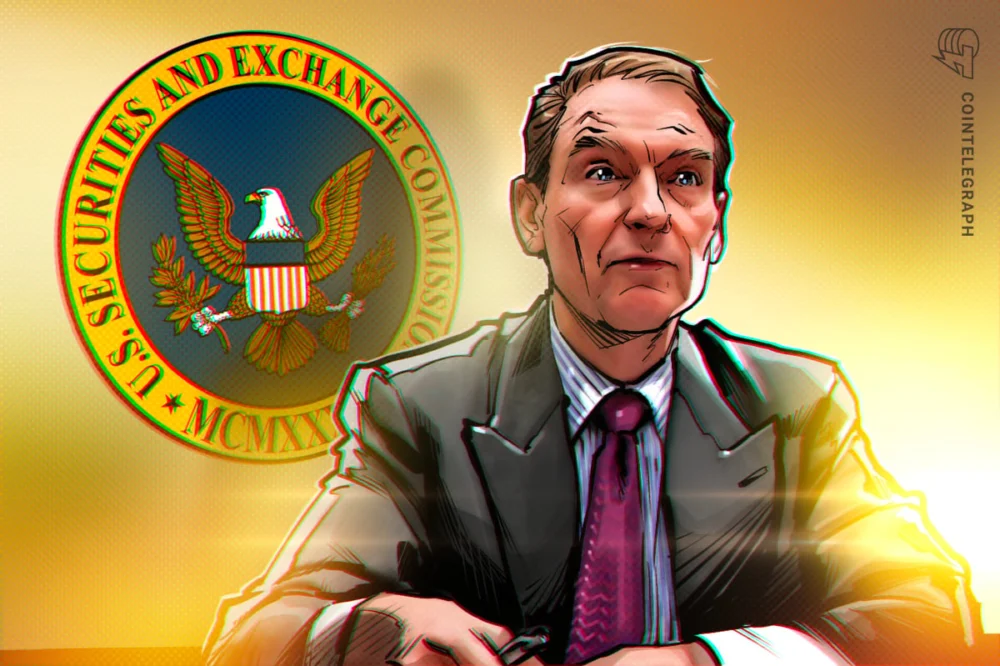
In a significant development for the U.S. financial regulatory landscape, Paul Atkins, the Chair of the Securities and Exchange Commission (SEC), has announced a forthcoming agreement with the Commodity Futures Trading Commission (CFTC) that promises to usher in a new era of "coordination and collaboration," with a particular emphasis on enforcement activities. Speaking at the FIA Global Cleared Markets Conference in Florida on Tuesday, Atkins revealed that the SEC and CFTC are actively considering an updated memorandum of understanding (MOU) designed to streamline their cooperative efforts. While Atkins did not explicitly detail the scope of this enhanced coordination concerning digital assets, he emphatically declared that the "regrettable era of duplicative enforcement actions and conflicting remedial obligations for the same conduct is over."
Atkins articulated a clear vision for how the two federal regulators should operate in tandem, stating, "Conduct in a single operating environment means that the SEC and CFTC, within the bounds of their independent statutory authority and regulatory interests, should coordinate legal theories and remedial strategies." He underscored the inefficiency and counterproductiveness of fragmented approaches, asserting that "Fragmented, redundant enforcement does not increase deterrence—it only increases confusion." This statement signals a clear intent to move away from instances where market participants might face contradictory or overlapping penalties for the same actions from different regulatory bodies.
These remarks from SEC Chair Atkins echo a similar sentiment previously expressed by CFTC Chair Michael Selig. Selig had adopted a cooperative tone as U.S. lawmakers engaged in efforts to pass comprehensive market structure legislation. A key objective of this legislative push was to grant the CFTC expanded authority in the oversight of the burgeoning cryptocurrency market. The proposed bill, known as the CLARITY Act, successfully passed the U.S. House of Representatives in July. However, its progress has stalled in the Senate, with ongoing discussions surrounding critical issues such as stablecoin yields, tokenized equities, and potential conflicts of interest. The current legislative impasse highlights the complexity of crafting a unified regulatory framework for evolving financial markets.
The inherent complexities in regulating digital assets have often led to jurisdictional overlap between the SEC, which oversees securities, and the CFTC, which regulates commodities. Many market participants and experts contend that cryptocurrencies frequently do not fit neatly into the purview of a single agency, creating ambiguity and potential for regulatory arbitrage. To address this, Atkins indicated that the SEC’s staff would be initiating joint meetings with CFTC officials specifically concerning product applications. Furthermore, the SEC has launched a new "harmonization website" intended to serve as a central resource for both regulators, facilitating information sharing and coordinated approaches.
"Firms should not be shuffled back and forth between regulators when a product touches elements of both regulatory frameworks," Atkins emphasized. He further elaborated on the need for clarity and consistency, stating, "Nor should clarity depend on which agency happens to speak first. Where jurisdiction overlaps, the most effective response is a coordinated one." This commitment to a unified front aims to provide greater certainty for businesses operating in these dynamic markets and to ensure that regulatory oversight is both effective and efficient.
Leadership Vacancies at Regulatory Agencies Amidst Unfilled Nominations
Adding a layer of complexity to the current regulatory environment, both the CFTC and the SEC are facing leadership vacancies due to a lack of nominations from U.S. President Donald Trump. As of Tuesday, CFTC leadership consisted solely of Chair Michael Selig, who was confirmed by the Senate in December. Selig took over from acting chair Caroline Pham but remains the sole Republican-appointed commissioner on a leadership panel that traditionally comprises a bipartisan group of five individuals. Similarly, the SEC is currently being led by three Republican commissioners.
The absence of new nominations from President Trump signals a potential challenge in filling these critical leadership roles with diverse perspectives and expertise. The ongoing political landscape and the process of senatorial confirmation can contribute to delays in appointing commissioners, impacting the agencies’ capacity to effectively address the evolving financial markets and implement new regulatory initiatives. The situation underscores the importance of timely appointments to ensure robust and balanced oversight across the financial sector.
The SEC’s efforts to enhance coordination with the CFTC, particularly in areas like digital assets, are seen as a proactive step towards mitigating regulatory uncertainty. The establishment of a joint approach to product applications and the creation of a harmonization website are tangible measures designed to foster a more cohesive regulatory environment. This collaborative spirit is crucial for navigating the complexities of modern financial innovation and ensuring that regulatory frameworks keep pace with market developments. The commitment to ending "duplicative enforcement actions and conflicting remedial obligations" suggests a move towards a more predictable and efficient system for both regulators and regulated entities. The success of these initiatives will likely be closely watched by market participants and policymakers alike as they seek to balance innovation with robust investor protection and market integrity.