 11
11
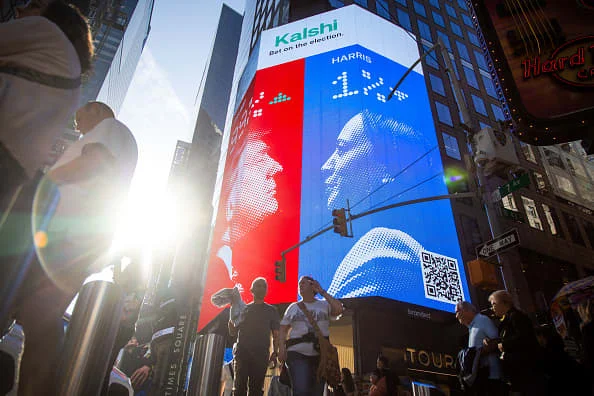
The prediction market platform Kalshi is set to launch a new, comprehensive resource designed to provide political enthusiasts and analysts with real-time insights into the unfolding dynamics of the upcoming midterm elections. The "Midterms Hub" will offer a consolidated view of how traders are betting on the outcomes of various political contests, integrating this with traditional polling data, campaign finance information, and curated news analysis. This initiative underscores Kalshi’s growing ambition to become a central data provider for understanding political sentiment, particularly as election cycles intensify.
The core of the Midterms Hub will be its presentation of event contract odds on the Kalshi platform. These contracts allow users to trade on specific political outcomes, such as which party will control the U.S. Senate or the House of Representatives, and even the results in individual congressional districts. The hub will visually represent these odds across a map of the United States, offering a granular perspective on market expectations for each state and congressional race. This allows observers to track the shifting probabilities and gauge the collective belief of traders regarding the electoral landscape.
Beyond prediction market data, the Midterms Hub will integrate several other key datasets to provide a more holistic view. Polling averages from reputable sources will be displayed alongside Kalshi’s odds, enabling users to compare the market’s sentiment with traditional survey data. This juxtaposition is crucial, as it allows for an analysis of whether prediction markets are diverging from or aligning with public opinion as measured by polls. Such comparisons can highlight areas of uncertainty or strong conviction within the electorate and the market.
Furthermore, the hub will incorporate the latest Federal Election Commission (FEC) fundraising reports for individual candidates. Campaign finance is a significant indicator of a candidate’s viability and support. By showcasing who is raising money and how much, the Midterms Hub will offer another layer of data for assessing the strength of various campaigns. This financial information can provide context for the odds presented on the prediction market, as increased fundraising often correlates with a stronger campaign and, potentially, better electoral prospects.
Kalshi emphasizes that the Midterms Hub is designed not just for active traders, but also for a broader audience interested in understanding political trends. According to the company, approximately three-quarters of visitors to its platform do not engage in trading but rather use the site to access current odds and gain insights. This suggests a significant demand for accessible, data-driven political intelligence, which the Midterms Hub aims to fulfill.
Tarek Mansour, co-founder and CEO of Kalshi, articulated the platform’s unique value proposition in a recent statement. He highlighted the inherent advantage of prediction markets in cutting through the noise of political discourse. "They cut through polarization and show you what the wisdom of the crowds actually believes, backed by real money, not rhetoric," Mansour stated. He further elaborated that this form of insight is particularly valuable in the current political climate, characterized by heightened polarization. Mansour, who has a background as a trader at Citadel and an analyst at Goldman Sachs, believes that the clarity offered by markets driven by real financial stakes provides a more objective measure of sentiment than traditional media or partisan commentary.
The introduction of the Midterms Hub represents a strategic expansion of Kalshi’s presence in the political arena, building on previous initiatives. In May, the platform launched the "American Power Index," which it described as a political equivalent to the "S&P 500." This index aims to track the relative strength and popularity of political parties over time, providing a broad gauge of the national political mood. The development and promotion of these political-focused products signal Kalshi’s intent to capitalize on the increasing interest in data-driven political analysis.
The timing of the Midterms Hub launch is particularly significant, as election seasons often lead to a substantial increase in prediction market activity. This trend was notably observed during the 2024 Presidential election, where trading volumes surged. For the upcoming 2026 midterms, the expectation is for a similar or even greater spike in engagement. Already, more than $30 million has been traded on contracts related to which party will control the House and Senate in 2026, indicating a robust and engaged market.
The Midterms Hub is positioned to become a go-to resource for journalists, researchers, political strategists, and engaged citizens seeking to understand the evolving electoral landscape. By aggregating diverse data points—market odds, polling data, fundraising figures, and news—Kalshi aims to provide a comprehensive and dynamic picture of the midterm elections. This approach not only democratizes access to sophisticated analytical tools but also leverages the collective intelligence of the market to offer predictive insights.
The platform’s commitment to transparency and data integrity is a key aspect of its strategy. In a field where subjectivity and bias can often cloud judgment, Kalshi’s reliance on quantifiable market data, backed by actual financial commitments, offers a compelling alternative for understanding political probabilities. The CEO’s emphasis on "real money, not rhetoric" underscores this core principle.
As the midterm election cycle progresses, the Midterms Hub is expected to provide continuous updates, reflecting the latest shifts in market sentiment and other relevant data. This dynamic nature ensures that users will have access to the most current information available, allowing for timely analysis and informed decision-making, whether for speculative trading or broader political observation. The platform’s success will likely hinge on its ability to maintain data accuracy, provide intuitive user interfaces, and continue to integrate valuable new datasets as they become available, solidifying its role as a key player in the intersection of finance, data, and politics.