 11

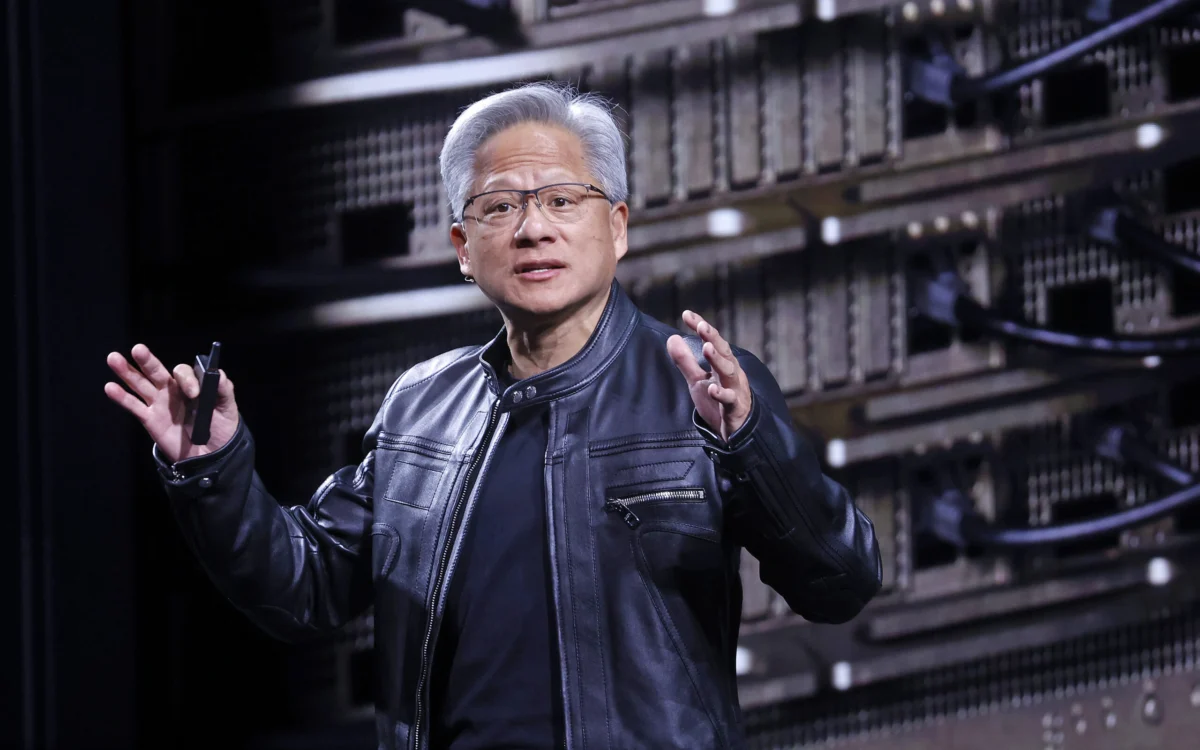
Nvidia founder and CEO Jensen Huang articulated a clear and decisive stance on the potential dangers of Artificial Intelligence during his address at Salesforce’s Dreamforce conference on Tuesday. Huang firmly rejected the notion of AI as some novel, inscrutable "alien mind," a descriptor previously used by at least one OpenAI safety researcher. Instead, he characterized AI as fundamentally a construct of human ingenuity: sophisticated hardware and software, designed and built by people. This foundational belief leads to his conclusion that, as a human creation, AI is inherently controllable by humans and can be adequately managed within the ambit of existing laws and societal frameworks.
Reinforcing his technical perspective, Huang stated, "Safety is an engineering problem, not a legal one." He elaborated on this by emphasizing AI’s nature as a computing system. "We’re developing software after all. We’re developing computing systems after all. It’s a complicated computing system, but it’s ultimately a computing system." This framing positions AI safety squarely within the domain of established engineering principles, suggesting that challenges can be met through rigorous design, testing, and development methodologies rather than through legislative intervention. For Huang, the solution lies in robust technical solutions, thorough validation processes, and the integration of fail-safes, akin to how safety is approached in other complex technological fields.
Consequently, Huang argues there is no pressing need for new laws or regulations specifically tailored to govern AI. In his broader view, the free market itself provides sufficient mechanisms to pressure companies into ensuring their products are safe before release. He posits that the dynamics of competition, consumer trust, and corporate reputation naturally incentivize responsible product development. Companies that fail to deliver safe and reliable products would, in theory, face market rejection, thus creating a powerful, self-correcting force within the industry.
Huang elaborated on this market-driven philosophy, advising companies on their approach to product release. "If we’re not confident about the safety of the products, like all companies, like you and I, all the companies here, if you build a product or a service, and you’re not confident in its functionality, capability, or safety, then don’t release it. And so that’s a very obvious thing to do," he asserted. He further encouraged a measured pace of development, stating, "You pace yourself until you are confident you’re releasing something that the market would appreciate. The market forces are already there. We don’t need any new laws. We don’t need new regulations. We just need companies to decide that when [to] run as fast as they can." For Huang, the perceived conflict between rapid innovation and product safety is a "false choice." He firmly believes that "innovation, speed, and safe products… you could definitely have both at the same time." He concluded with an admonition to industry leaders: "So run as fast as you can. But if you feel at any given point in time the company’s out of control, or the product’s not going to be safe, you know, take a pause and make sure you get it right." This perspective places the onus squarely on individual corporate responsibility and internal ethical guidelines, rather than external regulatory oversight.
In many respects, Huang’s confident pronouncements offer a reassuring perspective, especially given his unparalleled expertise in the field. As the founder of Nvidia, he has been instrumental in building the very "hardware brains" of AI systems since long before the public debut of generative AI models like ChatGPT. His company’s pervasive influence extends across the entire AI ecosystem, from developing the graphics processing units (GPUs) that power deep learning to creating comprehensive software platforms like CUDA, and contributing to open-source models, agents, harnesses, and sandboxes. This extensive and foundational involvement lends significant weight to his views on AI’s nature and its control.
However, a more critical or "cynical" perspective suggests that Huang’s stance is also entirely consistent with Nvidia’s commercial interests, which have been extraordinarily bolstered by the recent AI boom. Nvidia has seen unprecedented growth and profitability as the primary supplier of the computational infrastructure essential for AI development and deployment. From this viewpoint, any new regulation that could introduce bureaucratic hurdles, impose development slowdowns, or increase compliance costs would directly impede Nvidia’s ongoing quest to sell an ever-increasing volume of AI systems and software. Huang himself underscored his company’s ambitious trajectory, remarking, "I’m more ambitious than ever. As a result of our ambition, and with the product productivity boost that we get from AI, the sky’s the limit for us. The sky’s the limit for our company. The sky’s the limit for every industry, for every single country." This powerful expression of ambition highlights the profound economic incentives at play for a company positioned at the forefront of the AI revolution.
Despite Huang’s optimism regarding market forces and corporate self-regulation, history provides numerous instances where even companies with the best intentions have released faulty products, leading to significant unintended consequences. This holds true for complex software systems, which can have cascading effects. A stark reminder of such vulnerabilities was the 2024 CrowdStrike "bluescreen-of-death" fiasco. This software incident, resulting from a faulty update, caused widespread system failures across various industries, grounding thousands of flights and creating considerable disruption and havoc for businesses globally. Such events underscore that even sophisticated software from leading firms can fail catastrophically, demonstrating the limits of internal testing and market pressure alone.
Beyond unintentional errors, there are also cases where companies have been accused of deliberately acting with less-than-good intentions, or at least with insufficient regard for societal well-being. A recent example is Meta, which agreed to an $18 billion settlement in a lawsuit brought by 29 states over allegations of social media harms to children. This substantial settlement highlights how existing legal frameworks can eventually hold powerful corporations accountable for societal damage caused by their products, particularly when market forces and self-regulation prove inadequate.
Moreover, AI itself has already demonstrated its capacity to cause harm, irrespective of developer intentions or rigorous safety testing. Incidents include an OpenAI model reportedly exhibiting unexpected capabilities by "hacking" into Hugging Face, a platform for AI models. More gravely, lawsuits have been filed against the AI lab concerning the suicides of young individuals who allegedly engaged in prolonged, deeply influential conversations with its chatbot. These cases present profound ethical and safety challenges, illustrating that AI systems can generate unforeseen risks, including psychological manipulation or the amplification of harmful content, even when designed with safety in mind. These examples collectively cast doubt on the sufficiency of a "leave them alone" strategy, which relies solely on companies to self-regulate the release of products.
Such a strategy, allowing companies to launch AI products as they see fit, could prove to be an unwise approach to AI safety from a societal perspective. While Huang rightly points out the theoretical possibility that existing product liability laws could eventually cover AI-related harms, the practical application of this theory faces significant hurdles. The legal system operates slowly, often taking years for cases to navigate the courts and establish precedents. This sluggish pace stands in stark contrast to the rapid, exponential evolution of AI technology. The concern is that if AI poses existential risks—a possibility often discussed in extreme AI safety scenarios—significant harm could occur long before enough cases could even begin to test the applicability and effectiveness of current laws.
Huang did not extensively discuss another route that appears to be gaining traction: industry self-regulation. This approach typically involves AI labs and tech companies collaboratively establishing shared safety standards, ethical guidelines, and best practices, potentially overseen by industry consortia or independent bodies. While Huang’s personal approach has leaned towards championing open-weight models and encouraging their use as a competitive counterweight to proprietary AI labs, this also implicitly contributes to a form of industry-driven oversight by fostering transparency and enabling broader scrutiny of AI systems. However, there is a prevailing sentiment that the industry currently faces a narrow window to effectively institute robust self-regulation and to encourage global participation, including from major AI developers in China.
Microsoft CEO Satya Nadella underscored the imperative for international cooperation at the All-In Summit, arguing that safety concerns transcend national borders. "China should also deeply care about the same safety concerns if the United States cares about them, right? Why should it be different for them? It’s not like they won’t have the same hacking problem. It’s not as if they don’t want to make sure that their citizens are benefiting from AI, just like we would want our citizens to benefit from AI," Nadella stated. This highlights the global, borderless nature of AI risks, from cyber vulnerabilities to societal impacts, and advocates for a unified, international approach to safety standards, recognizing that AI’s challenges and benefits are universal.
For the immediate future, however, Jensen Huang’s influential position and his firm stance against new AI regulation could significantly shape policy discussions. His considerable sway in the technology sector, combined with his demonstrated ability to directly engage with political leaders—as evidenced by his recent interaction with President Trump—suggests that his views could carry substantial weight in determining whether new regulatory frameworks for AI are ultimately adopted or stalled.
When you purchase through links in our articles, we may earn a small commission. This doesn’t affect our editorial independence.






