 11
11
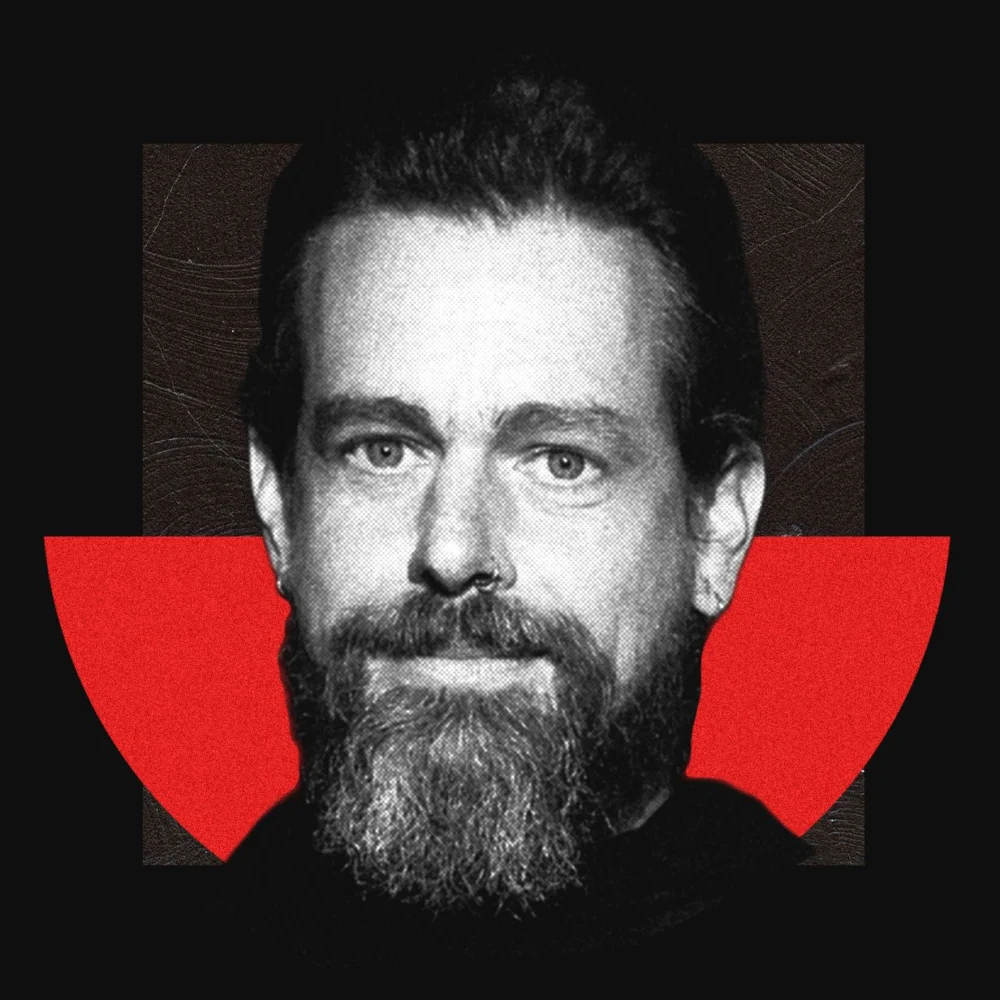
When bombs struck in Iran, the memory of a shared experience in Baghdad with Jack Dorsey resurfaced. In 2009, both Dorsey and the author were part of a US State Department delegation of technology professionals sent to Iraq in the aftermath of another contentious Middle East conflict. At the time, Dorsey, then distant from Twitter’s daily operations, observed glumly as his co-founders celebrated the success of the product born from his vision. Their mission, which involved traversing a war-torn city in flak jackets and helmets outside the protected Green Zone, served as a temporary diversion from his evident professional pain.
Dorsey’s career trajectory saw a significant rebound. Not long after the Baghdad trip, he founded the fintech company Square, now known as Block. In 2015, he reclaimed the leadership of Twitter, running both companies concurrently for several years until 2021, when he stepped down as Twitter CEO before its acquisition by Elon Musk. Today, Dorsey continues to lead Block, a company that reported nearly $3 billion in profit last quarter, boasts a $39 billion market capitalization, and until recently, employed 10,000 people.
That changed last week when Block made headlines for discharging almost half of its workforce. Dorsey’s explanation cited recent advancements in artificial intelligence (AI) tools as the driving force, compelling Block to transform into a leaner, more agile entity. He predicted that other companies would inevitably follow suit. This move was characteristic of Dorsey, who frequently disregards conventional corporate norms. Known for his nomadic lifestyle, distinctive hipster beard, and advocacy for meditation, he is a lifelong proponent of open-source protocols and decentralization, quick to embrace technologies he perceives as the future, from Bitcoin to AI.
Addressing the significant workforce reduction, Dorsey was pressed on whether these layoffs were merely a correction for overhiring or an instance of "AI-washing." He firmly refuted these suggestions, stating, "The most important thing for me and the company is that we stay well ahead of the technology trends that are impacting us. This comes down to one simple thing. These tools are presenting a future that entirely changes how a company is structured." He emphasized the need to be proactive rather than reactive, asserting that delaying action would put the company in a worse position. Regarding overhiring, Dorsey clarified that Block’s gross profit per employee metric was in line with or even ahead of its peers, and its post-Covid hiring and subsequent "corrections" mirrored industry trends. The decision, he maintained, stemmed from a deep dive into the capabilities of new AI tools and their application.
The emotional impact of such widespread layoffs was evident, with one employee at an internal meeting expressing offense at Dorsey wearing a "LOVE" hat. Dorsey acknowledged the challenge but believed a compassionate layoff was not an impossible task. He aimed to approach the situation with "love," offering what he described as a "generous" severance package from a position of strength. He highlighted that while negative feedback was received, much gratitude was also expressed, framing the event as a harbinger of broader changes for many other companies.
The catalyst for such drastic action, according to Dorsey, was a profound shift in AI sophistication observed in December, particularly with Anthropic’s Opus 4.6 and OpenAI’s Codex 5.3. These models, he noted, evolved from being proficient in greenfield products to handling increasingly larger codebases. This presented an unprecedented opportunity to fundamentally alter company structures. "We have to rethink how companies run, how they’re structured, how they’re built," Dorsey explained, criticizing inherited management hierarchies dating back to the 1900s as impediments to necessary progress. Despite building Block from the ground up, he conceded that the company, like others, adopted conventional structures because "that was the right way to do things." However, new technologies demand recalibration.
Dorsey explicitly stated that his decision was not influenced by Elon Musk’s extensive layoffs at Twitter. He differentiated the situations, explaining that Twitter’s transition from a public to a private company, burdened by massive debt, necessitated a dramatic change in its business model. He expressed gratitude for this shift, believing Twitter should have been private for some time.
Looking ahead, Dorsey envisions a future where Block operates with virtually no management hierarchy. He proposes that the company itself will function as a "mini AGI," with an intelligence layer at its core. This system would allow employees to query and converse with the company’s "intelligence" and build intent, dramatically accelerating product development and customization. Customers, he suggested, would effectively "vibe-code Block to make personalized products," achieving peace of mind by building solutions tailored to their specific needs. While acknowledging that "no one knows what the future holds," Dorsey expressed optimism that people would transition into different roles, but the fundamental role of a company would be markedly transformed.
A long-standing advocate for decentralization, Dorsey reiterated his focus on Bitcoin as an open protocol for money transmission, rather than broader "crypto." He views Bitcoin as the best representation of this ideal, unburdened by corporate control, and expressed a reluctance to support stablecoins despite customer demand, fearing a shift from one gatekeeper to another. He noted that despite ongoing centralization trends in the digital world, "it ebbs and flows," pointing to projects like OpenClaw as evidence of people’s desire for agency, which he believes stems from decentralization.
Reflecting on Twitter, now X, under Elon Musk’s ownership, Dorsey expressed mixed feelings. He appreciated its status as a private company and the changes to its business model. However, he admitted that the outcomes were "not always leading to the most positive." He cited algorithmic choices that could be drastically improved and voiced disappointment that the platform fragmented conversation along ideological lines, rather than existing as a single, open protocol. He recalled a specific incident where Musk mocked "Stay Woke" T-shirts, which had originated from a Black employee group at Twitter and which Dorsey himself had proudly worn. He found it "not wise to mock the people that use your platform and love it," viewing it as a driver of further fragmentation.
On broader societal issues, Dorsey described politics as "super confusing" and "a mess," advocating for increased transparency, access, and agency for individuals, rather than relying on any single system or party. He also dismissed any pressure to align with political figures like Donald Trump, emphasizing the need for separation between state and private companies, particularly for critical technologies. Regarding journalism, he found it "challenging" in an age of information overload and questionable credibility. While valuing citizen journalism, he maintained the necessity of credible storytellers who can provide cohesive sense and disclose their biases.
Dorsey also addressed his past public criticism of WIRED, explaining it stemmed from a deep personal connection to the publication, which he admired for its optimistic vision of technology and focus on hacking culture. He expressed disappointment that it had seemingly taken a "negative turn" and lost its optimism. He agreed that circumstances have changed, and the early over-optimism surrounding social media, including Twitter, had been tempered by the rise of toxicity. His solution: granting more sovereignty to users and establishing social media as an open protocol, rather than a company-owned entity, to mitigate inherent problems.
His disillusionment extended to Bluesky, a project he initially championed. He expressed unhappiness, stating it had "gone to the other ideology," taking venture capital investment and building like a conventional company. This, he clarified, was "not what I signed up for," as the project was intended to be an open protocol for everyone, not an antagonist to Twitter or other platforms. He identified algorithmic filter bubbles as the paramount issue facing social media.
Dorsey views AI as an unprecedented challenge to existing norms. He warns that "every company that’s not building itself as intelligence is going to face something existential, and it’s going to happen over the next year or two." This existential threat, he believes, will profoundly alter company funding, social media, and learning, given AI’s unparalleled rate of compounding technological advancement. His personal lifestyle reflects this unconventional thinking; as Block is fully remote, he works from wherever he feels most creative, often in the US, meeting in-person only when necessary. His daily routine includes an hour of meditation, which he credits with helping him manage stress and maintain a non-reactive approach.
Observing the major AI companies, Dorsey acknowledged their incredible speed but expressed concern over the low, almost zero, switching costs between models, citing instances like the Pentagon’s shift from Anthropic. He appreciates Anthropic’s principled stance and red lines on product usage.
Concluding the conversation, Dorsey circled back to the initial reflection on Baghdad, acknowledging the "crazy" shared experience and noting a sense of history repeating itself. This poignant observation underscored his belief that fundamental shifts are necessary to navigate an increasingly complex and rapidly evolving technological landscape.