 11
11
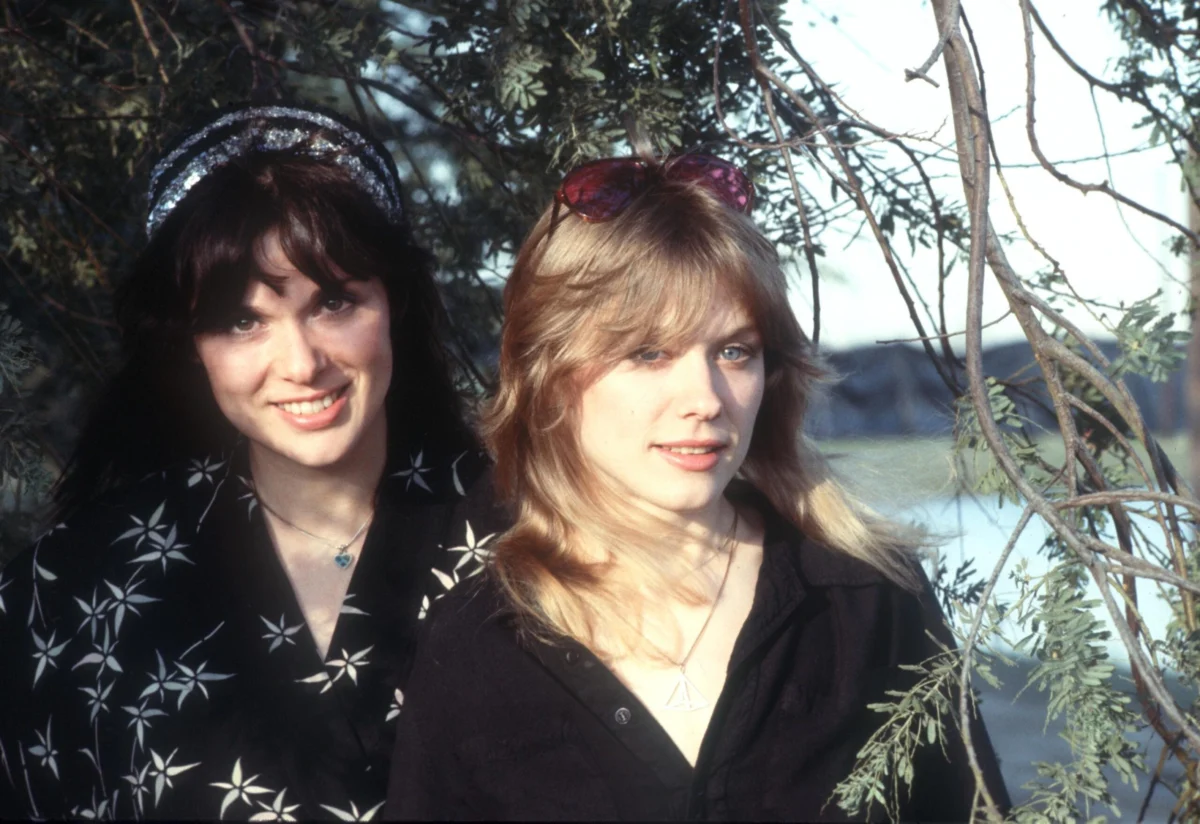
More than two months ago, the iconic sisters Ann and Nancy Wilson, the driving force behind the American rock band Heart, delivered a powerful performance at the prestigious 2026 Annual Grammy Hall of Fame Gala. The event, held at Los Angeles’ opulent Beverly Hilton, celebrated a new class of recordings deemed historically significant and culturally impactful, marking a pivotal moment in the band’s illustrious career. Heart’s seminal 1975 debut album, Dreamboat Annie, stood proudly among the newly inducted works, sharing the spotlight with recordings from other esteemed musical acts, including hip-hop legend 2PAC, pop icon Janet Jackson, and alternative rock pioneers Radiohead.
The Grammy Hall of Fame, established by the Recording Academy in 1973, honors recordings of lasting qualitative or historical significance. For Dreamboat Annie, its induction underscores its enduring impact on the landscape of rock music, nearly five decades after its initial release. Reflecting on the celebratory evening, Nancy Wilson recently recalled the profound sentiment of the occasion. “We went and played three songs from Dreamboat Annie,” she recounted. “The first lineup [of the band] was all in the audience. It was a really great feeling. It was really cool to see everybody again and to sort of pat ourselves on the collective back for not only done a cool thing 50 years ago that still kind of resonates today. We’re not on stretchers yet. We’re still kind of kicking ass out there.” This sentiment perfectly captured the band’s enduring vitality and the timeless appeal of their early work.
First introduced to audiences through the independent Canadian label Mushroom Records in 1975, Dreamboat Annie subsequently found its way to American shores the following year. It quickly ascended to become a smash hit, launching Heart into the rock firmament with beloved songs such as the mystical "Magic Man," the dramatic "Crazy On You," and the enchanting title track. The album served as an undeniable introduction to the signature hallmarks of Heart’s sound: a potent fusion of Led Zeppelin-influenced hard rock, intricate acoustic folk music, the stirring, powerhouse lead vocals of Ann Wilson, and the distinctive, ripping guitar work of Nancy Wilson. Fifty years on, Dreamboat Annie continues to be hailed as one of classic rock’s most outstanding and influential debut albums, a testament to its innovative sound and songwriting.
The journey to Dreamboat Annie‘s creation began in the vibrant, if somewhat unconventional, music scene of Vancouver, British Columbia, in the early 1970s. The original lineup, comprising sisters Ann and Nancy Wilson, guitarists Roger Fisher and Howard Leese, bassist Steve Fossen, and drummer Mike Derosier, had coalesced in Vancouver, a city that had become a haven for many Americans seeking to avoid the Vietnam War draft. This unique demographic contributed to a thriving counter-cultural and artistic environment. “In [our] early 20s, we knew we were competent enough musically to pull it off,” Nancy Wilson stated, recalling the early confidence of the band.
Securing a record deal proved to be an uphill battle against the established music industry giants. The band meticulously put together "little reel-to-reel demo tapes with letters written on typewriters," sending them off to the offices of major record companies. However, these efforts largely went unnoticed. Wilson vividly described the experience: "Of course, they all just probably got stacked on a big stack, like scripts in Hollywood. Nobody ever read them, and they just went to the shredder." It was a local connection that ultimately provided their breakthrough. A family involved in a paint company owned a small studio in Vancouver, and they happened to be avid music fans. This studio became the home of Mushroom Records, an indie label with an open ear for new talent.
The pivotal moment arrived when a producer associated with the studio witnessed Ann Wilson perform at a local cabaret called Oil Can Harry’s. He was immediately captivated by her voice. “He was like, ‘I want to make a record with that girl,’” Nancy recounted. “So Ann’s voice was the lure that brought the rest of the band up to Vancouver, and me to eventually join the band and make the album on an indie label called Mushroom.” This serendipitous encounter laid the groundwork for one of rock history’s most significant debut albums, proving that groundbreaking talent could emerge from unexpected places, circumventing the traditional gatekeepers of the music industry.
Recording Dreamboat Annie with producer Mike Flicker, the creative synergy within the band flourished. The songs on the album were predominantly crafted by the Wilson sisters, who brought a unique blend of personal introspection and rock energy to their compositions. Among these were "Magic Man," a track imbued with mystical qualities and semi-autobiographical elements, and "Crazy On You," a dramatic and powerful rock anthem. Both songs quickly transcended their album origins to become enduring staples of classic rock radio, solidifying Heart’s place in the genre for decades to come.

Nancy Wilson elaborated on the profound connection she and Ann felt with their creations. "You fall in love with something because you created it,” she explained. “So you can’t get enough of it if it sounds good… it’s so exciting when something like that sounds so good to you, like ‘Crazy on You’ in particular.” She further detailed the intricate musicality that made their songs so compelling, not just to them, but to fellow musicians. "And ‘Magic Man,’ too, because it had a lot of intricate departures and musical journeys that you went on — there was a lot of kind of tricky, cool stuff that we would put in there so that other musicians would go, ‘Wow, how do you do that? Let’s learn that.’ So we were pretty sure people would like it because we loved it.” This blend of technical prowess, emotional depth, and raw talent was a potent combination that resonated deeply with a burgeoning audience.
The initial tour supporting Dreamboat Annie stretched over two arduous years, a period during which Heart tirelessly worked to break through into the American market. "We did the homework to get it noticed,” Wilson affirmed. “We plugged it and plugged it and plugged it. And then it sort of caught fire." Their relentless touring schedule, often opening for other bands, allowed the album to gain traction "territory by territory," leading to progressively larger and more lucrative offers. With only one album to their name, their live shows were a blend of their original material, carefully chosen covers, and extended instrumental solos, including impressive drum solos, demonstrating their musicianship and stage presence. This grassroots approach to building a fanbase proved incredibly effective. Yet, after achieving their initial goal of success, a new question arose: "Once we got what we wanted, we were like, ‘Well, now what do we do?’ And so we had to make more albums,” Wilson humorously recalled, illustrating the continuous drive that defines a long-lasting career in music.
Following the remarkable commercial success of Dreamboat Annie, which has to date sold over 1 million copies in the U.S., Heart faced a significant challenge. The band parted ways with Mushroom Records, a move that precipitated a legal battle. This dispute was eventually settled through the release of their second album, 1977’s Magazine, which fulfilled contractual obligations with their former label. Subsequently, Heart signed with Portrait Records, embarking on a prolific period that saw them record a string of hit albums including Little Queen, Dog and Butterfly, and Bebe Le Strange.
The band’s journey, however, was not without its ebbs and flows. After a commercial dry spell in the early 1980s, Heart staged a spectacular return to the charts with the blockbuster albums Heart (1985) and Bad Animals (1987). These records spawned a new wave of hit singles, including power ballads like "What About Love," "These Dreams" (their first No. 1 hit), and the iconic "Alone" (another chart-topper), re-establishing their commercial dominance and introducing them to a new generation of fans. Nancy Wilson aptly described this unpredictable trajectory: "It was a roller coaster because as styles change like every five years or so, it’s kind of a lifespan. It’s a stylistic switcheroo in the culture. You’re cool, then you’re not cool. And then you’re cool again, and then you’re not cool. So we just had to roll the roller coaster right on through. I think right now we’re cool again. It’s cool when people respond like that.” This candid reflection highlights the resilience and adaptability required to sustain a career spanning decades in the ever-evolving music industry.
After pursuing individual solo projects and ventures, the Wilson sisters officially reunited as Heart in 2023, much to the delight of their global fanbase. Since then, they have embarked on extensive tours, showcasing their timeless repertoire. Unsurprisingly, classic tracks from Dreamboat Annie, such as "Crazy On You" and "Magic Man," remain indispensable highlights of their dynamic setlists, thrilling audiences old and new.
Nancy Wilson emphasized the intrinsic value that allows these songs to endure. "It’s cool to be able to still play those songs today because they have substance,” she noted. “There’s poetic substance going on. It’s not just like wallpaper, atmosphere, mechanical, automated sounding. It’s real human. That’s the stuff that kind of withstands the test of time, is the songs." She elaborated on the universal appeal of "Magic Man," stating, "Like ‘Magic Man’ is not just Ann’s story, but it’s a lot of every girl’s leaving-home story for better or probably worse. It’s kind of pretty universal girl story.” This connection to fundamental human experiences is precisely what imbues Heart’s music with its lasting resonance.
The sisters show no signs of slowing down. Currently, in addition to their ongoing touring commitments, the Wilsons are actively engaged in working on a new record and a documentary, further cementing their legacy and continuing their creative output. When asked if Dreamboat Annie stands as the quintessential Heart album among their extensive studio discography, Nancy Wilson offered a thoughtful perspective, placing it alongside two other classic band records.
"I think the definitive Heart album is more like Dog and Butterfly," she posited. "Little Queen maybe, because ‘Barracuda’ is kind of definitive. Even young people that never heard of Heart before, if you say ‘Barracuda,’ they know that. It’s like, ‘Oh, the ‘Barracuda’ band. Okay, I get it.’ It’s been in a lot of movies and stuff." Wilson elaborated on Little Queen‘s unique blend: "But the Little Queen album has all of the mandolin and the kind of the ren fair stuff that Heart can do. That’s more almost like a Zeppelin album. There’s the acoustic Tolkien-esque stuff over here, and then there’s the real hard rock like ‘Barracuda’ over here." She concluded by stating, "So between Little Queen and Dog and Butterfly and Dreamboat, you’ve got the definitive story of Heart.” This trio of albums, each distinct yet undeniably Heart, collectively tells the comprehensive narrative of a band that defied expectations, broke barriers, and continues to captivate audiences with their unique blend of raw power and poetic grace.