 11
11
Wikipedia has long been a cornerstone of online visibility, but the emergence of Grokipedia, a new AI-generated wiki, raises crucial questions about its potential as a competitor. Is Grokipedia a serious contender, a mere product of billionaire ambition, or something else entirely? Does it offer novel value, or simply repackage existing information? Critically, does Grokipedia influence AI search in a manner comparable to Wikipedia? To address these questions, a comprehensive analysis was conducted using data from Ahrefs’ Site Explorer and Brand Radar, focusing on key metrics including page count, traffic, AI citations, page length, and semantic similarity.
Content Volume and Growth Trajectory
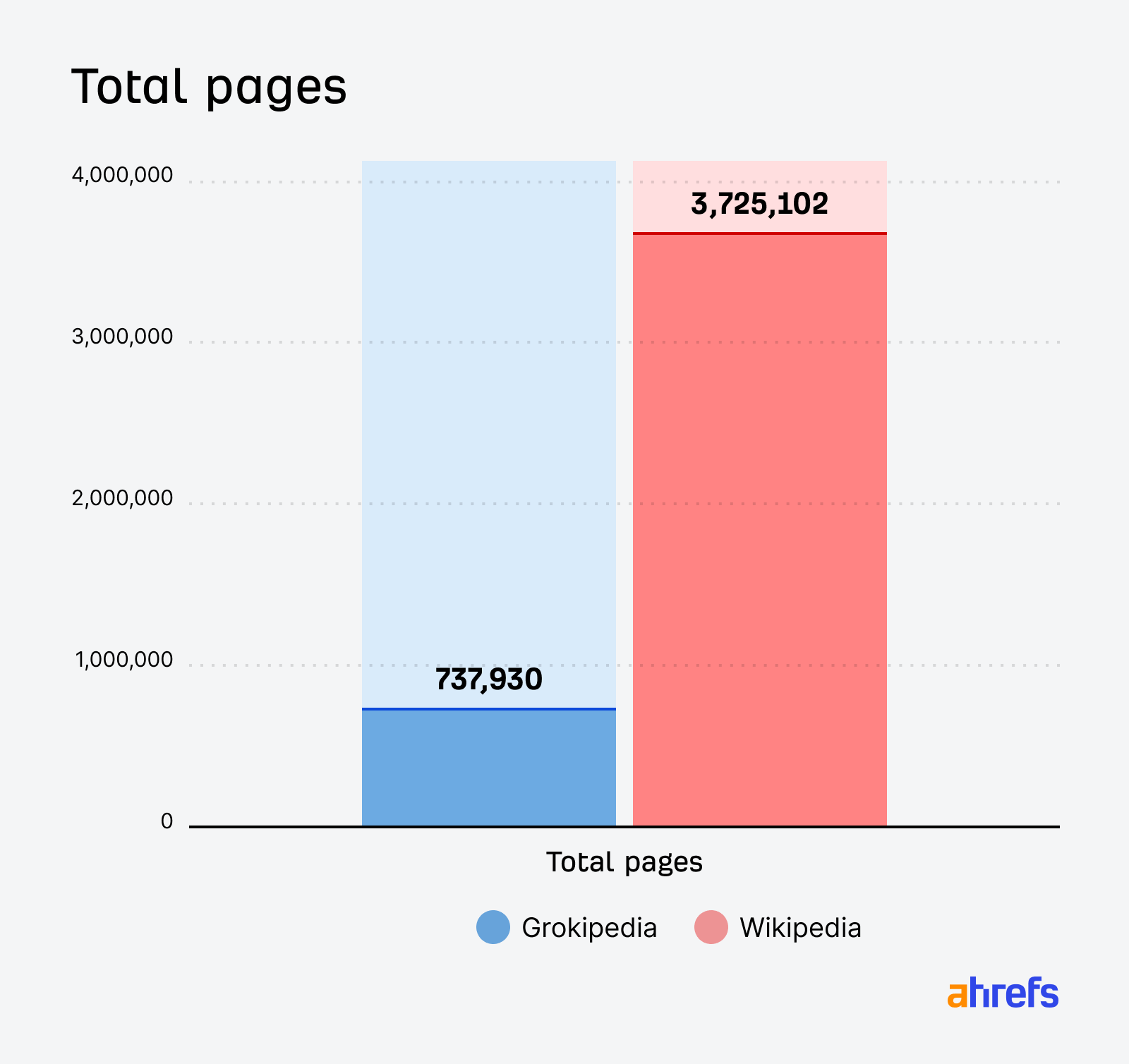
Since its launch in October 2025, Grokipedia has rapidly produced a substantial volume of content, accumulating 737,930 published pages. In comparison, Wikipedia boasts 3,725,102 crawled pages, representing five times Grokipedia’s current output. However, Grokipedia’s rapid content generation rate suggests a potential to eventually surpass Wikipedia’s total page count. Projecting Grokipedia’s current pace of nearly 6,000 new pages per day, and assuming Wikipedia’s page count remains static, Grokipedia could overtake Wikipedia in approximately 500 days, around July 2027.
Traffic and Keyword Performance: A Chasm Remains
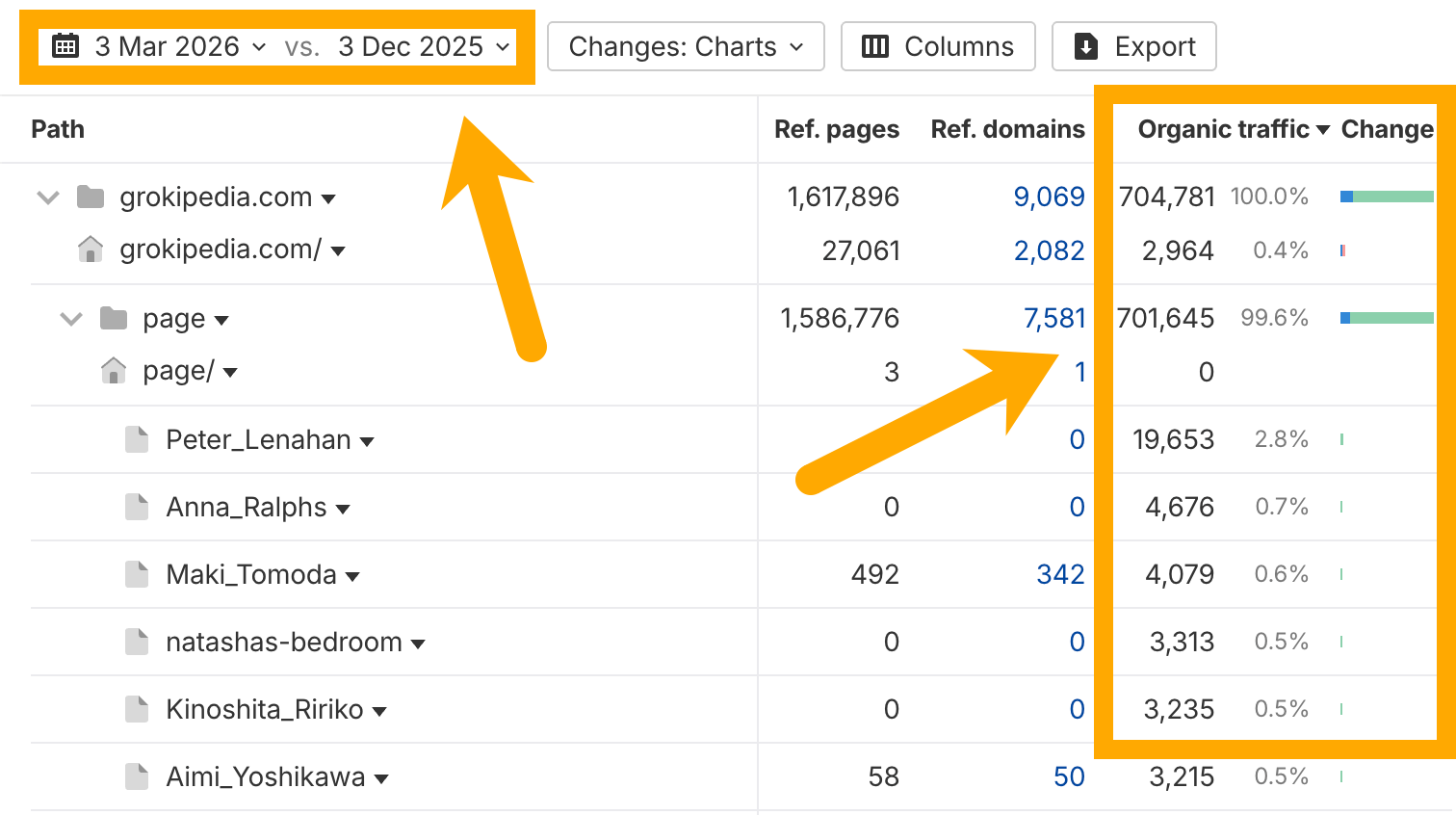
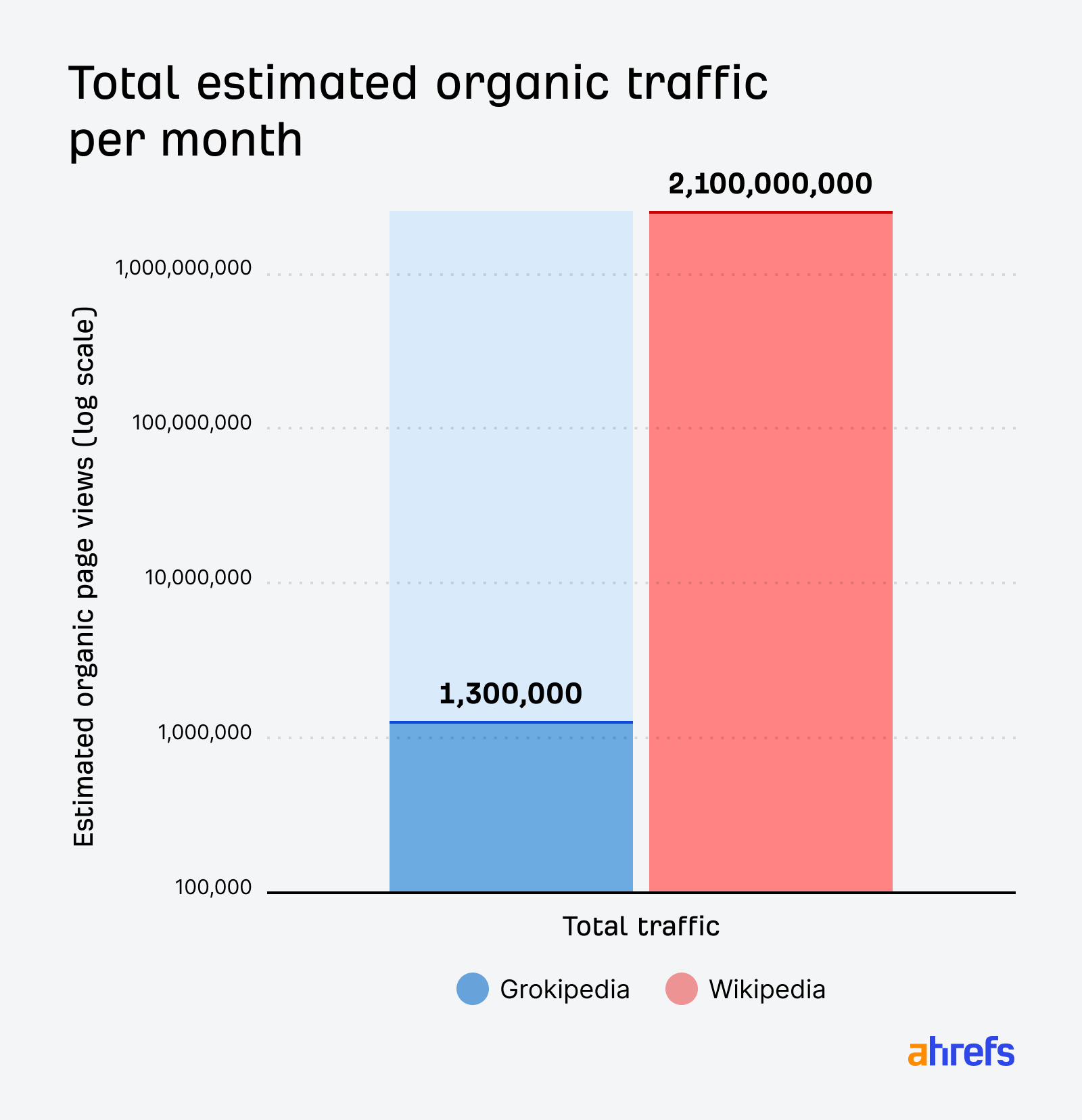
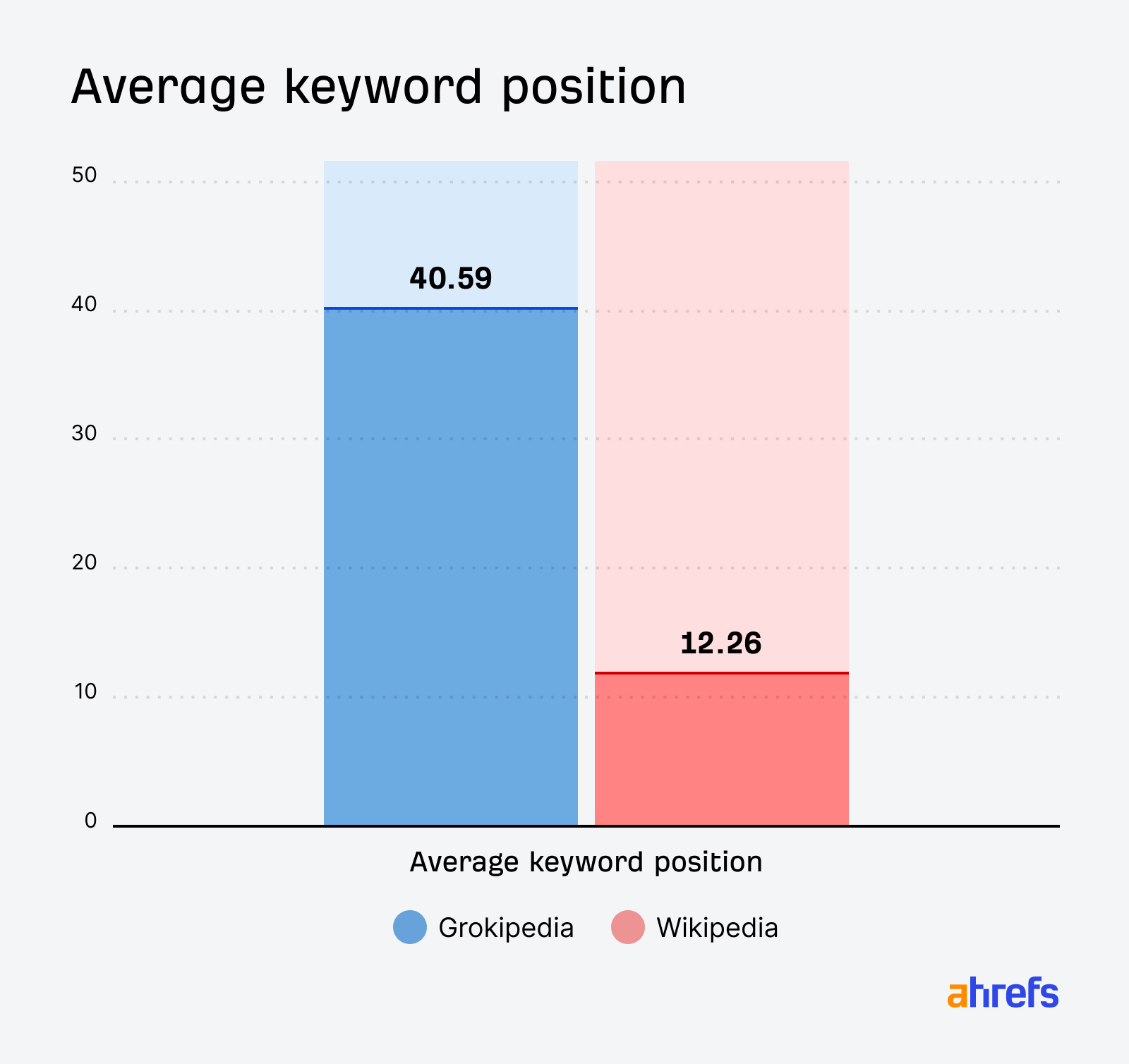
Despite its impressive content volume, Grokipedia struggles to attract organic traffic. Wikipedia garners an estimated 2,100,000,000 pageviews per month, vastly overshadowing Grokipedia’s approximately 1,300,000 monthly pageviews – a difference of 1,615 times. This disparity is partly explained by keyword rankings. Grokipedia ranks for 1,193,013 keywords with an average position of 40.59, whereas Wikipedia ranks for 45,573,106 keywords (38 times more) with a significantly better average position of 12.26.
Backlinks and Referring Domains: The Trust Deficit
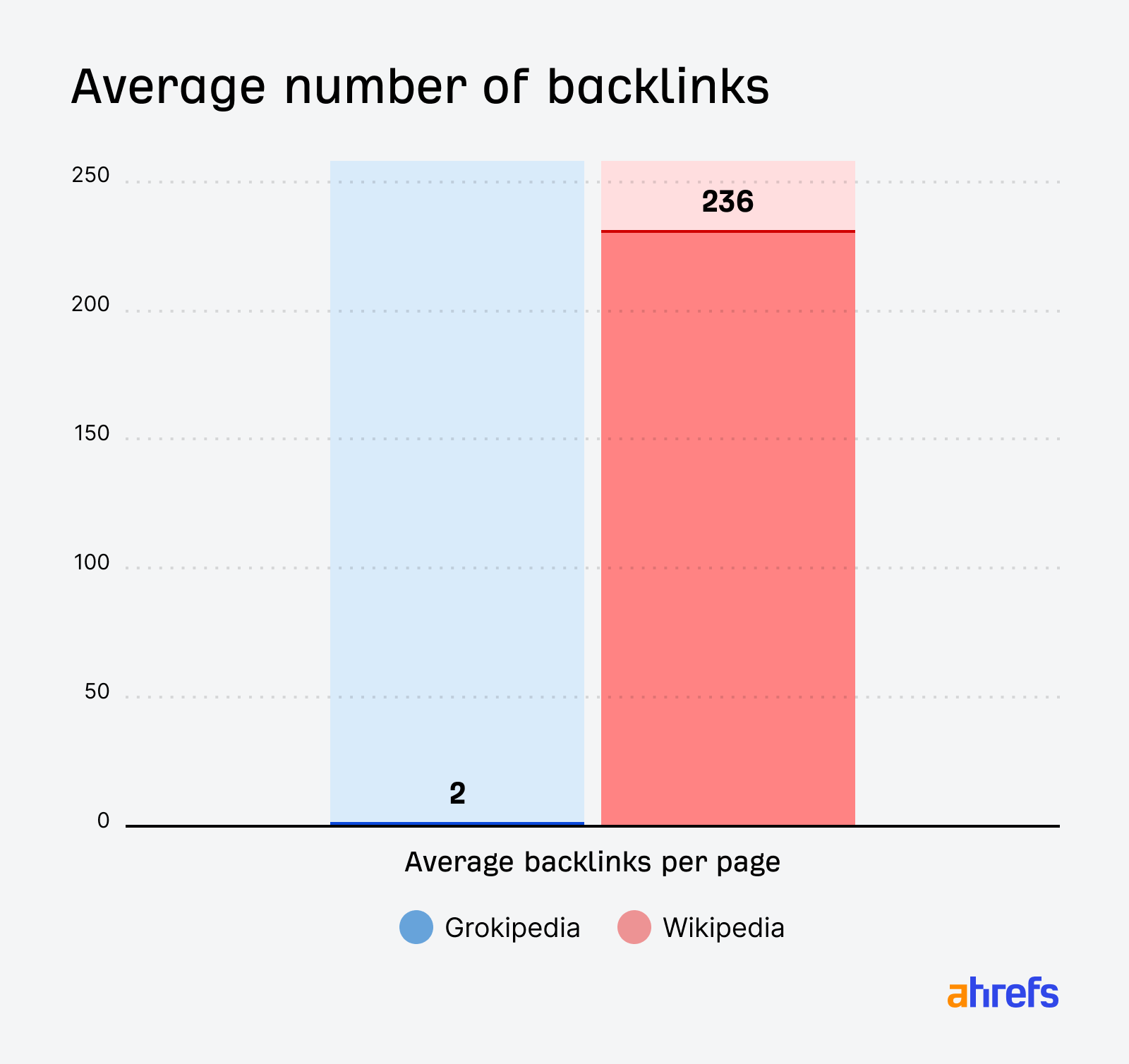
The authority and trustworthiness of a website are often reflected in its backlink profile and referring domains. Wikipedia holds a commanding lead with 879,615,708 backlinks compared to Grokipedia’s 1,414,654. This translates to approximately 236 backlinks per page for Wikipedia, versus a mere 2 for Grokipedia. Similarly, Wikipedia attracts 2,024,916 referring domains, dwarfing Grokipedia’s 8,016, indicating a significantly broader network of trust and authority. In terms of referring domains per page, Wikipedia has 0.54, while Grokipedia has only 0.01. By all traditional search metrics, with the exception of raw page count, Grokipedia faces a substantial challenge to catch up.
Content Structure: Length, Age, and Visuals
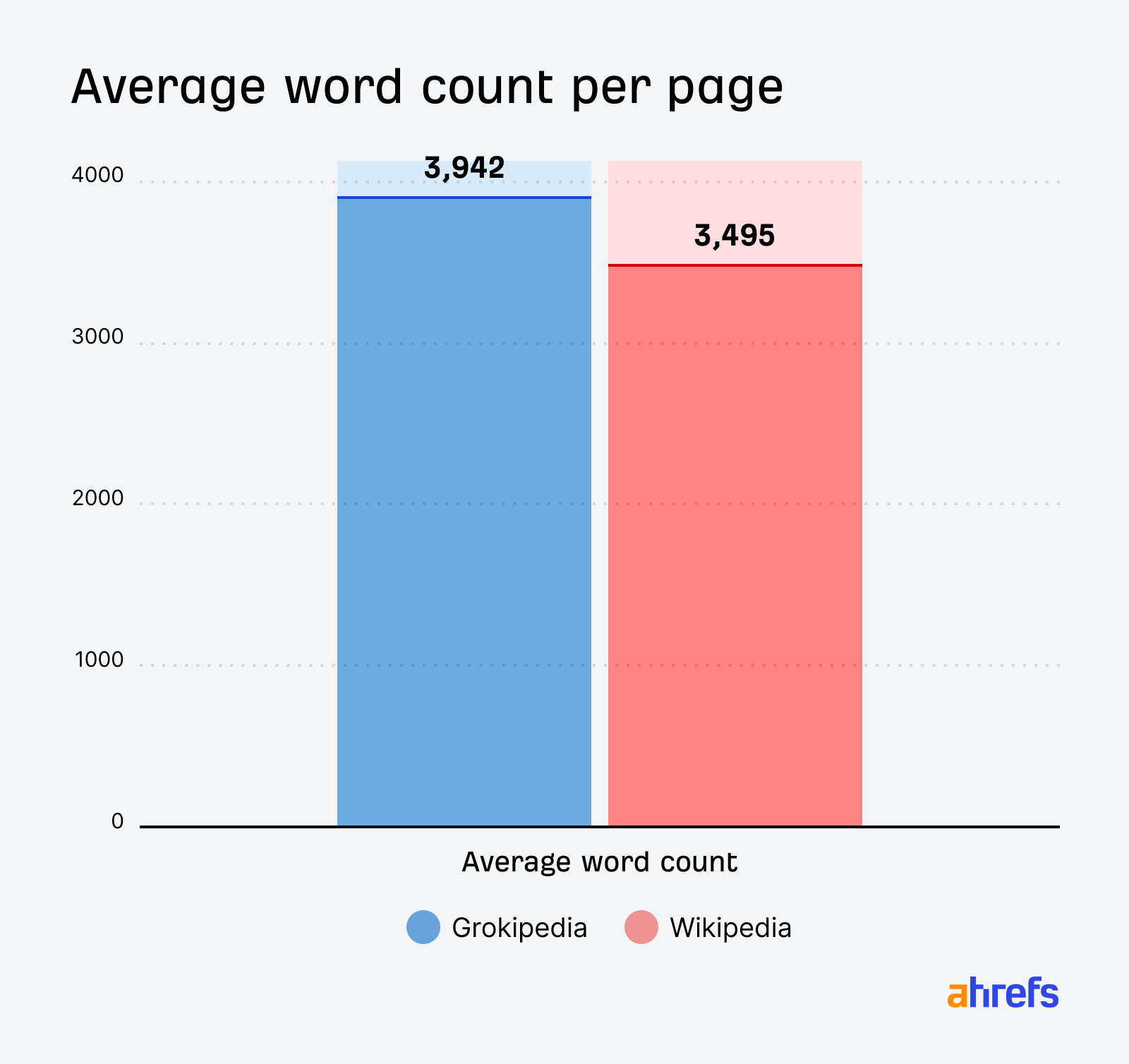
An analysis of 100,000 randomly selected pairs of Grokipedia and Wikipedia articles covering similar topics revealed distinct differences in content structure. Grokipedia pages average 3,942 words, approximately 13% longer than Wikipedia’s 3,495 words. This difference is less pronounced than might be expected given the ease of AI content generation.
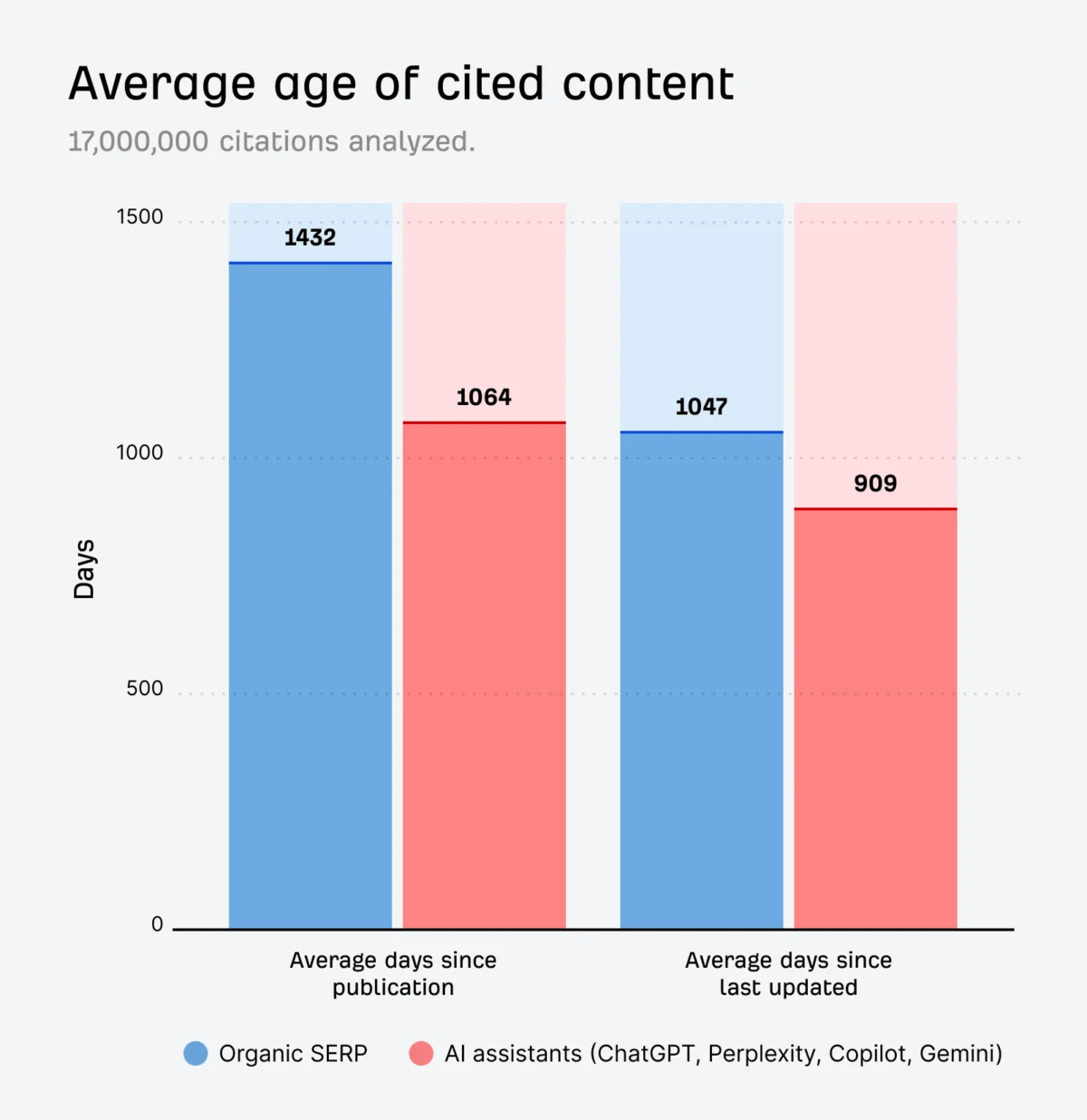
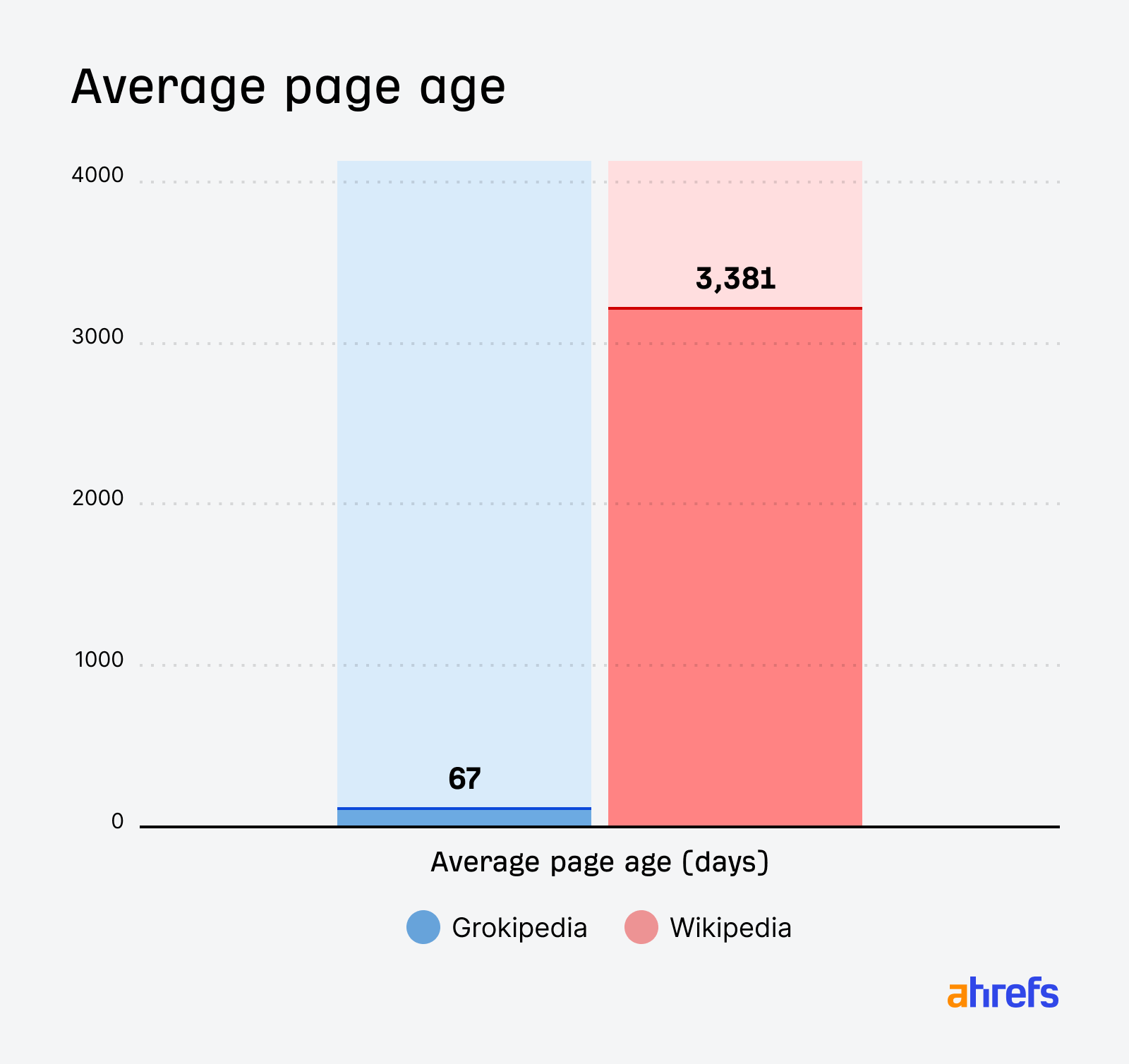
The age of the content also highlights Grokipedia’s nascent stage. Launched in October 2025, Grokipedia’s pages have an average age of just 67 days. In stark contrast, Wikipedia’s pages average 3,381 days old, or 9.3 years – nearly 51 times older.
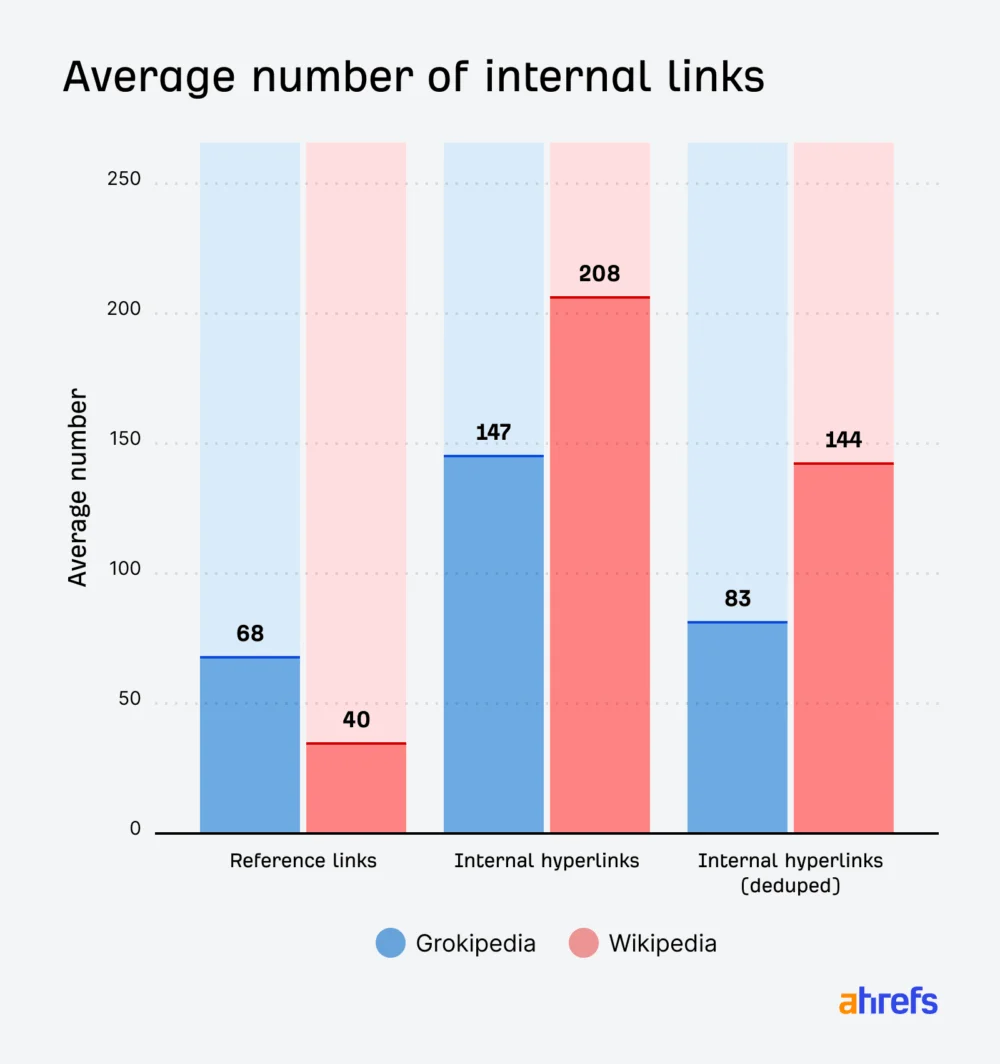
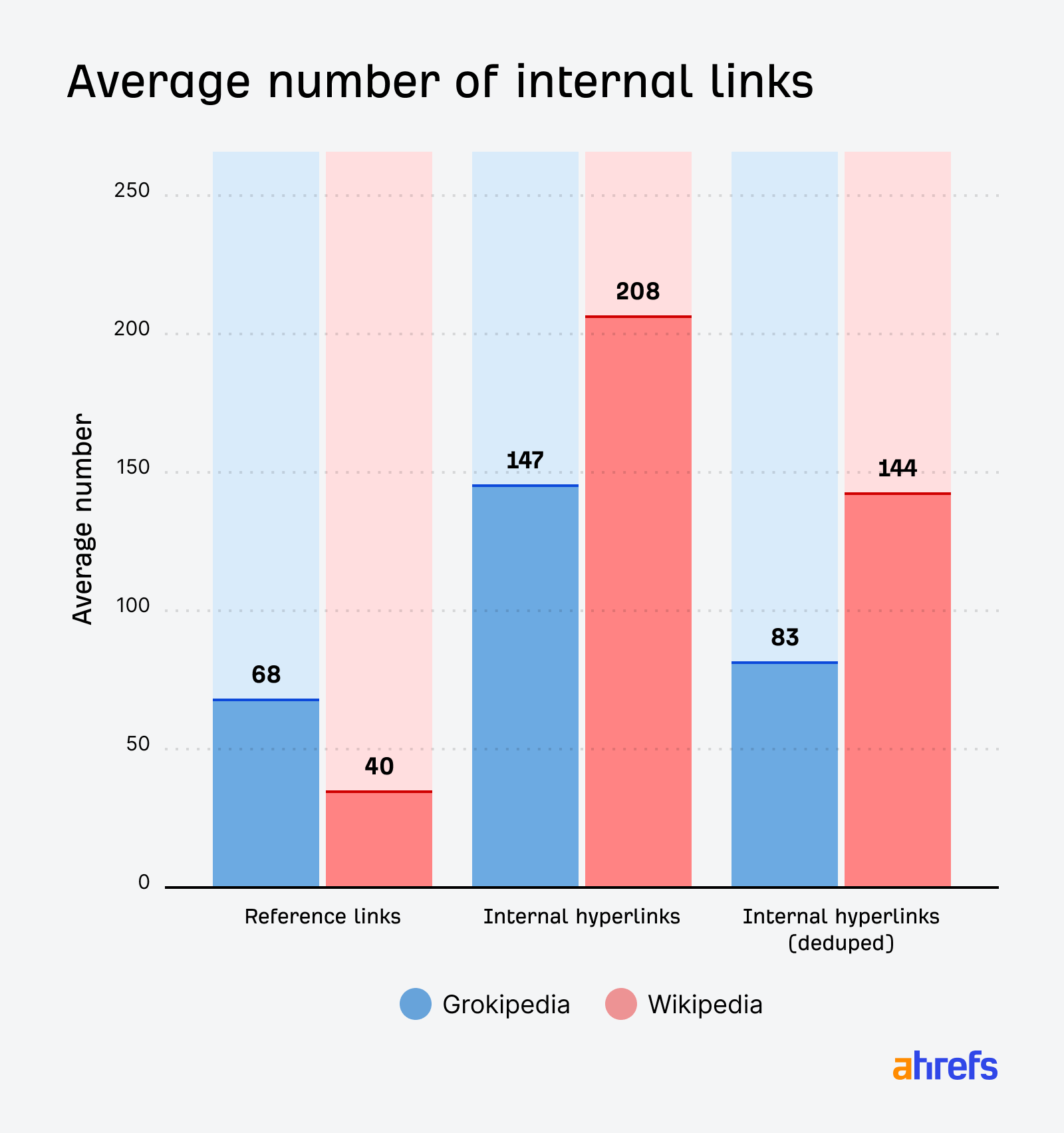
Interestingly, Grokipedia pages exhibit a higher number of external links in their reference sections, averaging 68 per page compared to Wikipedia’s 40. However, Wikipedia excels in internal linking, averaging 144 unique internal links per page, significantly more than Grokipedia’s 83. The most striking difference lies in visual content: Wikipedia pages feature an average of 24 images, while Grokipedia pages contain zero images.
AI Citations: A Developing Landscape
Grokipedia demonstrates a notable capability in earning AI citations, especially considering its traffic volume. Despite having 1,615 times less traffic, Grokipedia has 70 times fewer AI citations than Wikipedia, with 356,200 citations compared to Wikipedia’s 24,914,778. This results in an average of 0.48 citations per page for Grokipedia and 6.69 for Wikipedia.
The primary sources of AI citations for Grokipedia are ChatGPT and Google’s AI Mode, with Copilot and Gemini following. Wikipedia’s citations are predominantly from AI Mode and AI Overviews, with ChatGPT and Perplexity in third and fourth place.
When examining the relative distribution of citations across AI platforms, a nuanced picture emerges. Citations in AI Overviews are heavily influenced by existing search result rankings. Grokipedia’s lower average ranking position hinders its citation in AI Overviews compared to Wikipedia. Conversely, ChatGPT appears to have a relative bias against citing Wikipedia while showing no such bias against Grokipedia.
Semantic Similarity: A Deep Connection
A comparison of 10,000 topic pairs between Grokipedia and Wikipedia revealed a high degree of semantic similarity. The mean semantic similarity was 0.791, with a median of 0.831. For context, when Grokipedia pages were compared with random Wikipedia pages, the mean cosine similarity dropped to approximately 0.62. This strong overlap suggests that Grokipedia pages are semantically very close to Wikipedia pages covering the same subject matter. A significant 83% of the analyzed topic pairs exhibited a cosine similarity greater than 0.62, indicating a profound semantic connection.
Conclusion: An AI-Centric Model with Limited Human Reach
Grokipedia appears to be pioneering a new model for wikis: AI-generated content tailored for AI consumption. While it demonstrates influence within AI citation networks relative to its size, its impact on human readers, as measured by organic traffic, remains considerably weaker. The strong semantic similarity between Grokipedia and Wikipedia pages raises questions about originality and the potential for an "ouroboros" effect, where AI content closely mirrors its training data. The user experience seems geared more towards AI interpretation than human engagement. Ahrefs’ data indicates a decline in Grokipedia’s organic traffic, suggesting that search engines may be evaluating its content differently. The future trajectory of Grokipedia will likely depend on its ability to evolve beyond a direct replication of existing knowledge and offer unique value for human audiences.