 11
11
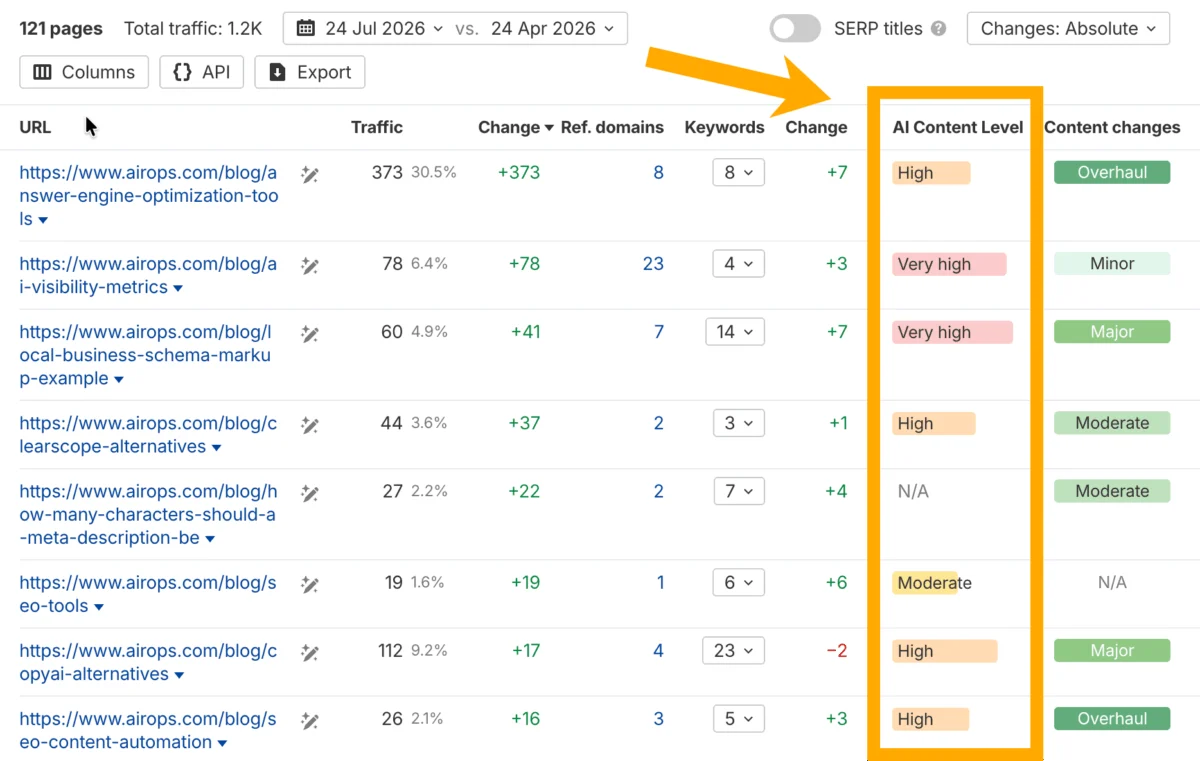
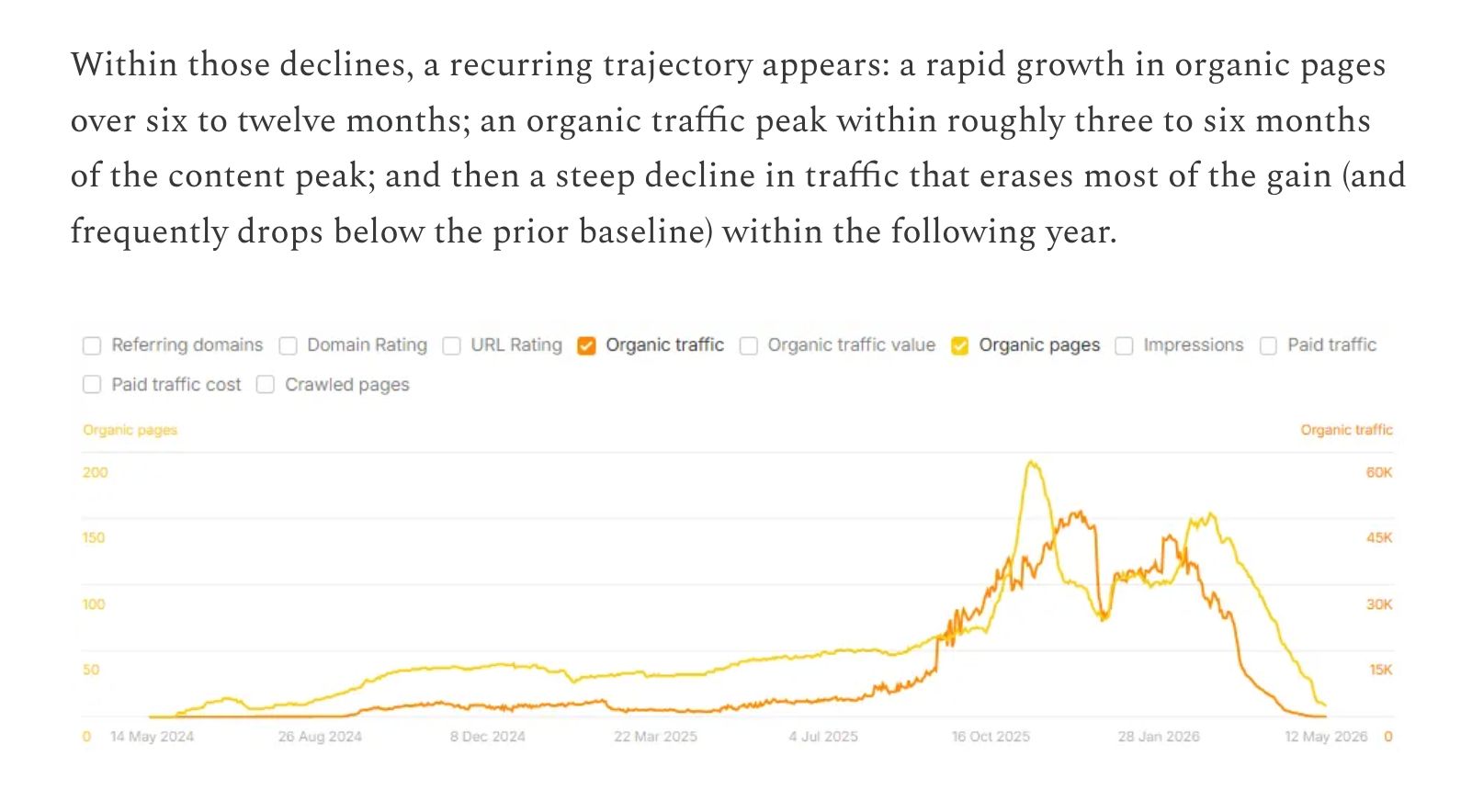
Questions persist regarding Google’s stance on AI-generated content. While Google asserts that the mere use of AI in content creation is not an issue, provided it is not primarily intended to manipulate search rankings, the practical implications remain a subject of debate. As Google stated, "Automation has long been used in publishing to create useful content. AI can assist with and generate useful content in exciting new ways." However, anecdotal evidence shared by industry experts like Lily Ray and Glenn Gabe highlights a trend of websites experiencing significant traffic surges after scaling content with AI, only to witness a subsequent sharp decline in organic performance. These instances, often referred to as "Mount AI" traffic graphs, illustrate a pattern of initial success followed by a dramatic downturn.
This has led many marketers to approach generative AI with caution, fearing potential penalties from Google. The central question then becomes: is Google penalizing websites specifically for using AI in their content, or is the AI usage merely incidental to the creation of low-quality, spammy content at scale? To address this, a comprehensive research study was conducted to investigate four key questions, aiming to illuminate the complex relationship between AI-generated content and Google’s search algorithms.
The overarching conclusion from this research suggests that Google is not inherently opposed to AI-generated content. Instead, its focus remains on the quality of the content itself. The confusion arises because AI-generated content frequently overlaps with what is considered "bad content."
Methodology
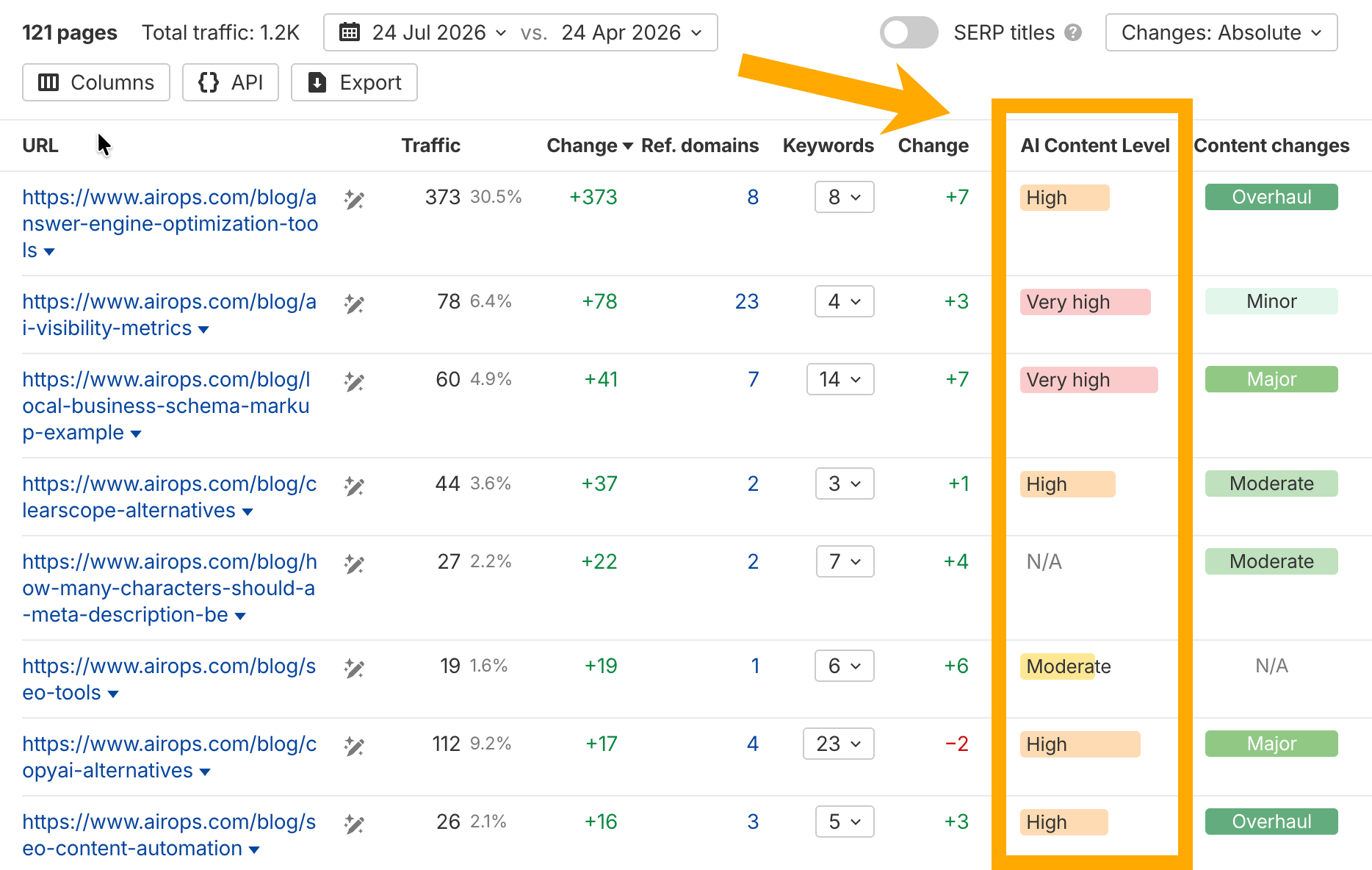
The research employed Ahrefs’ AI content detector, a tool accessible to Ahrefs customers through Site Audit and specific reports within Site Explorer. The AI content levels indicate the estimated percentage of AI-generated text on a page, categorized from low (<20%) to very high (≥80%). To ensure a reasonable level of accuracy, AI detection was only applied to pages with a minimum length of 350 words. It’s important to note that AI content detection is not infallible, and the methodology used may differ from Google’s internal processes for identifying AI-generated content. Similar to how Large Language Models (LLMs) generate text based on probability, AI detectors classify text using probabilistic models. This research prioritizes analyzing large-scale datasets and directional trends over scrutinizing individual articles and their AI content classifications.
Key Findings:
1. Are there any 100% AI-generated pages in positions 1-3?
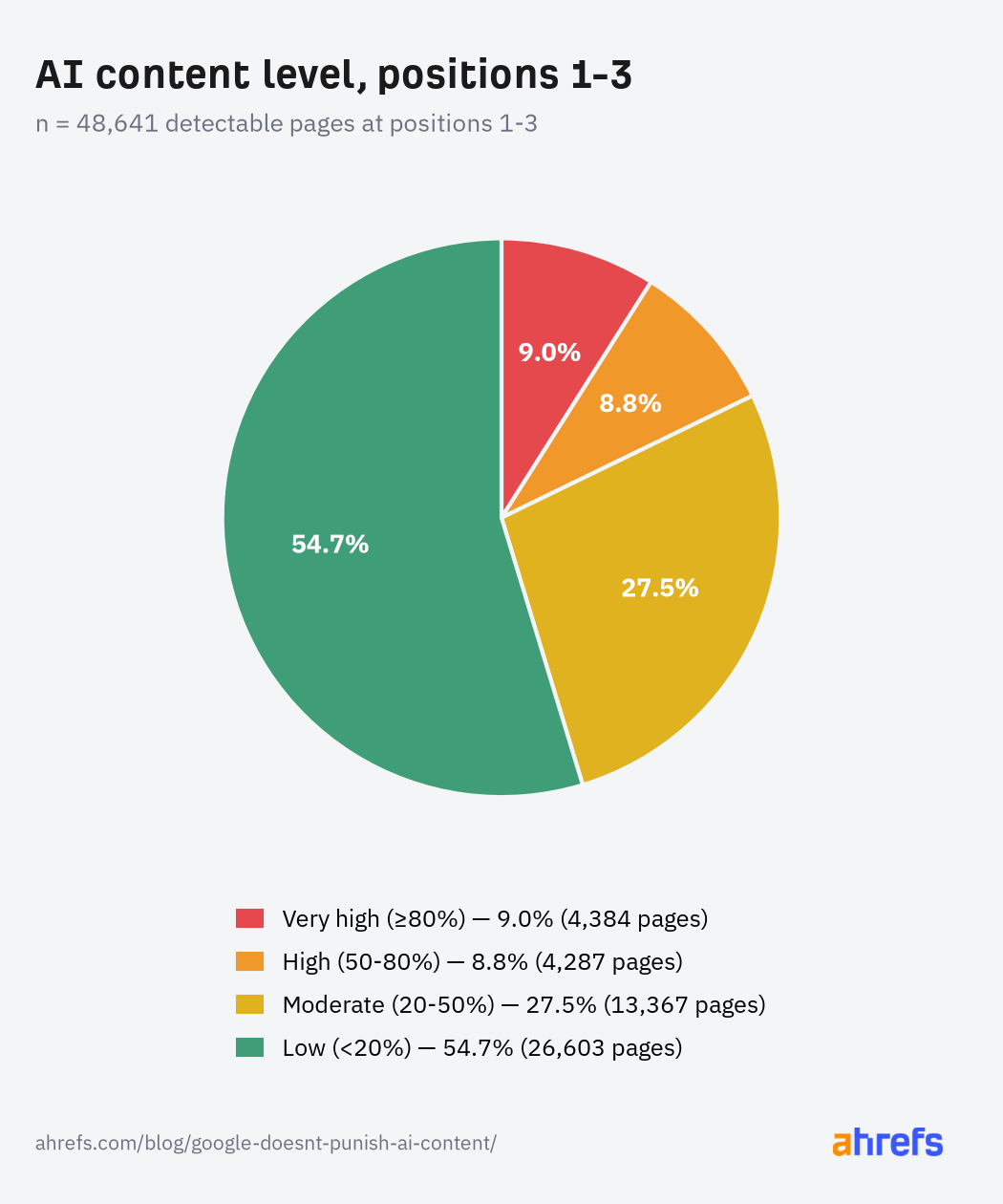
An analysis of one million pages ranking within the top 10 positions across 100,000 search engine results pages (SERPs) in June 2026 revealed that the majority of top-ranking pages are predominantly human-written. Of the approximately 300,000 pages available in the crawler database that contained sufficient content for AI detection, over half (54.7%) exhibited less than 20% AI content. Pages with under 50% AI content constituted 82.2% of top-3 rankings.
However, the data also indicates that it is possible for fully AI-generated content to achieve top rankings. While a small minority, 9% of top-ranking pages were estimated to be ≥80% AI content, and 5.3% were 100% AI-generated.
2. How common is AI-generated content in the top 10?
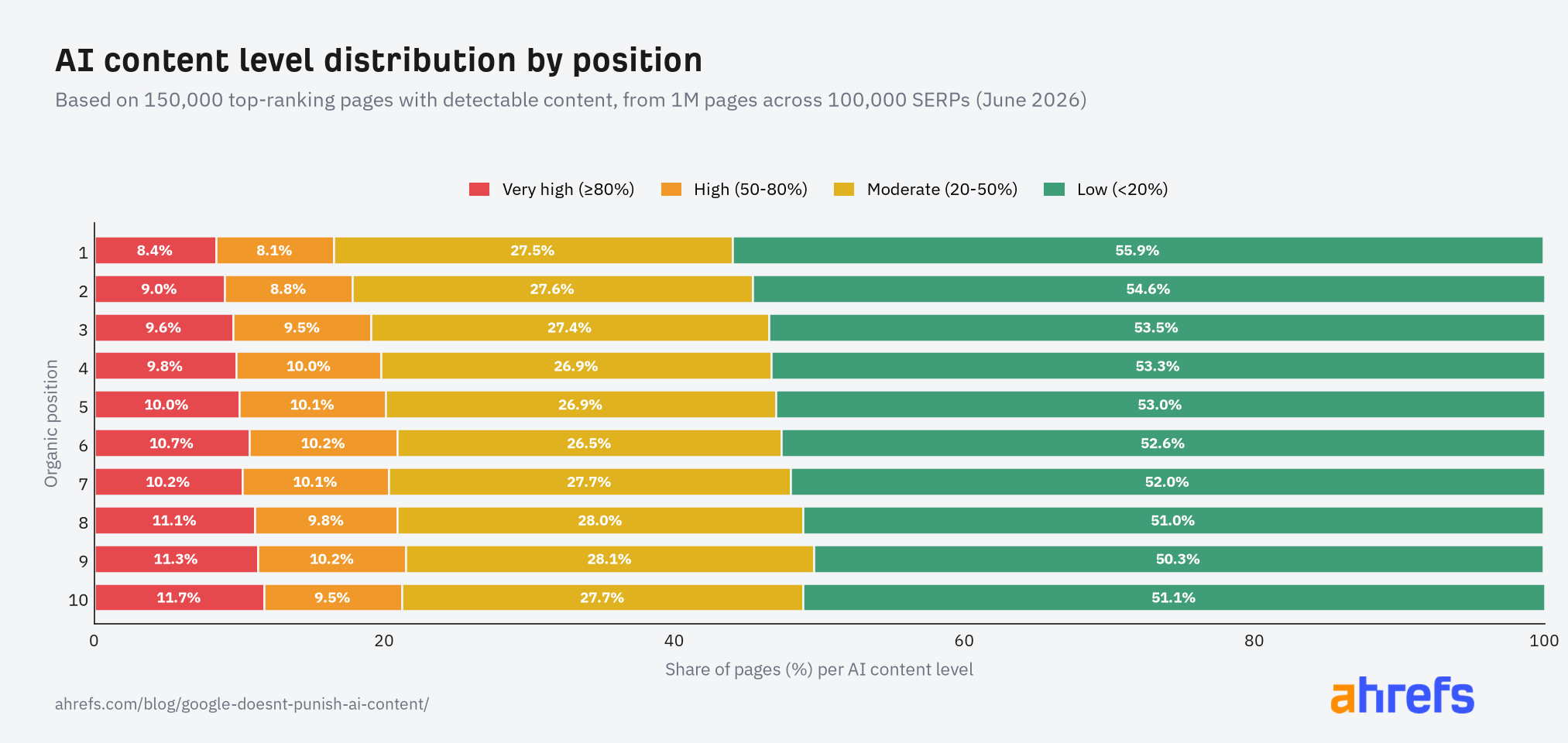
The prevalence of AI-generated content generally decreases as one moves up the SERP. Position 1 exhibits the highest proportion of pages with low AI content and the lowest proportion of pages with very high AI content. While there’s a gentle gradient, with AI content becoming progressively rarer from position 10 to position 1, heavily AI-generated pages still represent a significant portion across all ranking positions, with 8-12% of pages in the top 10 containing ≥80% AI content.
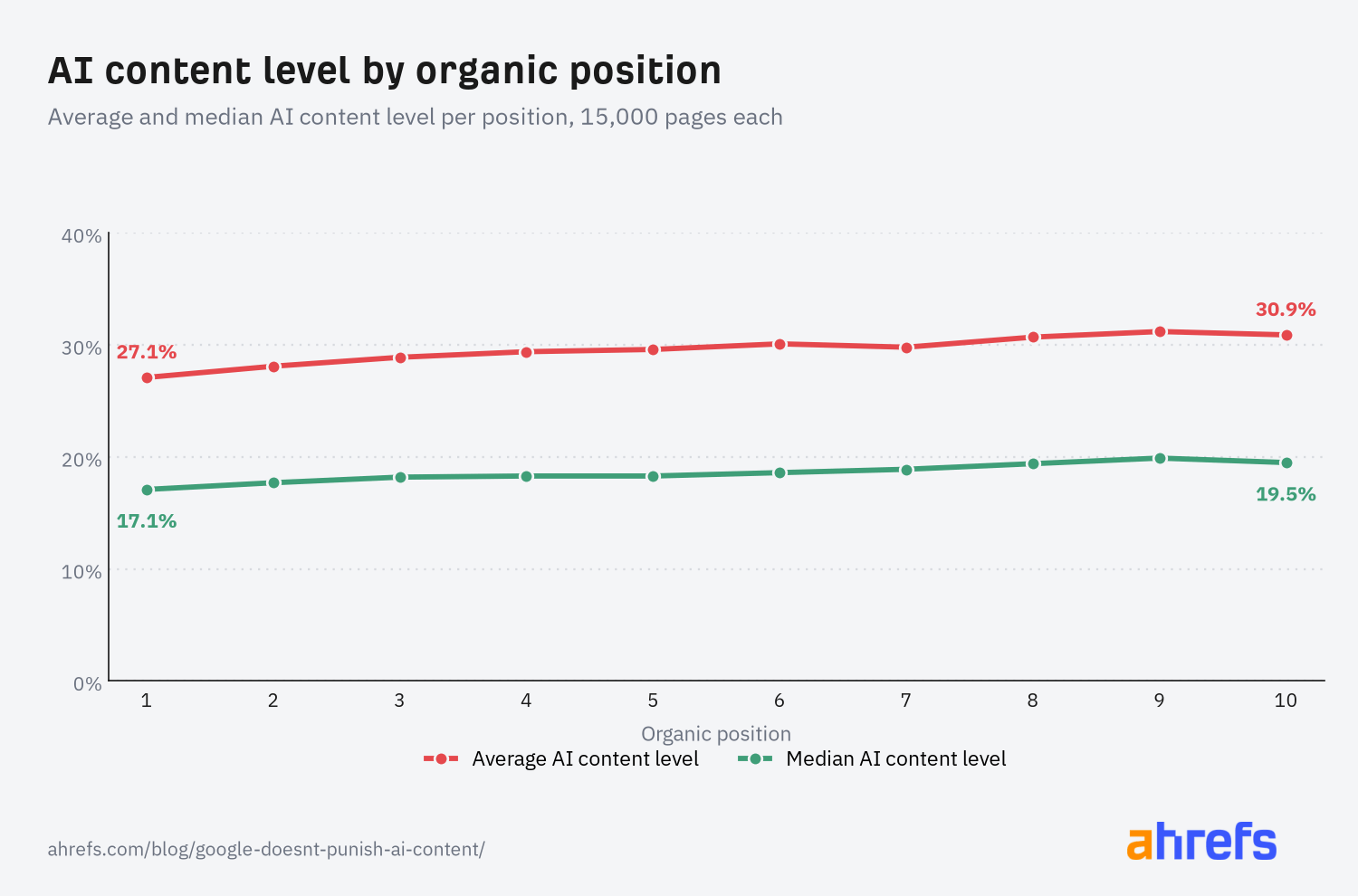
Further analysis using average and median AI content levels across 15,000 pages for each position reinforces this trend. AI content becomes more common further down the SERP, but remains present in higher positions. For instance, the average AI content level for position 1 was 27.1%, with a median of 17.1%. These figures gradually increased for lower-ranking positions.
3. Does Google index content with a very high likelihood of being AI?
While analyzing ranking pages introduces a selection bias, the study also investigated indexation rates for pages with varying AI content levels. A sample of one million pages from the crawler database (one page per domain) was analyzed, with approximately 100,000 pages meeting the content length criteria for AI detection.
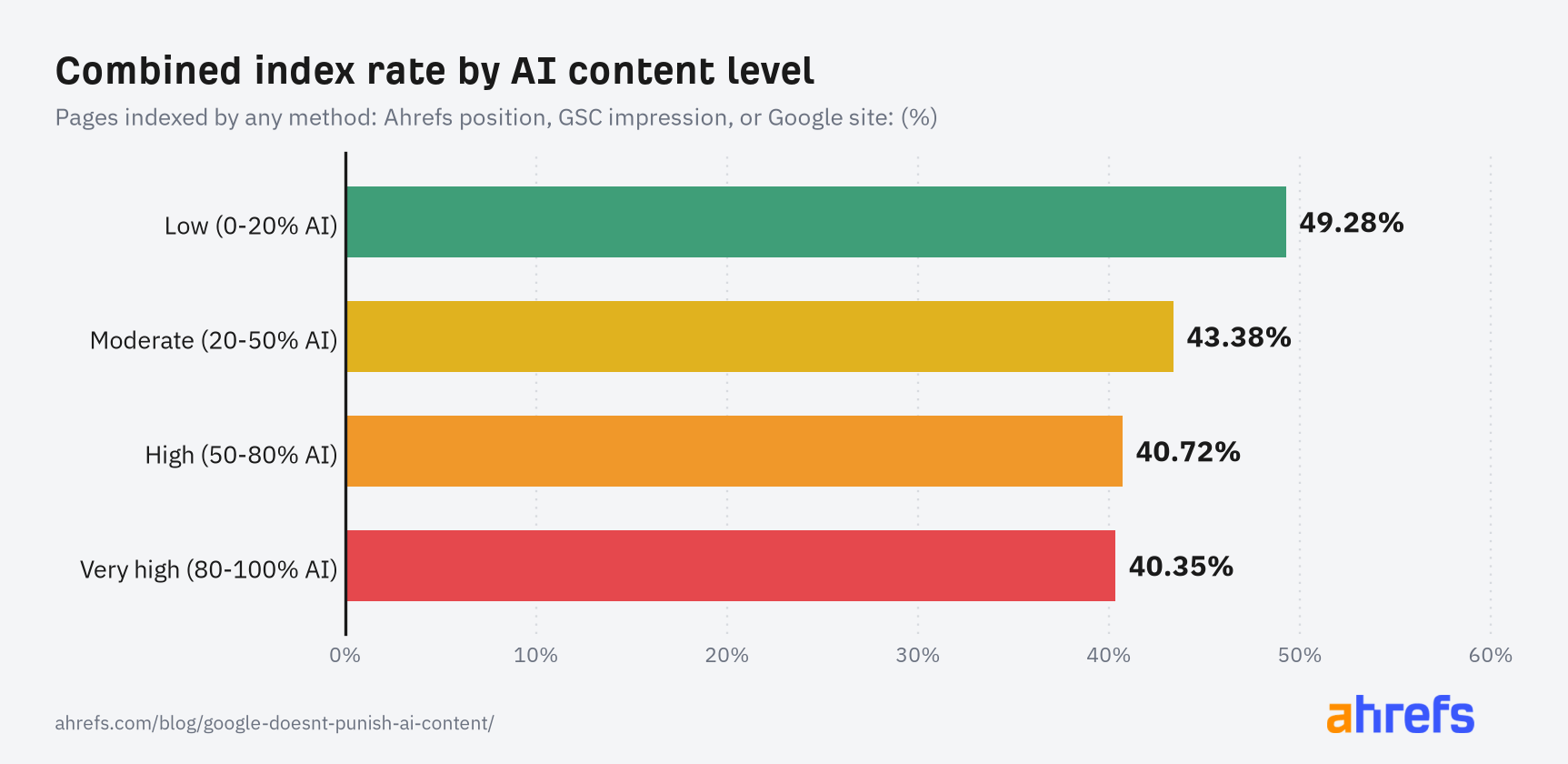
The findings indicate that higher AI content levels correlate with lower indexation rates. Pages with high or very high AI content (≥50%) had lower indexation rates compared to pages with low AI content (<20%). However, a substantial 40% of pages with high or very high AI content were still indexed, which is not significantly lower than the 49% indexation rate for low AI content pages. This suggests that Google does not automatically exclude highly AI-generated content from its index.
4. Does Google reduce traffic to AI-generated pages after 3-6 months?
The research also examined the long-term organic performance of AI-generated pages by analyzing Google Search Console data for impression trends over time. Two panels of websites were studied: one from June 2025 to January 2026, and another from January 2026 to June 2026.
While drawing definitive conclusions from this limited timeframe is challenging due to the numerous factors influencing organic performance, the data presented initial trends. The charts illustrating impression changes over time for different AI content buckets showed some variations, but the author notes that organic performance is influenced by many factors, and it would be premature to assume automatic suppression is occurring.
Author’s Perspective
The research indicates a correlation between increased AI use and decreased performance in search results—lower impressions, ranking positions, and indexation rates. However, this correlation does not necessarily imply direct causation by AI content alone. AI-generated content is present across all ranking positions, including the top spots, and a significant portion is successfully indexed. Impressions for AI-generated content have remained relatively stable over time.
There are no clear thresholds suggesting a binary AI classifier is preventing AI-generated pages from ranking or being indexed. Instead, a gradual decline in performance is observed with increasing AI usage, likely due to a corresponding decrease in content quality. Companies adopting AI content strategies often deviate from traditional content creation and SEO practices, frequently resulting in lower-quality output. This can manifest as generic content lacking depth, factual inaccuracies, poor readability, and a lack of original insights—all factors that can negatively impact organic performance.
The author posits that Google continues to rely on its established quality signals for content evaluation. The issue is not AI itself, but the common co-occurrence of AI use with lower content quality. While AI-generated content often exhibits these quality problems, they are not an inherent consequence of AI usage. It is possible to create detailed, well-researched content using AI, as demonstrated by the presence of indexed and top-ranking AI-generated pages. However, this requires a deliberate effort that many currently do not undertake.
In conclusion, marketers and SEO professionals should not fear AI content creation itself, but rather the potential pitfalls of spam and scaled, low-quality content, which are often associated with less discerning AI implementation.