 11
11
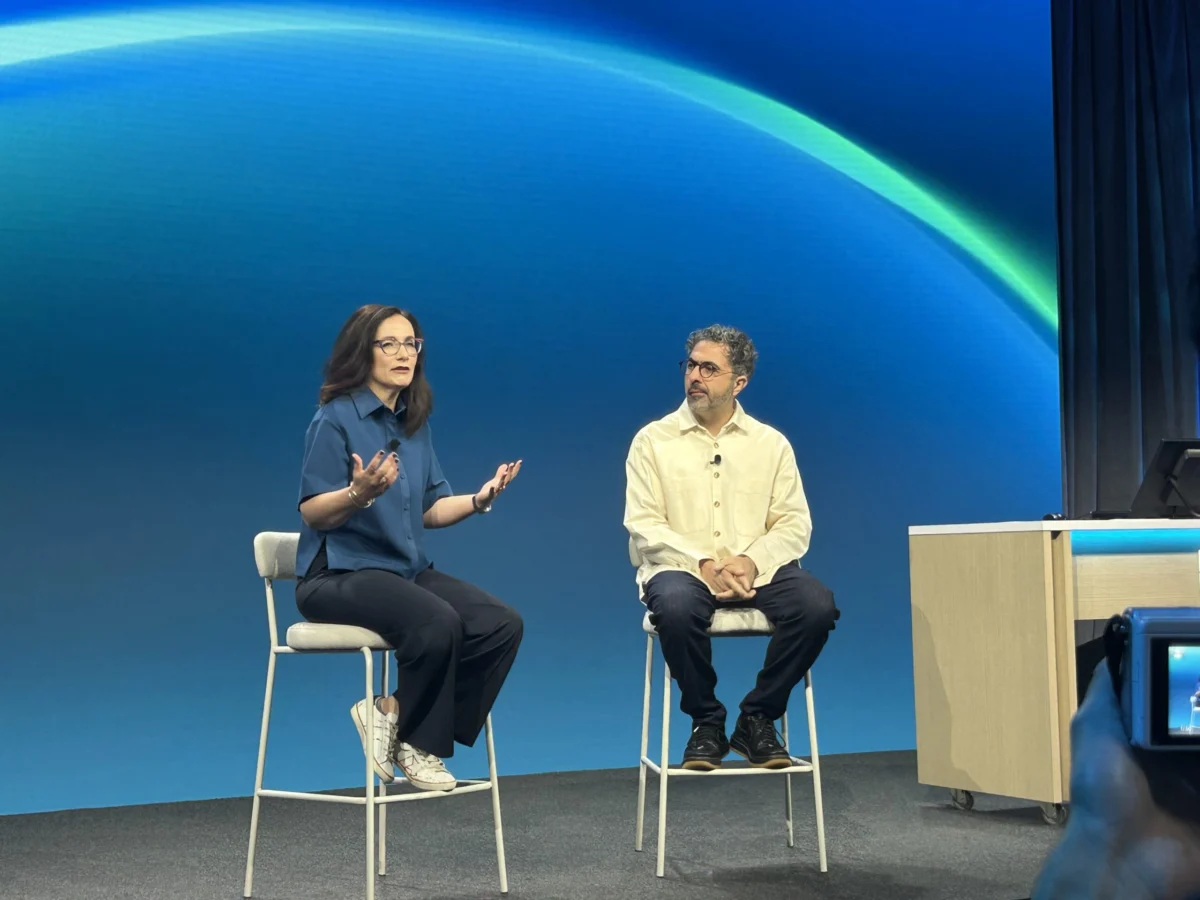
Microsoft has made a significant and strategic entry into the rapidly evolving artificial intelligence cybersecurity landscape, unveiling its inaugural cybersecurity-specialized AI model, MAI-Cyber-1-Flash, alongside a new comprehensive AI cybersecurity platform named Perception. The dual launch, announced at a concise yet impactful event in San Francisco on Monday, signals a direct and assertive challenge to prominent players in the AI domain, including Anthropic, Google, and OpenAI, as Microsoft unequivocally positions itself at the forefront of AI-driven defense mechanisms against an increasingly sophisticated threat environment.
The MAI-Cyber-1-Flash model is described by Microsoft as an advanced and highly specialized tool meticulously engineered to identify intricate and challenging vulnerabilities deeply embedded within complex software codebases. In today’s interconnected digital ecosystem, software applications often comprise millions of lines of code, making manual vulnerability detection a herculean task that is both time-consuming and prone to human error. MAI-Cyber-1-Flash aims to overcome this inherent difficulty by leveraging AI to sift through vast quantities of code, pinpointing subtle flaws that could be exploited by malicious actors. Its core function is to enhance and "animate" MDASH, Microsoft’s dedicated internal harness designed for the systematic identification and subsequent remediation of software vulnerabilities. This deep integration promises a more agile, intelligent, and automated approach to pre-empting potential security breaches at the foundational code level, offering a significant improvement over traditional methods.
Microsoft asserts that MAI-Cyber-1-Flash offers demonstrably superior performance and greater cost-effectiveness compared to existing competitor models. These compelling claims are substantiated by its exceptional results on an established AI cybersecurity benchmark. The model’s efficiency not only translates into faster vulnerability discovery but also into reduced operational expenditures for security teams, as it automates tasks that previously required extensive manual effort from highly skilled engineers. This blend of enhanced capability and economic efficiency is poised to be a game-changer for enterprises grappling with escalating security costs and a shortage of cybersecurity talent.
Mustafa Suleyman, the co-founder of DeepMind and current CEO of Microsoft AI, expressed considerable enthusiasm regarding the model’s capabilities and its competitive edge. "We’re very very excited to announce our results," Suleyman stated, highlighting the strategic combination of technologies that yielded these impressive outcomes. He elaborated, "We have MAI-1 Cyber Flash binded [sic] with GPT 5.4 inside of the MDASH harness — which beats out Gemini, GPT 5.5 Cyber, GPT 5.6 Sol, and Mythos 5 on Cyber Gym, which is the primary benchmark that we all use. The golden benchmark." This bold declaration, directly naming rival models from Google (Gemini), OpenAI (GPT series), and Anthropic (Mythos), underscores Microsoft’s ambition not just to compete, but to decisively outperform its peers in the crucial domain of AI-driven cybersecurity. The "Cyber Gym" benchmark, recognized as a standard within the industry, serves as a critical validation of MAI-Cyber-1-Flash’s advanced capabilities in real-world simulated environments.
Suleyman further emphasized the immediate and practical impact of this innovation, confirming, "We’re shipping this into production immediately." This commitment signifies Microsoft’s unwavering confidence in the model’s readiness and its potential to deliver immediate and tangible value to enterprise security operations worldwide. The strategic integration with MDASH ensures that the advanced detection capabilities of MAI-Cyber-1-Flash are directly channeled into Microsoft’s established vulnerability management processes, accelerating the discovery, analysis, and ultimate resolution of critical security flaws before they can be exploited.
Complementing the new model is Perception, Microsoft’s innovative security platform engineered to revolutionize enterprise defense strategies. Perception’s design centers on deploying "teams of agents" – autonomous AI entities – to assist with and automate a wide array of security workflows. These workflows span the entire lifecycle of vulnerability management, from initial identification and threat intelligence gathering to comprehensive remediation and continuous monitoring. Like MAI-Cyber-1-Flash, Perception is also designed for seamless integration with MDASH, creating a synergistic and highly efficient ecosystem for advanced, end-to-end cybersecurity management. This integrated approach ensures that the insights gleaned by the AI model are immediately actionable within the broader security framework.
The imperative for such a sophisticated platform is amplified by the rapidly evolving and increasingly perilous threat landscape. Hayete Gallot, Microsoft’s vice president for security, pointed out the escalating sophistication of cyberattacks, which are now frequently leveraging artificial intelligence to launch more targeted, evasive, and scalable assaults. Malicious actors are utilizing AI for everything from generating highly personalized phishing emails to developing polymorphic malware that can constantly change its signature to evade detection. Gallot articulated Perception’s strategic role as a crucial countermeasure: "defend against AI with AI at the scale and speed that the attackers have." This statement powerfully encapsulates Microsoft’s vision for an adaptive, proactive, and AI-powered defense capable of matching, and ideally surpassing, the escalating pace and complexity of modern cyber threats. It’s an acknowledgment that human-centric defenses, while essential, must be augmented by AI to keep pace with AI-driven offenses.
Perception’s innovative architecture is built upon the concept of three distinct types of agentic teams, each with specialized roles, designed to provide a holistic and continuous security posture:
Dave Weston, the lead engineer for Perception, underscored the platform’s transformative impact on operational efficiency for corporate defenders, emphasizing a paradigm shift from reactive, manual processes to proactive, automated security. He highlighted the dramatic reduction in time and resources required for critical security tasks. "We’ve gone from this taking hours and hours of manual work from multiple specialized folks across the security organization — appsec hunters, remediation engineers, you name it — and in minutes, we have a fix for all of this," Weston explained. He further detailed the comprehensive nature of Perception’s end-to-end capabilities: "Not only do we discover the issues and prioritize them, but we have detection, posture fixing, and even a code fix." This level of automation promises to free up highly skilled human security experts from repetitive, time-consuming tasks, allowing them to focus on more strategic initiatives, complex threat intelligence analysis, and bespoke incident response, while routine yet critical tasks are handled with unprecedented speed, accuracy, and consistency by AI agents.
The emergence of advanced AI has fundamentally reshaped the cybersecurity landscape, creating both unprecedented opportunities and formidable challenges. While AI offers powerful new defensive capabilities, its increasing accessibility to cybercriminals has simultaneously given rise to a "dazzling array of potential threats," as malicious actors leverage AI to craft more sophisticated and potent attacks. These include hyper-realistic deepfake phishing attempts, autonomous malware development, and intelligent reconnaissance systems that can map vulnerabilities with alarming efficiency. This escalating "AI arms race" necessitates equally advanced and agile countermeasures, a critical need that Microsoft aims to comprehensively address with its latest offerings.
Microsoft’s new security tools, slated for public preview on November 3, are poised to enter an increasingly crowded and competitive market. The field of AI cybersecurity solutions is rapidly expanding, with major tech companies and specialized startups alike recognizing the critical need for AI-powered defense mechanisms. Earlier this year, Anthropic, another prominent AI research company and a direct competitor, launched its own security platform known as Mythos. Mythos was initially rolled out to a select group of partner organizations through a specialized initiative called Glasswing, indicating a similar strategic focus on leveraging AI for robust security applications. OpenAI, a key player in general AI development and a Microsoft partner in other areas, has also ventured into the cybersecurity domain. In May, the company unveiled its own security solution, introduced through a dedicated program named Daybreak. These parallel developments across the industry underscore a clear consensus: AI is not just a tool for innovation but an indispensable component of future cybersecurity strategies.
Microsoft’s dual launch with MAI-Cyber-1-Flash and the Perception platform positions the company not merely as a participant but as a determined challenger aiming for definitive leadership in this vital sector. By