11

Generative AI tools such as ChatGPT, Claude, and Letaido have experienced significant advancements over the past year, transforming previously automatable marketing tasks. These tools now enable marketers to streamline complex processes without requiring extensive technical expertise. This comprehensive guide details 37 practical AI applications across various marketing disciplines, from SEO to international marketing, all demonstrated by marketers who have successfully implemented them.
All the workflows described can be built using Letaido, an AI marketing agent from Ahrefs. Ahrefs customers can try Letaido for free for one month.
SEO
SEO often involves tedious tasks like analyzing crawl exports, managing Search Console data, and complex spreadsheet manipulations. AI excels at automating these repetitive yet intricate processes. However, it’s crucial to note that no AI tool can replace fundamental SEO knowledge; they remain dependent on user judgment.
Google Quality Rater Page Evaluation: Dan Hinckley of Go Fish Digital has developed an AI agent that assesses web pages against Google’s quality rater guidelines. The agent reviews Google’s extensive rater handbook, converts it into a checklist, searches for a given keyword, analyzes top-ranking pages, and then evaluates the user’s page, providing a detailed report on guideline adherence and areas for improvement. It even records a video of the process. This allows for a quick, expert-like verdict on page quality, applicable to both one’s own content and competitor pages.
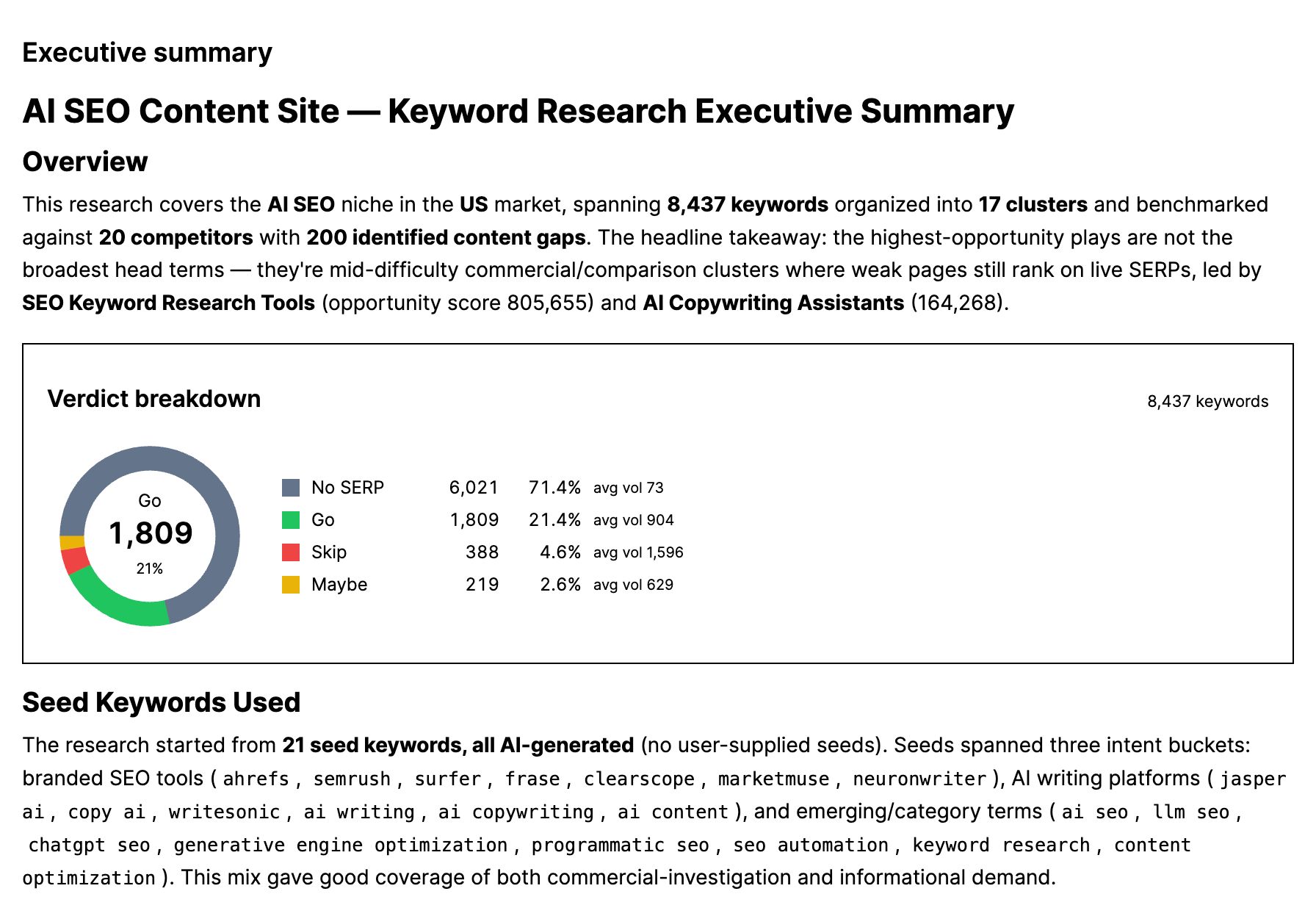
Accelerated Keyword Research: Sam, VP Marketing at Ahrefs, created an AI-powered keyword research tool within Letaido. By inputting a niche like "coffee," the AI generates a comprehensive plan. It identifies seed keywords, retrieves search volume from Keywords Explorer, analyzes SERPs for intent and difficulty, and determines the prevalence of different page types (e.g., videos, Reddit threads) in the top results. Keywords are then graded as "Go," "Maybe," or "Skip," clustered into topics, and mapped with competitor gaps and hub-and-spoke structures. One run graded 8,437 keywords into 17 clusters, marking 1,809 as "Go."
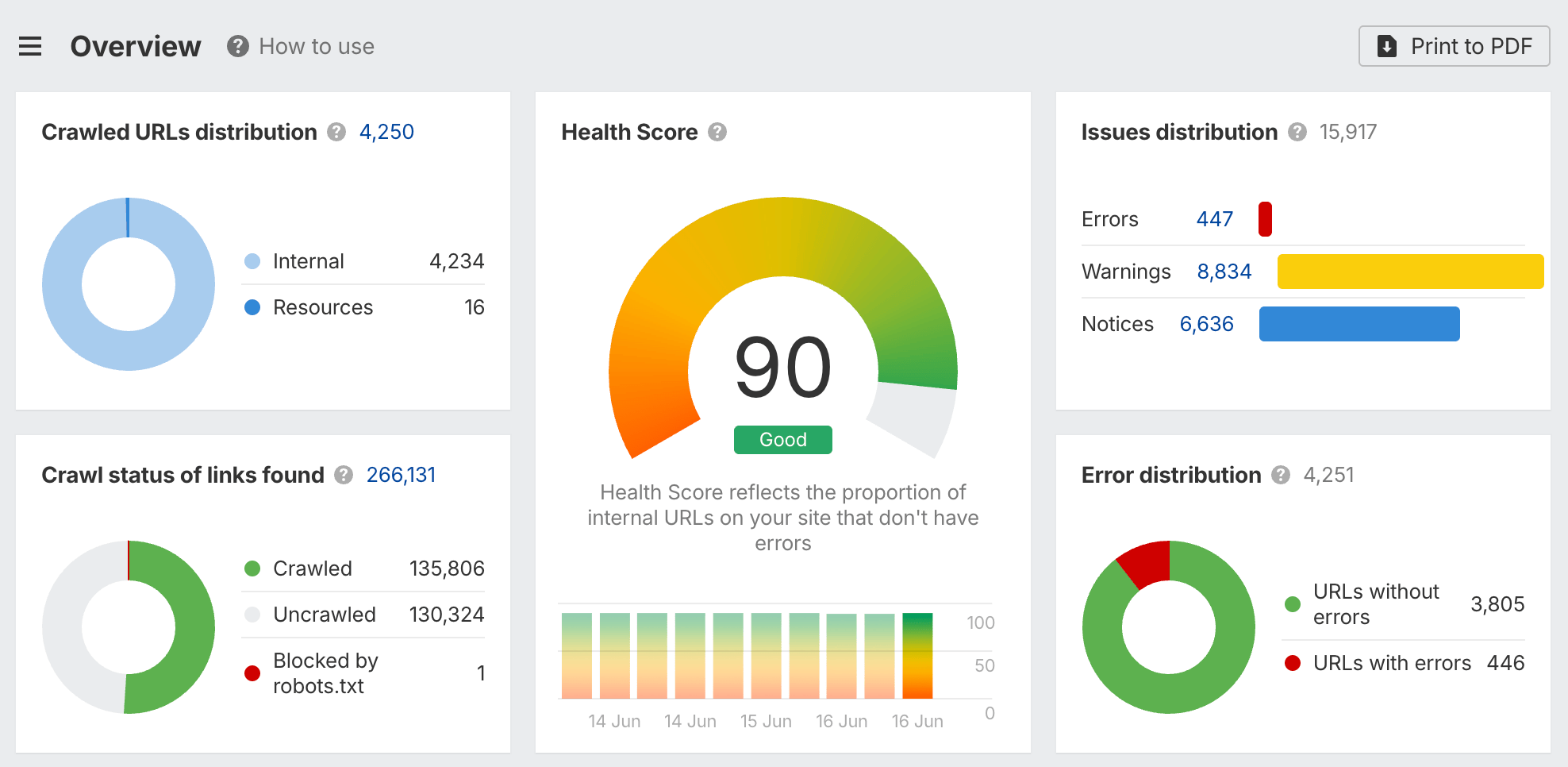
Developer-Actionable Site Audit Reports: Ahrefs integrated generative AI to connect its Site Audit tool directly to GitHub, automating the technical health analysis of websites. A weekly job pulls the latest Site Audit data, prioritizes issues by severity, and creates pull requests for high-severity problems like indexability errors or broken links. Each pull request includes a checklist and audit data, streamlining the developer’s workflow by presenting actionable insights directly.
Traffic Boost from AI-Generated FAQs: Steven Macdonald conducted an experiment where he used ChatGPT to generate FAQs for 21 existing blog posts. By identifying lingering questions after an article, writing answers, and appending them as an FAQ section, he observed an average 32% traffic increase across the updated posts, resulting in approximately 16,000 additional visits and 3,500 more keyword rankings. The control group experienced a 4% decline, validating the AI-assisted updates.
Internal Linking Engine Without Coding Expertise: The author developed a tool that suggests internal links for blog articles by leveraging AI’s ability to understand semantic relationships. The AI reads all blog articles, converts them into numerical representations (vector embeddings) that capture their meaning, and then compares a given article against the entire corpus to identify semantically related pages. This process identifies pages about the same subject rather than just those sharing keywords, addressing the challenge of maintaining comprehensive internal linking across a large content base. Ahrefs’ Site Audit offers a similar feature in its "Internal link opportunities" report, providing specific text passages for link placement.
Automated Internal Link Implementation: John Iwuozor created a Python script that not only identifies relevant internal links but also automatically inserts them into the target page’s HTML. The script reads the article, finds the most semantically relevant page, identifies a suitable phrase for anchor text, and embeds the link directly into the HTML, automating the often-time-consuming process of editing pages for internal linking.
Prioritized SEO Plans from Search Console Data: Rudiger Dalchow developed a tool that analyzes Search Console exports to generate actionable plans for content creation. By processing query and page data, the tool groups pages by topic, determines user intent, identifies competing internal pages, and generates briefs for writers. This moves beyond simple reporting to provide structural insights and strategic content recommendations. Ahrefs’ Site Explorer "Opportunities" report offers similar functionality, highlighting keywords for improvement, featured snippets, cannibalizing pages, and technical fixes.
AI Search Optimization
Ensuring a business appears in AI search results is a growing challenge. While complex concepts like "fan-out queries" and "retrieval-augmented generation" exist, many effective strategies are rooted in familiar SEO principles. AI assists in processing the vast amounts of data required to understand how AI models interact with web content.
LLM Perspective on Web Pages: Aimee Jurenka built a tool that captures a page’s raw HTML and rendered screenshot, then uses GPT to analyze how a language model "reads" the page. It provides a score and feedback on content clarity, citation value, and JavaScript-dependent content, identifying pages that might appear empty to crawlers without JavaScript execution.
Mapping Fan-Out Queries: Chris Long’s script analyzes AI assistant queries, breaking them down into narrower constituent questions. It then scores existing website pages against these sub-questions, identifying content gaps. This provides a more actionable understanding of what AI assistants are asking for compared to traditional keyword lists.

Rewriting Pages for AI Queries: Wil Reynolds uses Bing’s webmaster tools to identify pages cited in AI answers and the exact questions that led to those citations. He then rewrites the pages to directly address these specific questions, transforming content optimization from a guesswork process into a data-driven comparison.
AI-Driven Web Page Template Design: Adina Timar, AEO at Weflow, redesigned her listicle and comparison page templates based on AI citation data rather than traditional assumptions. By tracking which pages are quoted by various AI models for specific prompts, she identified how AI structures answers and which page elements are most utilized, creating templates optimized for AI citation. She emphasizes that pages with genuine insights and competitive analysis perform best.
Content Prioritization Based on AI Citations: Ross Hudgens’ team at Siege Media identifies content to write for AI visibility by tracking prompts that lead to sales. They then analyze which pages are most frequently cited by AI across relevant answers. This list, ranked by citation frequency and cross-referenced with ordinary Google demand, prioritizes content creation for topics that are both AI-visible and have significant search volume.
Content Marketing
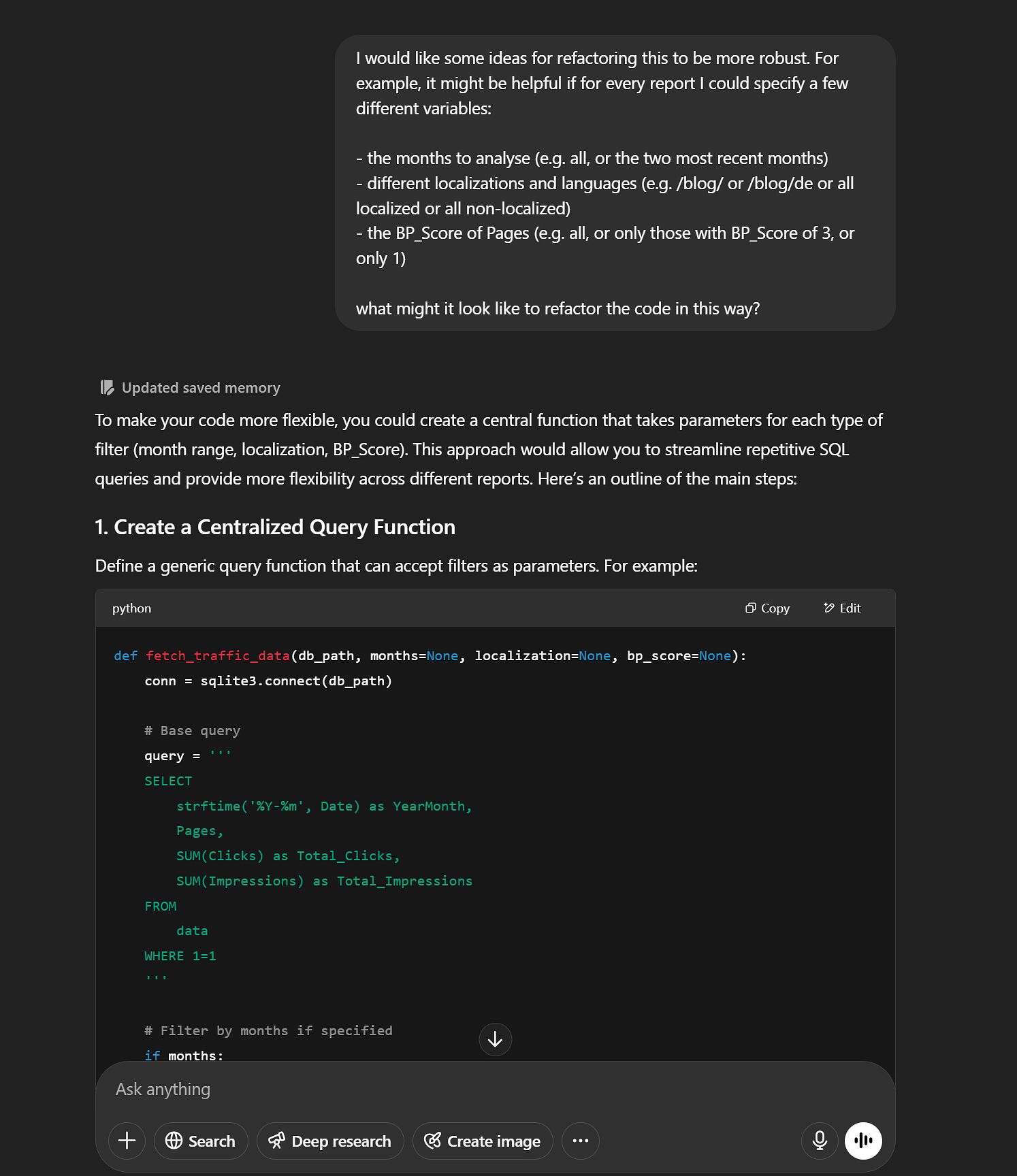
AI-generated blog posts often lack personality, originality, and essential elements like internal links and images. However, AI can significantly assist in various stages of the content marketing process, including research, briefing, outlining, editing, fact-checking, and formatting.
Accelerated Draft to Publication: The author developed a process that reduces content creation time from days to approximately two hours by breaking down the editorial process into discrete, manageable steps. Each step, from topic selection to final formatting, is guided by AI within a structured ChatGPT project, with human oversight at each stage. This multi-step approach ensures higher quality output compared to a single prompt for a complete article.
Empowering Content Creators to Build Web Pages: Kelsey Libert spent a month learning Cursor, a code editor with integrated AI, to build 30 landing pages for her company’s agent products. By describing desired page elements in plain language, Cursor generated the code. This enabled her, without a development background, to create and launch landing pages efficiently, bypassing traditional development bottlenecks.
Data-Driven Research Without Engineering Expertise: Mateusz from Ahrefs’ content team used AI to write code for a study investigating the correlation between organic traffic and stock prices. The AI pulled data from Ahrefs and Polygon APIs, merged datasets, and performed initial analysis. While a data scientist refined the analysis, AI enabled the project to overcome the initial data acquisition and processing hurdle, a common barrier for original research.
Eliminating AI’s Generic Voice: Myriam Jessier employs a "system prompt" called "Absolute Mode" to strip extraneous elements like emoji, filler, and conversational warm-ups from ChatGPT’s responses. This instruction, pasted into custom instructions, ensures AI output is concise and direct, allowing for easier evaluation of the underlying ideas.
Idea Visualization with AI: Wil Reynolds records himself explaining a concept, transcribes the audio, and uses an LLM to extract a story arc. Tools like NotebookLM and Gamma then transform this structure into presentation decks, providing a rough outline that significantly speeds up the slide creation process.
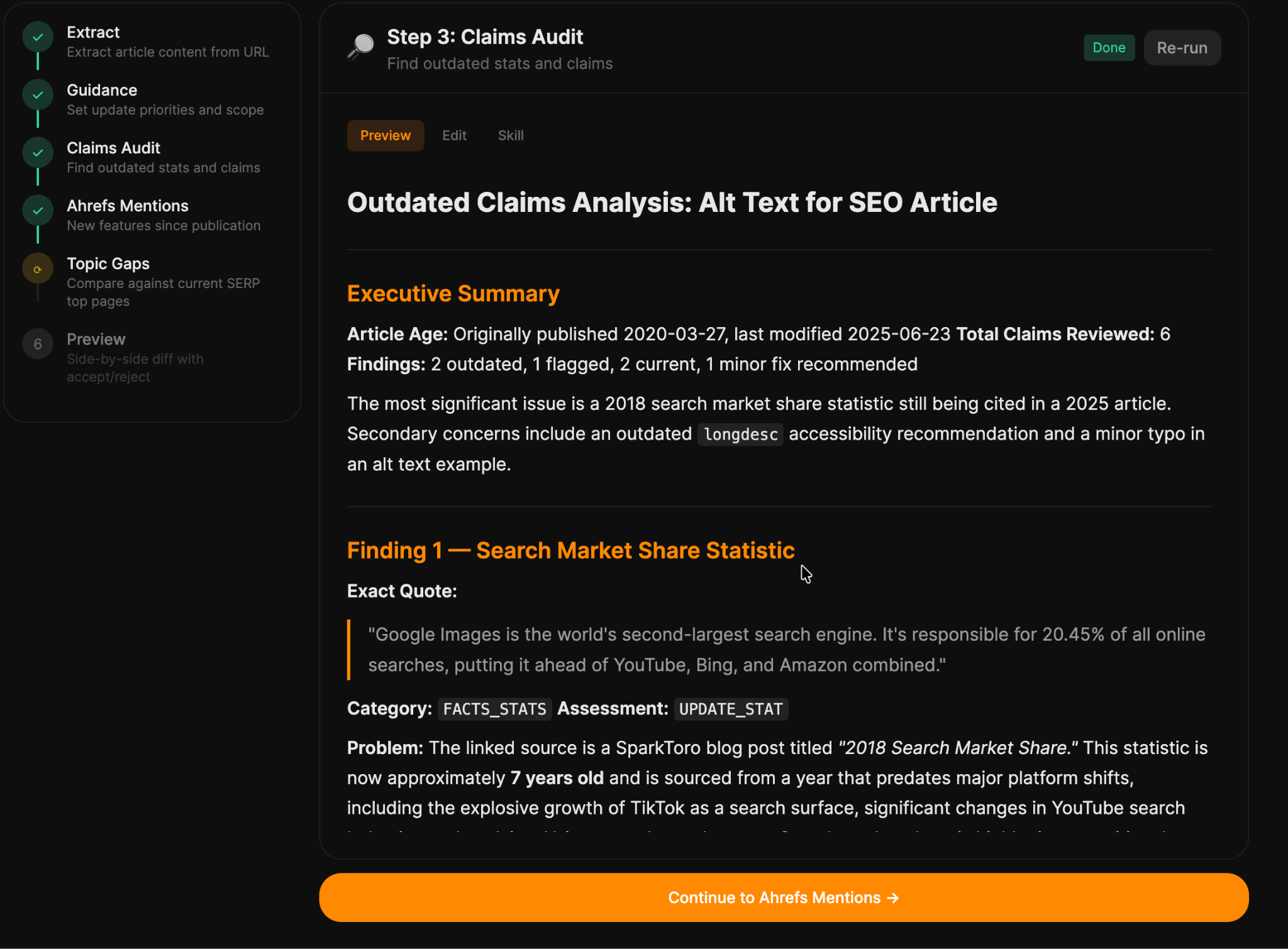
Managing a Large Content Refresh Backlog: Ahrefs utilizes an "Update Pipeline" tool to manage the refresh of its approximately thousand blog posts. The AI identifies stale statistics, outdated product information, and content gaps by comparing articles to current top-ranking content. It then presents side-by-side comparisons of old and new versions, allowing for one-by-one review and approval of changes, making the substantial refresh task manageable. AI assistants are noted to cite fresher content more frequently, underscoring the importance of updates.
Discovering Unique Statistics: An AI tool can be used to search for statistics within PDFs, Word documents, and PowerPoint decks, rather than just web pages. This uncovers statistics that competitors may have missed, providing original data points that can earn links.
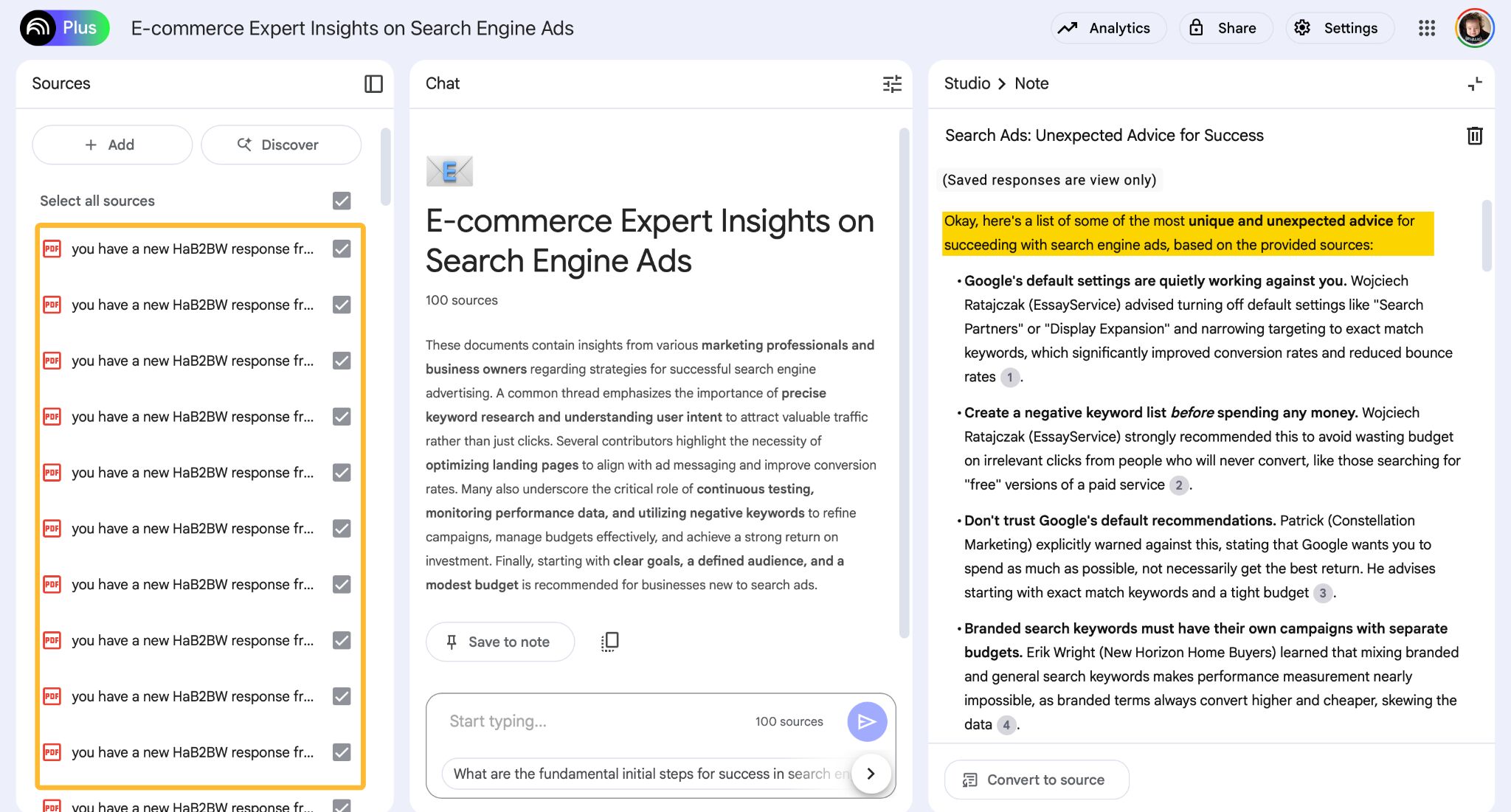
Efficiently Querying Expert Quotes: Mateusz Makosiewicz uses NotebookLM to manage piles of expert quotes gathered for articles. By uploading email notifications as PDFs, he can query the entire set of quotes in plain language, identifying specific insights and their sources without manually opening each document. NotebookLM’s capacity to handle large text volumes and ground answers in source documents makes it more effective than general chat tools for this task.
Repurposing Webinars into Multiple Content Assets: An AI workflow transforms webinar recordings into three blog outlines, a guide to key clips, and social media briefs. A second stage expands outlines into draft articles, and subsequent stages analyze sales calls to identify customer pain points, objections, and quotes, creating a valuable database of customer insights that can inform content strategy.
Marketing Analytics
Reporting is one of the most automatable marketing tasks. AI can handle data extraction, integration, and table generation, ensuring consistency and reducing errors. However, the interpretation of the data remains a human-driven process.
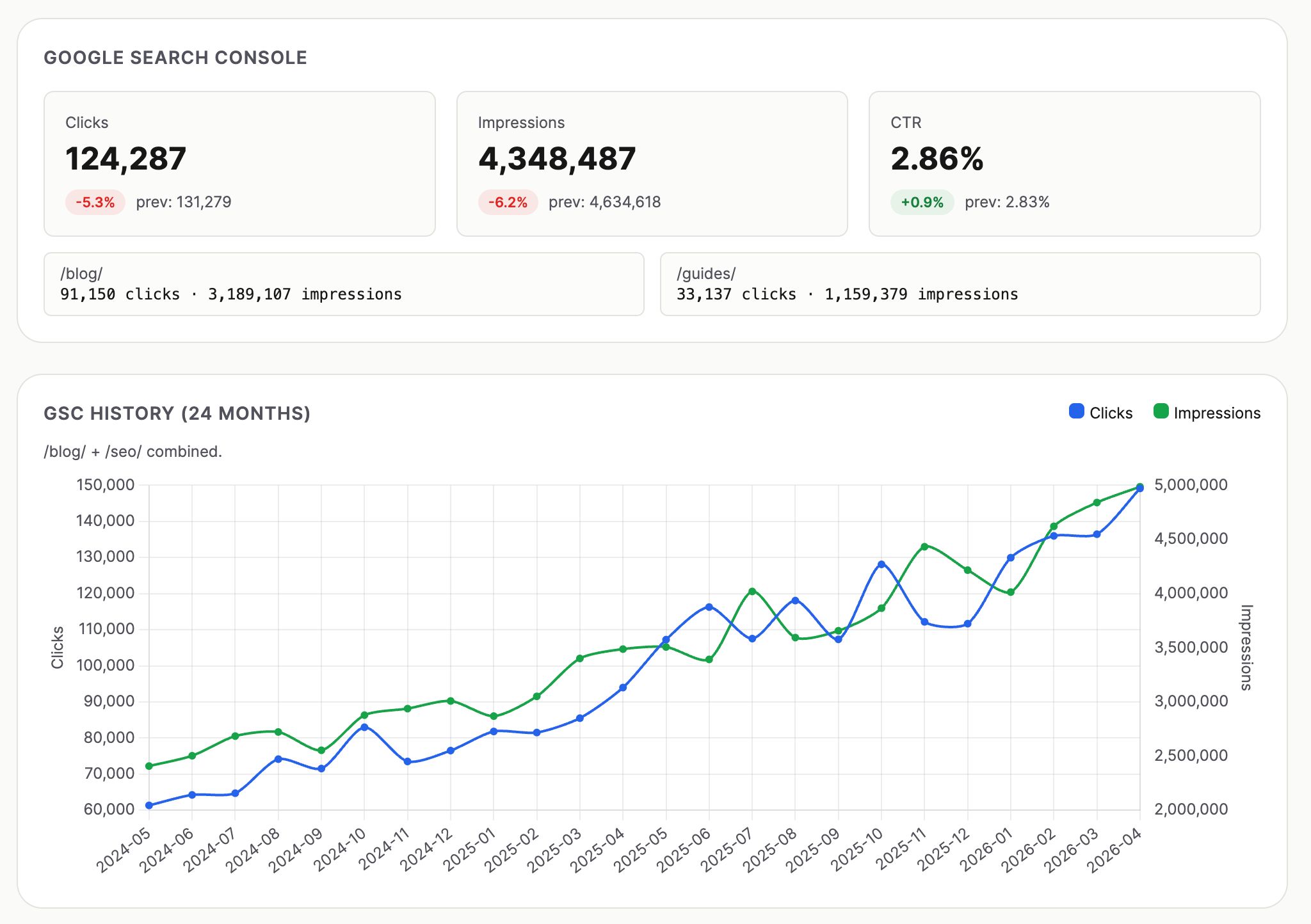
Automated Monthly Reporting: Letaido generates Ahrefs’ monthly blog performance report, pulling data from Google Search Console and Ahrefs Web Analytics. The automated report includes KPI tiles, trend charts, subfolder splits, and winner/loser tables, along with draft analysis bullets for commentary. This process, previously a full day’s work, now runs automatically.
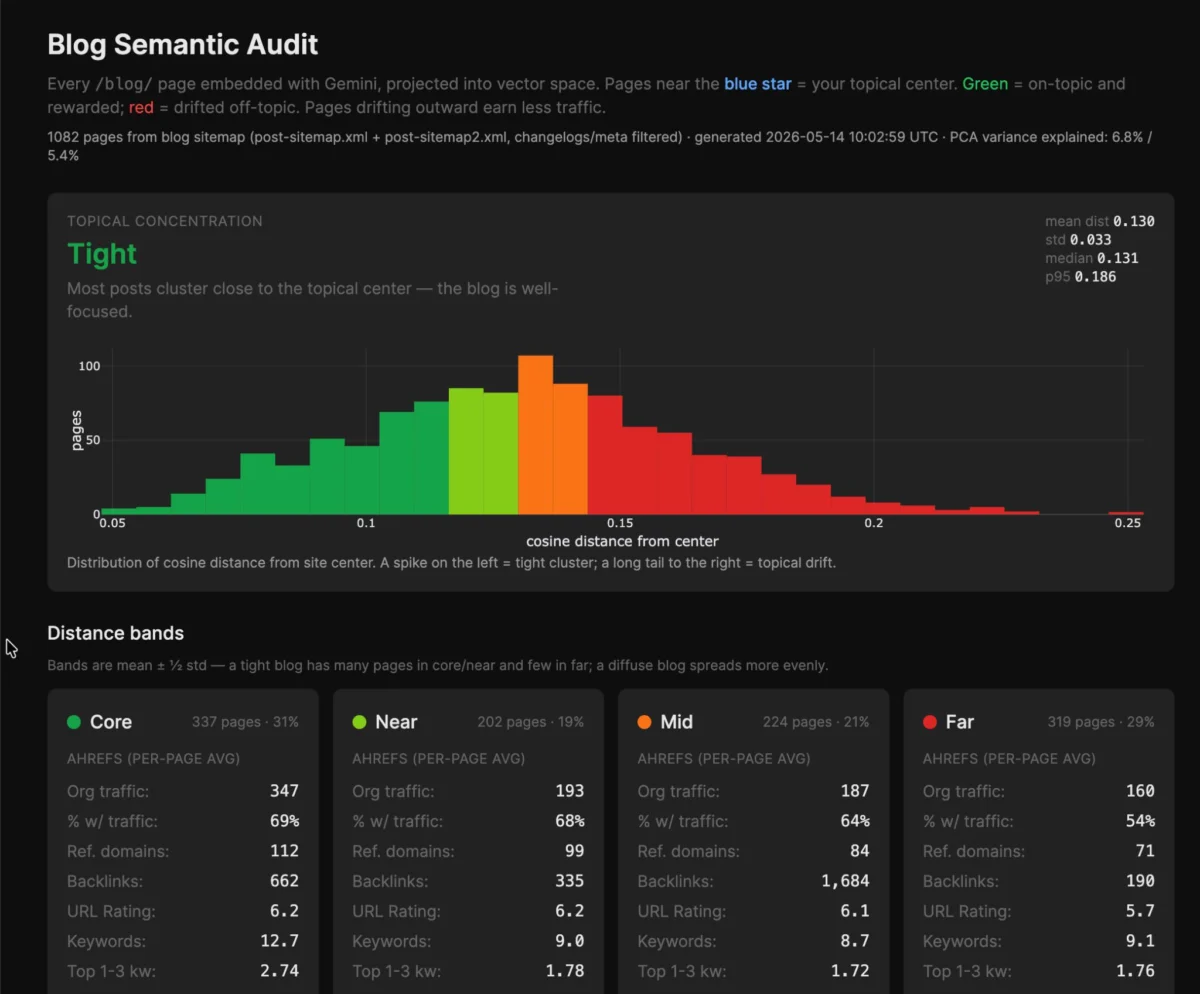
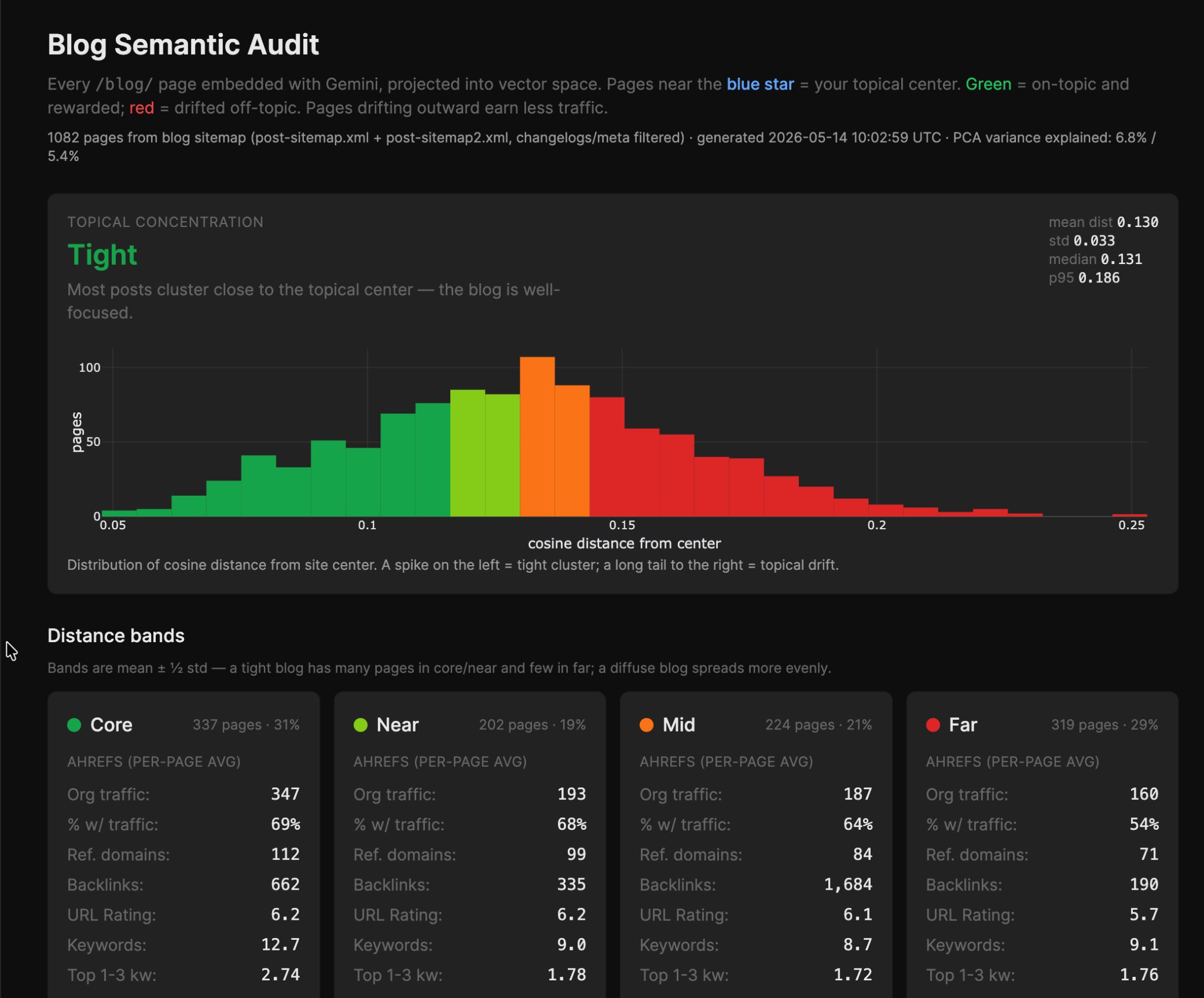
On-Topic Content Verification: A semantic audit of the Ahrefs blog used AI to convert articles into vector embeddings, creating a central representation of the blog’s core topics. By measuring the distance of each article from this center, the tool categorized content as core or tangential, revealing that core topic pages receive significantly more organic traffic.
Integrated Crawl, Analytics, and Search Console Audits: An AI assistant, fed data from Screaming Frog, Google Analytics, and Search Console via Zapier, analyzes crawl data, user behavior, and search performance simultaneously. This allows for the identification of pages losing traffic, answering incorrect queries, or no longer aligning with the site’s overall theme, revealing issues not apparent in single-source reports. Letaido offers a similar integrated solution without the need for complex plumbing.
Social Media and Community
Social media presents challenges in monitoring brand mentions across numerous platforms and generating consistent posting schedules. AI can assist in identifying relevant conversations and drafting posts, but human judgment is crucial for authentic engagement and avoiding reputational damage.
Identifying Relevant Reddit Conversations: The lemlist team used AI to sift through Reddit’s vast content to find relevant discussions where their brand or expertise could add value. AI identified threads, and a human team member then engaged authentically, leading to a 22% increase in Reddit traffic and a 20% higher sign-up rate from these visitors. AI helped identify opportunities, but human interaction was key to success.
Understanding Customer Language: Britney Muller’s method involves using a platform’s API to collect discussions mentioning a brand or subject, then employing AI to extract recurring complaints, questions, comparisons, and the exact language customers use. This provides authentic customer insights that can inform landing pages and content strategy.
Personalized Social Media Drafts: Letaido generates five distinct social media post drafts for each published article, based on the author’s voice and performance metrics from previous posts. These drafts offer various angles, such as leading with a surprising statistic or posing a question, simplifying the process from content creation to scheduling via Ahrefs’ Social Media Manager.
PR and Outreach
Effective PR and outreach depend on timely and relevant pitches. AI can monitor news feeds for opportunities and draft outreach messages, but human judgment is essential to ensure pitches are welcome and personalized.
Monitoring News for PR Opportunities: Mark Williams-Cook developed a Python script using a local LLM to screen thousands of daily news stories from RSS feeds against client interest profiles. Qualified leads are sent to Slack, enabling digital PR teams to act quickly on relevant opportunities without per-call API costs.
Rapid Follow-Up Emails from Transcripts: Andy Chadwick uses a ChatGPT workflow trained on his tone, product details, and common objections to draft follow-up emails from sales call transcripts in under five minutes. This has reduced composition time significantly and reportedly led to a 90% close rate on high-ticket follow-ups.
AI-Powered Cold Outreach Campaigns: Sam Oh built an AI outreach campaign managed via Slack, featuring agents for prospect research, data analysis, and email drafting. The system, trained on his preferences, generates personalized email drafts that read as if written by a human, significantly improving efficiency and conversion rates for booked meetings. Letaido offers similar native functionality.
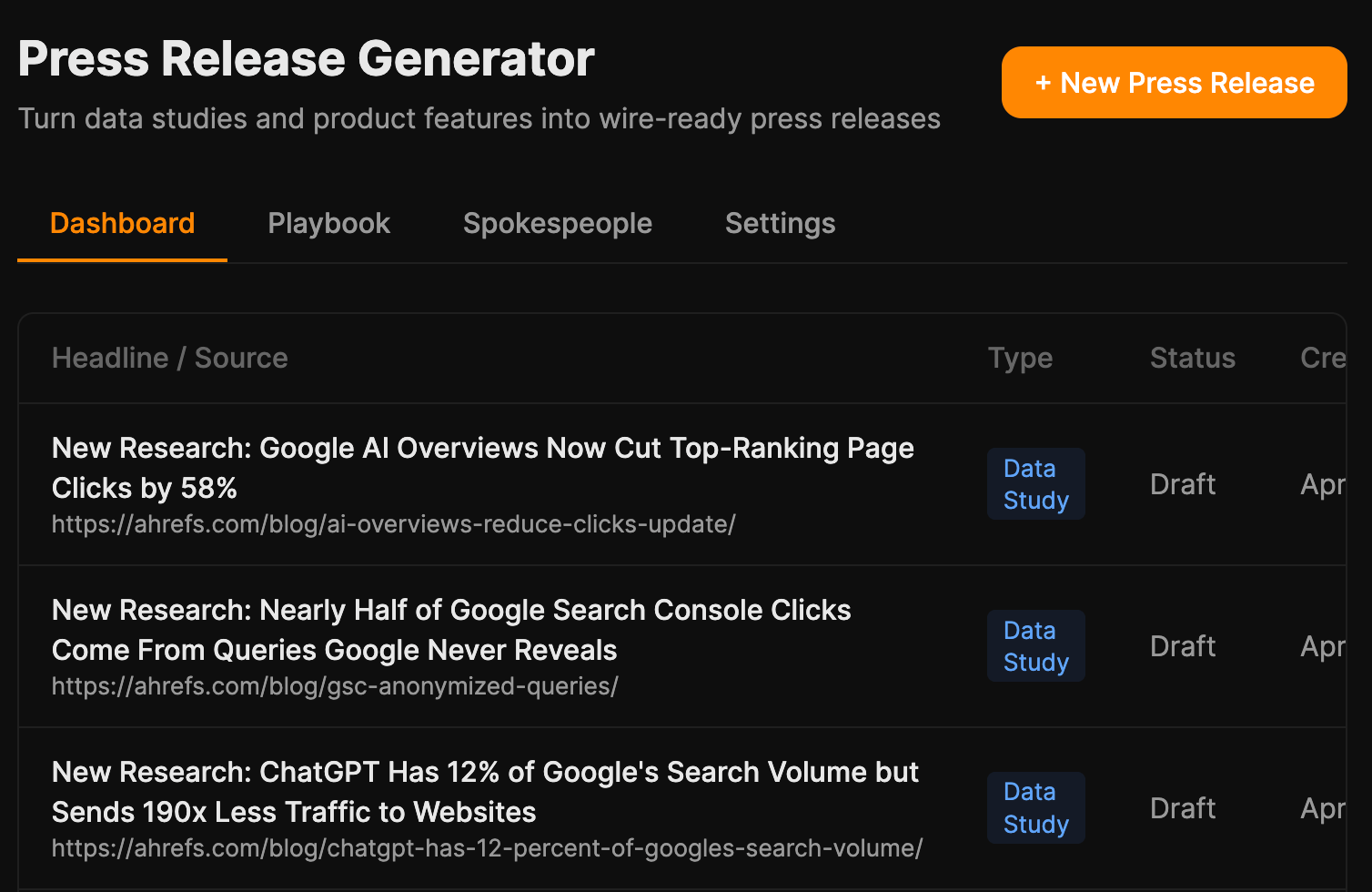
Automated Press Release Generation: A Press Release Generator tool takes a blog post URL or product feature note and automatically drafts a formatted press release. This accelerates the promotion of original research and new features, ensuring timely pitching to media outlets.
Product Marketing
Launching a product typically involves creating multiple collateral pieces (landing pages, emails, scripts, decks) that often lack consistency. AI can assist in generating these assets and, crucially, checking for discrepancies between them.
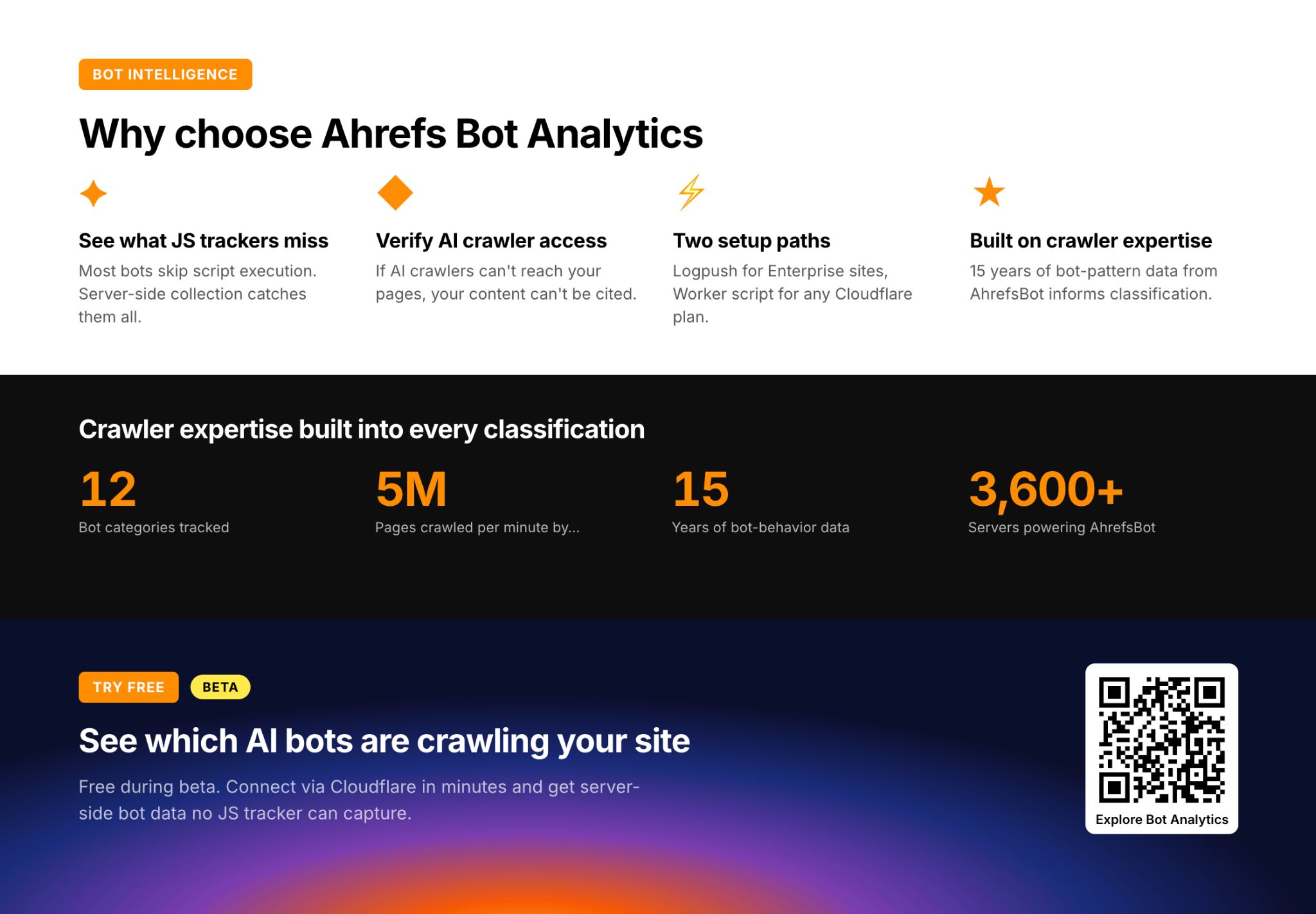
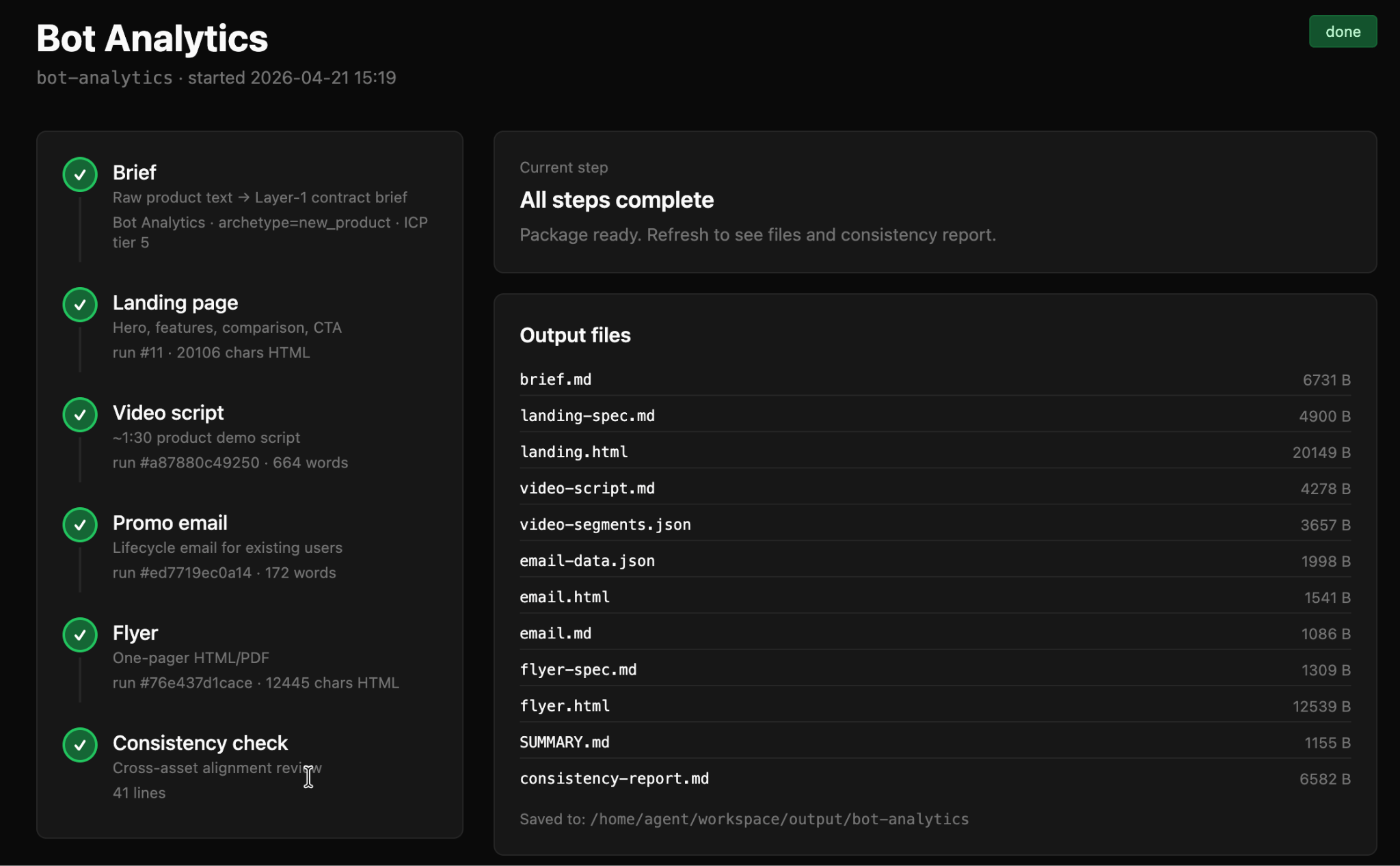
Comprehensive Launch Package Generation: Andrei, head of product marketing at Ahrefs, developed a GTM Generator that transforms a single product brief into six assets: a refined brief, landing page, video script, promotional email, flyer, and a final discrepancy check. This final check ensures all documents are aligned, preventing inconsistencies in product promises.
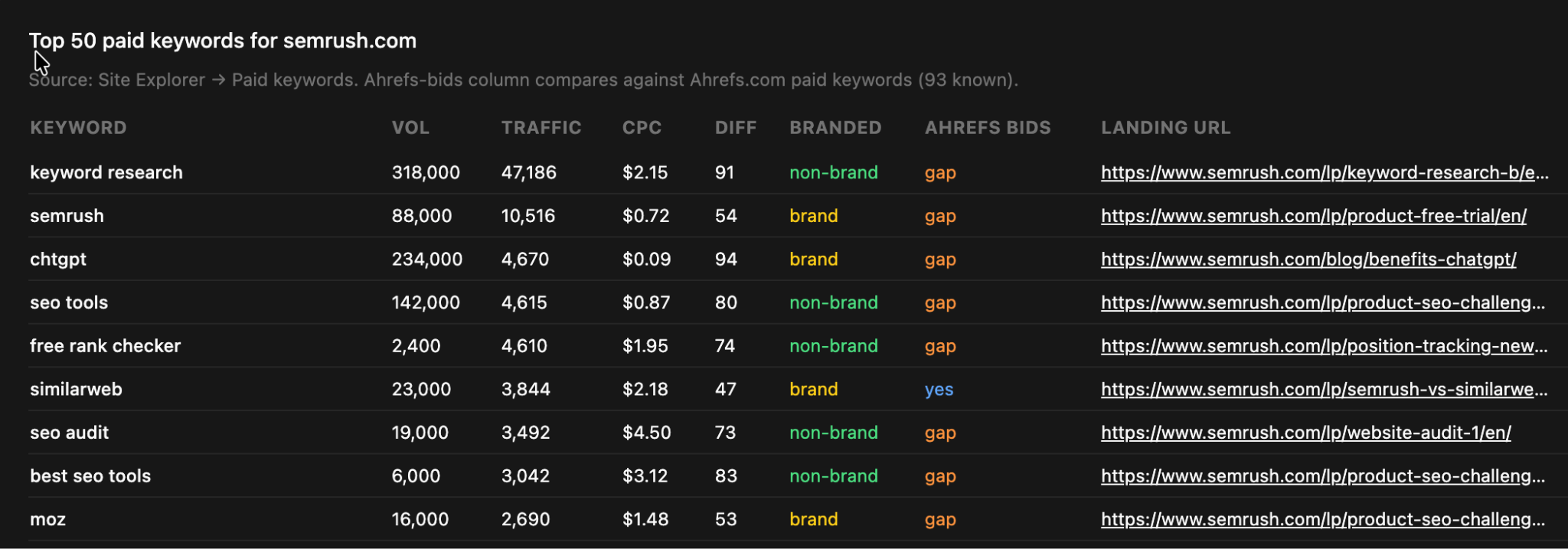
Reverse-Engineering Competitor Paid Campaigns: Ahrefs’ Paid Ads Campaign Builder analyzes a competitor’s domain to identify their paid keywords and landing pages. It then generates ad copy for underbid keywords, providing a validated list of advertising opportunities based on competitor investment.
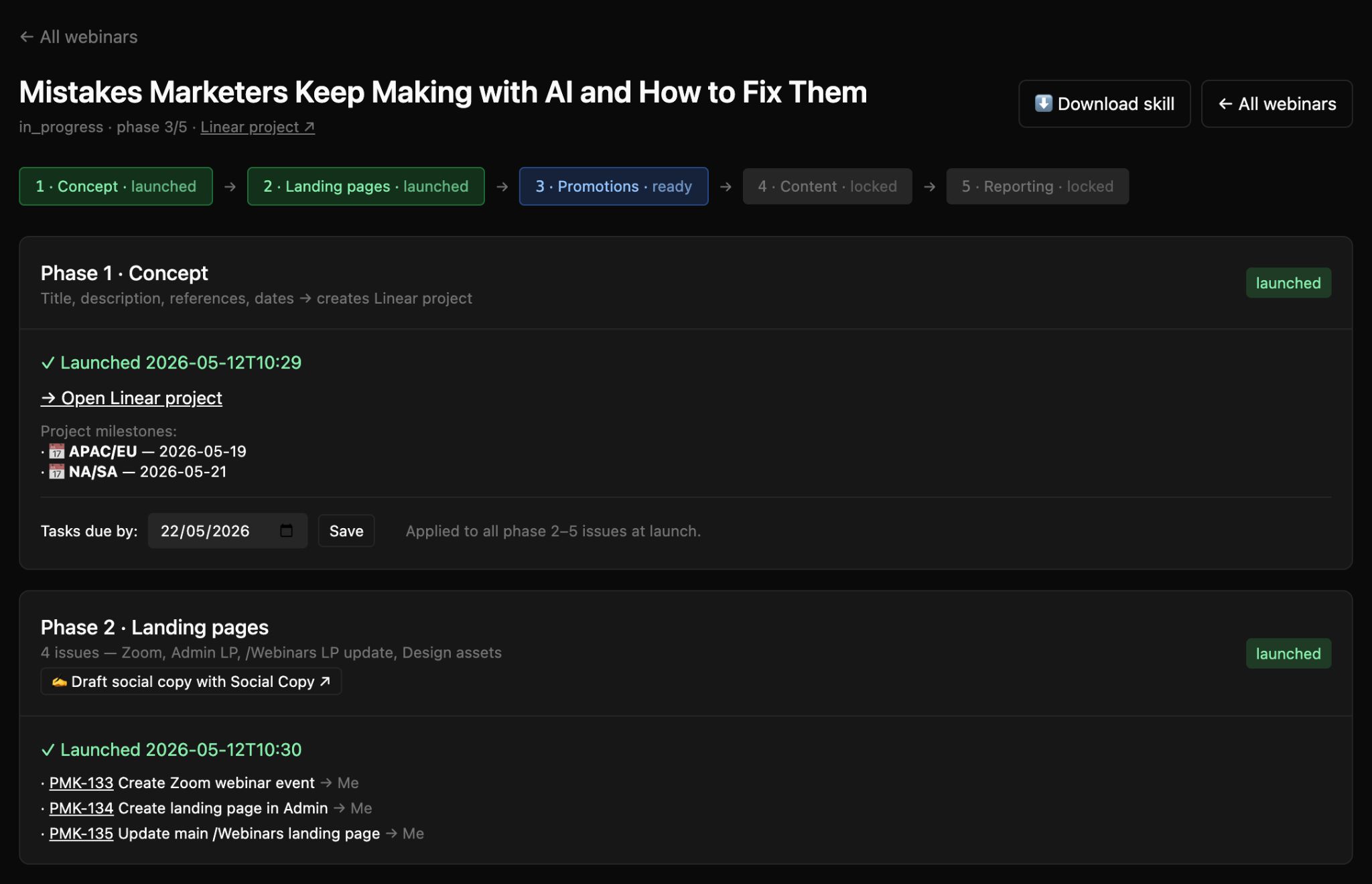
End-to-End Webinar Setup Automation: Constance implemented a webinar automation app built with Letaido. By inputting a title, date, and speaker, the app schedules all necessary tasks, including Zoom event setup, landing page creation, promotional copy writing, slide and script generation, and post-webinar reporting, ensuring all elements are managed in the correct sequence.
International Marketing
Expanding marketing efforts internationally multiplies the workload for tasks like keyword research, internal linking, and content adaptation. AI can automate much of this mechanical work, but careful attention to translation and localization is vital.
Link-Preserving Blog Post Translation: Ahrefs’ international marketing team developed a translation pipeline that handles seven languages, incorporating tone guides, glossaries, and specific translation rules. Crucially, it also updates internal links within translated articles to point to their localized versions, ensuring a seamless user experience. Keyword research is also localized for each target country.
Localized Visual Content: A dedicated translator for visuals allows users to upload images (PNG, JPG, PDF) and receive localized versions for specific languages and regions. This process involves AI identifying elements to change and a second AI redrawing the image with country-specific details like prices, web addresses, and names. Corrections can be made directly.
Affordable Live Subtitling: Taka developed a "Live Interpreter" tool that generates live English and Japanese subtitles from microphone feeds at conferences. This cost-effective solution uses a glossary of product names to ensure accurate translation of terminology and processes speech in half-finished chunks to display complete sentences on screen.
Final Thoughts
While some may claim to have fully automated their marketing with AI, it remains a tool whose effectiveness is dictated by the user. The successful applications presented here are driven by marketers with deep industry knowledge, judgment, and taste. AI amplifies existing expertise, making work faster, better, and more enjoyable. Skepticism is warranted, as AI is not a panacea, but in capable hands, it offers significant advantages. The author invites readers to share their own successful AI workflows.