 11
11
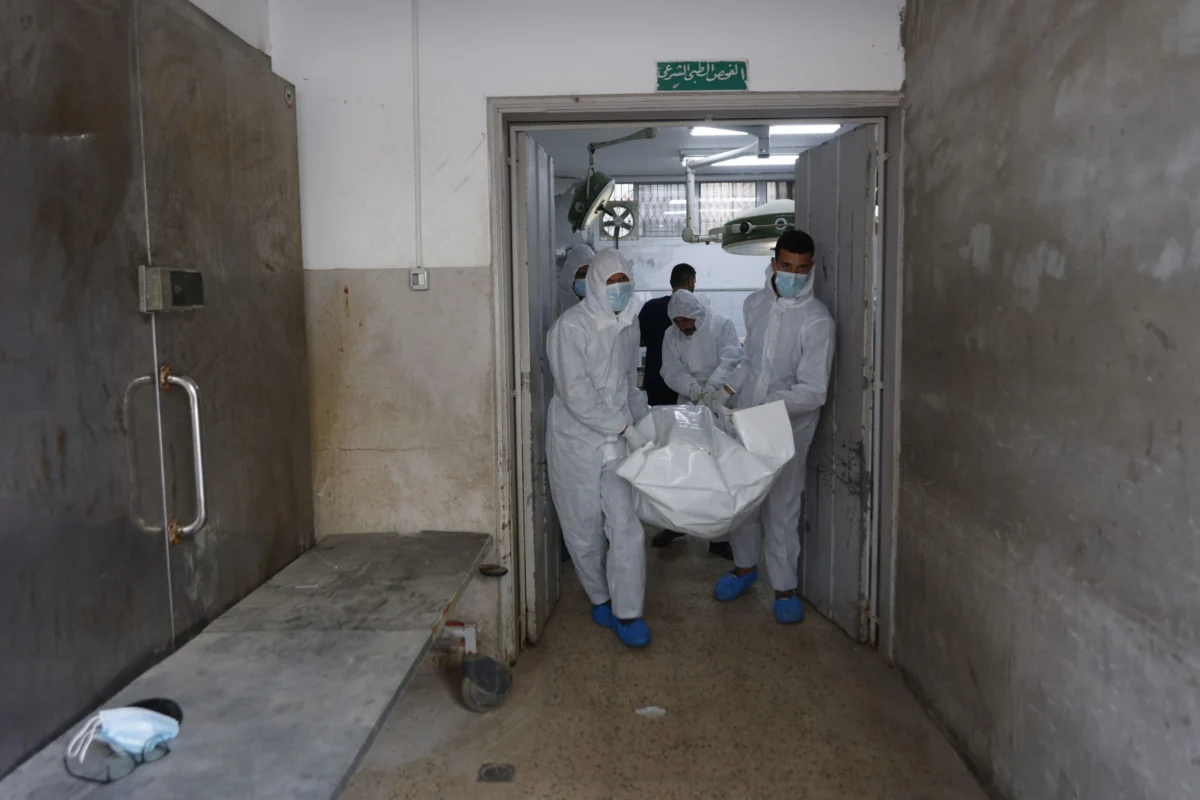
In Gaza, the solemn act of registering a death was once, as in most parts of the world, a straightforward administrative process. A body would be brought to a hospital, where medical professionals would issue the necessary paperwork, which was then submitted to civil authorities. This critical documentation allowed grieving families to update official civil records, settle complex inheritance matters, access bank accounts crucial for daily life, apply for much-needed assistance, or secure legal guardianship for orphaned children. It was a foundational pillar of civil society, ensuring continuity and order even in the face of loss.
However, since October 2023, the relentless Israeli bombardment, the detention of an unconfirmed number of Palestinians, and the repeated mass displacement of entire communities have irrevocably shattered this established system. The very mechanisms designed to identify bodies, record fatalities, and settle personal and financial accounts have been pushed to the brink of collapse. "It is an unfolding legal crisis," stated Ahmed Masoud, who heads the legal department at the Palestinian Center for the Missing and Forcibly Disappeared. "Thousands of cases now sit in a legal gray zone, leaving families in an agonizing state of limbo."
The scale of this crisis is immense and deeply personal for countless families. Many find themselves in the harrowing position of suspecting their relatives have been killed, yet they are utterly unable to produce the legally recognized proof required to confirm their deaths. Compounding this tragedy, other families have witnessed their loved ones taken by Israeli forces, only to be left without any confirmation of their detention, their whereabouts, or their ultimate fate. This profound uncertainty translates into a pervasive sense of helplessness and despair.
Comprehensive research underscores the widespread nature of this burgeoning problem. The Palestine Reporting Lab, collaborating with WIRED as its reporting partner for this investigation, worked alongside the Institute for Social and Economic Progress (ISEP), a dedicated Palestinian research organization, to meticulously examine the profound impact of Gaza’s missing persons crisis. Through a rigorous survey encompassing 600 individuals across 53 distinct locations throughout the Gaza Strip, ISEP has arrived at a sobering estimate: more than 51,000 people may have gone missing at some point since October 2023. Alarmingly, an estimated 14,000 to 15,000 individuals remain unaccounted for, their fates unknown.
The immediate consequences for households are devastating. According to ISEP’s findings, a staggering two-fifths—precisely 42.9 percent—of households with a missing person report significant struggles in obtaining a death certificate. This administrative bottleneck has far-reaching implications, particularly given that roughly the same percentage of these households indicate that the missing individual was the family’s primary breadwinner. For wives of missing men, the inability to legally confirm their husband’s death or even his status as missing often means they are unable to withdraw money from bank accounts, access vital legal documents, claim pensions that are rightfully due, or receive other essential benefits in their husband’s name. This bureaucratic paralysis plunges already vulnerable families into extreme financial precarity.
The ripple effects of these disappearances are extensive, permeating every aspect of family life and legal standing. Among Gazans who reported a missing household member, a striking 71.4 percent confirmed that the disappearance has directly impacted their rights and legal entitlements. Over one in four, or 28.6 percent, reported severe difficulties in establishing guardianship of a child, a critical legal step for ensuring the well-being and future of minors. Furthermore, 14.3 percent faced unforeseen obstacles in getting married or divorced, disrupting fundamental life events.
Financial barriers represent another significant burden. A third (33.3 percent) of affected households stated they could not access bank accounts associated with their missing relative. Nearly one in five (19.1 percent) reported being unable to access crucial aid specifically reserved for widows or children who have lost at least one parent, exacerbating their already dire circumstances. Furthermore, close to one in ten (9.5 percent) found themselves unable to access an inheritance, denying them legitimate financial resources. ISEP employed quota sampling to survey a representative pool of Gazans across the strip and cross-tabulated these results with existing pre- and post-war demographic data to generate its comprehensive estimates.
Samah Al-Shareif, a dedicated lawyer at the Gaza-based Women’s Affairs Center, an organization providing crucial legal support to families, attests to the severity of the situation. Her group has encountered hundreds of cases where a parent, typically a mother, could not access essential aid for herself or her children due to the absence of proper paperwork. She recounted the heartbreaking case of a woman whose husband had retired prior to the war, with the couple relying entirely on his pension for their livelihood. When he disappeared, the woman found herself utterly unable to access his bank account or receive his rightful pension. "The bank has refused to deal with her," Al-Shareif explained, "insisting that she either get a death certificate or present her husband in person." This bureaucratic impasse has left the woman without any income or financial security, despite her husband’s lawful entitlements.
Children whose parents are missing represent an even more vulnerable demographic. Nedal Jarada, who leads the Al Amal Institute for Orphans, one of Gaza’s longest-standing social welfare organizations, highlights how the pervasive lack of documentation has crippled their efforts. Some children firmly believe their parents have been killed, yet their relatives are unable to provide legal proof. Others simply have no knowledge of a parent’s whereabouts. Jarada poignantly refers to these children as "de facto orphans," a new and tragic category that has emerged with devastating clarity since October 2023.

Al Amal has had to grapple with hundreds of such cases. The organization endeavors to find creative ways to support these children, often by requesting adults in their lives to provide any available evidence that the parent’s fate is unknown. This can include records of inquiries made to official bodies, messages sent to human rights organizations, screenshots of communication attempts, or call logs demonstrating efforts to locate the missing individual. However, such proof is not always available, and Jarada laments that his institution is unable to assist many of these children, as the sheer number of traditional orphans already overwhelms their capacity. "These are the most painful cases," Jarada confessed. "For many families, even receiving confirmation that their loved one has been killed is easier than living with complete uncertainty." The psychological toll of ambiguous loss, where there is no closure or clear status, is immense.
The challenges extend beyond the financial and legal. According to Al-Shareif, many wives of missing men face intense social pressure, suspicion, and profound isolation within their communities. In some deeply disturbing instances, the extreme vulnerability created by a husband’s disappearance has tragically exposed women to exploitation. The Women’s Affairs Center has documented cases of wives of the missing being subjected to sexual extortion by unscrupulous individuals who falsely claim they can provide support or facilitate access to vital resources. "These abuses occur because the women are perceived as unprotected—without a partner or social shield—and because they are navigating urgent needs such as financial assistance, documentation, or access to aid," Al-Shareif emphasized, painting a stark picture of their precarious existence.
The emotional and psychological impact is pervasive and debilitating. The ISEP poll revealed that a staggering 91.7 percent of individuals with a missing relative reported experiencing constant anxiety. Furthermore, 68 percent stated that simply knowing their missing relative’s fate, regardless of the outcome, would significantly alter their family’s life decisions, underscoring the desperate need for closure and certainty.
Faced with this escalating legal crisis of missing persons, Gazan authorities proposed a new policy in November. This policy aimed to allow families to classify a person as deceased if they had been missing for more than six months, a pragmatic and compassionate response to the mounting number of unresolved cases. However, this policy was swiftly declared "illegal" by Palestinian Authority judicial officials in Ramallah. Under existing Palestinian law, the PA clarified, a missing person can only be legally treated as deceased if they have been unaccounted for for a period of four years. This legal discrepancy highlights the administrative fragmentation and political divides that further complicate the humanitarian response.
In January, the Palestinian Authority’s cabinet announced the formation of a national task force specifically designed to address the growing file of missing persons. This task force, operating through the Justice Ministry, has initiated a digital form for families to log information about their missing loved ones. Yet, despite its establishment, the task force has not yet commenced its critical work, leaving families with little immediate recourse.
Amidst Israel’s ongoing blockade of Gaza, which severely restricts movement and access to resources, and the persistent administrative fragmentation between authorities in Gaza and those in Ramallah, the fundamental question of how to effectively proceed remains agonizingly unresolved. In response, various civil society groups within Gaza are vigorously advocating for the creation of a comprehensive, centralized database for the missing. Such a system would be designed to record and meticulously track cases of the disappeared in a consistent and unified manner, rather than having them scattered across disparate institutions and organizations. Human rights experts stress that for such databases, which might include crucial evidence of disappearance and even family genetic samples, to be effective, they must be managed with absolute transparency and unwavering integrity to inspire trust among the affected population.
Others are calling for the immediate issuance of a temporary, formalized recognition of the missing – a concept known in other contexts of war, atrocity, and disaster as "certificates of absence." These certificates represent a crucial legal innovation, striking a delicate balance between safeguarding the rights of the missing – individuals who, by definition, may yet reappear – and addressing the urgent practical needs of their families. They would enable families to access essential resources such as bank accounts, government and humanitarian aid, and to move forward with vital civil and legal processes like marriage or guardianship without prematurely declaring a loved one deceased. Crucially, unlike a declaration of death, these certificates would keep open the possibility of accountability, preserving the fundamental obligation under international law for governments to thoroughly investigate disappearances.
"Without legal mechanisms to recognize disappearance as a distinct status—and without emergency protections for families—wives of the disappeared remain suspended between life and death, responsibility and powerlessness," Al-Shareif concluded, encapsulating the profound human rights crisis unfolding in Gaza.
This article was produced in partnership with the Palestine Reporting Lab, a project of Just Vision, underscoring the collaborative effort to shed light on this critical humanitarian issue.