 11

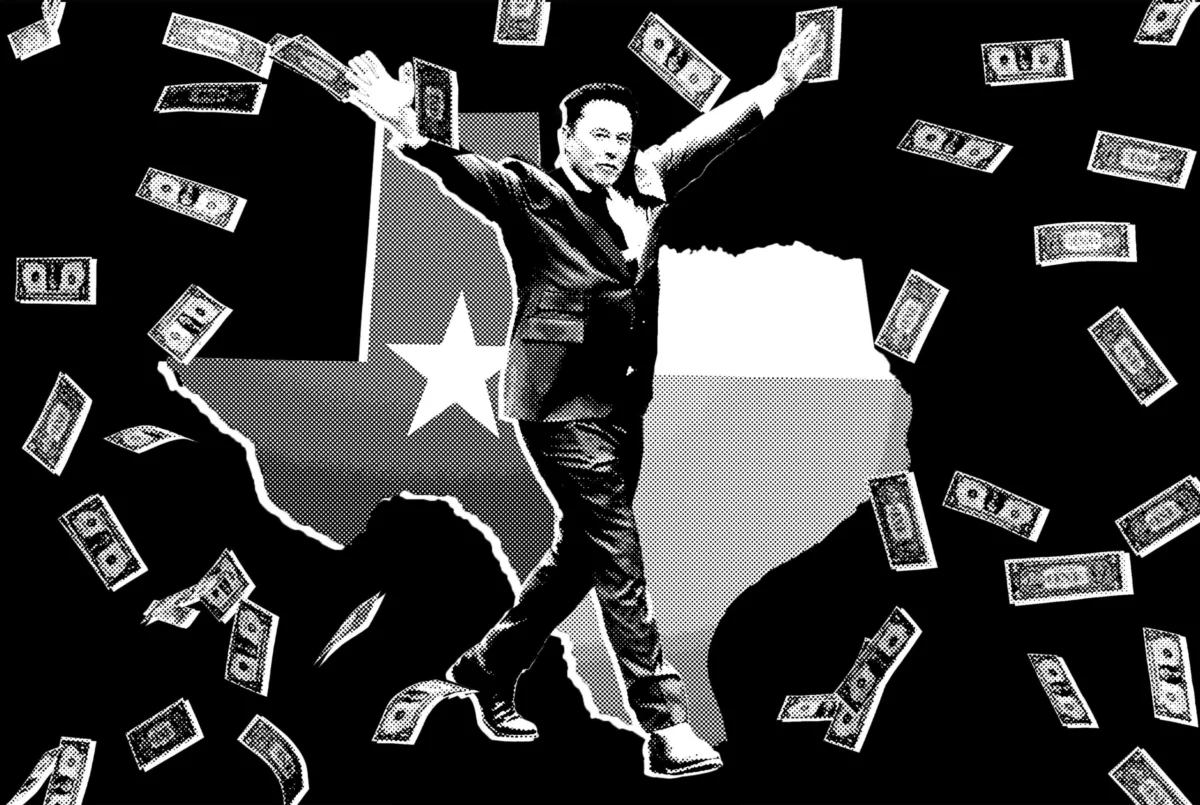
Elon Musk is reportedly poised to make a substantial financial commitment to bolster Republican efforts in the upcoming 2026 midterm elections, with figures briefed by former President Donald Trump’s officials estimating his contribution could range between $100 million and $200 million. This significant investment is expected to primarily target voter turnout initiatives in crucial races across the country, with a particular focus on states like Texas, where the outcome of contests could play a pivotal role in determining the balance of power in the U.S. Senate.
The anticipated cash infusion, or any in-kind contributions related to mobilizing voters, would be a considerable boost for Republican candidates who have struggled with fundraising this cycle. One such beneficiary is Texas Republican nominee Ken Paxton, whose campaign has faced a significant financial disadvantage against his Democratic opponent. According to the latest Federal Election Commission (FEC) filings, Paxton’s campaign has raised approximately $9 million, a stark contrast to the roughly $69 million amassed by his Democratic challenger, James Talarico.
Paxton’s path to the nomination was fraught with challenges. While an endorsement from former President Donald Trump was instrumental in securing his primary victory, his campaign lagged in contributions throughout a bruising contest against Senator John Cornyn. This primary battle not only tested Paxton’s political resilience but also brought renewed attention to past scandals, which further complicated his fundraising efforts. Despite securing the nomination, Paxton has continued to struggle in attracting substantial campaign donations.
Adding to Paxton’s fundraising woes is the notable absence of financial backing from two of the largest national GOP entities. The Senate Leadership Fund, a super PAC aligned with Senate Majority Leader John Thune, had previously supported Cornyn during the primary and has yet to commit funds to Paxton. Similarly, MAGA Inc, a prominent pro-Trump super PAC, has not publicly released any spending plans that would include support for the Texas nominee. This situation underscores a broader trend where many Republican candidates in close races have found themselves outraised by their Democratic counterparts this election cycle, often relying heavily on national party committees and external groups to bridge the financial gap.
Musk’s projected spending comes at a time when the Republican National Committee (RNC) commands a formidable $128 million war chest. In contrast, the Democratic National Committee (DNC) is reportedly $2 million in debt. Furthermore, the two main GOP super PACs dedicated to House and Senate races collectively possess $380 million, significantly outpacing the Democrats’ $116 million. MAGA Inc, a key player in conservative political financing, separately holds approximately $400 million on hand, an amount for which there is no direct Democratic equivalent. This financial landscape highlights the potential impact of a major individual donor like Musk, whose contributions could further solidify the Republican Party’s monetary advantage in key races.
A spokesperson for America PAC, a political action committee linked to Elon Musk, declined to comment on the group’s specific spending plans. However, previous reports by The New York Times indicated that Musk had authorized his PAC to spend at least $100 million for the 2026 midterms, aligning with the figures now being discussed by Trump officials.
While the prospect of such a substantial investment is significant, Musk’s track record in orchestrating voter turnout operations has yielded mixed results, raising questions about the ultimate effectiveness of his planned contributions. The 2024 election cycle provides a recent case study. During that presidential campaign, the Trump campaign largely outsourced its field operations to America PAC. The PAC subsequently disbursed more than $46 million to various third-party canvassing firms across several critical battleground states. The primary objective of these efforts was to mobilize "low propensity" voters—individuals who, despite holding favorable views of Donald Trump, do not consistently participate in elections.
Ultimately, Trump achieved a clean sweep of all six battleground states where America PAC focused its efforts. However, even within Trump’s campaign circles, officials expressed skepticism that this outcome was a direct result of America PAC’s work with paid canvassers. Many attributed Trump’s success more to his unique celebrity appeal and his inherent ability to energize and turn out his dedicated base, rather than the efficacy of the outsourced ground game.
Concerns about the effectiveness of third-party canvassing operations are not uncommon. Paid canvassers are often perceived as less enthusiastic than volunteers who are deeply committed to a candidate or cause. There have also been instances where paid canvassers have been known to cut corners, sometimes pretending to knock on doors to meet quotas and claim their paychecks, rather than diligently engaging with voters.
Adding to the challenges faced by America PAC’s 2024 operation were complaints from workers themselves. Reports surfaced of canvassers claiming they had been "tricked" and threatened with having to cover their own lodging expenses if they failed to meet ambitious quotas. At the time these allegations emerged, neither America PAC nor Elon Musk provided a response to requests for comment regarding these worker grievances. This history suggests that while Musk’s financial power is undeniable, translating that investment into effective voter mobilization on the ground presents its own set of operational hurdles and potential pitfalls.
This report is based on information initially presented in Hugo Lowell’s Inner Loop newsletter.






