11

In a significant move to address the persistent challenge of fragmented enterprise data, Atlassian has announced the launch of a new Salesforce connector for its Teamwork Graph. This integration is designed to bridge the gap between customer relationship management (CRM) data and the collaborative work environments where product development, support, and strategic planning occur. By surfacing Salesforce context directly within the Atlassian ecosystem, the company aims to eliminate the manual "context switching" that currently hampers productivity for sales, support, and marketing teams.
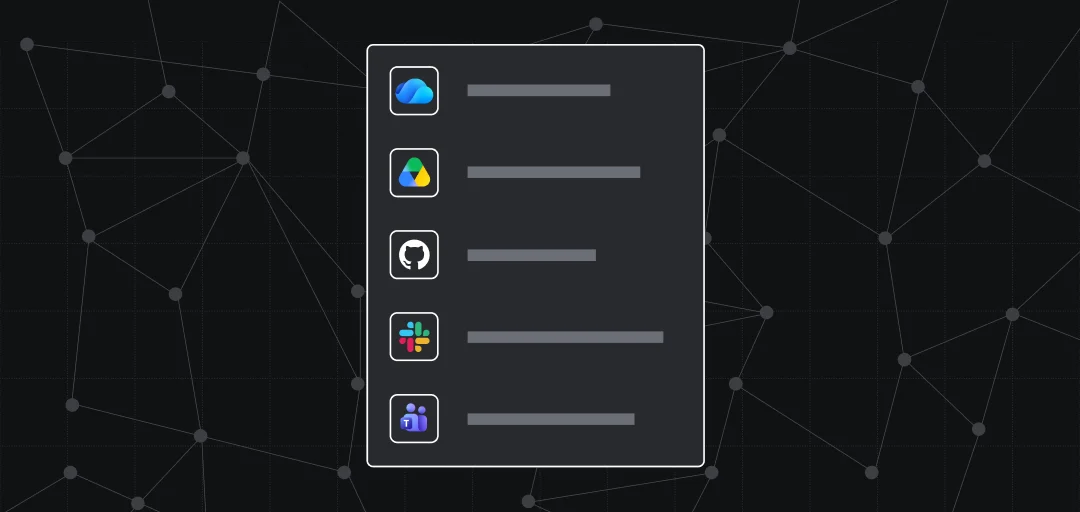
The modern enterprise landscape is characterized by a proliferation of specialized tools, which often leads to "information silos." In a typical workflow, critical customer data is distributed across multiple platforms: Salesforce holds the primary account, opportunity, and contact details; Jira tracks the technical product work associated with customer commitments; Confluence stores account plans and meeting notes; and Jira Service Management handles support escalations. Meanwhile, internal conversations and assets are often scattered across Slack, Microsoft Teams, and Google Drive. This fragmentation means that before high-stakes activities—such as pipeline reviews, campaign planning, or customer escalation calls—employees are often forced to manually "stitch" information together by switching between dozens of browser tabs to rebuild a coherent picture of the customer.
The introduction of the Teamwork Graph connector for Salesforce seeks to solve this by creating a unified context layer. Once configured by an administrator, the connector allows Salesforce data to be searched, synthesized, and analyzed alongside Atlassian-based knowledge. Crucially, the system is built to respect existing Salesforce permissions, ensuring that users can only access information they are authorized to see within the CRM. This allows teams to ask more complex questions and prepare for customer interactions with a comprehensive view of the account history, current opportunities, and unresolved technical issues.
The core value proposition of this connected experience lies in the intersection of "what is happening" with a customer (the CRM data) and "the work being done" for that customer (the Atlassian data). According to Atlassian, customer-facing teams make superior decisions when they can view the customer record in tandem with the surrounding collaborative work. While Salesforce, Atlassian applications, and collaboration tools like Slack are effective in isolation, they often leave the broader customer picture disconnected. For instance, Salesforce may lack the specific product delivery or internal documentation context, while Atlassian tools may lack the real-time revenue and pipeline data found in the CRM. The Teamwork Graph acts as the connective tissue, providing what Atlassian describes as an "ideal state" where teams can reason across both CRM and teamwork contexts simultaneously.
Atlassian has identified three primary ways in which the Teamwork Graph and its AI agent, Rovo, assist teams in navigating this unified data environment. The first is through advanced search and discovery. Users can utilize chat interfaces to query Salesforce objects alongside internal company knowledge. Examples of such queries include identifying enterprise accounts with open cases within a specific month, or determining which Atlassian customer accounts have open opportunities that might be jeopardized by unresolved support tickets. By allowing for natural language queries that span multiple data sources, the platform reduces the time spent on manual cross-referencing.
The second application focuses on preparation and synthesis. The highest-value context for a professional is often the relationship between disparate records, such as how a support case might affect a pending contract renewal. Rovo allows users to request comprehensive briefs before customer calls. For example, a user could ask the AI to prepare a brief for a specific client that includes all open opportunities, recent account notes, support issues, and any "stale" items requiring immediate attention. This transforms a labor-intensive preparation process into a single automated task, allowing representatives to focus on the conversation rather than data retrieval.
The third application involves aggregate analysis across a professional’s entire "book of business." Instead of exporting data to spreadsheets to perform manual cross-referencing, teams can ask Rovo to synthesize answers across many records. This includes identifying opportunities over a certain dollar threshold that have remained stagnant for 30 days, or summarizing the status of the top three accounts for a given quarter. Rovo reads across the connected records and returns a synthesized view, highlighting areas that require urgent intervention.
Beyond simply understanding and finding data, the integration introduces "agentic" capabilities that allow for automated action. Atlassian is positioning Rovo agents as tools that can handle the administrative "busywork" that typically follows customer interactions. A common friction point for sales representatives is the need to manually update Salesforce after a meeting. With the new integration, a Rovo agent can be tasked with reviewing a meeting recording—such as one hosted on Loom—to extract key outcomes, including next steps, changes in deal stage, or updated close dates.
Upon the user’s approval, the Rovo agent can then write these updates directly back to the Salesforce opportunity. This "type less, sell more" philosophy is intended to keep the CRM data current without requiring the representative to spend significant time on data entry. The agent acts as an intermediary that reads the transcript, drafts the update, and executes the change within the user’s existing permission framework. This ensures that the record of the conversation in Loom is immediately reflected in the deal status in Salesforce, maintaining a "single source of truth" with minimal manual effort.
Data governance and security are central to the design of the Teamwork Graph. Atlassian emphasizes that customer privacy and enterprise trust are enforced throughout the integration. Administrators maintain granular control over what data flows from Salesforce into the Atlassian environment. This includes selecting specific supported objects—such as accounts, opportunities, contacts, cases, and campaigns—as well as choosing which standard and custom fields are ingested.
The system is designed to sync with Salesforce to ensure that any updates or deletions in the CRM are mirrored in the Teamwork Graph. Furthermore, Rovo can augment the Teamwork Graph context by calling Salesforce’s Model Context Protocol (MCP) directly. This operation is always performed within the scope of the individual user’s permissions, ensuring that the AI never displays information to a user that they would not be authorized to view within the Salesforce platform itself.
The launch of the Salesforce connector is part of a broader strategic shift for Atlassian. The company views the Teamwork Graph as the foundational context layer for teamwork across both first-party and third-party tools. In this vision, Jira remains the primary tool for tracking work, Confluence for capturing knowledge, and Jira Service Management for support, while Salesforce provides the essential customer and revenue context. The Teamwork Graph serves as the engine that connects these signals, while Rovo provides the interface for teams to interact with that combined data.
Organizations can begin using these features by connecting Salesforce to the Teamwork Graph via the Atlassian Administration portal. Initial recommended workflows include using Rovo to summarize recent activity on a key account or using it to find specific Salesforce records through the Atlassian search interface.
Looking ahead, Atlassian plans to expand these capabilities further. While the current focus is on finding and understanding Salesforce data, future updates will delve deeper into automated agentic actions. This will include more sophisticated automations and agents designed to take proactive steps in Salesforce, helping teams maintain their CRM systems with even higher levels of efficiency. The ultimate goal is to move toward a state where the AI handles the majority of administrative synchronization, allowing human workers to focus on high-value strategic tasks and customer relationships.