11
11
There was a time when the trajectory of luxury hospitality seemed entirely predictable. Global epicenters like London, Paris, and New York served as the fertile ground where pioneering restaurants, hotels, and lifestyle brands were conceived, developed, and subsequently exported, with thriving metropolises like Dubai often importing these established concepts to cater to their burgeoning luxury markets. How swiftly and profoundly things can change, demonstrating a dynamic reversal in this traditional flow.
A striking testament to this evolving landscape is Shanghai Me London, which on July 23rd, celebrated its first anniversary, marking a significant milestone in one of the capital’s most fiercely competitive hospitality arenas. Perched majestically on the 28th floor of the London Hilton on Park Lane, the restaurant commands breathtaking panoramic views, sweeping across the verdant expanse of Hyde Park towards the iconic silhouette of Buckingham Palace and beyond, encompassing a significant portion of the city’s celebrated skyline. This prestigious address holds historical resonance for many London diners, having previously housed Galvin at Windows, a restaurant synonymous with a particular era of London fine dining characterized by its formal ambiance, European culinary focus, and reassuringly traditional approach.
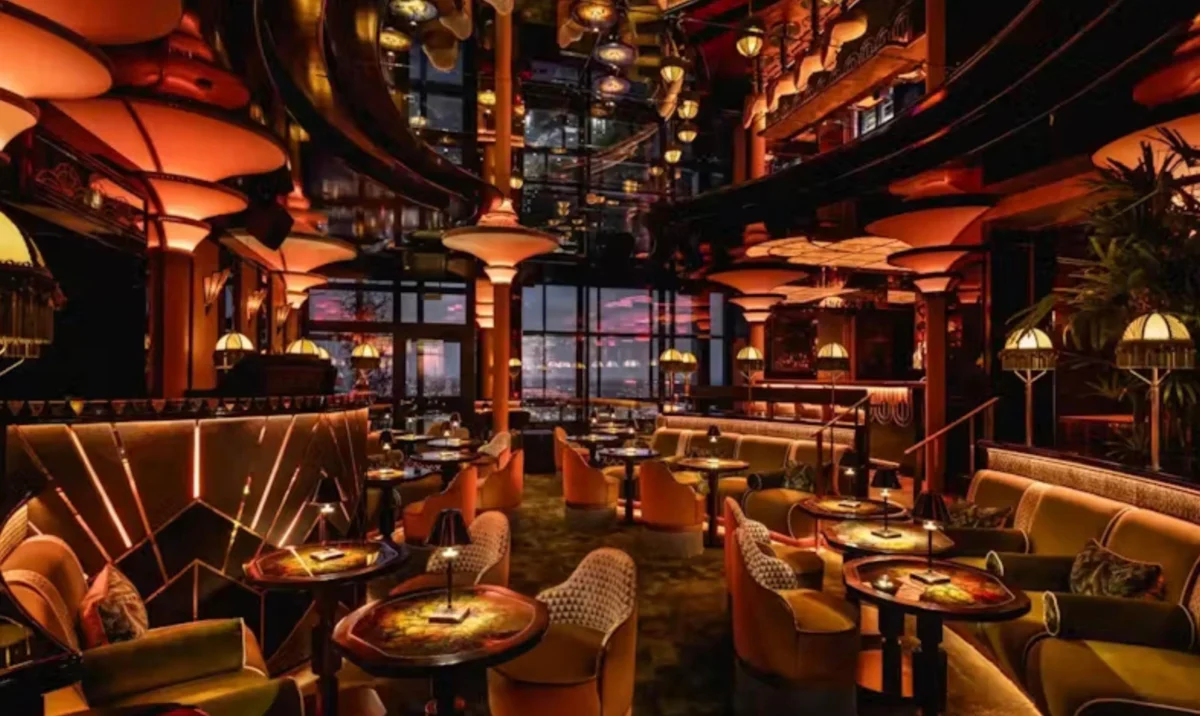
Shanghai Me has reimagined this extraordinary piece of real estate, injecting it with an entirely different spirit. It evokes the opulent glamour of 1930s Shanghai, offering a sophisticated blend of Chinese and East Asian culinary artistry. The interior design, a deliberate departure from understated luxury, immerses guests in a world of deep reds and golds, rich textures, and dramatic lighting, creating an atmosphere that seamlessly transitions from an exquisite dinner service into a vibrant late-night Mayfair experience. This confidently executed vision embodies the unmistakable verve and ambition of contemporary Dubai hospitality, a style that has clearly resonated with London’s discerning clientele.
Indeed, London appears to have embraced this new arrival with considerable enthusiasm. Earlier this year, the influential cultural guide Time Out bestowed upon Shanghai Me the coveted title of "best London restaurant with a view." The accolade not only recognized its unparalleled vantage point but also lauded the exceptional quality of its cuisine, the impeccable service, and the rather fabulous opportunities for people-watching that define its lively atmosphere.
Yet, beyond the immediate success and critical acclaim of its inaugural year, Shanghai Me represents something far more significant. Its story transcends that of merely another triumphant Mayfair restaurant; it serves as compelling evidence of a profound reversal underway in global hospitality, where Dubai is emerging not just as a consumer, but as a successful exporter of luxury brands and innovative concepts.
From Imported Luxury To Made In Dubai: A New Paradigm
Shanghai Me is a proud flagship of Fundamental Hospitality, a dynamic Dubai-headquartered group founded by the visionary Evgeny Kuzin, with the renowned Chef Izu Ani serving as a key creative force and co-founder behind its impressive restaurant portfolio. The group’s existing presence in London, with GAIA in Mayfair and La Maison Ani in Knightsbridge, underscores that Shanghai Me’s arrival was not an isolated venture but rather a calculated and deliberate international expansion of hospitality brands that were not only conceived but also rigorously proven within the demanding luxury market of the Middle East.
For many years, Dubai’s burgeoning restaurant scene was largely constructed around the strategic importation of celebrated international names. A successful culinary concept originating in London, Paris, New York, or Milan could almost certainly find another lucrative audience and establish a thriving outpost in the Gulf region. Fundamental Hospitality has ingeniously inverted this established model. Their strategy is clear: conceptualize and build in Dubai, meticulously prove the concept’s viability and appeal in one of the world’s most competitive and high-expectation luxury markets, and then confidently export it to global capitals.
The financial muscle supporting this ambitious vision is substantial. Fundamental Hospitality is actively pursuing an extensive $200 million global expansion program. Reports from earlier this year outlined plans to inaugurate approximately 15 new restaurants throughout 2026, strategically targeting key markets across the GCC (Gulf Cooperation Council), Europe, and the United States. The group’s impressive operational scale saw its venues welcome more than five million guests globally in 2025, with internal forecasts projecting this figure could exceed a remarkable 10 million during 2026, highlighting the rapid pace and scale of their expansion.
Selling The Whole Evening: A Holistic Approach to Luxury

Fundamental Hospitality’s success is also rooted in its astute understanding of a crucial shift in the preferences of today’s premium consumer: the expectation that dinner doesn’t necessarily conclude with dessert. Shanghai Me has been meticulously designed around the concept of delivering an entire evening’s experience, catering to guests who seek more than just a meal.
Chef Izu Ani’s menu is a sophisticated tapestry woven from Chinese and East Asian influences, executed with a Japanese precision that elevates recognizable dishes and ingredients into more indulgent and adventurous culinary territory. The restaurant’s surroundings are intentionally theatrical, eschewing fashionably restrained aesthetics for a design that embraces lavishness. Designer Richard Saunders has masterfully incorporated elements like polished lacquer, sumptuous velvet, dramatic lighting schemes, and subtle yet distinct Art Deco references, all contributing to an immersive and visually rich environment.
A pivotal component of this "whole evening" philosophy is The Bund Lounge, an adjoining cocktail space. This elegant extension allows the restaurant to retain its customers, and crucially, their discretionary spend, for a considerably longer duration. From a business perspective, this strategy is highly effective. Given that the most expensive aspect of hospitality often lies in the initial acquisition of a customer, allowing them to depart after just two hours means surrendering their potential subsequent transactions to a competitor. The Bund Lounge, however, offers a credible and enticing "after dinner" proposition, transforming the dining experience into a multi-faceted engagement.
The restaurant’s brand world, inspired by the Chinese Zodiac, coupled with its innovative cocktail program and palpable late-night energy, transforms Shanghai Me into something akin to a self-contained lifestyle experience. This model perfectly reflects a wider, undeniable change across premium hospitality, where modern consumers increasingly anticipate that restaurants will deliver not just exceptional food, but also a blend of theatre, entertainment, and social currency.
Why Mayfair, Why Now? A Strategic Alignment with Urban Evolution
Shanghai Me’s strategic placement and success in Mayfair are intricately linked to a broader urban transformation. Mayfair and the wider West End are currently undergoing one of their most substantial periods of reinvestment and revitalization in decades. Oxford Street, situated immediately to the north, is a prime example of this evolution, with plans actively progressing towards significant pedestrianization. The first western section of this iconic shopping thoroughfare is anticipated to close to vehicular traffic by the end of August 2026. The newly established Oxford Street Development Corporation has been explicitly tasked with the ambitious goal of transforming the district into an even stronger destination for shopping, leisure, and a diverse range of events.
The economic implications of this transformation are immense. Oxford Street alone is estimated to contribute a staggering £25 billion annually to London’s economy, underscoring its pivotal role. Furthermore, the accommodation and food services sector collectively accounts for approximately 12% of employment across the wider West End, highlighting its importance as an economic driver and employer.
Crucially, the future prosperity of London’s most valuable shopping districts will not be sustained by retail alone. Modern consumers require compelling reasons to extend their stay: a rich tapestry of restaurants, luxurious hotels, vibrant cultural attractions, inviting public spaces, and immersive experiences that can effortlessly transform a brief shopping trip into a half-day excursion, or indeed, an entire evening’s entertainment.
This is precisely why the profound transformation unfolding across Oxford Street, Bond Street, and Mayfair should be of paramount interest to restaurant groups and hospitality operators, just as much as it is to property developers and retailers. London City Hall itself has formally acknowledged that Oxford Street may need to diversify further into leisure and hospitality as a core component of its next chapter, recognizing the imperative to create a more holistic and engaging urban experience.
Perhaps, then, this is the true, overarching story of Shanghai Me’s first year of operation. It has not only successfully introduced a sophisticated, Dubai-born hospitality concept into one of the world’s most competitive and discerning dining markets but has also astutely captured London’s growing appetite for a more energetic, experiential, and glamorous version of luxury. In doing so, it has powerfully demonstrated that the traditional, unidirectional flow of hospitality influence is decisively changing. As Mayfair itself continues to evolve and redefine its identity, Shanghai Me stands as a potent and compelling example of what the next generation of premium dining may look like: inherently international in its outlook, profoundly social in its design, relentlessly experience-led in its offering, and conceived around far more than simply what arrives on the plate.