 11
11
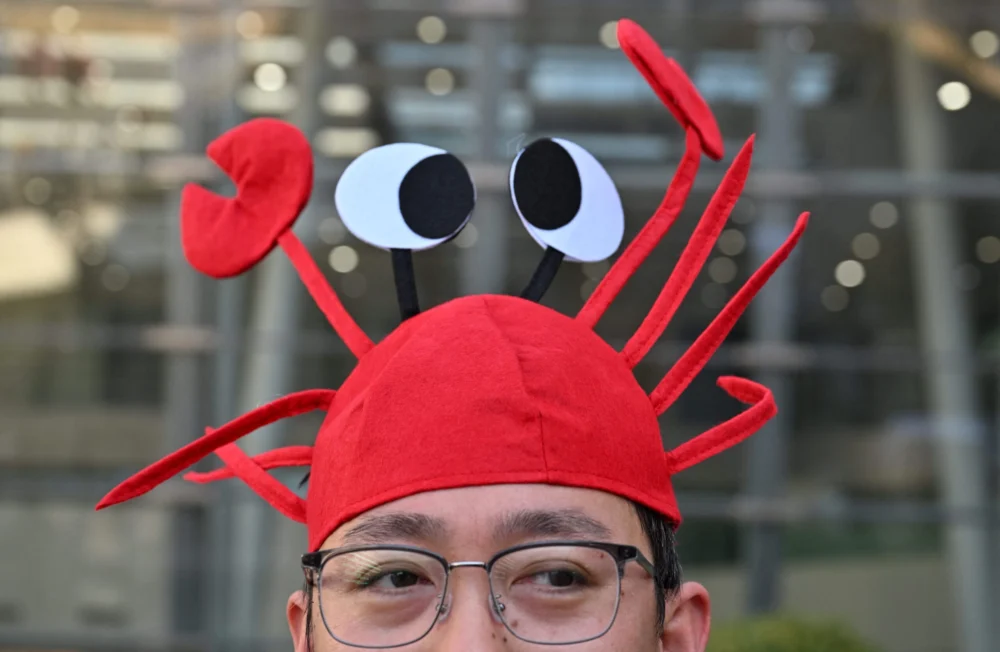
A man wears a lobster hat that represent the OpenClaw logo, an open-source AI assistant at the Baidu headquarter in Beijing on March 11, 2026. Adek Berry | Afp | Getty Images
China is experiencing a significant surge in the adoption of OpenClaw, a popular open-source artificial intelligence tool, with major technology companies and local governments actively expanding access to the lobster-themed AI agent. This rapid embrace of AI agents, which can perform tasks like sending emails, scheduling meetings, and booking reservations with minimal human intervention, marks a pivotal moment in China’s technological landscape. Unlike chatbots, AI agents possess the capability to take proactive actions, which inherently raises considerations regarding data privacy and system security due to their broader access requirements.
In a notable development, Chinese tech giant Tencent announced on Tuesday the launch of a comprehensive suite of user-friendly AI products built upon OpenClaw. These offerings, branded as "lobster special forces," are integrated with Tencent’s widely-used superapp, WeChat. Concurrently, startup Zhipu AI unveiled its localized version of OpenClaw on the same day, providing an AI agent pre-equipped with over 50 popular functionalities through a simplified "one-click installation" process. These initiatives, alongside similar efforts from other Chinese enterprises, have fueled consumer interest, leading to OpenClaw’s usage in China surpassing that of the United States, according to American cybersecurity firm SecurityScorecard.
Jaylen He, CEO of Violoop, a Shenzhen-based startup developing a device with features akin to OpenClaw but with enhanced security, observed, "In terms of adopting the new technologies, I think China definitely has a really large community that always wants to try what’s there, what’s new, and don’t want to be left behind." He further elaborated on the widespread adoption, stating, "I have friends who are not even in the tech industry… they are doing this, they are also running it."
As China’s economy navigates prevailing headwinds, OpenClaw presents a compelling opportunity that domestic tech companies are eager to capitalize on to attract paying users. The nationwide enthusiasm for OpenClaw has concurrently bolstered the popularity of Chinese-developed large language models, according to Winston Ma, an adjunct professor at NYU School of Law. Autonomous AI agents like OpenClaw are typically model-agnostic, allowing for integration with a variety of large language models, including OpenAI’s ChatGPT and Anthropic’s Claude.

Data from OpenRouter, a platform providing developers with access to AI models through a unified interface, indicates that the top three AI tools utilized by OpenClaw users on its marketplace over the past month were all from Chinese companies. Their combined usage was double that of the three most frequently used Google Gemini and Anthropic Claude models. Chinese-made AI models launched this year have significantly closed the gap with their U.S. counterparts, offering comparable AI capabilities at a substantially lower cost. This cost-effectiveness directly benefits users of OpenClaw, which was first released in November. The tool enables users to interact with the AI agent through popular messaging applications like Telegram and WhatsApp, allowing it to perform multiple tasks autonomously. Peter Steinberger, the Austrian developer behind OpenClaw, joined OpenAI in mid-February.
Easing Installation Hurdles
Despite OpenClaw’s recent surge in popularity, experts have previously highlighted the complex installation process as a barrier to its mass adoption, particularly for non-technical users. Chinese technology companies are actively working to simplify this process. Following an initial surge of interest last month, Chinese social media platforms have been inundated with posts detailing company-organized installation events. Some organizers have even distributed red lobster plush toys, reinforcing the project’s distinctive crustacean-themed branding.
Engineers install and set OpenClaw, an open-source AI assistant for users at the Baidu headquarter in Beijing on March 11, 2026. Adek Berry | Afp | Getty Images
Volcano Engine, the cloud unit of TikTok owner ByteDance, recently introduced "ArkClaw," a version of OpenClaw accessible via a web browser, thereby eliminating the need for intricate local setup. Furthermore, several companies are providing direct support to consumers in China seeking to utilize OpenClaw with their existing tools. Tencent hosted a complimentary in-person OpenClaw setup session in Shenzhen, its headquarters, last week, assisting "hundreds" of individuals in installing the tool on TencentCloud. JD.com launched a dedicated webpage on Tuesday where users can pay 399 yuan ($58) for remote assistance from Lenovo’s information technology maintenance team, Baiying, to deploy the software. Meituan reportedly announced a comparable partnership with Lenovo on Monday.
The burgeoning interest in OpenClaw is reshaping how Chinese consumers approach payment for AI services. Violoop, which plans to launch its initial device on Kickstarter in April with a price point of approximately $300 per unit and a monthly AI service fee of $30, had initially intended to focus on the U.S. and other international markets. However, the startup is now prioritizing a launch in China. "After 2026, after OpenClaw, I think we are seeing a significant rise, both in terms of [interest in] paying for good models and also that MiniMax and Kimi have released very capable models," stated CEO He on Wednesday. "I wouldn’t say that they can surpass maybe ChatGPT or Anthropic, but they are definitely approaching that and definitely are creating value for users. So this is a new change for us." The startup has secured at least two rounds of initial funding this year, primarily to cover production expenses.

Governments Get Involved
Despite official warnings issued by China’s state media regarding OpenClaw’s security risks, several local governments have introduced incentives in the past week to encourage companies to develop applications leveraging the AI tool. Shenzhen’s Longgang district and Hefei’s high-tech development zone have proposed equity financing support of up to 10 million yuan ($1.46 million), in addition to direct subsidies targeted at "one-person companies" utilizing OpenClaw. A district within Suzhou city has announced similar subsidies, along with 30 days of complimentary office space, accommodation, and meals. The term "one-person company," referring to a single individual or a small group using AI to rapidly establish a business, has gained considerable traction in China, particularly as Beijing recently concluded a meeting to formalize a five-year plan aimed at stimulating domestic technological development.
Weekly analysis and insights from Asia’s largest economy in your inbox. Subscribe now
The increased participation of Chinese entities in the OpenClaw phenomenon is contributing to a global trend. In a testament to its widespread appeal, the OpenClaw project has garnered more stars on the GitHub coding platform than Linux, a foundational open-source operating system that underpins modern computing. Violoop’s He remarked, "This is like the 2022 ChatGPT moment. This is like the 202[5] DeepSeek moment. I think the craving, the desire, for a personal assistant that can really help the user, the desire has been there, and has been suppressed for a very long time."
Engineers install and set OpenClaw, an open-source AI assistant at the Baidu headquarter in Beijing on March 11, 2026. Adek Berry | Afp | Getty Images
People queue to have their laptops install with OpenClaw, an open-source AI assistant at the Baidu headquarter in Beijing on March 11, 2026. Adek Berry | Afp | Getty Images