 11

The rapid integration of artificial intelligence into the professional sphere has introduced a new phenomenon known as "workslop," a term describing AI-generated content that appears polished and professional on the surface but fails to provide substantive value or advance organizational goals. While AI tools have significantly accelerated the speed at which drafts, reports, and presentations can be produced, the emergence of workslop presents a significant challenge to the return on investment for AI technologies. According to research conducted by Atlassian’s Teamwork Lab, the proliferation of this low-utility, high-gloss output does not represent a true increase in productivity; rather, it merely shifts the burden of meaningful work further downstream, forcing reviewers and collaborators to expend excessive time deciphering or correcting superficial content.
The core issue identified by researchers is that the "polish" provided by AI—such as perfect grammar, sophisticated formatting, and professional tone—can effectively mask critical errors or a lack of depth. This creates a dangerous cognitive bias for reviewers. In an extensive study of 903 knowledge workers in the United States, Teamwork Lab found that individuals were 22% less likely to identify a critical flaw in a document if it had been polished by AI compared to a more raw, human-authored draft. This suggests that the aesthetic quality of AI output can lull professionals into a false sense of security, leading to a breakdown in quality control and the eventual passage of faulty information through the corporate pipeline.
Beyond the immediate impact on operational efficiency, workslop has been found to have a corrosive effect on professional relationships and interpersonal trust. Data from a 2025 survey conducted by BetterUp and Stanford University indicates that the delivery of AI-generated workslop significantly damages the sender’s reputation. The survey revealed that 42% of respondents viewed colleagues who sent them workslop as less trustworthy, while 37% perceived those colleagues as less intelligent. This suggests that the use of AI to cut corners, rather than to enhance quality, is interpreted by peers as a lack of effort or a lack of competence, creating a new social friction in the workplace.
The Atlassian Teamwork Lab hypothesized that the issue of workslop is neither a fundamental failure of AI technology nor a character flaw in the employees using it. Instead, they posited that the problem stems from a lack of alignment regarding what constitutes "good work" and how AI should be utilized to achieve those standards. To test this theory, the Lab conducted a pilot study involving 31 members of Atlassian’s Workplace team—the group responsible for managing office spaces, hospitality, and internal connection programs. This pilot, which included sessions scheduled through June 2026, focused on the practical application of AI within Confluence, Atlassian’s internal connected workspace.
The intervention took the form of a 60-minute workshop designed to bridge the gap between AI capability and team expectations. The workshop was structured into four distinct phases, each aimed at establishing a shared definition of quality. The goal was to move beyond the mere use of AI as a shortcut and toward using it as a tool for high-quality production. By identifying specific standards for what a "good" Confluence page looks like, the team sought to ensure that AI-generated content would save time without sacrificing the integrity of the work.
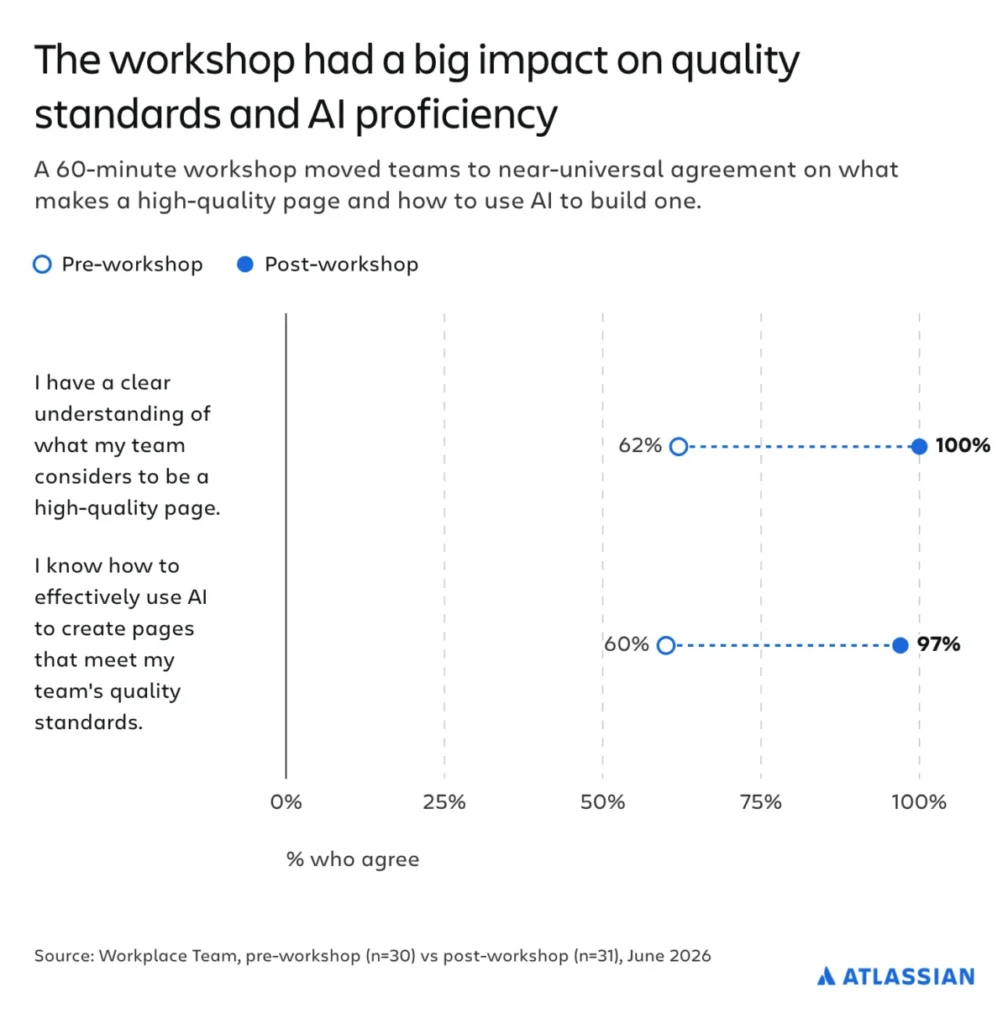
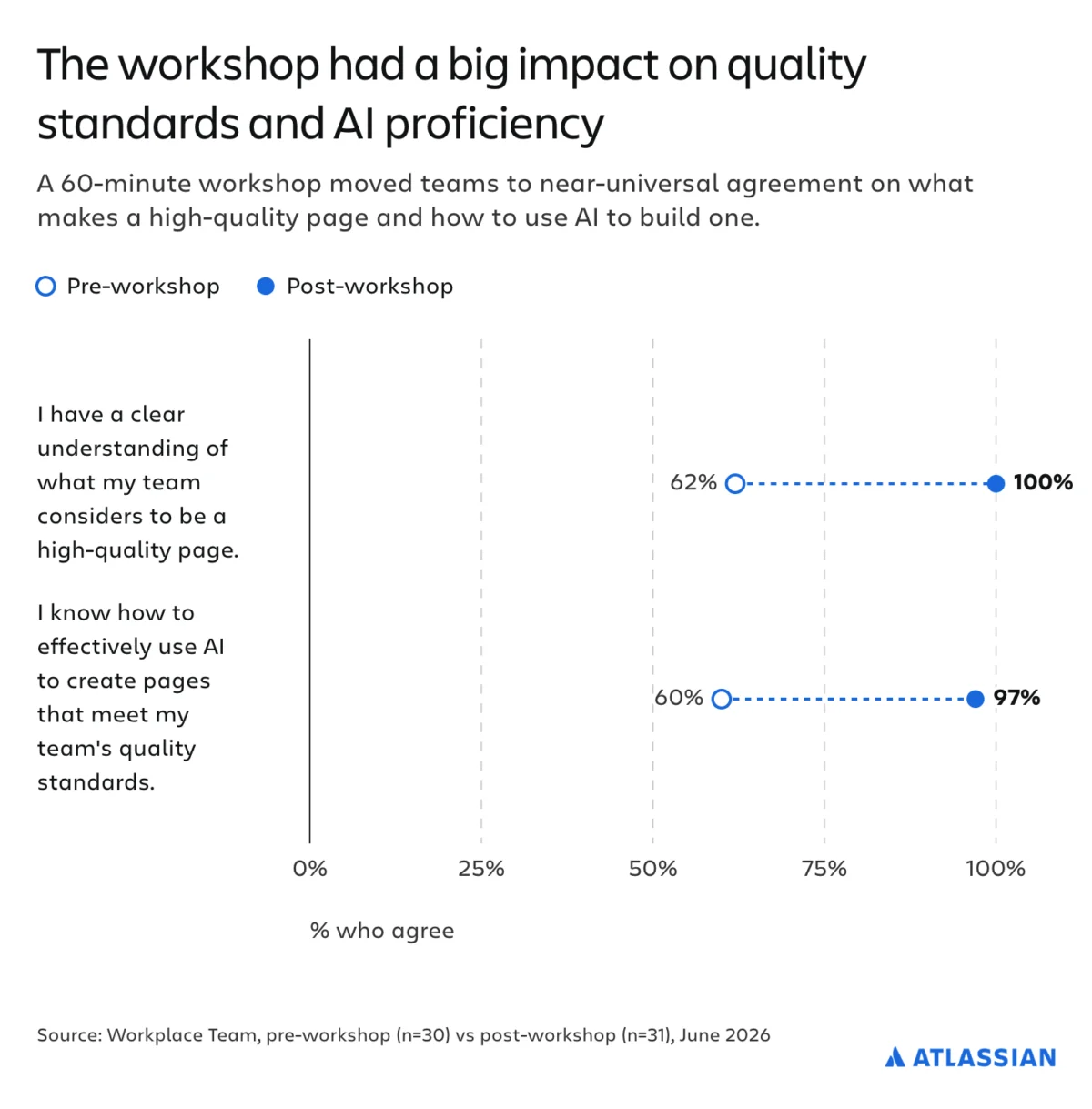
To measure the efficacy of the workshop, participants were surveyed before the session, immediately following the session, and again two weeks later. These surveys utilized a five-point agreement scale to assess the participants’ understanding of quality standards and their confidence in using AI to meet those standards. The results showed a dramatic shift in team alignment. Prior to the workshop, only 62% of the participants agreed that they knew what their team considered to be a high-quality page. Following the 60-minute session, that number rose to 100%, indicating universal agreement on quality benchmarks.

Furthermore, the workshop significantly boosted technical confidence and proficiency. Before the training, 60% of the employees felt they knew how to use AI to create a quality page; after the workshop, this figure rose to 97%. This suggests that the primary barrier to effective AI use is not a lack of access to the tools, but a lack of clarity on how to direct those tools toward a specific, high-quality outcome. When teams are given the opportunity to vocalize and formalize their standards, they become better equipped to prompt AI effectively and to edit its output with a critical eye.
The study also highlighted a notable change in the culture of accountability and feedback within the pilot group. Post-workshop data showed that 94% of participants felt more comfortable providing feedback on AI-generated pages created by their peers. This is a critical development, as the "polish" of AI work often makes reviewers hesitant to criticize it. Additionally, 97% of participants reported a heightened sense of personal responsibility to ensure their pages met the team’s standards before sharing them. This shift from passive reliance on AI to active ownership of the final product is essential for eliminating workslop.
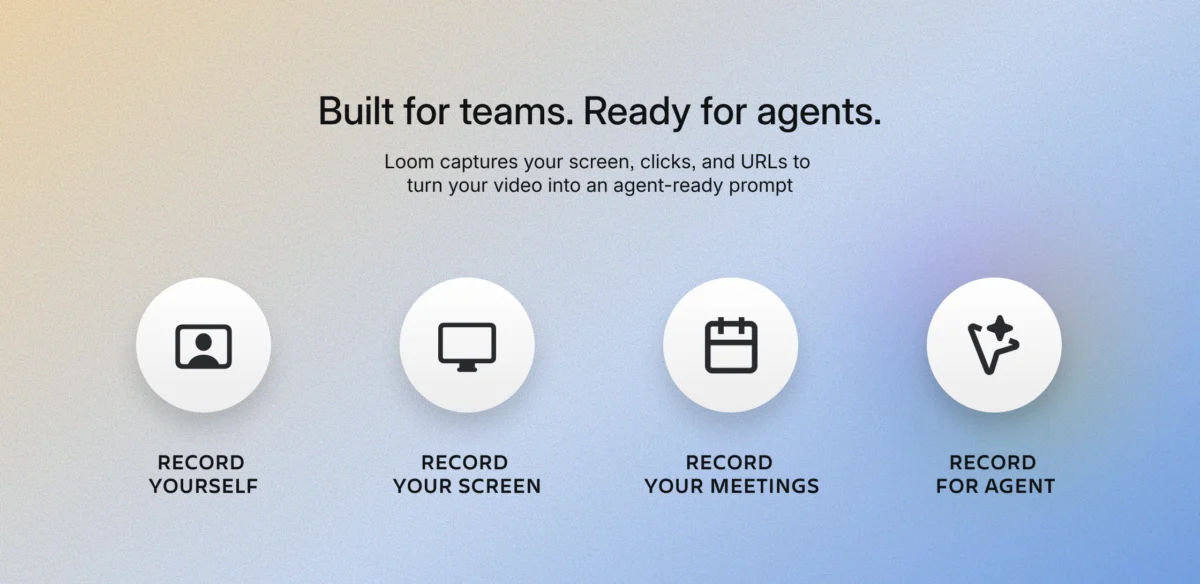
Participants in the study also identified specific, concrete tactics to integrate into their daily workflows to maintain these standards. One such method involved recording a brief video using Loom to explain the underlying logic and goals of a project before asking Rovo, Atlassian’s AI agent, to draft a page. This "human-first" approach ensures that the AI is working from a foundation of clear human intent rather than generating content in a vacuum. By providing the AI with more context and a clearer set of instructions, the resulting output is more likely to be relevant and useful, rather than just superficially polished.
While the pilot study was relatively small, the results were compelling. The researchers noted a 67% agreement among the team that their pages met a higher-quality standard post-workshop, compared to a baseline of 40%. While the study’s authors acknowledged that these findings are not yet statistically significant due to the small sample size, the overwhelming positive feedback—including a 97% recommendation rate from participants—suggests that the workshop model is a highly effective intervention.
Morgan Weaving, a Senior Workplace Researcher at the Teamwork Lab, emphasized the simplicity of the solution. According to Weaving, the "fix" for the workslop problem does not require complex technical overhauls or extensive retraining. Instead, it requires teams to engage in honest, direct conversations about their expectations. By defining "what good looks like" out loud and agreeing on the specific role AI should play in the creative process, teams can establish a shared "bar" that prevents the degradation of work quality.
The broader implications of the Teamwork Lab’s findings suggest that as AI becomes more ubiquitous, the value of human alignment and clear communication will only increase. Organizations that fail to set these standards risk falling into a cycle of "productivity theater," where a high volume of work is produced and polished, but very little of it contributes to actual progress. The study concludes that workslop is a symptom of a disconnect between human strategy and machine execution. When teams take the time to align on quality, they can reclaim the time-saving benefits of AI without sacrificing the trust of their colleagues or the integrity of their output.
As the pilot continues through 2026, the Teamwork Lab intends to refine these workshop phases to help more teams across different departments. The ultimate goal is to transform AI from a generator of "slop" into a powerful engine for high-standard, high-impact work. By focusing on the "human" side of the AI equation—clarity, accountability, and shared standards—companies can ensure that their investment in artificial intelligence leads to genuine gains in productivity and a more reliable, transparent work environment.