11

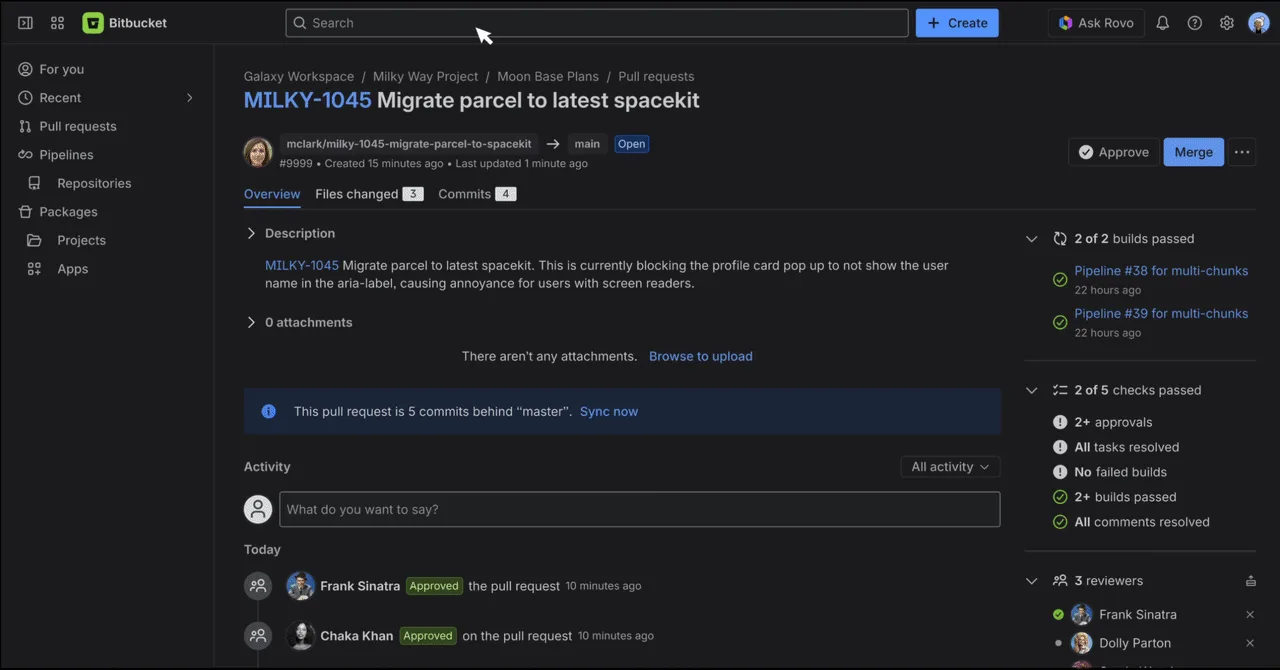
Atlassian has officially announced a significant upgrade to its Bitbucket Cloud platform with the introduction of a new code search experience, currently available in open beta. This overhaul is designed to provide a faster, more integrated, and more reliable way for developers to navigate their codebases without the need to exit their primary workflows. As software projects grow in complexity and repositories multiply, the ability to locate specific strings, functions, or configurations becomes a critical component of the development lifecycle. Atlassian’s latest update aims to address these challenges by rebuilding the search infrastructure from the ground up, focusing on speed, accessibility, and high-trust results.
For modern development teams, code search serves as a foundational tool for several high-frequency tasks. It is frequently the quickest method for exploring an unfamiliar codebase, investigating the root cause of a production incident, auditing the usage of specific APIs, or determining the scope of a necessary refactor. Recognizing that the previous search capabilities needed to evolve to meet the demands of enterprise-scale development, the Bitbucket team has transitioned to a "code-first" philosophy. This means the search results are no longer just a list of file names, but a dedicated environment where code visibility and context are prioritized.
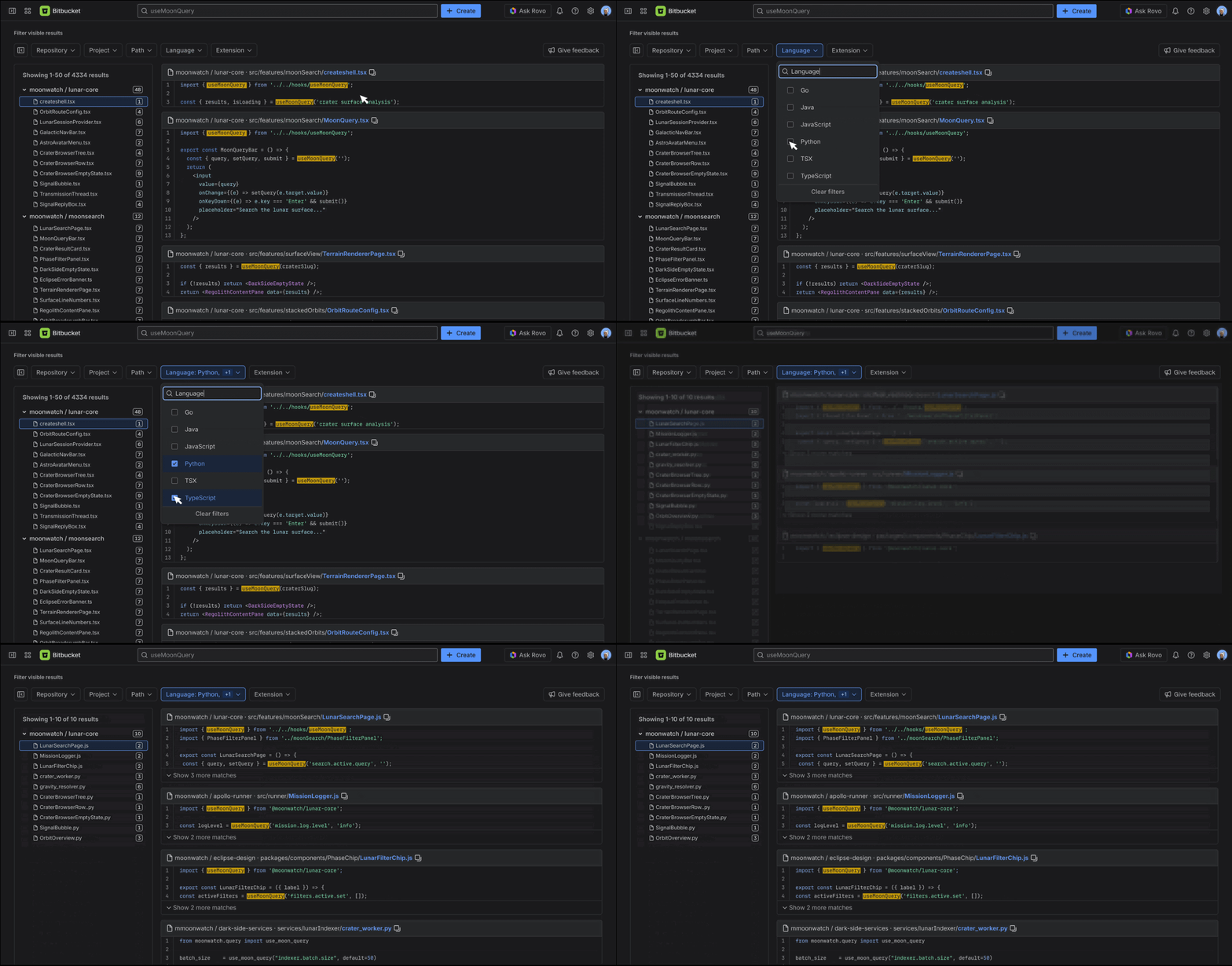
One of the primary improvements in this update is the introduction of a global entry point for search. This feature allows developers to initiate a search from anywhere within the Bitbucket Cloud interface. By centralizing the search function, Bitbucket aims to eliminate the friction associated with navigating through multiple menus to find a specific line of code. Once a query is entered, the system transitions the user into a dedicated, full-page results experience. This interface is specifically optimized for reading code, providing a clear and expansive view that mimics the environment of a local integrated development environment (IDE).
To assist users in navigating this new system, Atlassian has clarified the distinction between finding a repository and searching for code within those repositories. In the new interface, users looking for a specific repository can simply begin typing the name in the search bar and select the appropriate entry from the "Repositories" list in the dropdown menu. This can be done quickly using the arrow keys and the Enter or Return key. Conversely, to search for code across the entire workspace, users type their query and press Enter or click the "Search in code" option. To further refine these searches, Bitbucket has introduced the repo: filter, which allows developers to scope their search to a single repository, such as using the command repo:moonlight-lunar-integration auth to find authentication logic within a specific project.
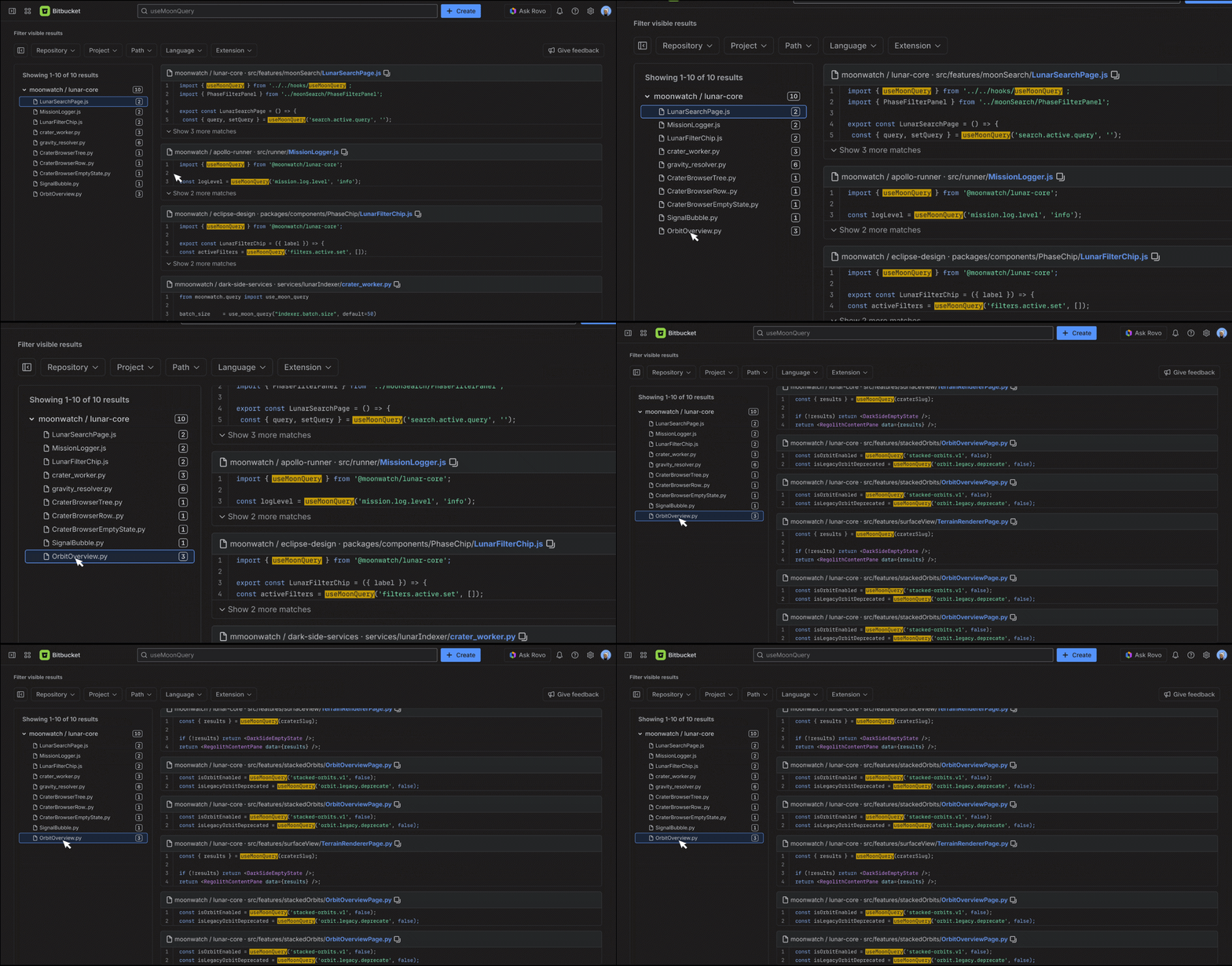
The user interface of the results page has been redesigned to be "code-first," meaning that matches are displayed with full syntax highlighting. This allows developers to scan through logic and identify relevant code blocks at a glance. Context is key in code search; seeing the lines of code surrounding a match helps a developer understand how a particular function is being used without needing to open the full file immediately. Furthermore, the search experience is heavily optimized for keyboard usage, catering to the preferences of power users. Keyboard shortcuts such as the forward slash (/) to initiate search, arrow keys for navigating through the list of results, and the Enter key to open files enable a fluid, mouse-free navigation experience.
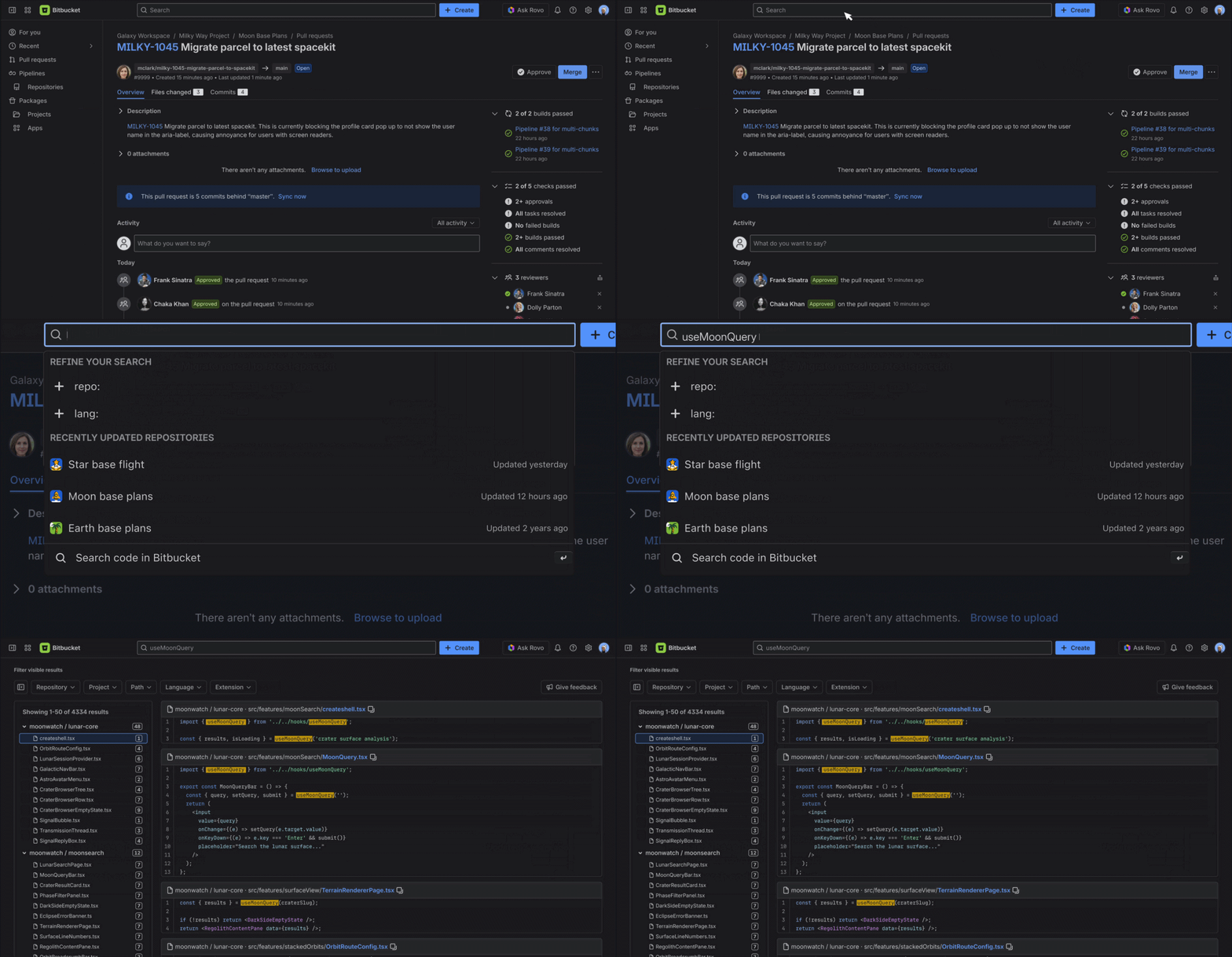
Precision in search is another area where this update provides substantial value. The new system includes powerful filters and query refinement tools that help narrow down results in large-scale workspaces. Developers can filter their searches by repository, project, programming language, file path, or file extension. The search bar now provides active suggestions for filters such as repo:, lang:, and path:. These tools are particularly useful for teams managing monorepos or organizations with hundreds of microservices, where a generic search might otherwise return an overwhelming number of irrelevant results. By using a command like lang:python or path:src/utils, a developer can instantly strip away the noise and focus on the exact file type or directory they are interested in.
The development of this new search engine was driven by the need to support everyday developer workflows more effectively. In the context of incident investigation, the speed of the new search allows teams to quickly track down where an error-prone function is defined or where a specific environment variable is being called. For architectural audits, the search provides a reliable way to see how an API is consumed across multiple projects, ensuring that changes do not cause breaking regressions. When scoping a refactor, the ability to see every instance of a class or method across the entire workspace allows for more accurate estimation of effort and risk.
Atlassian is rolling out this open beta progressively across Bitbucket Cloud workspaces. The availability of the feature is tied to the indexing of a workspace’s code. As soon as a workspace has been fully indexed by the new system, the enhanced search experience becomes the default. To ensure a smooth transition, the rollout includes a quick onboarding guide that appears when a user first accesses the new search, helping them familiarize themselves with the new shortcuts and filtering syntax. The company has indicated that availability will continue to expand to more workspaces over the coming weeks as the backend infrastructure scales to accommodate the data.
While the current beta focuses on speed and reliability, Atlassian has also provided a glimpse into the future of code search within Bitbucket Cloud. The roadmap includes making the search "smarter" by incorporating a deeper understanding of developer intent. This suggests a move toward semantic search capabilities, where the system understands the relationships between different parts of the code rather than just matching literal text strings. By expanding how developers discover code, Atlassian hopes to turn the search bar into a more proactive tool for discovery and knowledge sharing within engineering organizations.
For developers looking to dive deeper into the technicalities of the new system, Atlassian has updated its support documentation. The "Search in Bitbucket Cloud" documentation provides comprehensive details on supported search syntax, a full list of keyboard shortcuts, and information regarding how the indexing process works. This resource is intended to help teams maximize the utility of the tool as it moves through the beta phase toward general availability.
The Bitbucket team is also actively seeking user feedback during this period. The search results view includes a "Give feedback" action, encouraging developers to report issues, suggest new features, or share their general experience with the tool. This feedback loop is essential for Atlassian to refine the product before its final release, ensuring it meets the diverse needs of the global developer community.
The launch of the code search beta represents a major step in the evolution of Bitbucket Cloud. By prioritizing a fast, keyboard-centric, and context-rich search experience, Atlassian is addressing one of the most common bottlenecks in the development process. As the rollout continues, developers can begin using the new features immediately by opening Bitbucket Cloud and using the / shortcut to explore their codebase with greater precision and speed than previously possible. The focus remains on providing a search tool that is not only a utility but a seamless extension of the developer’s natural workflow, grounded in results that can be trusted for critical engineering tasks.