11

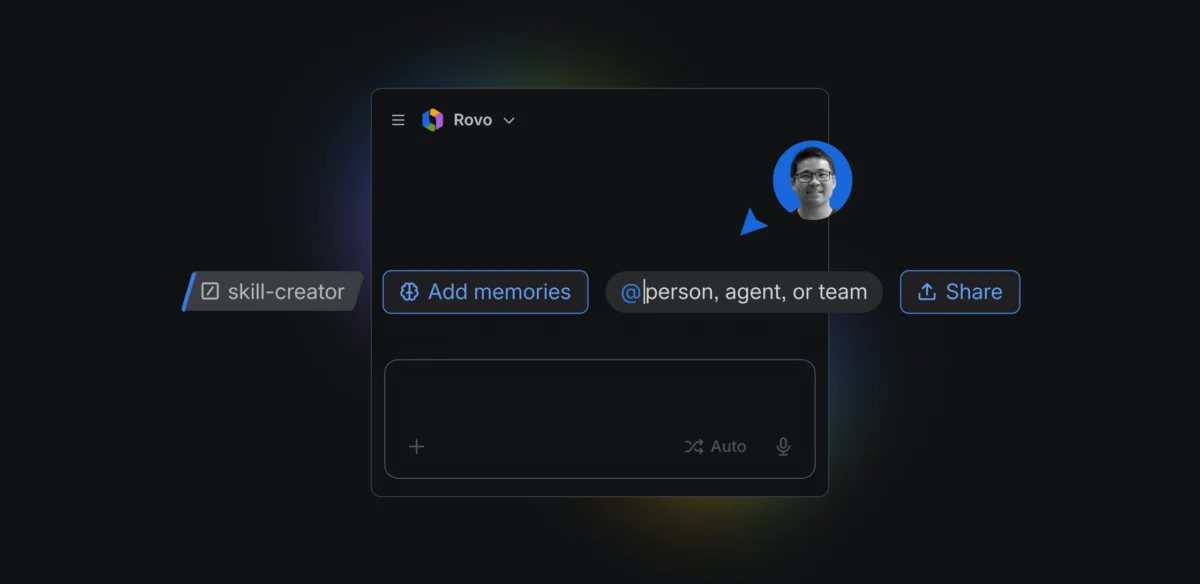
The landscape of enterprise artificial intelligence is undergoing a significant shift from individual productivity tools to collaborative systems designed for collective organizational intelligence. Atlassian, a leader in team collaboration software, has announced a major update to Rovo, its AI-powered teammate, introducing a suite of features aimed at making AI more transparent, specialized, and integrated into the multi-stage workflows typical of modern business environments. The new updates—which include visible memory controls, @mentionable agents, shareable chats, and natural language custom skills—are built on the premise that while most AI is designed for a single user in a single moment, professional work is inherently shared, continuous, and cumulative across diverse teams.
The core philosophy driving these updates is the recognition that work rarely stays within the confines of one application or one person. In a standard enterprise lifecycle, a project might begin as an engineering sprint tracked in Jira, evolve into a comprehensive marketing launch plan documented in Confluence, and eventually transition into customer support knowledge within Jira Service Management. Throughout this progression, information touches multiple connected apps and various specialized teams. Atlassian’s Rovo is designed to act as the "connective tissue" for this journey, utilizing the Teamwork Graph to understand how work, tools, and projects are interlinked.
One of the most significant additions to the platform is "Memory you can see and shape." Historically, many AI systems have operated as "black boxes," learning user preferences and project contexts in the background without providing users a way to audit or refine that knowledge. Atlassian is moving toward a model of transparency by introducing a dedicated memory view. This interface allows users to see exactly what Rovo has learned about their work habits and project specifics. For instance, if Rovo remembers that a user prefers summaries formatted in bullet points, that a specific project was successfully shipped in the first quarter, or that sensitive customer data must be excluded from certain drafts, the user can now verify and edit these data points.
This level of control ensures that users do not have to repeatedly provide the same context or correct the AI on recurring preferences. Furthermore, the system includes robust governance features, allowing both individual users and site administrators to toggle the memory function on or off at any time, ensuring that the AI’s learning capabilities align with organizational privacy and data handling policies.
To address the need for specialized expertise within a single conversation, Atlassian has introduced the ability to @mention agents directly within Rovo Chat. This feature mirrors the social dynamics of modern communication platforms like Slack or Microsoft Teams, but applies them to AI agents. When a project reaches a phase requiring specific technical or analytical skills—such as competitive intelligence, launch planning, or deep data analysis—a user can summon a specialized agent into the existing chat thread.
The primary advantage of this "mention" system is the preservation of context. When a specialized agent is brought into a conversation, it does not start from a blank slate; it inherits the full history of the thread, including previous decisions, shared artifacts, and the general direction of the work. This eliminates the need for users to manually brief the AI on what has already transpired, allowing the specialized agent to pick up exactly where the previous interaction left off.
Recognizing that the "thinking" behind a decision is often as valuable as the decision itself, Atlassian has also launched Shareable Chats. In traditional workflows, handing off a project often involves writing a static summary or a "handover" document. This process frequently results in the loss of nuance and the detailed reasoning that led to a particular conclusion. With Shareable Chats, users can now share the entire interactive analysis and planning session with their teammates.
This feature allows a team member to see the step-by-step logic used to reach a conclusion, enabling the whole team to build upon existing work rather than starting from scratch. To maintain security and data integrity, these shared chats remain "permissions-aware." This means that even if a chat history is shared, a teammate will only be able to view information and documents they already have authorized access to within the Atlassian ecosystem, preventing unauthorized data exposure.
The update also introduces a powerful new way to codify internal processes through "Custom Skills for Workflows." Every organization operates with its own unique set of standards, specialized language, and repeatable procedures, such as specific protocols for triaging software bugs or summarizing weekly executive updates. While standard AI can assist with general tasks, it often lacks the specific "house style" or procedural knowledge of a particular company.
Rovo now allows users to encode these unique processes as custom skills using natural language. A user can simply instruct the chat to "create a skill that generates a sprint summary from my board." Rovo then engages in a clarifying dialogue, asking questions to understand potential edge cases and the desired visual output. These skills can be created, refined, and updated either directly within the chat interface or through Rovo Studio. This democratizes the creation of automated workflows, allowing non-technical users to build sophisticated, repeatable AI processes without writing code.
The integration of these features is powered by the Teamwork Graph, Atlassian’s proprietary data model that maps the relationships between people, goals, and work across an organization’s entire software stack. By leveraging this graph, Rovo can surface insights that are not just general, but highly specific to the organizational context. This allows the AI to understand, for example, that a mention of "Project Phoenix" refers to a specific set of Jira tickets and Confluence pages, rather than a generic term.
From a strategic perspective, these updates represent Atlassian’s broader commitment to "Team AI." By focusing on features that facilitate the transfer of context and the codification of team-specific knowledge, the company is positioning Rovo as more than just a chatbot, but as a dynamic member of the workforce that retains institutional memory and scales specialized expertise.
The rollout of these features is currently underway. While the memory controls, agent mentions, and shareable chats are becoming available to users, the custom skills functionality is scheduled to be deployed across all instances over the coming week. This phased release ensures that organizations can begin integrating these collaborative AI tools into their daily operations immediately.
As AI continues to permeate the enterprise, the ability to manage context and share expertise will likely become a key differentiator for high-performing teams. Atlassian’s latest updates to Rovo Chat aim to provide the infrastructure for this transition, ensuring that as projects move from engineering to marketing to support, the intelligence gathered along the way moves with them. By allowing teams to "teach" the AI their specific workflows and "share" the logic behind their work, Atlassian is attempting to solve one of the most persistent problems in project management: the loss of information and momentum during handoffs.
In summary, the new Rovo Chat capabilities focus on three pillars: control, specialization, and collaboration. Users gain control through visible memory; they gain specialization through @mentionable agents and custom skills; and they gain collaborative efficiency through shareable, permissions-aware chat histories. These tools are designed to ensure that context is not just captured but shared effectively across the various applications and teams that define the modern workplace. Atlassian encourages users to begin utilizing these features this week to transform repetitive work into reusable workflows and to maintain momentum across complex, multi-team projects.