11

Anthropic has begun embedding an invisible, machine-readable watermark into all content generated by its AI model, Claude. This watermark is designed to be resilient, surviving copy-and-paste operations and applying across all global versions of Claude. This development, driven by impending European Union regulations, raises questions about its impact on content creators, marketers, and search engine rankings.
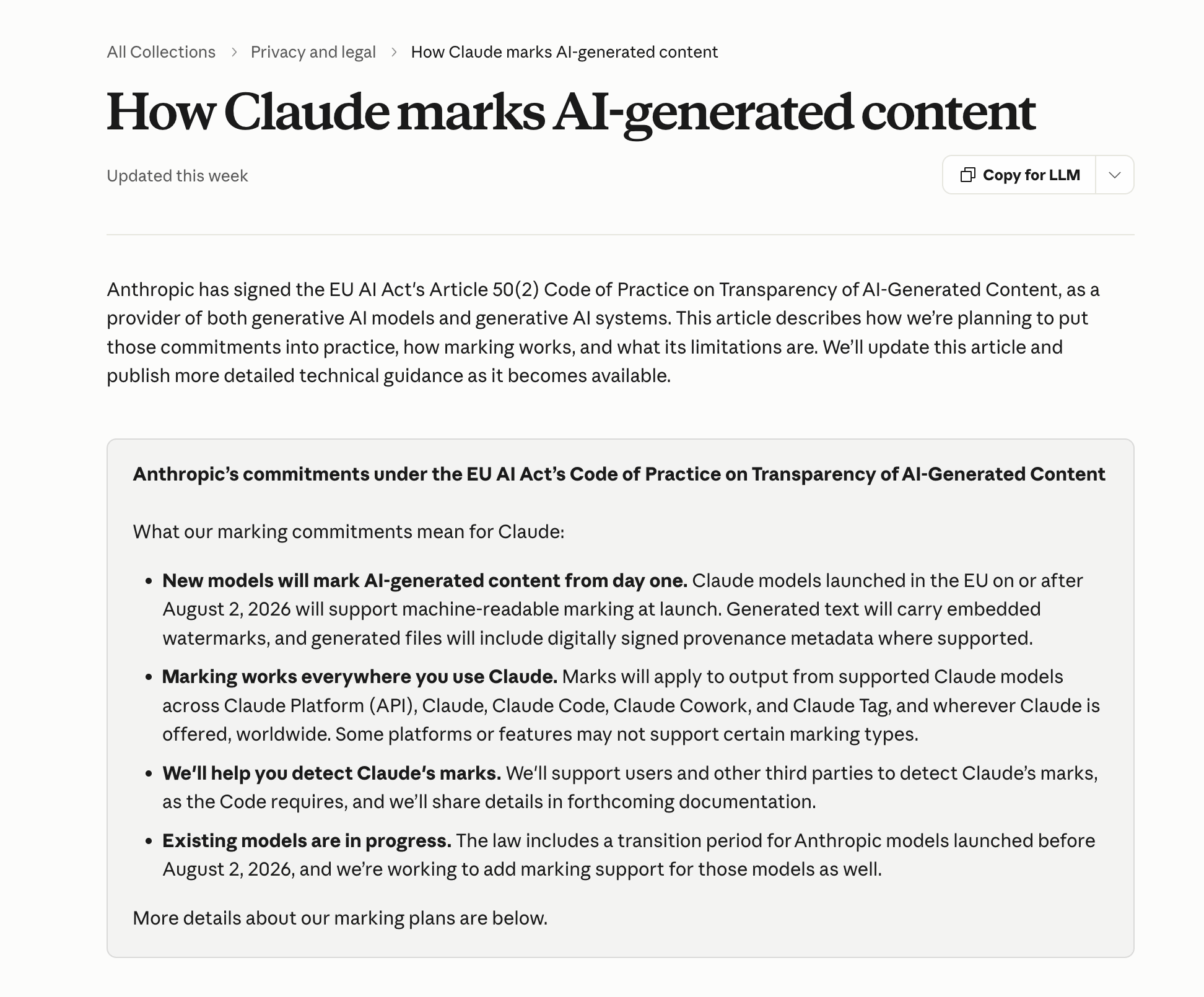
The announcement from Anthropic, detailed in their support documentation, states that the watermark is a compliance measure for Article 50 of the EU AI Act, which became applicable on August 2, 2026. This article mandates that providers of generative AI systems must mark their output in a machine-readable format. The watermark’s purpose is to indicate that content "may have been processed by Claude," a phrasing that emphasizes Claude’s role in the generation pipeline rather than definitively identifying the original author.
Anthropic clarifies that the watermark’s presence does not exclusively mean the content was entirely authored by AI. For instance, if a user pastes their own draft into Claude for editing, such as correcting typos, translating, or summarizing, the resulting output can carry the mark. Conversely, the absence of a watermark does not guarantee that content was not processed by Claude, as marks can be undetected in short passages, heavily rewritten text, or when format conversions strip file metadata.
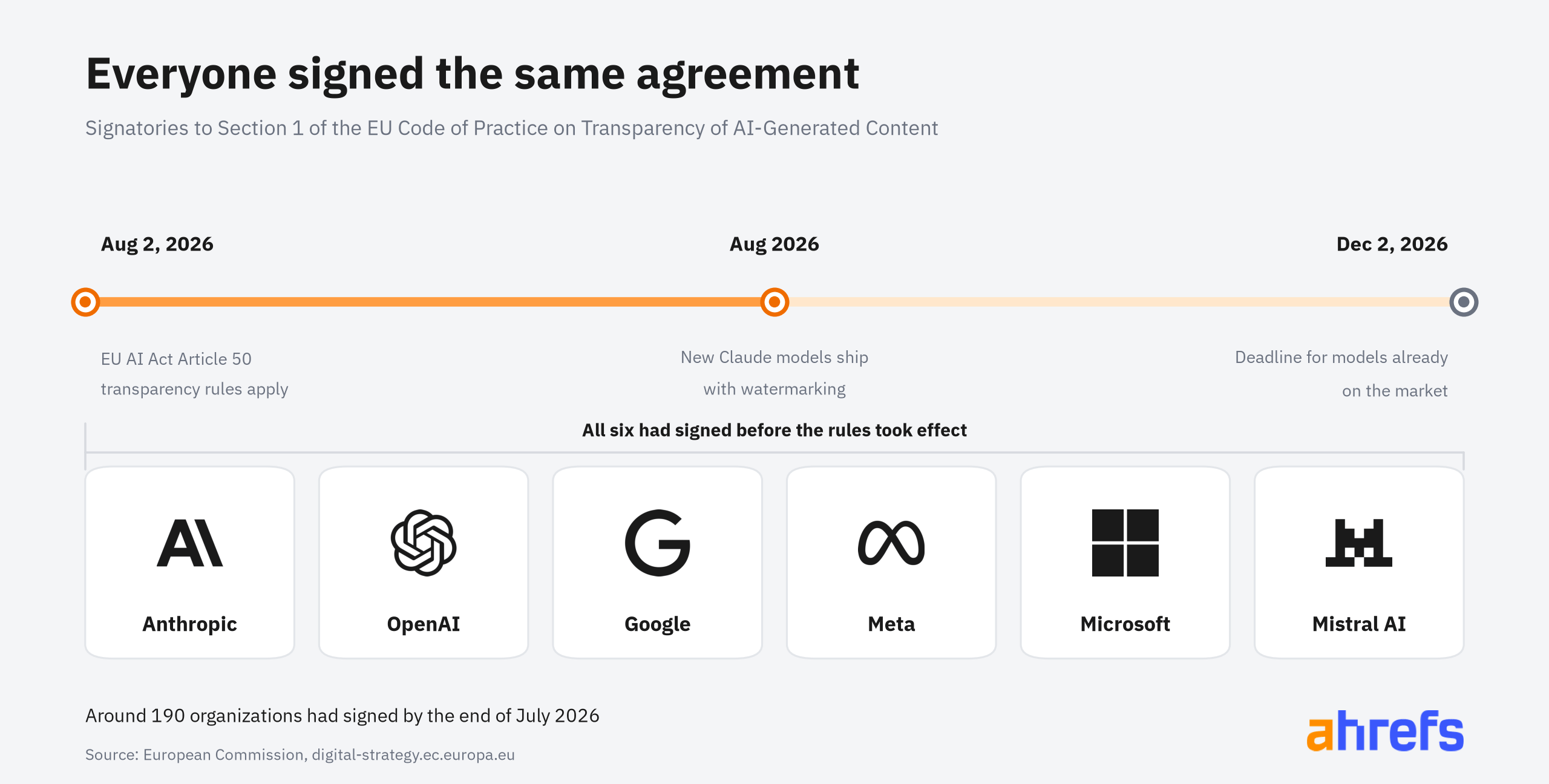
This move by Anthropic is a precursor to similar implementations by other major AI providers. The EU AI Act’s obligations extend to all significant AI companies, meaning that switching to alternative models like those from OpenAI or Google is unlikely to circumvent future watermarking requirements. The EU legislation also includes Article 50(4), which impacts publishers of AI-generated text on matters of public interest, requiring disclosure. However, guidance from the European Commission suggests this requirement is waived if the text undergoes human review or editorial control by a responsible natural or legal person.
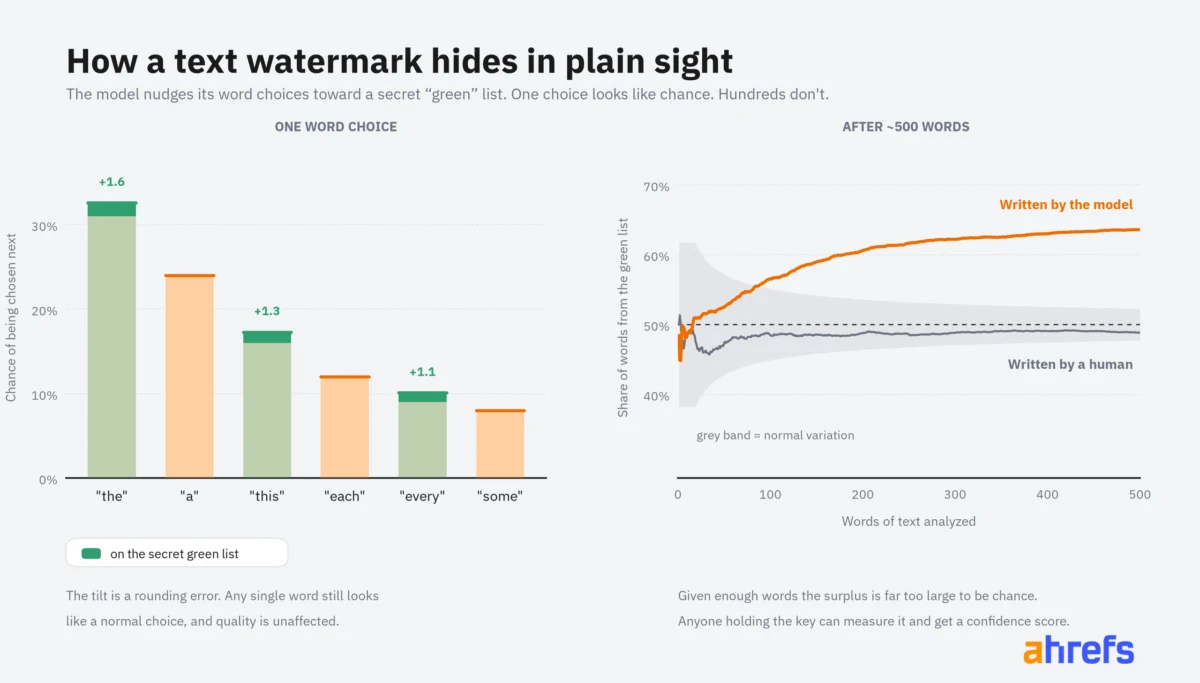
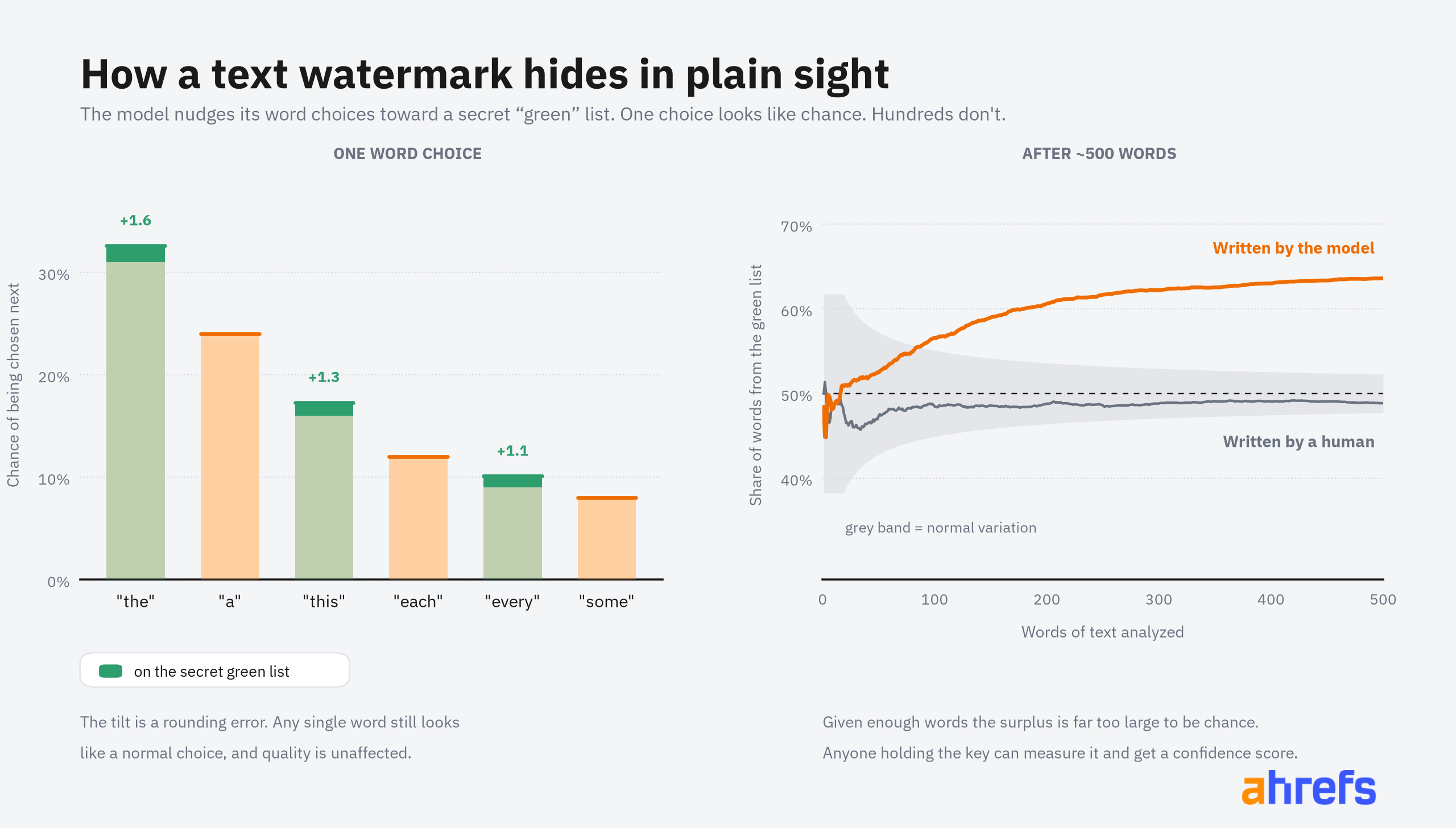
The technical mechanism behind this watermarking involves subtly nudging the AI model’s word choices toward a predefined, secret list. Large Language Models (LLMs) generate text token by token, assigning probabilities to potential next tokens. Watermarking technology, as described in research such as by Kirchenbauer et al., influences these probabilities by favoring a randomized set of "green" tokens during the generation process. Individually, these token choices appear natural, but across a substantial volume of text, the statistical pattern becomes discernible and difficult to attribute to chance. Detection requires a specific key, currently held by Anthropic, as their detection method has not yet been publicly disclosed.
Limitations of this watermarking technology are acknowledged. Short texts may not contain sufficient signal for reliable detection. Significant rewriting or translation can degrade the watermark’s effectiveness, with confidence scores dropping sharply as noted by Google DeepMind. File format conversions can strip metadata containing the watermark, and crucially, detection necessitates access to the proprietary key.
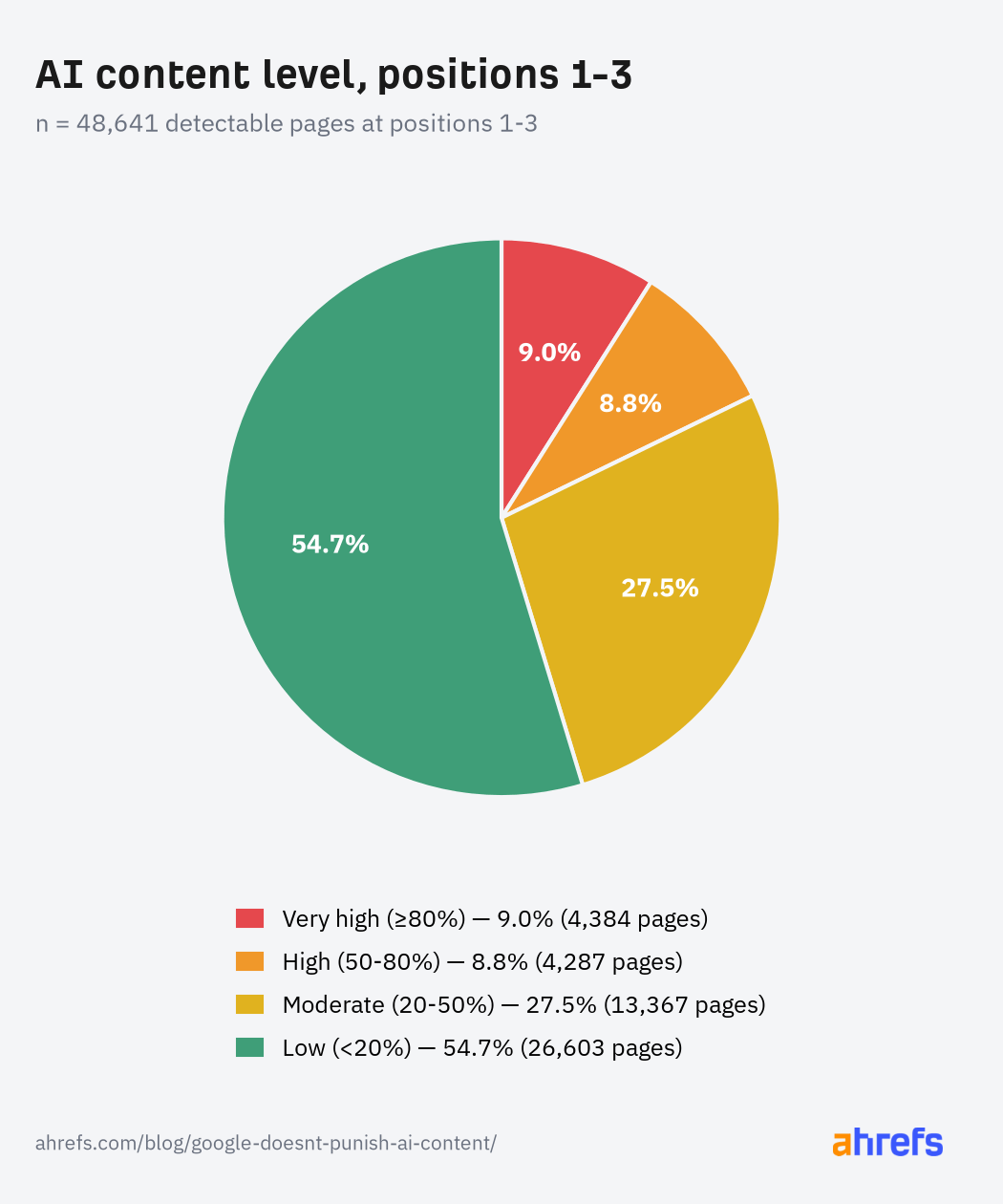
The potential impact of AI content watermarking on Google search rankings is considered minimal by many experts. Google has consistently maintained an agnostic stance on AI-generated content, focusing instead on content quality and helpfulness. Research indicates that AI-generated content currently ranks effectively in Google search results, with a gradual, not sharp, decline in AI content prevalence as search result positions improve. The data does not suggest a significant penalty for AI content itself, but rather for poor-quality content, which AI can sometimes produce. Therefore, it is unlikely that watermarking will become a direct ranking signal.
Instead, the primary utility of AI content watermarking is anticipated in contractual and legal contexts. For instance, agencies that have agreed to produce human-written content or clients who have paid for such services may use watermarking to verify adherence to agreements. However, even in these scenarios, a detected watermark only indicates Claude’s involvement in the processing, not the entirety of the writing process, and its absence offers little definitive proof.
Tools like Ahrefs’ Site Explorer already offer AI content level ratings for web pages without requiring provider cooperation or secret keys. This capability is independent of specific watermarking technologies and serves as a broader detector of AI-generated content. This highlights a potential gap where watermarking might not be universally detectable if the detection method is proprietary.
In conclusion, the introduction of AI content watermarking by Anthropic, and its anticipated adoption by other major AI providers, is largely a response to regulatory requirements, specifically the EU AI Act. While this development marks a significant step in the transparency of AI-generated content, its immediate impact on content marketers and search engine optimization strategies is expected to be limited. The focus for content creators and businesses is likely to remain on producing high-quality, valuable content, regardless of the tools used in its creation. The watermarking’s main application is foreseen in resolving disputes where the origin and authorship of content are contractually significant.