 11

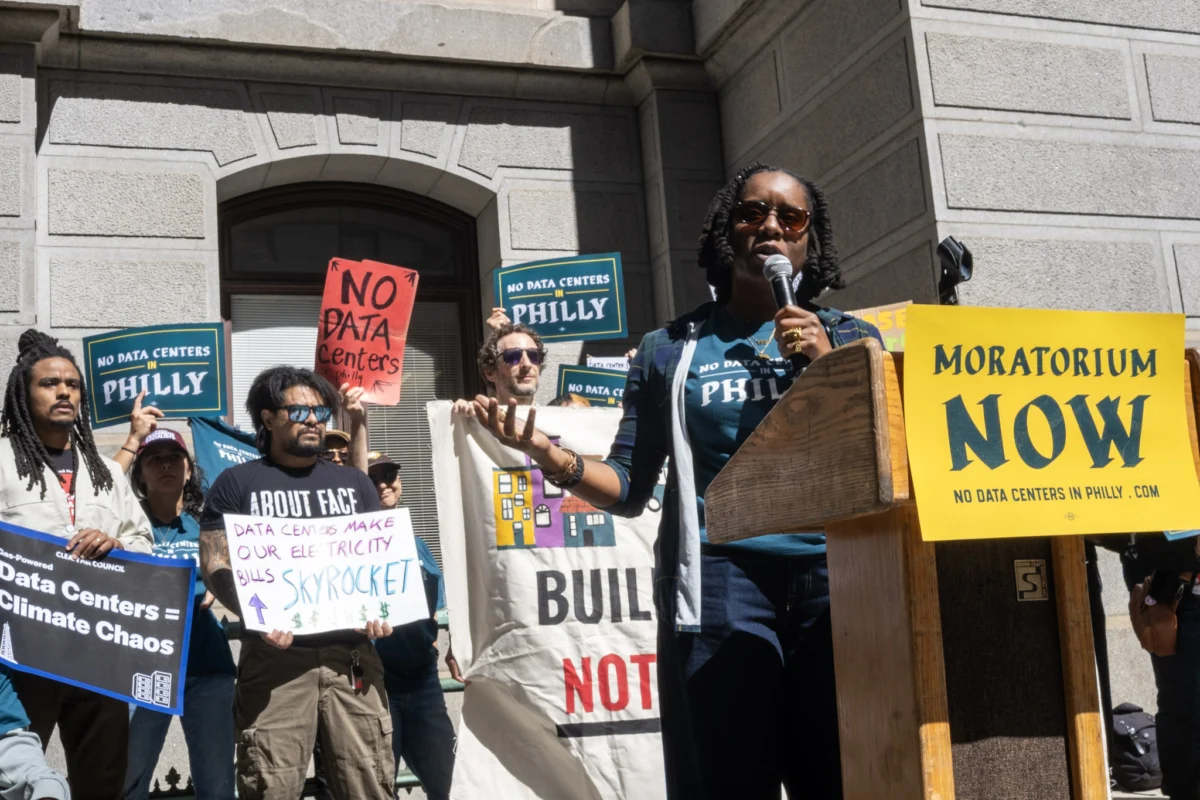
Across the country, Americans are embroiled in a significant debate regarding the potential construction of new AI data centers in their local communities, questioning how these facilities might fundamentally alter their daily lives and environments. Companies spearheading these data center projects, along with their high-profile customers, are actively promoting the promise of new employment opportunities and substantial economic growth. However, this appeal has largely failed to sway public opinion, with a recent Gallup poll indicating that a clear majority of Americans, approximately 54%, express opposition to data center construction in their immediate vicinity. This widespread resistance is primarily driven by profound concerns over the environmental footprint and intense energy demands associated with these burgeoning technological hubs.
For dedicated activist Shawmar Pitts, these anxieties are far from abstract theoretical discussions. His lived experience offers a visceral understanding of what it means to reside in the persistent shadow of American industrialization and its lasting impacts. Pitts, a lifelong resident of the Grays Ferry neighborhood situated in Southwest Philadelphia, grew up in close proximity to what was once the East Coast’s largest oil refinery. This massive industrial complex, a fixture in the community for decades, eventually ceased operations following a catastrophic explosion in 2019. The closure, while ending a chapter of heavy pollution, could not erase the legacy of its presence.
Throughout his childhood and into adulthood, Pitts observed many of his friends and family members grappling with chronic health conditions. Yet, for a significant period, he remained unaware of the potential causal link between these pervasive illnesses and the industrial behemoth next door. This crucial realization dawned upon him in 2018 when he encountered Philly Thrive, a local environmental justice organization. The group was tabling in his neighborhood, disseminating information about a proposed expansion of the very same oil refinery that had defined his community’s landscape.

"I read the information they had on the table about how living near the refinery affects you, and I’m looking at all the sicknesses on this paper, and I’m like, ‘My mother has this, my sister has that, my next-door neighbor suffers from this’ — every house, someone has something on that list," Pitts recounted to TechCrunch, describing the powerful moment of epiphany. This stark connection between his neighbors’ suffering and the refinery’s emissions galvanized him into action. "From that point, I was all the way in," he affirmed, committing himself fully to the cause of environmental justice.
Today, Shawmar Pitts has ascended to the role of managing co-director of Philly Thrive, the very organization that first opened his eyes to the environmental realities of his neighborhood. In his current capacity, Pitts is at the forefront of a growing movement advocating for a data center moratorium in Philadelphia. While no formal proposals for construction have yet been advanced or approved by city authorities, municipal officials have already pinpointed two potential sites for future development. One of these locations is situated in Northeast Philadelphia, while the other, notably, is in Pitts’s own Grays Ferry neighborhood, bringing the issue directly to the community he has dedicated his life to protecting.
The opposition to data center development from local residents is not an isolated phenomenon unique to Philadelphia. Across the United States, communities are increasingly mobilizing to push back against the establishment of new data center facilities. This resistance is particularly pronounced in cities and towns that grapple with finite resources, such as limited water supplies or constrained electrical grids. The backlash is often most swift and vehement from individuals living in communities that have historically borne the brunt of large-scale industrial activities, where the adverse marks of past industries, like pollution and health crises, are still acutely felt and remembered. These communities, having experienced the promises and subsequent realities of industrial growth, are now wary of new developments that may replicate similar patterns of environmental degradation and resource exploitation.
This sentiment was powerfully articulated by Sonya Sanders, the board president of Philly Thrive, during a recent rally held on a Monday at Philadelphia’s City Hall. Addressing the gathered crowd, Sanders declared, "We don’t want data centers. We don’t want the pollution, we don’t want the noise, and we know they’re not going to bring us more jobs." Her words resonated with the lived experiences of many attendees, highlighting the skepticism surrounding the economic benefits often touted by data center developers, especially when weighed against the environmental and quality-of-life costs.

Sanders’s personal story underscores the profound impact of industrial pollution on human lives. Her husband, who also resided in Grays Ferry, tragically succumbed to a rare form of bone cancer in 2020. As she conveyed, her husband neither smoked nor drank, leading her to firmly believe that the emissions emanating from the now-defunct refinery were the direct cause of his illness. At the rally, she expressed her heartbreak and outrage, stating, "In my eyes, they killed him. The pollution killed him. I believe he would be here today if he wasn’t silently murdered, because it was the pursuit of profit that killed him." This powerful testimony humanized the abstract concept of industrial pollution, transforming it into a deeply personal tragedy.
While a new data center in Philadelphia may not exert the same catastrophic environmental impact as the Philadelphia Energy Solutions (PES) refinery, which notoriously processed up to 335,000 barrels of crude oil on a daily basis before its closure, the burgeoning international competition to dominate the artificial intelligence industry presents its own set of significant environmental challenges. The computational demands of AI, particularly for training complex models, are extraordinarily energy-intensive. According to recent projections from BloombergNEF, a leading provider of strategic research, U.S. data centers are anticipated to consume more natural gas than both Germany and Japan combined by the year 2035. This revised forecast represents a staggering doubling of the firm’s projection from merely nine months prior, underscoring the escalating and rapidly accelerating energy requirements of the AI sector.
Natural gas, while often promoted as a cleaner alternative to other fossil fuels like oil and coal, is by no means harmless. Its combustion releases carbon dioxide, a potent greenhouse gas. Specifically, burning just one cubic foot of natural gas releases the equivalent of approximately 60 grams of carbon dioxide into the atmosphere. The projected additional data center demand is expected to generate an extra 1 million metric tons of greenhouse gas pollution each day. To put this figure into perspective, this daily increase in emissions would account for roughly 12% of all present-day U.S. greenhouse gas emissions, significantly exacerbating climate change. Furthermore, a comprehensive study conducted by Harvard University researchers in 2021 revealed that air pollution stemming from fossil fuel combustion is responsible for a staggering one in five deaths worldwide. This alarming statistic is poised to increase further as the age of AI ushers in greater energy consumption and associated emissions.
Annie Fox, an attorney with the Clean Air Council, further elaborated on these concerns at the rally. She highlighted a critical, yet often overlooked, aspect of data center operations: "A typical data center planned in Pennsylvania has hundreds of diesel engines that spew air pollution, and even if they’re supposedly reserved for emergencies, the government has already said that the data center should use those rather than drawing from an overstressed electrical grid during some heat waves." This indicates a systemic issue where backup diesel generators, intended for rare use, might become more frequently deployed to alleviate strain on the electrical grid, particularly during peak demand periods like heatwaves. "We can expect that to get more frequent," Fox warned, connecting the dots between increased energy demand, reliance on fossil fuel backups, and the broader climate crisis. "Fossil fuel-hungry data centers will worsen climate change, making those heatwaves more frequent and severe," she concluded, emphasizing the self-reinforcing negative cycle.

The growing chorus of concerned citizens across the country appears to be making an impact on elected officials. In New York, Governor Kathy Hochul took decisive action by signing an executive order that temporarily prevents the state from approving new permits for large-scale data center projects. This move signifies a recognition at the state level of the potential adverse impacts of unchecked data center proliferation. At a press conference, Governor Hochul articulated the rationale behind her decision, stating, "Progress shouldn’t arrive with a higher utility bill, deleted water supply, or noise pollution." She further emphasized the importance of local consent in such developments: "These data centers can only be built, should only be built in places that want them."
New York is not alone in taking such precautionary measures. Data center moratoriums, which are temporary prohibitions or pauses on new development, have also been approved and implemented in a number of other U.S. cities. These include Denver, Colorado; Indianapolis, Indiana; Asheville, North Carolina; Charlotte, North Carolina; and Reno, Nevada. The fundamental purpose behind these moratoriums is to grant city officials and local planning bodies crucial time. This period allows them to thoroughly investigate and collect more comprehensive information regarding the potential environmental, economic, and social impacts of constructing new data centers within their jurisdictions, ensuring more informed decision-making processes.
Donna Greenberg, a Philadelphia resident who attended the "No Data Centers in Philly" rally, articulated a range of concerns that echo those heard nationwide. She shared her anxieties with TechCrunch, stating, "I’m worried about pollution. I’m worried about surveillance and the fact that they’re going to have access to information they have no business knowing, and I’m concerned that they’re going to be using water and electricity that takes away from the people and the neighborhoods who need it." Her statement encapsulates the multifaceted worries of many citizens, encompassing environmental degradation, privacy concerns, and the equitable distribution of essential resources.
The Monday kick-off rally for the "No Data Centers in Philly" campaign garnered significant local support, with more than 100 people gathering to voice their opposition. The crowd chanted loudly and passionately, their collective voices aimed at ensuring that city council members inside their offices at City Hall would hear their demands and concerns. The strong turnout and fervent participation underscored the community’s determination to protect their neighborhoods from what they perceive as another potential industrial burden.

Reflecting on the unified effort, Shawmar Pitts expressed his profound admiration for his community’s resilience and activism. "I just think that our community standing up and fighting back is tremendous," Pitts remarked, acknowledging the significant undertaking required to challenge powerful industrial interests. He added, "It takes a lot of effort and a lot of people," emphasizing the collective power and sustained commitment necessary to advocate for environmental justice and community well-being in the face of rapid technological expansion.






