 11
11
Google’s stance on AI-generated content for Search Engine Optimization (SEO) has been clear: the evaluation of content hinges on its quality and helpfulness, not the tool used for its creation. The core issue that Google has always penalized is thin, unhelpful, and spammy content. Artificial intelligence merely amplifies the ease with which such content can be produced at scale, a distinction that is often blurred. This article explores why AI content is not inherently an SEO risk and likely never will be.
Google’s Stance on AI Content: Consistency Over Time
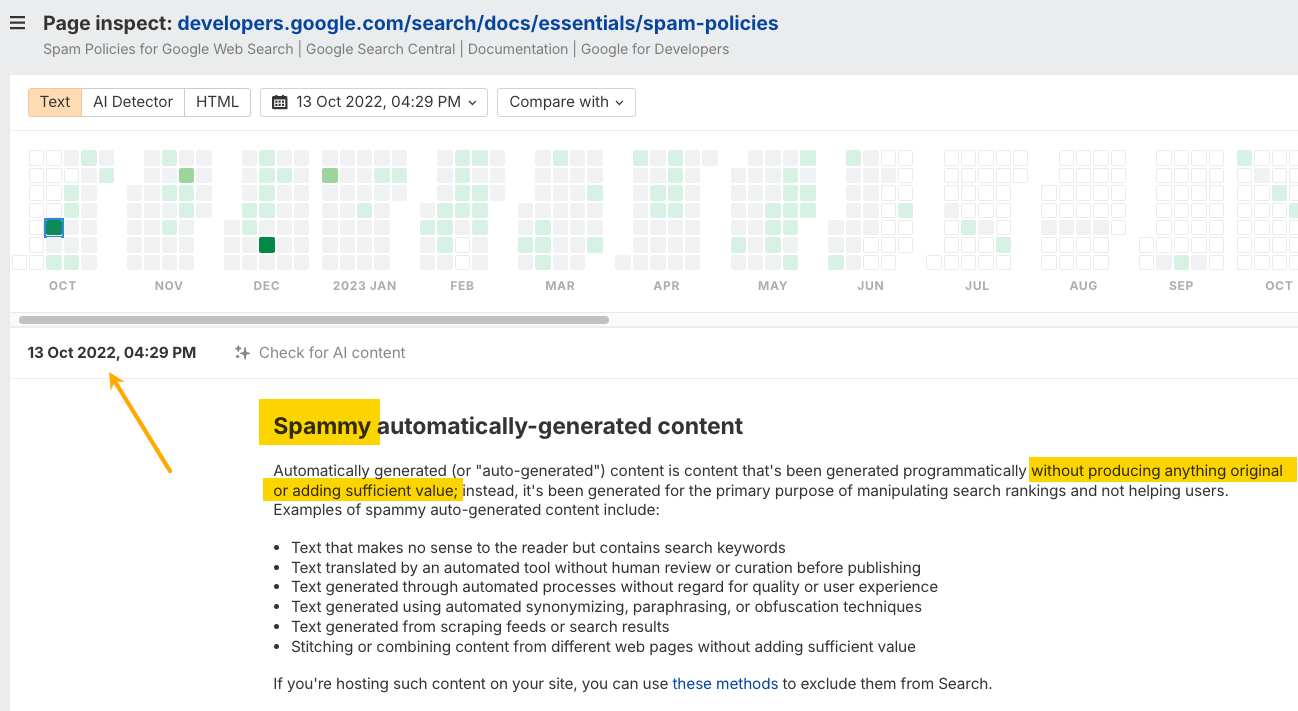
Long before the advent of sophisticated AI content generation tools, Google addressed "automatically generated content." Crucially, the penalty was never based solely on the method of creation. For instance, Wise operates a directory of currency conversion pages that are programmatically generated. Despite this automated origin, these pages have not faced penalties because they are not spammy and continue to perform well in organic search results. This principle extends to AI-generated content. Google’s guidance on AI content explicitly states that using automation, including AI, to generate content with the primary purpose of manipulating search rankings is a violation of its spam policies. Conversely, appropriate use of AI or automation that does not aim to manipulate search rankings is not against their guidelines. This focus on quality and intent, rather than the production method, aligns with the transformative potential of AI across various fields, including scientific and medical breakthroughs, making its application in content creation a logical progression.
Empirical Evidence: AI Content Already Ranks
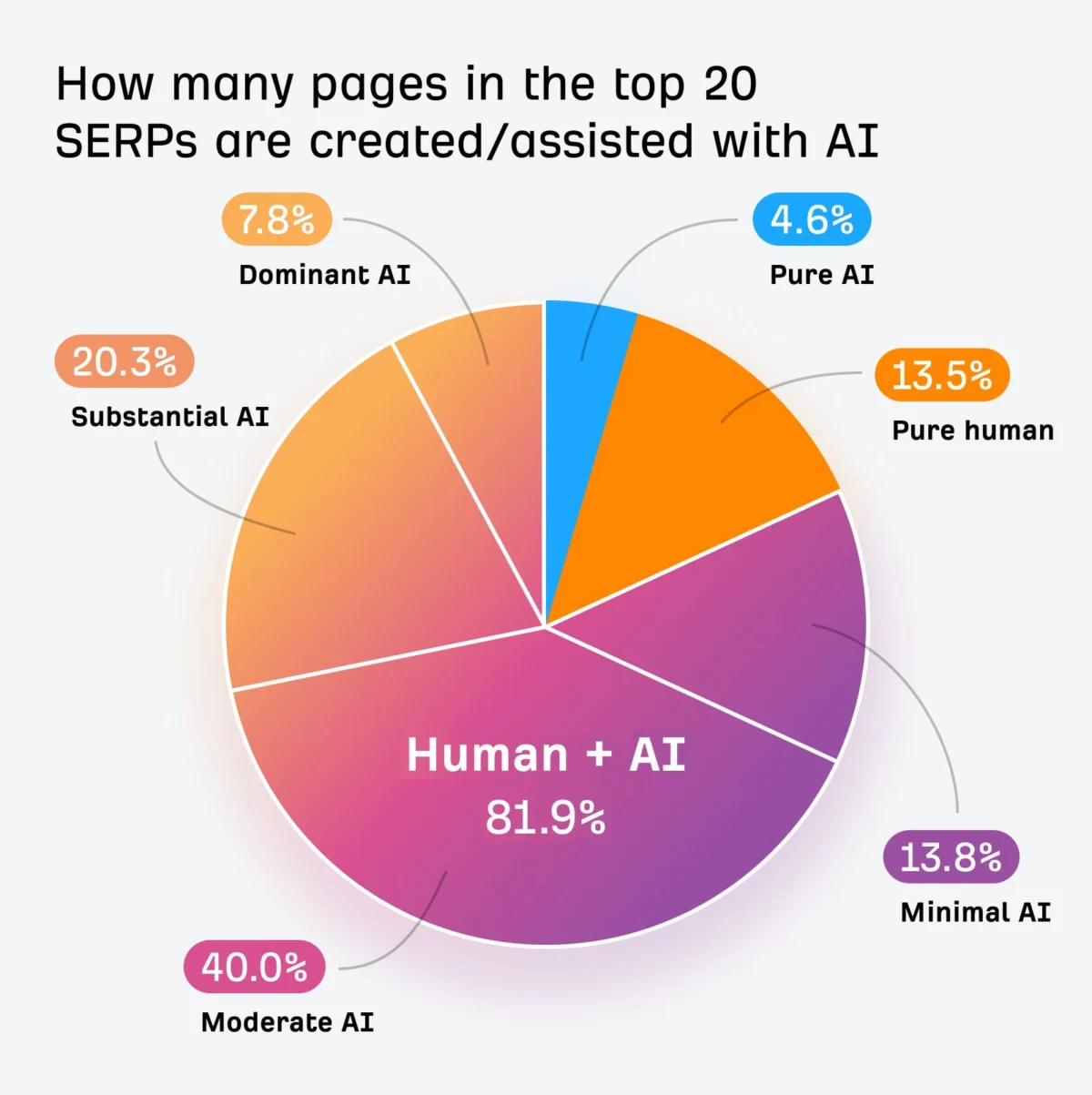
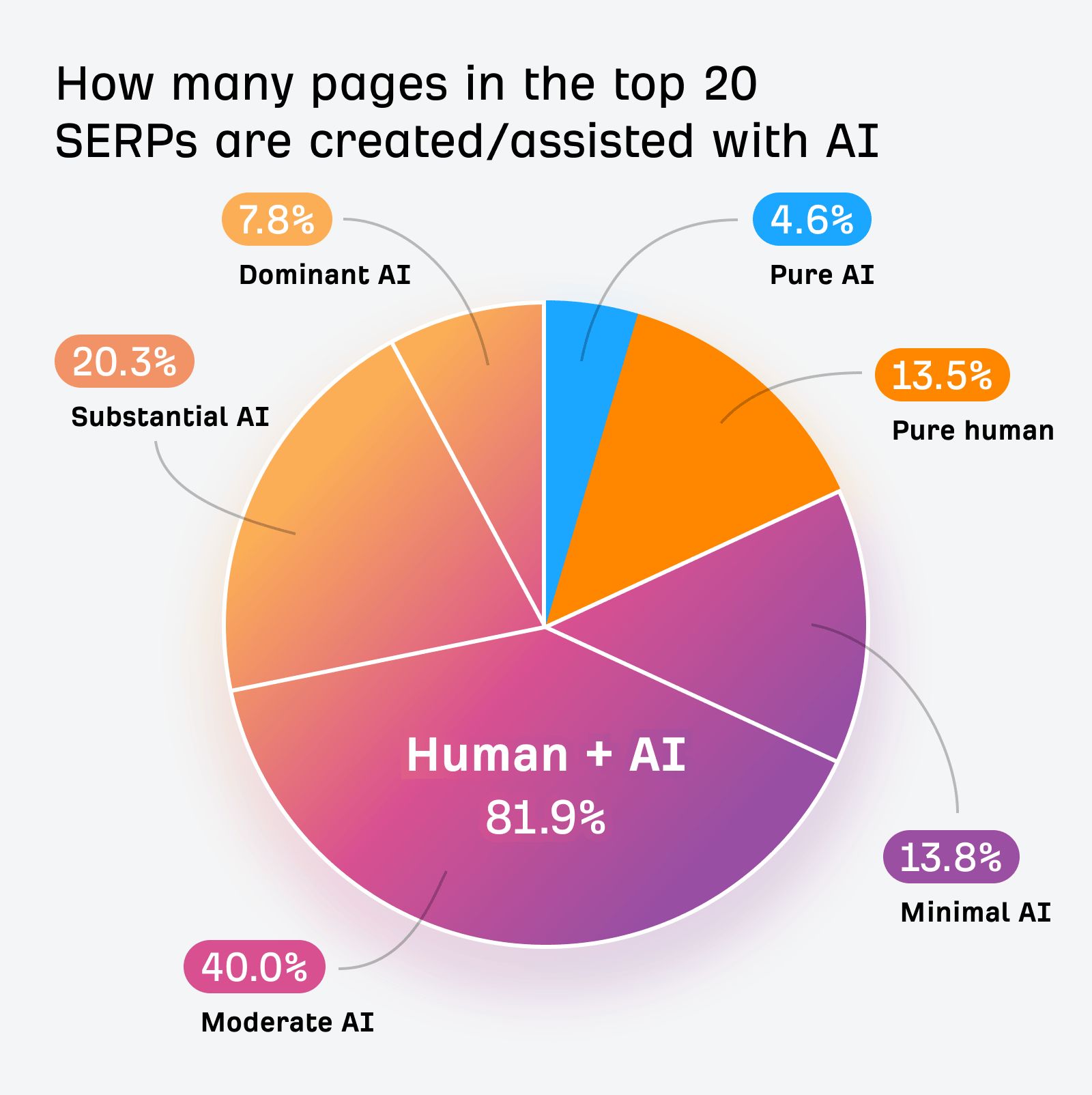
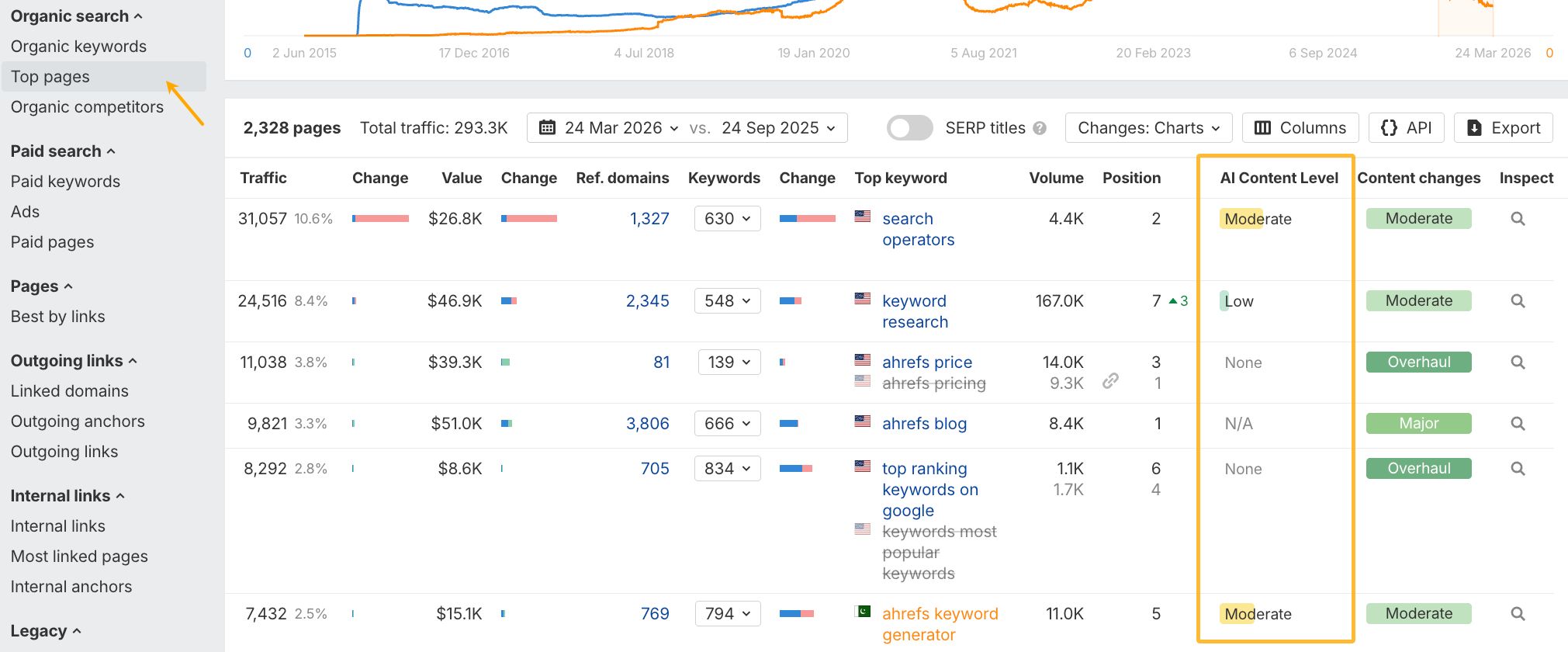
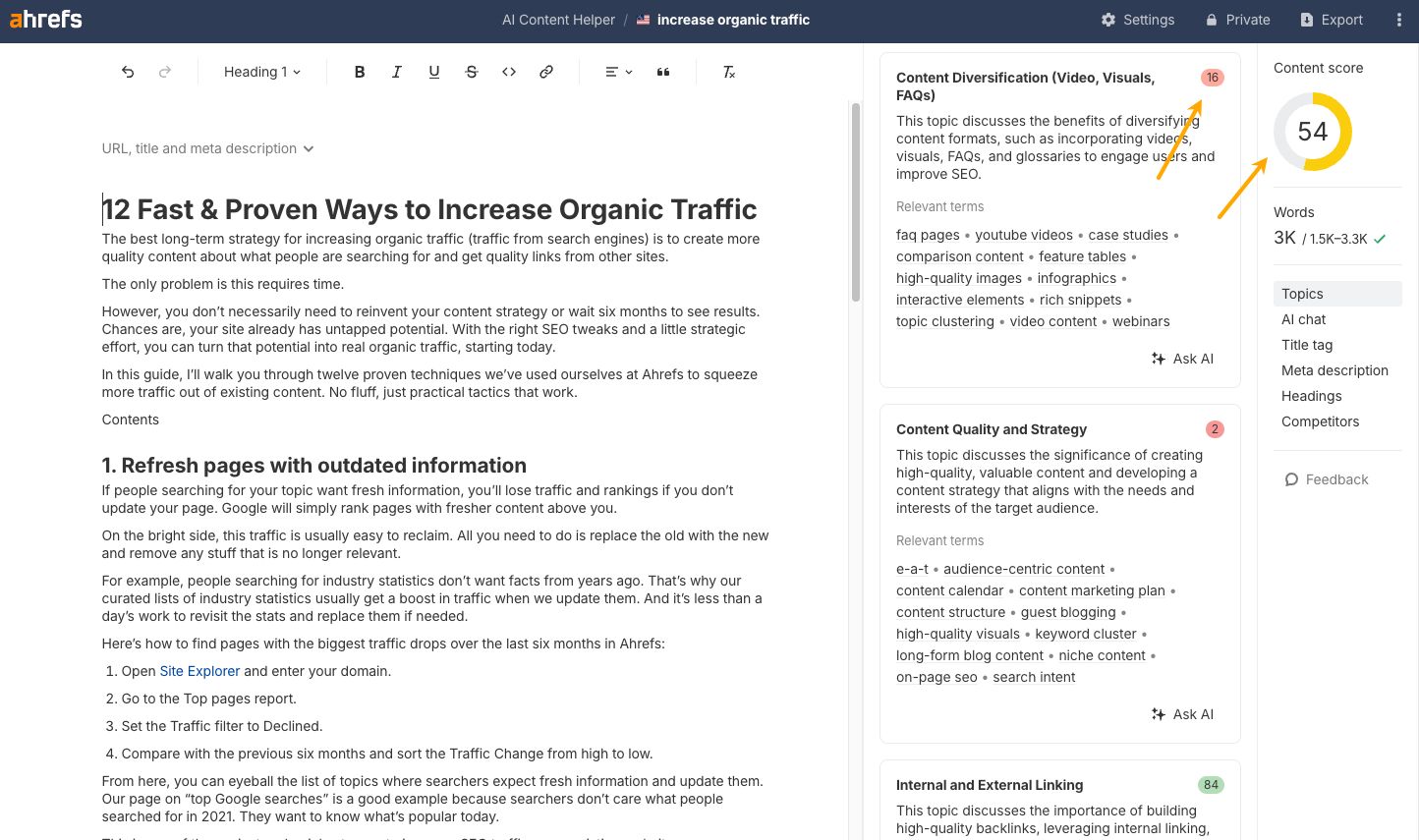
Research indicates that AI content is already prevalent and successful in search engine results pages (SERPs). A study analyzing 100,000 keywords found that only 13.5% of the top 20 ranking pages were exclusively human-created. A significant 81.9% incorporated some form of AI assistance, with 4.6% being fully AI-generated. The majority of AI-assisted content fell into the moderately to heavily assisted categories. The author’s own experiments with articles that were over 90% AI-generated also yielded rankings within the first page of search results. Tools like Ahrefs’ Site Explorer can help identify the extent of AI usage in competitors’ top-ranking content through an "AI Content Level" column. Furthermore, tools like Ahrefs’ AI Content Helper assist in optimizing content for both traditional search and emerging AI search results by grading writing against top-ranking pages and identifying topical gaps.
Google’s Own AI Initiatives: A Question of Hypocrisy
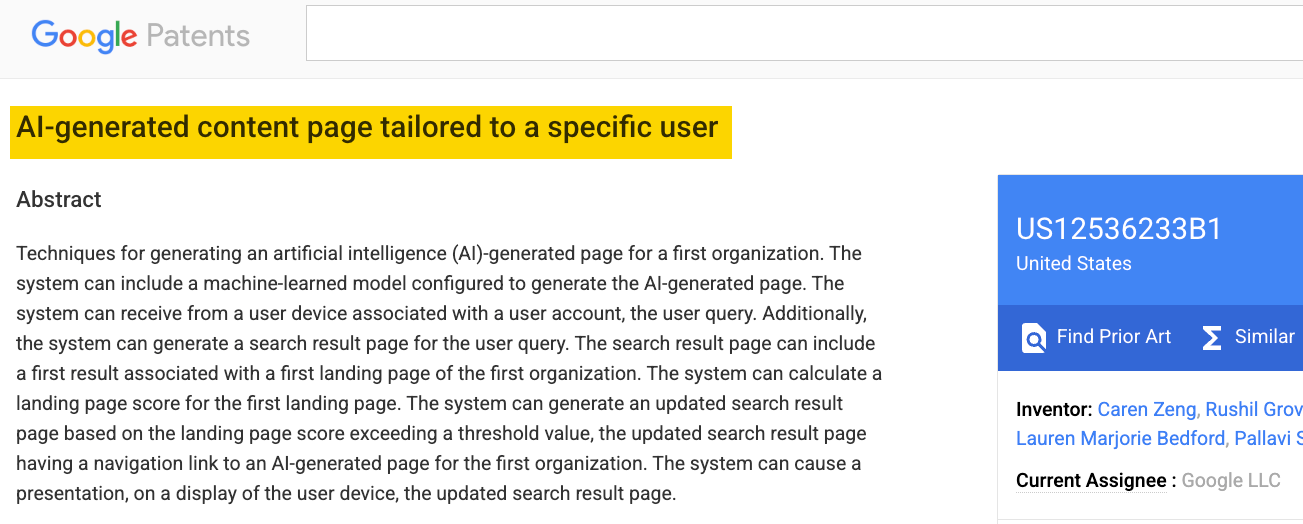
Google’s own utilization of AI in its products raises questions about any potential ideological opposition to AI-generated content. The company holds patents for AI systems that could potentially replace landing pages for shopping and ads, generating AI-driven content tailored to specific user needs. This suggests a deep integration and reliance on AI for content generation within Google’s ecosystem, making any broad penalty against AI content inherently contradictory.
The Evolving Nature of "AI Content" and its Detection
The lines between "AI content" and "AI-assisted content" have significantly blurred as AI integration becomes widespread across common writing tools like Google Docs, Gmail, Notion, and Grammarly. A survey indicated that 87% of content marketers were using AI in their content creation process, a figure likely higher today. This pervasive use makes the "AI content" label increasingly less meaningful. While AI detection tools exist and can be valuable for competitive research, their accuracy in definitively labeling content as solely AI-generated is a complex challenge. Factors such as the evolution of AI models, the increasing sophistication of AI-generated text, and the role of human editing make precise detection difficult. Ahrefs’ AI Detector, for instance, is positioned as a tool for competitive analysis, highlighting the extent of AI usage by competitors and its impact on search performance, rather than a punitive policing mechanism.
Addressing Penalties: The Real Culprits
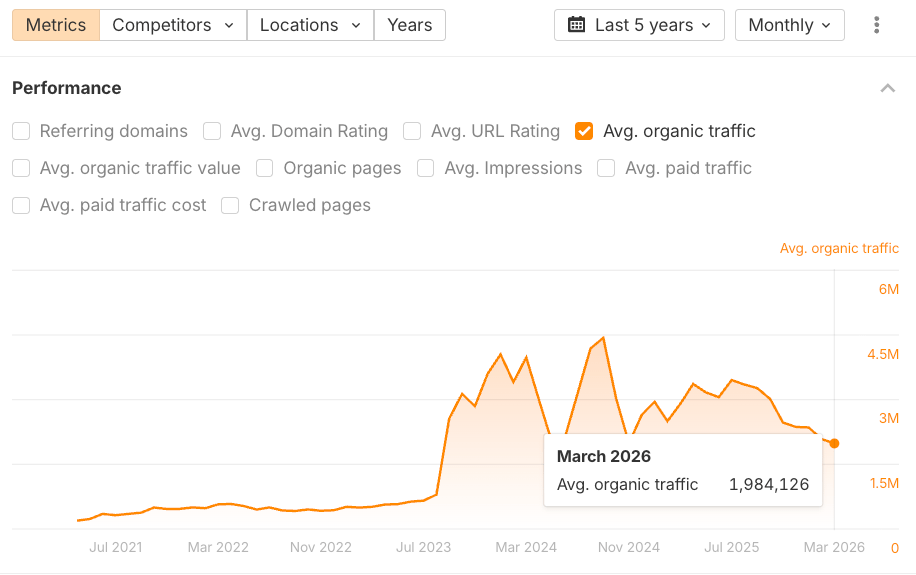
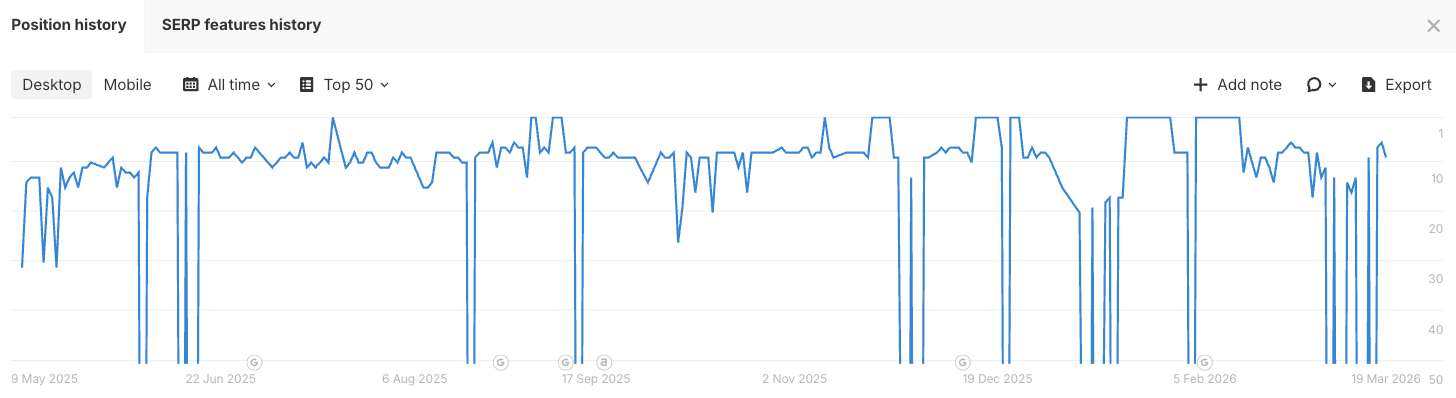
While Google has issued manual penalties under its "scaled content abuse" policy, which have sometimes involved AI-generated content, the underlying issue has consistently been deception and low quality, not the mere use of AI. Examples cited include sites penalized for faking human writers, complete with fabricated bylines, bios, and expertise. Such actions fall under "site reputation abuse" and are penalties for deception, not for employing AI. Similarly, instances of rapid content publication solely to manipulate search rankings, without meaningful human oversight, have led to penalties. The pattern observed is a quick rise followed by a swift decline when content lacks genuine value or is used deceptively.
The Inevitability of AI in Content Creation
The sheer volume of AI-generated content already present on the web and its continuous growth make it impractical, if not impossible, for search engines to penalize it broadly without essentially ignoring a significant portion of the modern internet. The trend is further accelerated by major brands adopting AI to produce content more efficiently. In a competitive landscape where rivals are leveraging AI for faster, optimized content creation, not utilizing these tools risks falling behind. This situation resembles a "Red Queen’s race," where entities must constantly adapt and innovate just to maintain their current position.
Human Content: Not Always Superior
Evaluating content solely on whether it was written by a human or an AI is a flawed approach. The critical factor is whether the content effectively fulfills its purpose and answers the user’s query. For informational content, such as instructions, the "human touch" may not inherently improve clarity or usefulness. Human-written content can also be thin, outdated, or poorly executed, as evidenced by the proliferation of low-quality content farms that necessitated the development of Google’s Panda algorithm update. Google itself has acknowledged this by drawing parallels to concerns about mass-produced human content a decade ago, emphasizing that a blanket ban on human-generated content would have been unreasonable. In contrast, current AI models often produce content that consistently meets a high standard of quality, explaining its rapid adoption in business contexts.
Conclusion: Focus on Value, Not the Tool
The prevailing notion that "AI content gets you tanked" conflates the tool with its misuse. Google’s penalties are directed at low-quality, deceptive, and spammy content, and AI simply facilitates the creation of such material at scale. The fundamental SEO principles remain unchanged: helpfulness, topical depth, and providing superior answers to user queries compared to existing rankings. Given Google’s own integration of AI into its products and the widespread adoption of AI across the web, a stance against AI content is untenable. The key takeaway is to avoid using AI for activities that have historically led to site penalties, such as producing low-quality or deceptive content. The focus should remain on creating valuable, informative, and genuinely helpful content, regardless of the tools employed in its creation.