 11
11
The question of whether AI-generated content is detrimental to Search Engine Optimization (SEO) has been a persistent topic of discussion. However, Google’s stance, as clarified by their guidelines, emphasizes that content is evaluated based on its quality and helpfulness, not the tools used in its creation. The core issue, according to industry experts and Google’s own statements, lies not in the use of AI itself, but in the creation of content that is thin, unhelpful, or spammy, a practice that AI can unfortunately facilitate at scale. This distinction is crucial, as the two are often conflated.
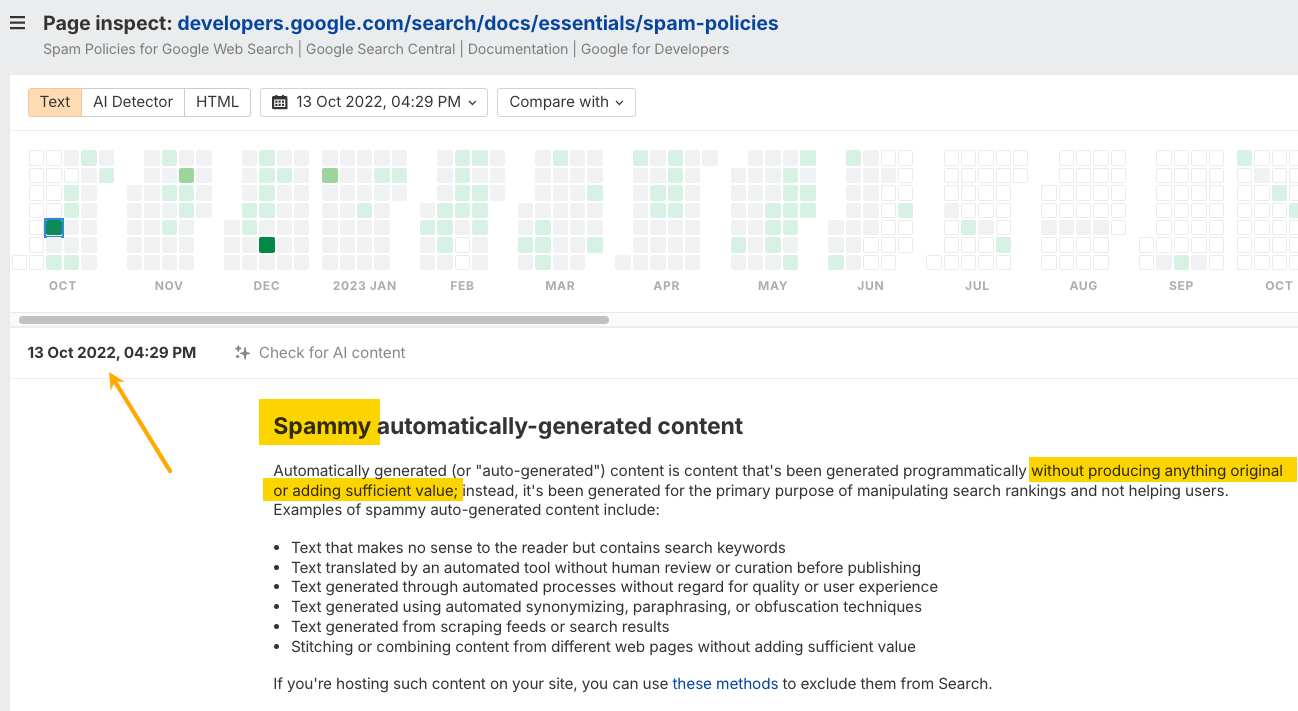
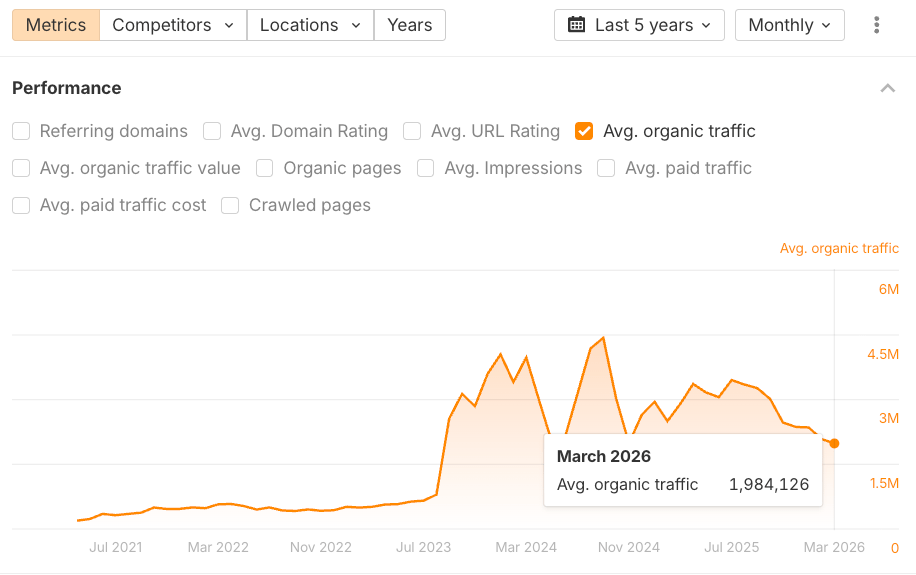
Google has historically addressed "automatically generated content," and their penalties have always targeted the quality and intent behind the content, not its origin. For instance, the currency conversion website Wise utilizes programmatic content generation for its directory of currency conversion pages. Despite being automatically generated, this content has not faced penalties because it is not considered spam and continues to perform well in organic search results. This demonstrates that Google’s algorithms are designed to assess the value and utility of content, regardless of whether it was produced by a human or an AI.
Google’s official guidance on AI-generated content reinforces this position. Their statements indicate that using automation, including AI, to generate content with the primary purpose of manipulating search rankings is a violation of their spam policies. However, the appropriate use of AI or automation, when not employed to manipulate search rankings, is not against their guidelines. This underscores that Google’s focus remains squarely on the quality and user experience provided by the content. The argument is that penalizing AI content would be akin to penalizing advancements in science and medicine, where AI has already made significant contributions.
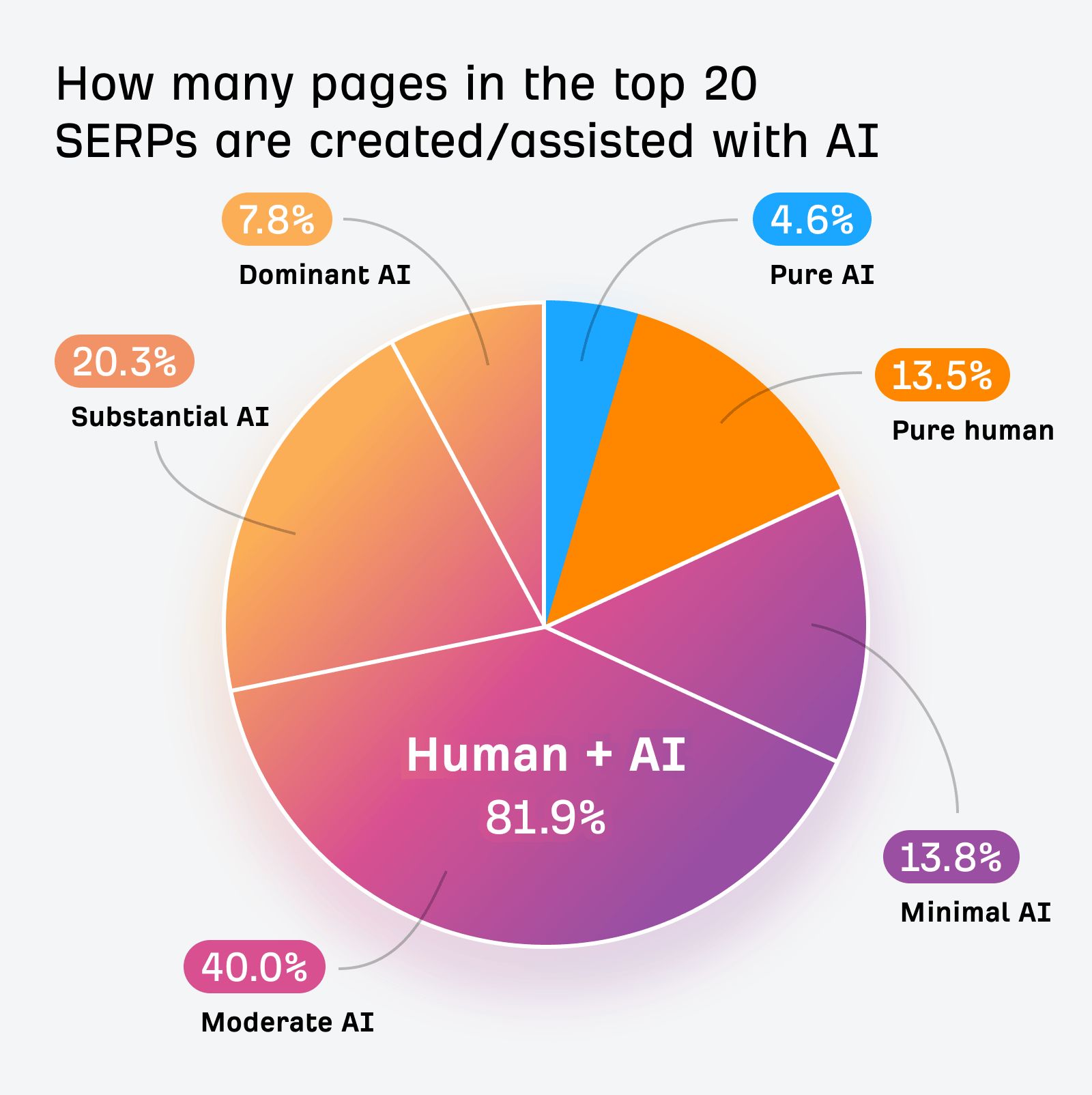
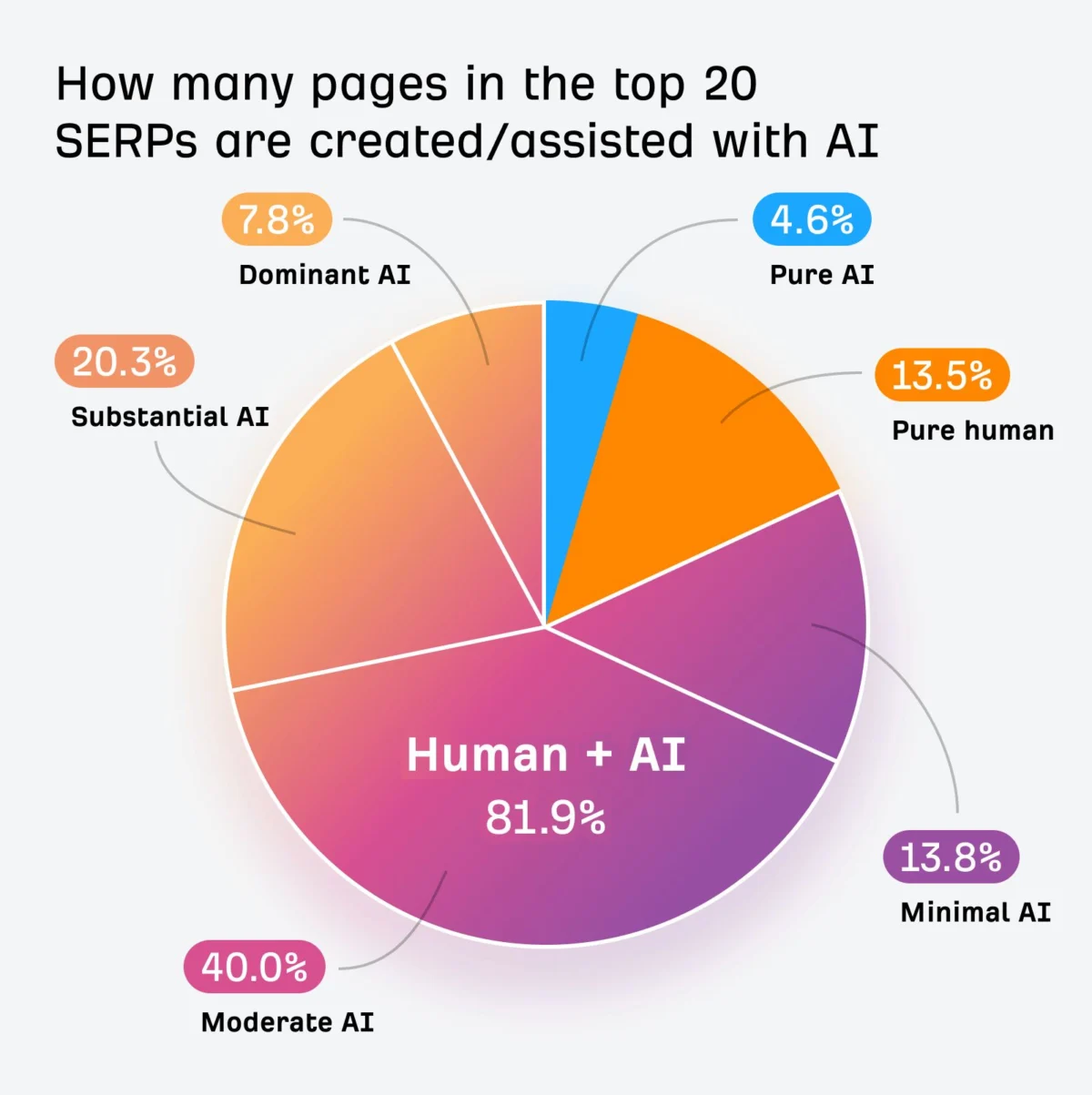
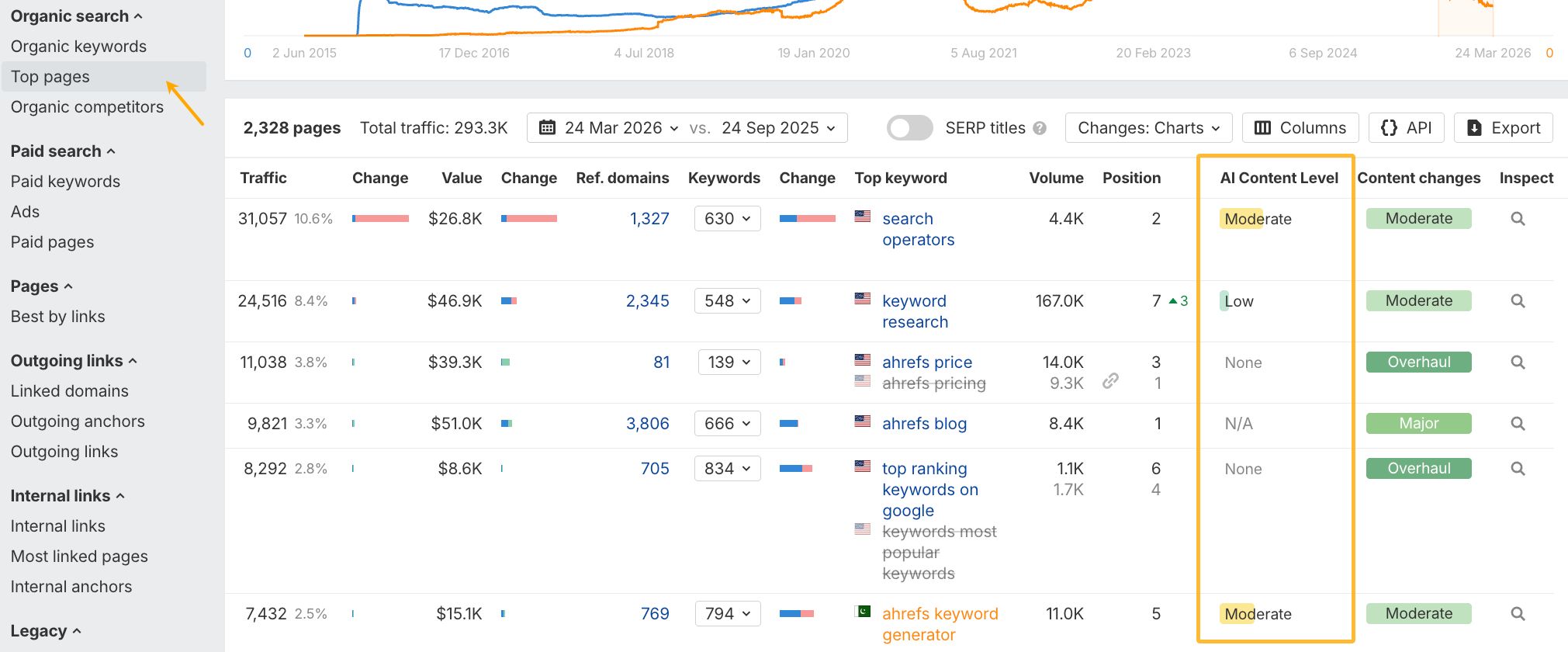
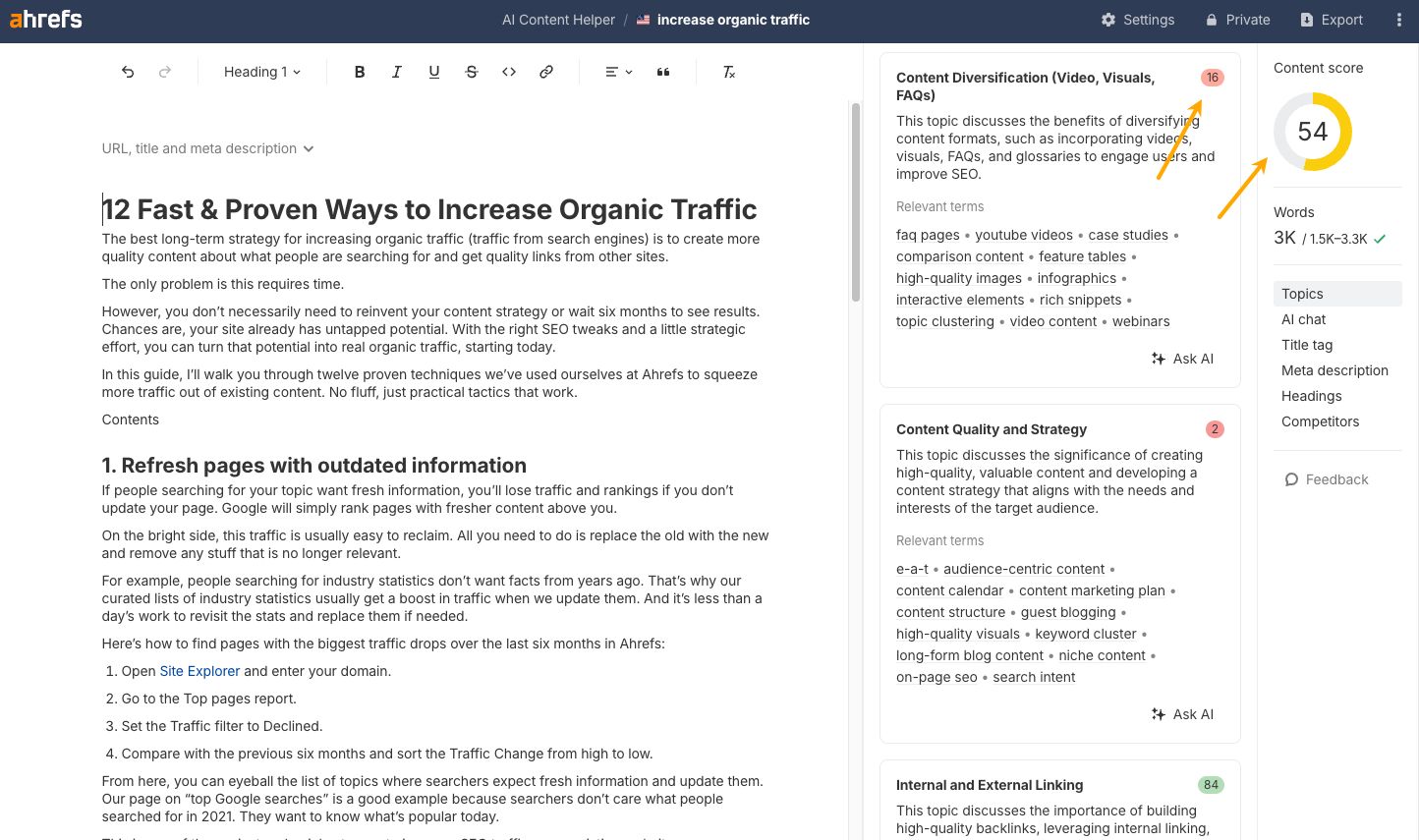
Evidence suggests that AI content is already ranking successfully in search engine results pages (SERPs). A study analyzing 100,000 keywords found that a significant majority of top-ranking pages (81.9%) incorporated some form of AI assistance, with 4.6% being fully AI-generated. Only 13.5% of these top pages were classified as "pure human." This indicates that AI-assisted content is not only present but also competitive in search rankings. The author of the report shares personal experience, noting that articles with a high percentage of AI generation have consistently ranked on the first page, suggesting that the performance is tied to content quality rather than its generative method. Tools like Ahrefs’ Site Explorer can be used to analyze the AI content levels of competitor pages, providing insights into their content strategies. Furthermore, Ahrefs’ AI Content Helper assists users by grading their writing against top-ranking pages, identifying topical gaps, and suggesting subtopics to cover for better visibility in both traditional search and AI-driven search results.
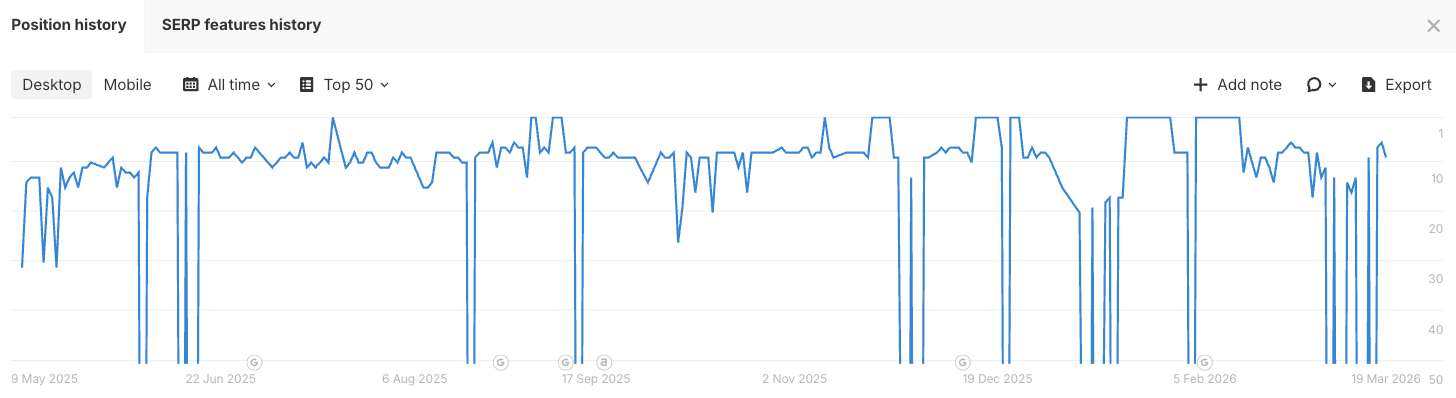
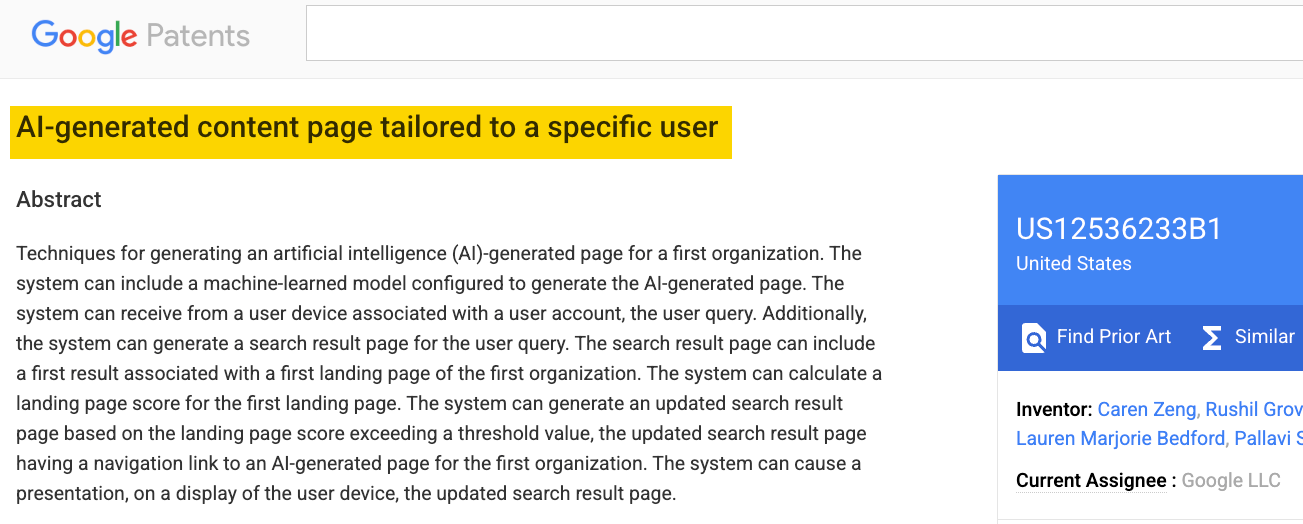
Google’s own increasing reliance on AI for generating answers in search results further complicates any notion of an outright ban on AI content. Google holds patents for AI-generated content tailored to specific users, even suggesting potential replacements for existing landing pages in shopping and advertising contexts. This indicates a strategic integration of AI into their own product offerings.
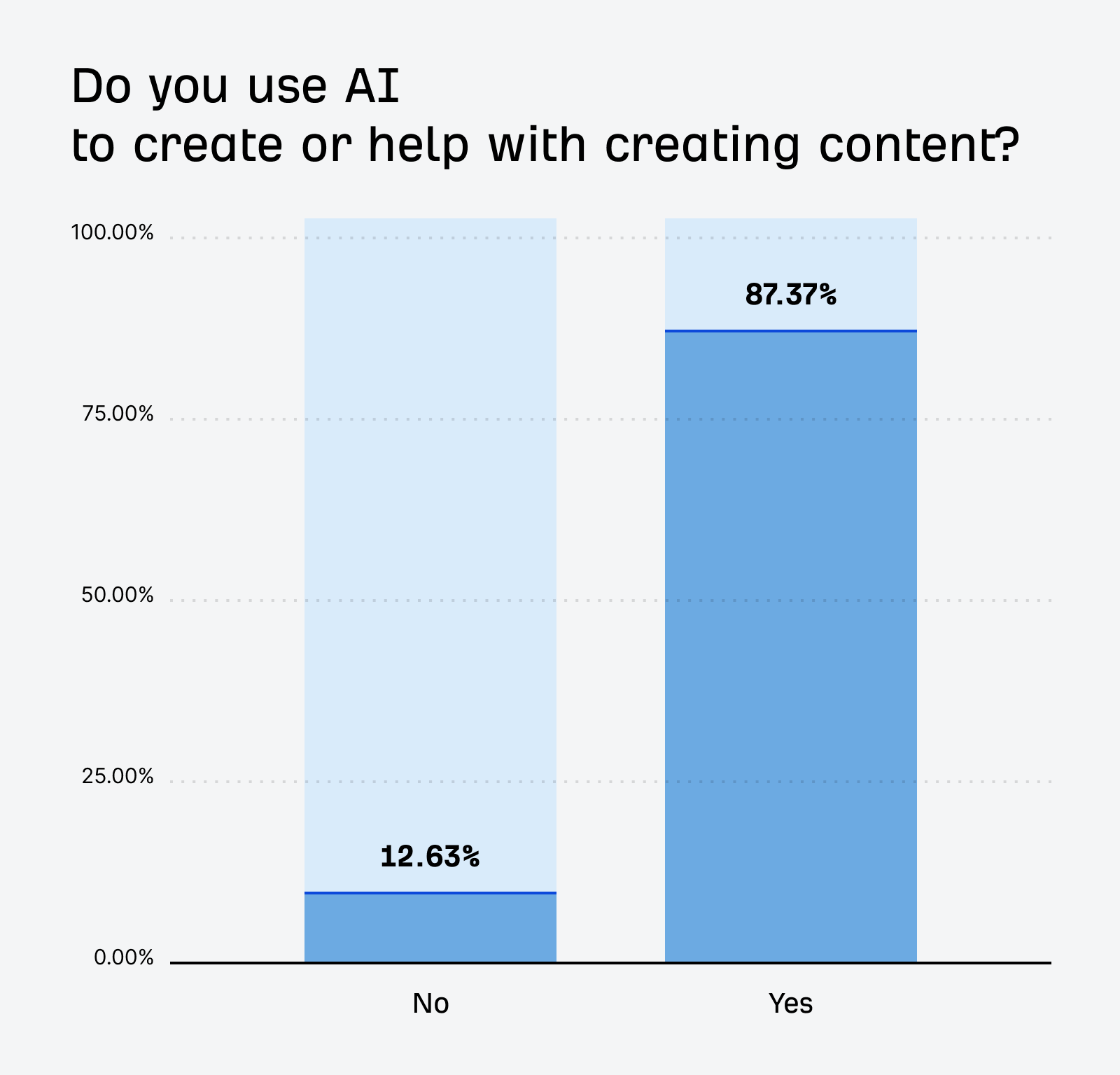
The distinction between "AI content" and "AI-assisted content" is becoming increasingly blurred as AI integration becomes ubiquitous across writing tools like Google Docs, Gmail, Notion, and Grammarly. A survey indicated that 87% of content marketers were using AI in their content creation process, a figure likely higher today given the rapid evolution of AI capabilities. This widespread adoption suggests that AI is no longer a niche tool but an integral part of modern content creation workflows.
The sheer volume of AI-generated and AI-assisted content already present on the web makes a widespread penalty for AI content impractical. Such a move would effectively necessitate ignoring a significant portion of the modern internet. This is particularly relevant as many established brands are increasingly leveraging AI for content production. The competitive landscape now often forces businesses to adopt AI to maintain pace, leading to a scenario where not using AI can mean falling behind. This has been described as a "Red Queen’s race," where entities must run as fast as they can just to stay in place.
Furthermore, the argument that human content is inherently superior to AI content is being challenged. In many factual or instructional contexts, the "human touch" may not significantly enhance clarity or effectiveness. For example, instructions on how to open a door are unlikely to be improved by a human author over an AI-generated version, provided both are clear and accurate. The true measure of content success is whether it solves the user’s problem or answers their query effectively. Human-written content, despite its perceived advantage, can often be thin, outdated, or poorly written, as evidenced by the historical issues Google faced with content farms that produced low-quality, human-generated content, leading to the development of the Panda algorithm. Google itself has drawn parallels between concerns over mass-produced human content a decade ago and the current discourse around AI content, suggesting a consistent focus on quality over origin. In contrast, current AI models are often capable of producing content that is consistently rated as high quality, making it a compelling tool for businesses.
The technical challenges of accurately detecting AI-generated content also present a hurdle for any potential punitive measures. Factors such as the sophistication of AI models, the varying degrees of human editing, and the fact that AI can be trained to mimic human writing styles make detection complex. While AI detectors can be useful for competitive research, providing insights into competitor strategies and content performance, their reliability as a policing tool is questionable. Ahrefs’ AI Detector, for example, is highlighted for its effectiveness in analyzing competitor content and its performance in search results.
Concerns about sites being penalized for AI content often stem from misinterpretations of Google’s manual penalties. While some sites have received penalties for "scaled content abuse," a closer examination reveals that the underlying issue is typically deception or the creation of low-quality, unhelpful content at scale, rather than the mere use of AI. Examples include instances where AI was used to create fake author profiles, bios, or expertise, which constitute a violation of trust and transparency policies. This is a deception penalty, not an AI penalty. Similarly, rapid, unchecked publication of AI-generated content without human review can lead to penalties under the Scaled Content Abuse policy. Data visualization tools, such as those in Ahrefs’ Site Explorer, can help identify rapid, uncharacteristic growth in organic pages, which might indicate a reliance on scaled content production.

Ultimately, the debate over AI content in SEO boils down to helpfulness, topical depth, and the ability to provide better answers than existing top-ranking content. The author’s own experience with a largely AI-generated article performing well in search results further supports the notion that quality and utility are the primary drivers of SEO success. The core lesson remains that AI should not be used to facilitate practices that have always led to SEO penalties, such as creating deceptive or low-quality content at scale. The focus should be on leveraging AI as a tool to enhance content quality and user experience, rather than as a shortcut to circumvent established SEO principles.