11

The ultra-wealthy peninsular Arab state of Qatar, strategically located in the Persian Gulf, has finalized a significant order for four KC-46A Pegasus aerial refueling and strategic transport aircraft. This acquisition, part of an estimated $4.5 billion deal, marks a pivotal moment for the Qatar Emiri Air Force (QEAF) as it seeks to dramatically enhance the operational reach and endurance of its burgeoning fleet of advanced combat aircraft. While delivery of these sophisticated tankers is still years away, their integration will fundamentally transform Doha’s air power capabilities.
The specifics of the deal were outlined in an August 20, 2026, press release from the U.S. State Department, which formally announced the approval of the possible sale. Beyond the four state-of-the-art aircraft themselves, the comprehensive package includes a robust suite of associated equipment and support systems. This encompasses eight powerful PW4062 turbofan engines, ten AN/ALR-69A radar warning receivers designed to alert pilots to potential threats, fifteen Guardian Laser Transmitter Assemblies essential for Large Aircraft Infrared Countermeasure (LAIRCM) systems, and eight LAIRCM system processor replacements. Both installed components and critical spares are part of this extensive procurement, ensuring long-term operational readiness and maintenance.
The Boeing-built KC-46A Pegasus is renowned for its multi-role versatility, distinguishing it from single-purpose refueling platforms. Its primary function, aerial refueling, allows combat aircraft to extend their missions significantly without returning to base, thereby increasing their operational range and loiter time. However, the Pegasus is far more than just a flying gas station. It can alternatively serve as a strategic military transport aircraft, capable of carrying up to 65,000 pounds of cargo, making it invaluable for logistics and rapid deployment scenarios. Furthermore, in another adaptable configuration, it can perform critical aeromedical evacuation missions, providing essential support for humanitarian and emergency operations. This inherent flexibility positions the KC-46A as a crucial asset for any modern air force, offering a spectrum of capabilities vital for both combat and support roles.
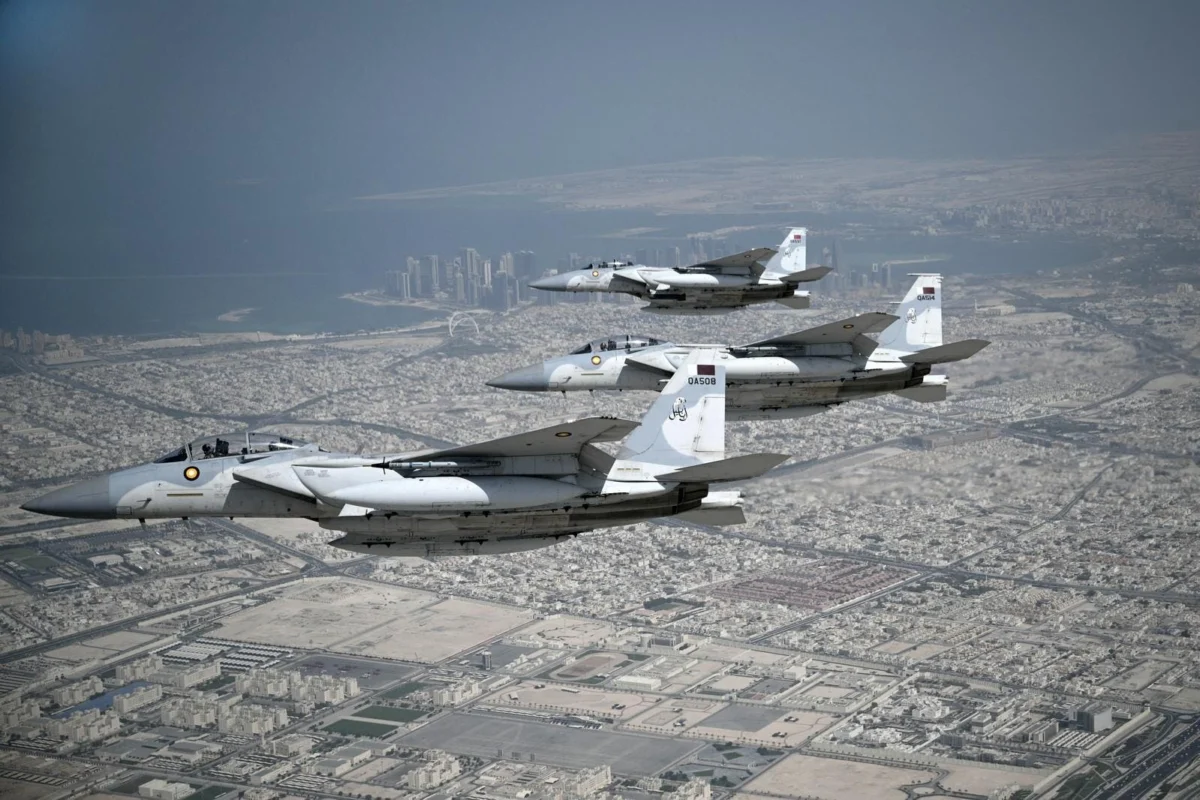
The timing of Qatar’s decision to acquire these aircraft, despite the anticipated multi-year delivery timeline, speaks volumes about its evolving defense strategy and the dynamic regional security landscape. A mere decade ago, the Qatar Emiri Air Force operated a relatively modest fleet, consisting primarily of a dozen French-built Dassault Mirage 2000-5 multirole jets, acquired in the 1990s. In such a context, the absence of a dedicated tanker fleet was less critical. However, the past ten years have witnessed an ambitious and costly modernization drive by Doha. The QEAF has invested heavily in cutting-edge, unique F-15QA (Qatar Advanced) Ababil jets from the United States, Dassault Rafales from France, and Eurofighter Typhoons from the United Kingdom. This diversification has resulted in a formidable fleet comprising dozens of each of these aircraft, making it one of the most advanced collections of Western 4.5-generation combat aircraft in the region.
With such a significant investment in advanced fighters, the absence of aerial refueling capabilities became a glaring strategic gap. These modern jets, while exceptionally capable, can only maximize their potential – in terms of range, endurance, and combat air patrol duration – with the support of tanker aircraft. Without them, their operational envelopes are constrained, limiting their ability to project power or sustain prolonged defensive postures over Qatar’s relatively small airspace and surrounding strategic waterways.
The potential implications of Qatar’s new tanker fleet have already garnered attention from regional observers. The Jerusalem Post, for instance, has noted that the addition of KC-46As could enable Qatar’s air force "to conduct long-range strike missions far beyond its borders, marking a dramatic shift in its operational reach." This perspective suggests a move toward a more offensive-oriented capability, potentially allowing Doha to project force across the wider Middle East. The article further observed that "the deal simultaneously hands Doha a long-range force-projection capability toward Israel that it previously did not possess."
While acknowledging the recent Iranian attacks Qatar has experienced, which most likely served as a significant motivator for this order, the predominant view, including that of military analysts, suggests a more defensive-oriented strategy for Qatar. Given its geographical constraints and diplomatic posture, the tiny country is more likely to leverage these tankers to sustain its advanced fighters for prolonged combat air patrols over the Gulf. This approach would maximize the air-defense potential of its sophisticated jets, providing continuous aerial surveillance and readiness against evolving threats.

Qatar’s understanding of the importance of refueling aircraft for sustaining extended combat air patrols is not unique in the region. Other Gulf states have also recognized this critical need. Long before the 2026 Iran war put its home front and world-class air defenses under unprecedented assault, the United Arab Emirates (UAE) faced its own challenges. In January 2022, the UAE endured its first drone and missile attacks from Houthi rebels in Yemen. While its ground-based Terminal High Altitude Area Defense (THAAD) systems successfully intercepted Houthi ballistic missiles – marking the combat debut of the American-made THAAD – Abu Dhabi determined that the most reliable method to intercept incoming Houthi drones was through round-the-clock patrols by its F-16s and Mirage 2000s. For these sustained missions, the UAE found itself reliant on assistance from U.S. Air Force KC-135 tankers. Emirati leaders reportedly "became deeply offended" when Washington promptly billed them for this crucial assistance, underscoring the strategic vulnerability of lacking independent refueling capabilities.
Subsequent crises in the region, particularly the intensifying drone and missile warfare, have further underscored the value of possessing such independent capabilities. The 2026 Iran war, for example, starkly demonstrated that drones, often slow-moving and with unpredictable trajectories, can prove more challenging for even sophisticated air defenses to combat effectively than faster, more predictable ballistic missiles. Sustained aerial patrols by fighter jets, supported by tankers, offer a flexible and potent countermeasure against these evolving aerial threats.
Qatar’s recent combat experiences provide further context for its decision. Near the end of the June 2025 Israel-Iran 12-day war, Iran forewarned a retaliatory strike on Qatar’s enormous Al-Udeid airbase, the largest U.S. military base in the region. This strike was threatened in response to the first American strikes on Iranian nuclear sites. In anticipation, Qatar scrambled its F-15QAs and AH-64E Apache helicopter gunships to search for any incoming drones. Ultimately, Iran fired only a salvo of ballistic missiles, which Qatar’s American-made MIM-104 Patriot PAC-3 surface-to-air missile systems successfully intercepted, showcasing the effectiveness of its ground-based defenses against that specific threat profile.
However, the limitations of Qatar’s air defense were brutally exposed during a surprise and unprecedented Israeli airstrike on Doha on September 9, 2025, targeting Hamas political leaders. In that attack, Israeli fighters, flying hundreds of miles away over the Red Sea, fired air-launched ballistic missiles (ALBMs) that ascended into the atmosphere before descending on Doha at high speeds with no warning. Qatar’s air force and air defense proved powerless in the face of this advanced, long-range attack. The Israeli jets were too far away for conventional interception, and Qatar’s fighters, even with ample advanced warning, could not have intercepted the ALBMs given their trajectory and speed. This incident highlighted the specific vulnerabilities against certain types of advanced, standoff attacks.
In the subsequent 2026 Iran war, Qatar’s F-15QAs were again called into action. At the start of that conflict, they successfully intercepted two Iranian Soviet-made Su-24 Fencer tactical bombers heading for Al-Udeid, demonstrating their ability to defend Qatar’s airspace against conventional aerial incursions. While Doha denies recent Iranian claims that it still holds three of the downed pilots, these interceptions underscored the QEAF’s capability to protect its sovereign territory. Interestingly, despite these successes, Qatar is not known to have used its air force in retaliation for any Iranian attacks on its territory. This stands in stark contrast to Saudi Arabia and the UAE, which "secretively bombed Iranian targets" during the war, and Kuwait and Bahrain, which "did the same" in July following continued Iranian attacks after the April 8 ceasefire. This pattern suggests a deliberate choice by Qatar to maintain a primarily defensive posture, even in the face of direct threats.
The acquisition of KC-46s will eventually provide Qatar with significantly greater capabilities and more options. These aircraft could theoretically enable its fighters to strike targets deep inside Iran, presuming they are prepared to evade or neutralize any Iranian air defenses along the way. Such a capability would represent a major shift in its military doctrine. On the other hand, and more aligned with its observed operational tendencies, the tankers could profoundly enhance its seemingly preferred defensive posture. By enabling its fighters to remain airborne for far longer patrols, Qatar could independently maintain a constant vigil, allowing its pilots to actively search for and engage drones, low-flying warplanes, and even cruise missiles flying in unpredictable trajectories, without reliance on external support.
Ultimately, while a fatal attack on its territory could compel Doha to retaliate, it otherwise seems unlikely that these refueling aircraft would ever be primarily used to support long-range Qatari strike missions against either Iran or Israel. Instead, their strategic value for Qatar will likely lie in bolstering its independent air defense capabilities, extending the endurance of its advanced fighter fleet, and ensuring continuous vigilance over its critical national assets and strategic waterways in an increasingly volatile region. The KC-46A Pegasus represents not just an aerial refueling platform, but a vital enabler for Qatar’s future air security and strategic autonomy.