 11

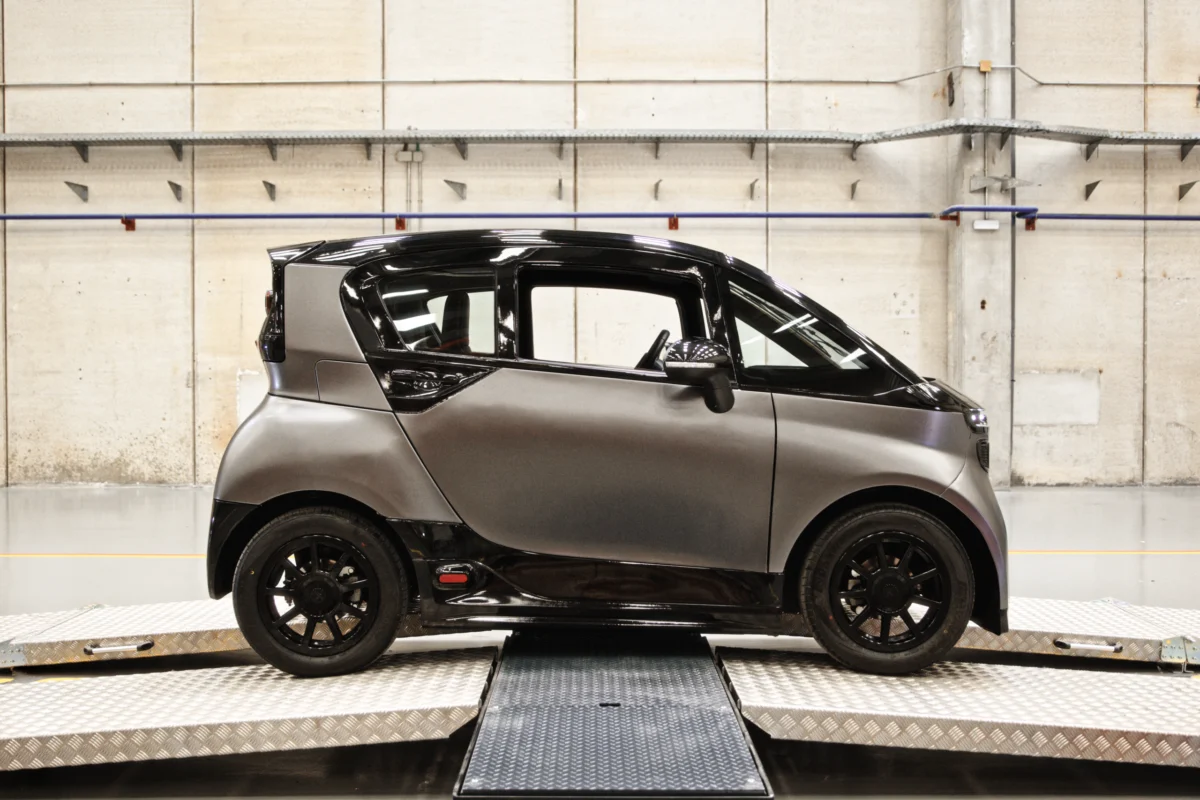
European cities are witnessing a significant shift in automotive preferences, with cars becoming progressively smaller. This growing appetite for microcars, once dominated by charming Italian "yoghurt pots," has largely given way to a new wave of compact electric vehicles, many of which now hail from China. Even iconic ultracompact brands like Smart have relocated their manufacturing operations to Asia, underscoring the globalized reality of modern vehicle production. Amidst this evolving landscape, a Spanish startup named Liux is determined to carve out its niche, introducing a tiny electric car built on an unwavering commitment to sustainability and a unique approach to manufacturing.
Following in the innovative footsteps of Swiss ventures like the Microlino, Liux is preparing to launch its highly anticipated microcar, aptly named the Liux Big. The "Big" moniker, a playful nod to its diminutive size, simultaneously reflects the outsized ambitions of a team that consistently defies conventional wisdom. This vehicle is designed to be compact enough to park perpendicular to the curb, yet it embodies a philosophy that challenges the prevailing norms of the automotive industry.
"The idea of a European car does not exist," Liux co-founder Antonio Espinosa de los Monteros candidly shared with TechCrunch. This provocative statement, coming from the CEO of a startup making headlines for its "made in Spain" vehicles, offers profound insight into the company’s core priorities. While Liux proudly inaugurated Spain’s first new car plant in over three decades, Espinosa and co-founder David Sancho have come to terms with the undeniable truth that a fully sovereign, localized supply chain is an unattainable ideal in today’s interconnected world. Instead, Liux is navigating this complex global reality by relentlessly pursuing sustainability as its guiding principle.

The commitment to sustainability manifests in every aspect of the Liux Big’s design and production. While the car’s batteries are not manufactured in Europe, they are engineered for convenient home recharging, including compatibility with solar power systems, promoting energy independence and reducing reliance on public charging infrastructure. The vehicle is also meticulously designed for ease of maintenance, aiming to counteract the rapid obsolescence cycles prevalent in modern cars. Perhaps its most groundbreaking feature is its fiber body, crafted from a novel linen-based biocomposite. This innovative material is not only environmentally friendlier than traditional composites but is also specifically engineered for easy extraction and recycling at the end of the car’s life.
Antonio Espinosa de los Monteros’s vision for "real circularity" is deeply ingrained in Liux’s ethos. "One thing that’s very clear for David and me is that recycling isn’t just a lab concept. You can recycle almost anything in a lab. What makes something recyclable has to do with how it’s built," Espinosa explained. "When you build something, you have to try to preserve the integrity of the material and the components so that a second life is possible." This philosophy extends beyond mere material choices, influencing the entire product lifecycle from design to end-of-life. Espinosa previously co-founded Auara, a Spanish B Corp renowned for selling natural mineral water in bottles that were both recycled and recyclable, a venture that was later successfully acquired by Corporación Hijos de Rivera. This prior experience cemented his commitment to circular economy principles, which he now brings to the automotive sector.
David Sancho, the engineering mastermind behind Liux, brings a complementary expertise to the team. His specialization lies in developing electric vehicles that can genuinely rival their gas-powered counterparts in performance and efficiency, all while maintaining a strong focus on low emissions. Before co-founding Liux, Sancho’s most notable achievement was the creation of the Bóreas, a hybrid supercar unveiled at the prestigious 24 Hours of Le Mans in 2017. Following a professional divergence with his former partners, Sancho joined forces with Espinosa, uniting their distinct yet synergistic skills to establish Liux.
The company’s journey began with its first prototype, the Liux Animal. Unveiled to the world in 2022, this fully electric five-seater SUV showcased their combined expertise, featuring a construction almost entirely from recycled or plant-based materials. However, soon after its debut, the co-founders made a strategic pivot. They determined that their chances of achieving Europe-wide homologation – the rigorous certification process required for vehicles to be sold legally across the continent – would be significantly higher with a smaller, more manageable car. This pragmatic decision led to the birth of the Liux Big.

Fast forward to 2026, and Liux has successfully secured Europe-wide homologation for the Liux Big, a crucial milestone that paves the way for commercial sales. The company anticipates commencing sales in the first half of the following year (2027), marking a significant step from prototype to market readiness. Liux has also experienced substantial growth, expanding its team to 65 employees and preparing to scale up production across three dedicated facilities in Spain.
One of these facilities, visited by TechCrunch, is located in Azuqueca de Henares, approximately an hour’s drive from central Madrid. The factory, though compact, is a testament to efficient design, adhering strictly to Toyota’s "lean management" principles. This approach emphasizes minimizing waste, optimizing processes, and focusing on value creation, allowing the plant to concentrate primarily on the final assembly steps. Beatriz Belda González, the Spanish-born head of production, brings a wealth of experience from her previous tenure at BMW in Munich, ensuring that Liux’s production lines are both efficient and of high quality. Despite its modest size, Liux projects an impressive production capacity, aiming to reach 20,000 cars annually by 2030, demonstrating the scalability inherent in its lean manufacturing model.
While it is still early to fully gauge market demand, the initial response has been highly encouraging, with over 7,500 individuals joining the waiting list for a Liux Big. Although joining the list does not require a fee, it has provided the startup with invaluable insights into its prospective customer base. The most prevalent demographic identified is a 55- to 60-year-old city dweller, suggesting that the Liux Big will frequently serve as a household’s second car. This finding might temper initial hopes that microcars could fundamentally challenge traditional car ownership models. However, Espinosa acknowledges that Liux must strategically pick its battles. Rather than attempting to predict the market’s trajectory or pace of change, the startup is maintaining an open mind towards partnerships, particularly with companies managing B2B fleets and those that could facilitate the integration of autonomous driving technologies.
Affordability is another key pillar of Liux’s strategy. The startup has indicated that the final price tag for the Liux Big will be below €18,000 (approximately $21,000) before any potential electric vehicle subsidies. While this positions it at the higher end of the microcar price spectrum, Liux is confident that its vehicle will "punch above its weight" in terms of features, quality, and overall value. Celso Fernández Llorens, Liux’s head of R&D, highlights the significant constraints imposed by weight and size limitations within the microcar category. He observes that many microcars share considerable similarities, despite European authorities differentiating between ultralight L6e four-wheelers and slightly heavier L7e vehicles. Liux, however, meticulously engineered the Big to maximize its L7e homologation, allowing for enhanced features and safety.

This optimization has translated into practical benefits, such as the inclusion of a surprisingly spacious 260-liter trunk. Beyond utility, a primary focus of Liux’s engineering efforts has been to ensure that users experience the feel of driving a robust car, not merely a two-wheeler. This commitment is closely linked to safety, as Sancho emphasizes the critical importance of a vehicle capable of withstanding impacts and maintaining stability during maneuvers. Despite the fact that its vehicle category does not mandate crash tests, Liux has proactively undertaken extensive testing and publicly demonstrated the Liux Big’s capabilities in various dynamic scenarios, including slalom courses and emergency braking. During a short ride and test drive of its upcoming off-road version, TechCrunch experienced firsthand some of these impressive performance attributes.
Looking ahead, the main model of the Liux Big will be offered in two battery versions: 15 kWh and 20 kWh, catering to varying range requirements. A cargo version is also in the pipeline, and with David Sancho’s background in high-performance vehicles, the allure of developing a supercar remains a persistent, albeit distant, temptation. As the company noted in a LinkedIn post, it has no intention of being "a one-car brand." For now, Liux will channel the €16 million (approximately $18.5 million), including significant European funding, it has secured to bring the urban version of the Liux Big to market. This will be achieved through strategic partnerships with car dealerships across Europe, ensuring broad accessibility for potential buyers.
The showroom where the TechCrunch interview took place offers a glimpse into Liux’s future sales experience. Ana Terrado Leyva, head of brand, highlighted the carefully curated aesthetic elements: textile screens, interactive 3D models showcasing the Liux Big’s three distinct color options (two more than the historic Ford Model T), and a linoleum floor, a subtle yet meaningful nod to the vehicle’s linen-based components. These deliberate aesthetic choices, Terrado Leyva explains, are integral to how Liux intends to differentiate itself and stand out from its predominantly Chinese competitors. In essence, by blending innovative sustainable engineering with thoughtful design and a clear brand identity, Liux is not just building a car; it is, perhaps, crafting a compelling answer to the question: maybe the idea of a European car does exist after all.






