11

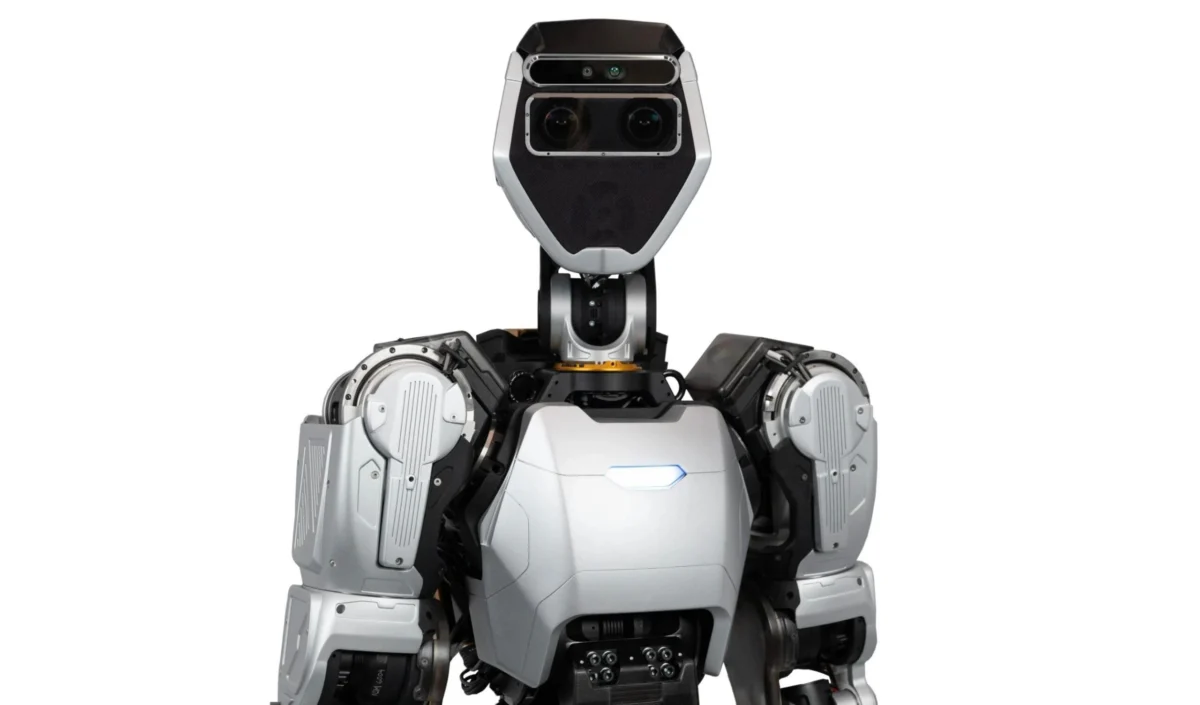
Sanctuary AI, a company originally known for its humanoid robot development, has announced a significant achievement in industrial automation, demonstrating its Physical AI’s capability to perform a highly complex wire-plugging task with exceptional precision and speed. Earlier this summer, the company reported a success rate exceeding 99.5% with a rapid 2.54-second cycle time at a global Tier 1 automotive supplier. This breakthrough involves inserting flexible wired plugs into a moving target on a live conveyor belt, a task traditionally considered extremely challenging for automation. Notably, this specific deployment utilized Sanctuary’s advanced AI brain controlling "disembodied hands" – robotic manipulators – rather than a full humanoid robot, highlighting a strategic expansion of the company’s approach.
This success underscores Sanctuary AI’s realization that its proprietary AI, coupled with sophisticated robotic hands, can function as a highly effective industrial worker. The intricate nature of the wire-plugging operation, requiring fine motor control, precise orientation, and adaptation to dynamic environments, makes it an ideal proving ground for advanced robotic dexterity. As former CEO Geordie Rose once remarked, "half of the complexity of the robot is in the hands," emphasizing the critical role of advanced manipulation capabilities in real-world applications.
The company’s current strategy represents an interesting pivot, or perhaps more accurately, an accelerated add-on to its long-term vision. Instead of solely focusing on the eventual mass commercialization of humanoid hardware, Sanctuary AI is proactively deploying its Physical AI within existing commercial industrial processes and robots. This hardware-agnostic approach allows the company to deliver immediate value to industries facing acute labor shortages and increasing operational costs. By integrating its intelligent software into current robotic platforms, Sanctuary AI is not only speeding up industrial adoption today but also laying a robust foundation for the next generation of intelligent robotic systems, including future industrial humanoids.
This strategic direction is particularly timely, aligning with similar initiatives observed across the technology landscape. For instance, tech giant Meta is reportedly exploring the use of robots for intricate tasks within its data centers, such as plugging in cables and resetting servers, according to a recent Wired story. The parallels between Meta’s requirements and Sanctuary AI’s wire-plugging achievement suggest a growing demand for advanced robotic dexterity in various industrial and infrastructural settings. The ability to handle delicate, contact-rich tasks that have historically eluded traditional automation methods is becoming paramount.
Following up on these developments, Daniel Friedmann, Sanctuary AI’s new CEO, provided further insights into the company’s strategy. Friedmann brings a wealth of experience from his previous roles as long-time chief executive at space robotics firm MDA and later at Carbon Engineering, a clean energy company, positioning him well to steer Sanctuary AI through this crucial phase of growth and deployment.
While Sanctuary AI’s website still prominently features Phoenix, the company’s full humanoid robot, now in its Gen 8 iteration—boasting a strong torso, arms, and head on a wheeled platform with significant improvements in manufacturability and sensor data—the emphasis on the homepage has shifted. The top-line promise now states "physical AI for industrial automation," and the most prominent images and videos showcase robotic arms, hands, and grippers integrated into existing industrial production lines, rather than full humanoids operating autonomously.
This shift naturally raises questions about Sanctuary AI’s core focus: Is this a strategic departure from humanoid robotics, a complementary venture, or merely an initial step towards a broader suite of robotic and automation tools? Friedmann offered clarity on these points during his interview.
Addressing the meticulous nature of the reported success, Friedmann explained how the 99.5% success rate was measured: "We tallied successful insertions against unsuccessful ones to calculate the overall success rate." He further detailed that this impressive performance was achieved over a 40-minute test period, encompassing a total of 313 plug insertion trials, demonstrating consistent high accuracy over a significant number of repetitions.
When asked about the 2.54-second cycle time in comparison to human workers and existing automation, Friedmann highlighted the task’s inherent difficulty: "This task has not been possible to automate with traditional methods. The 2.54-second cycle time was benchmarked against the customer’s existing line performance." This indicates that Sanctuary AI’s solution is not just matching but potentially surpassing the efficiency of human operators in a task that conventional automation struggles with, or enabling automation where none existed before.

Regarding whether this represents a strategic shift away from humanoids, Friedmann clarified: "This represents an expanded approach to Physical AI and solving critical labor challenges. Our hardware-agnostic capabilities expedite industrial adoption of Physical AI, while building the foundation that will support the next generation of intelligent robotic systems, including industrial humanoids." This statement firmly positions the current industrial deployments as a strategic expansion rather than an abandonment of the humanoid vision, serving as a vital stepping stone.
Explaining the rationale for deploying AI on industrial robots rather than the Phoenix humanoid, Friedmann emphasized pragmatism: "Rather than waiting for humanoid hardware to reach mass commercialization, we’re deploying Physical AI on existing commercial platforms today. This lets us deliver production-ready performance to customers now, while building toward the next generation of intelligent robotic systems, including industrial humanoids." This pragmatic approach allows Sanctuary AI to generate immediate revenue, gather invaluable real-world data, and refine its AI models in diverse industrial environments, accelerating its development roadmap.
The experience gained from building humanoids proved invaluable, according to Friedmann. When questioned about what lessons were learned, he stated, "Global industrial leaders are facing unprecedented labor shortages and increasing operational costs. When it comes to solving those challenges, function matters more than form." This insight underscores a customer-centric philosophy, prioritizing effective solutions to pressing industrial problems over the form factor of the robotic system itself, at least in the short to medium term. The complex dexterity developed for humanoid hands directly translates to the precision needed for tasks like wire plugging, regardless of the overall robot’s appearance.
Friedmann also addressed the fundamental identity of Sanctuary AI, clarifying whether it is primarily an AI or a robotics company. "Sanctuary AI is a full-stack company: we’re developing both Physical AI and robotic hardware," he asserted. "We need access to the best hardware to train our Physical AI with the highest quality data, and we need highly capable Physical AI to utilize that hardware to its fullest extent. The relationship between hardware and Physical AI is symbiotic." This full-stack approach ensures deep integration and optimization between the intelligent software and the physical manipulators, leading to superior performance.
While the results are highly promising, Friedmann confirmed that this specific deployment is currently at the "proof-of-concept stage," meaning it’s a successful demonstration of capability, with full production deployment being the next step.
Looking ahead, the broad applicability of this system is a key focus for Sanctuary AI. "Our Physical AI is designed to handle the contact-rich, dexterity-intensive tasks that have historically been out of reach for traditional automation," Friedmann explained. "For companies in manufacturing, logistics, and other labor-constrained industries, it’s deployable on existing robotic hardware today, giving customers production-ready performance and a clear path to the next generation of intelligent industrial systems." This positions Sanctuary AI’s technology as a versatile solution for a wide array of industries grappling with the challenges of manual labor and complex tasks.
The timeline for customer deployment is another critical factor for industrial adoption. Friedmann stated, "Our goal is to deploy within a few weeks. Currently, the timelines vary based on the complexity of the task." This relatively quick deployment target highlights the potential for rapid integration and tangible benefits for customers. While specifics on Return on Investment (ROI) are still being gathered, Friedmann noted, "We are focused on maintaining customer throughput at a lower cost, but it’s too early to share specifics beyond that." The underlying value proposition remains clear: enhancing efficiency and reducing operational expenses.
A significant advantage of Sanctuary AI’s approach is its compatibility with existing infrastructure. Friedmann confirmed, "Yes. Our Physical AI can run on currently available industrial robots using both off-the-shelf end effectors and custom ones designed by our team. We also intend to support the next generations of intelligent robotic systems as they come to market, including industrial humanoids." This hardware flexibility makes the technology highly accessible for businesses that have already invested in robotic hardware, enabling them to upgrade their capabilities without requiring a complete overhaul of their existing systems.
Sanctuary AI’s recent achievement and strategic direction mark a pivotal moment in the evolution of industrial automation. By leveraging its advanced Physical AI to solve immediate, high-dexterity challenges on existing robotic platforms, the company is not only providing tangible solutions to today’s labor and cost pressures but also systematically building the intelligence and data foundation necessary for the widespread adoption of next-generation intelligent robotics, including the industrial humanoids of tomorrow.