 11
11
Kyiv, Ukraine – August 3, 2026 – Ukraine is facing an unprecedented surge in Russian missile attacks, with July 2026 marking new wartime records for both the scale and intensity of bombardments, according to data released by the Ukrainian Air Force. Concurrently, Ukrainian President Volodymyr Zelenskyy has intensified diplomatic efforts in Washington, seeking to bolster air defense capabilities and expand strategic strike options against Moscow.
Throughout July, Russian forces launched a staggering 381 missiles of all types, translating to an average of just over 12 strikes per day. This figure represents the highest monthly total and daily rate recorded since Russia’s full-scale invasion of Ukraine began in February 2022. The escalation suggests a significant shift in Russia’s strike campaign, with missiles accounting for a record share of the total munitions launched, even as large-scale attacks continue to rely primarily on drones. The increased reliance on missiles underscores a potentially evolving strategy by Moscow, aiming to inflict maximum damage on Ukrainian infrastructure and civilian areas, placing immense strain on Ukraine’s air defense systems.
Escalation of Attacks: Zaporizhzhia, Kharkiv, and Beyond
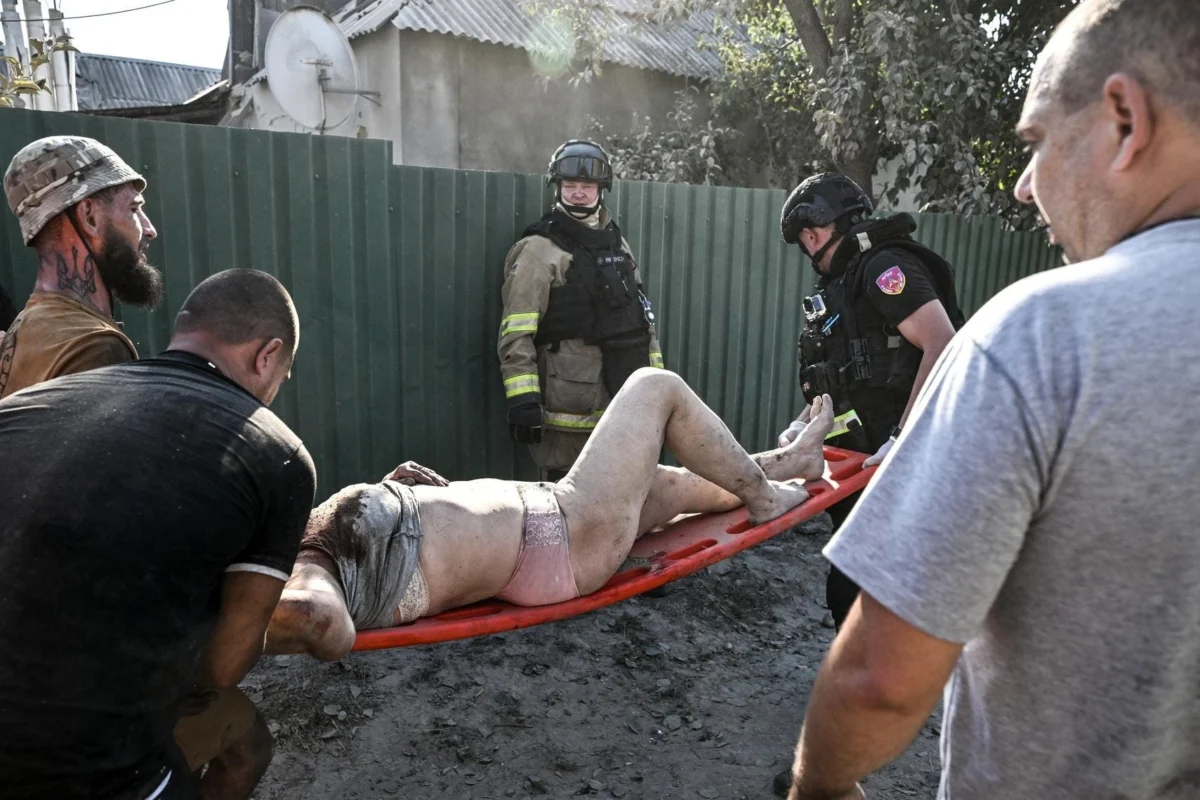
The impact of this intensified aerial assault was tragically evident on August 2, 2026, when the southern Ukrainian city of Zaporizhzhia endured a concentrated Russian attack. During daytime hours, Russia dropped eight powerful glide bombs in a span of just 90 minutes, targeting residential districts. One multi-story apartment building suffered a direct hit, resulting in the death of one person and injuries to at least 31 others. Regional chief Ivan Fedorov confirmed the details of the attack, which brought further devastation to a city that has frequently been on the front lines of Russia’s aggression. The image from Zaporizhzhia depicts first responders diligently working to retrieve a woman from under the rubble of a destroyed house, highlighting the immediate and harrowing consequences of these attacks. Glide bombs, known for their ability to be launched from a distance and guide themselves to targets, represent a significant threat due to their destructive power and the challenges they pose to conventional air defenses.
Just a day prior, on August 1, 2026, another devastating Russian drone strike targeted a warehouse belonging to the Ranok publishing house in Kharkiv, Ukraine’s second-largest city. The attack resulted in the destruction of millions of books, including crucial school textbooks that were destined for classrooms ahead of the upcoming academic year. Viktor Kruhlov, the head of the publishing company, recounted the harrowing incident, explaining that two Russian jet-powered drones struck the facility. Critically, the second drone hit mere minutes after the first, as employees had already begun desperately attempting to extinguish the initial blaze, underscoring the malicious intent behind such follow-up strikes, often designed to target emergency responders. The destruction of educational materials represents not just an economic loss, but a profound attack on Ukraine’s cultural heritage and future generations.
These incidents are part of a broader pattern of intensified Russian aggression. On July 28, 2026, other Russian strikes killed at least nine people and injured nearly 70 across various regions of Ukraine. The heaviest casualties from these attacks were reported in the eastern Donetsk and southern Kherson regions, where seven individuals lost their lives. The persistent targeting of civilian areas and critical infrastructure continues to exact a heavy toll on the Ukrainian populace.
Beyond residential areas and cultural institutions, Russia has also systematically targeted vital civilian infrastructure. Oleksandr Skoryk, a member of the Kharkiv Regional Council, reported that Russian forces have knocked out every single gas station along the roughly 90-mile stretch between Kharkiv and Poltava, effectively crippling a key transportation artery. Skoryk added that Russia has destroyed more than 200 gas stations across Ukraine, with over 80 of those located specifically in Kharkiv and its surrounding region. This deliberate destruction of civilian infrastructure aims to disrupt daily life, impede logistics, and undermine the Ukrainian economy, further exacerbating the humanitarian crisis.
Zelenskyy’s Diplomatic Push in Washington

Amidst this escalating assault, Ukrainian President Volodymyr Zelenskyy embarked on a critical visit to Washington, D.C., meeting with President Donald Trump at the White House on July 28, 2026. The high-stakes meeting aimed to solidify and expand the U.S. president’s increasingly favorable stance toward Ukraine, a relationship that Zelenskyy himself attributed to Trump’s "political instincts" and his desire to align with "success." The Ukrainian leader previously highlighted a brief encounter with Trump at Pope Francis’ funeral in April 2025 as a pivotal moment that marked the beginning of a thaw in relations.
A primary objective of the visit was to revive stalled peace efforts, which had been complicated by the ongoing conflict in Ukraine and broader geopolitical dynamics. Discussions between the two leaders explored various avenues to reinvigorate diplomacy, including the conceptualization of an "air ceasefire" that could eventually be presented to Moscow as a step towards de-escalation.
Central to Ukraine’s defense strategy and its ability to withstand Russia’s missile onslaught is the acquisition and production of advanced air defense systems. Zelenskyy revealed that the leaders discussed "licenses for Patriot production and several other ideas," signaling a significant move towards enabling Ukraine to manufacture Patriot missiles domestically rather than solely relying on the supply of U.S.-made systems. This initiative is critical as Ukraine continues to face a severe and ongoing shortage of Patriot interceptors. The Patriot remains the only air defense system currently in Ukraine’s arsenal capable of effectively intercepting advanced Russian ballistic missiles, making its availability and sustainability paramount for protecting Ukrainian cities and strategic assets.
Further demonstrating Kyiv’s ambition to expand its operational capabilities, President Zelenskyy reportedly urged President Trump and other U.S. officials to facilitate securing Elon Musk’s approval for Ukraine to utilize the Starlink satellite communications network to support long-range strikes inside Russia. This bold proposal underscores Ukraine’s strategic push to enhance its ability to conduct deep strikes against Russian targets, leveraging Starlink’s robust and critical communications infrastructure, which has become an indispensable component of Ukraine’s military operations and command and control.
U.S. Sanctions and Battlefield Assessment
Following President Zelenskyy’s visit, the U.S. Senate took decisive action, overwhelmingly voting to advance sweeping Russia sanctions legislation on July 28, 2026. This bipartisan move provides the U.S. president with another potent lever to exert pressure on Moscow. The proposed bill would authorize the president to impose sanctions on Russian officials and levy steep tariffs on countries, such as China and India, in an effort to curb their purchases of Russian oil and gas, thereby cutting off a crucial source of revenue for Russia’s war machine.
Despite Russia’s intensified missile campaign, independent assessments indicate a lack of significant operational progress on the battlefield. A new assessment released on August 1, 2026, by the Washington-based Institute for the Study of War (ISW), concludes that Russia’s spring-summer 2026 offensive has failed to produce any operationally significant gains more than two and a half months after its inception. The pace of Russian advances has remained notably slow, a testament to the resilience and strategic effectiveness of Ukrainian forces.
The ISW report attributes this stagnation to several key factors: sustained Ukrainian counterattacks, Kyiv’s increasingly effective intermediate-range strike campaign, and Ukraine’s undeniable dominance in drone warfare. These combined elements have severely constrained Russia’s ability to advance its forces and deploy mechanized units effectively across the front lines. The institute’s analysis further indicates that there are no immediate signs that Russian forces are poised to significantly accelerate their offensive operations or restore battlefield maneuver in the near term, suggesting that despite their intensified aerial attacks, Russian ground forces continue to face substantial challenges in achieving their strategic objectives.
The confluence of record-breaking Russian missile attacks and Ukraine’s concerted diplomatic efforts highlights the critical juncture in the ongoing conflict. As Russia attempts to wear down Ukraine through aerial bombardment and infrastructure destruction, Kyiv is resolutely seeking advanced military capabilities and international support to not only defend its territory but also to project power and push for a lasting peace.