 11
11
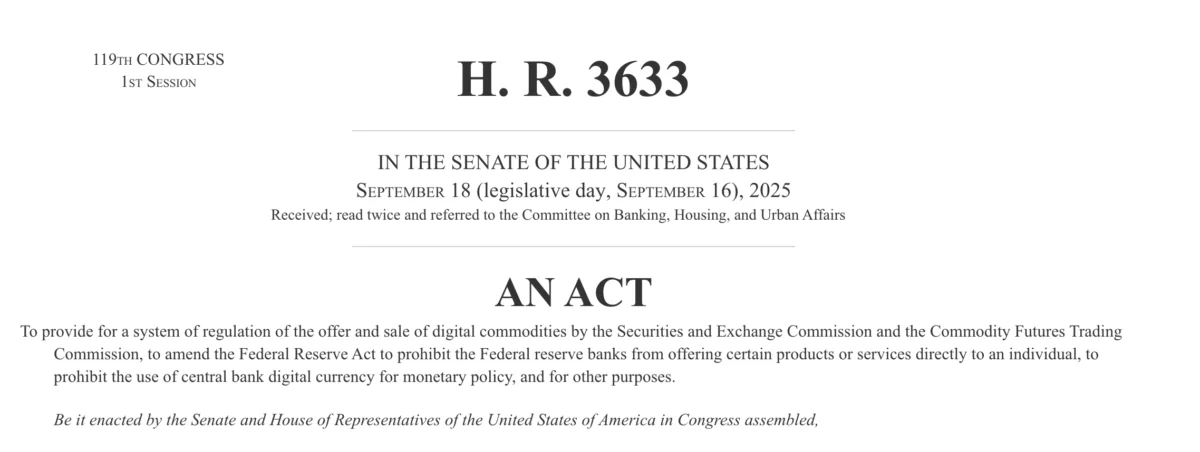
The US Digital Asset Market Structure Clarity Act, widely known as the CLARITY Act, is drawing significant criticism from within the cryptocurrency community, with prominent figures like Dr. Friederike Ernst, co-founder of the Gnosis blockchain protocol, expressing grave concerns that its provisions could inadvertently cede control of the burgeoning crypto market to large financial institutions. Ernst articulated that the bill’s underlying assumption that all digital asset activity must be funneled through centralized intermediaries poses a substantial risk of consolidating the decentralized infrastructure of crypto into the hands of a select few established players.
Speaking to Cointelegraph, Dr. Ernst highlighted the fundamental ethos of blockchain technology, emphasizing that its true innovation lies not merely in creating a new financial infrastructure, but in empowering users to become owners of the networks they utilize. She cautioned that a regulatory framework pushing activity back through institutional gatekeepers could relegate users to the status of mere customers renting access to financial technology, thereby eroding the stakeholder model that blockchain pioneers envisioned. The critical challenge, as Ernst sees it, is to ensure that regulatory clarity does not inadvertently dismantle this core ownership principle.
Despite these significant reservations, Dr. Ernst acknowledged that the CLARITY Act does offer some positive developments. Notably, the bill aims to delineate clear regulatory jurisdiction over digital assets between the Securities and Exchange Commission (SEC) and the Commodity Futures Trading Commission (CFTC). Furthermore, it includes provisions that protect peer-to-peer transactions and the crucial concept of self-custody, allowing individuals to maintain direct control over their digital assets.

However, Ernst reiterated her apprehension that the bill’s shortcomings in adequately safeguarding open, permissionless blockchain networks and decentralized finance (DeFi) protocols could lead to the reintroduction of the very vulnerabilities and points of failure that plague the legacy financial system. This, she warned, would undermine the transformative potential of blockchain technology.
The path of the CLARITY Act through Congress has been far from smooth, marked by a significant stalemate stemming from disagreements between the crypto industry and traditional banking institutions. A key point of contention revolves around the issue of stablecoin yields, specifically whether stablecoin issuers should be permitted to share interest earned with token holders.
This internal conflict has led to significant industry pushback. In January, Coinbase, a leading cryptocurrency exchange, announced its withdrawal of support for the bill. Brian Armstrong, CEO of Coinbase, stated that the exchange would rather see no bill passed than a flawed one, citing concerns that certain provisions within the draft legislation would weaken the decentralized finance industry, prohibit stablecoin yields, and hinder the growth of the tokenized real-world asset sector.
The political landscape surrounding the bill is also complex. Senator Bernie Moreno has expressed optimism that the CLARITY Act could pass by April and reach President Donald Trump’s desk for signature. However, industry analysts caution that the timeline is exceedingly tight. Alex Thorn, head of firmwide research at Galaxy, an investment firm, suggested that if the bill does not advance by April 2026, its chances of becoming law in the current year would be "extremely low." Thorn further indicated that the debate over stablecoin rewards might not be the ultimate hurdle, but rather a symptom of deeper unresolved issues concerning DeFi, developer protections, and regulatory authority.

The CLARITY Act’s proposed structure has also drawn parallels to potential missteps made in other jurisdictions. A crypto lawyer warned that the bill risks repeating mistakes made in Europe with its Markets in Crypto-Assets (MiCA) regulation, suggesting that the current approach could inadvertently stifle innovation and decentralization.
The broader implications of the CLARITY Act underscore a critical juncture for the digital asset market in the United States. While the desire for regulatory clarity is widely acknowledged by both traditional finance and the crypto industry, the specific approach taken by the CLARITY Act has ignited a fierce debate about the future architecture of this rapidly evolving sector. The core tension lies in balancing the need for investor protection and market stability with the preservation of the decentralized ethos that has defined cryptocurrency’s disruptive potential. The ongoing legislative process and the industry’s response will be crucial in determining whether the CLARITY Act ultimately fosters a more robust and inclusive digital asset ecosystem or inadvertently centralizes power within the hands of established financial players, mirroring the very systems it seeks to regulate. The coming months are critical in shaping the regulatory future of digital assets in the US, with significant implications for innovation, user ownership, and the broader financial landscape.