 11
11
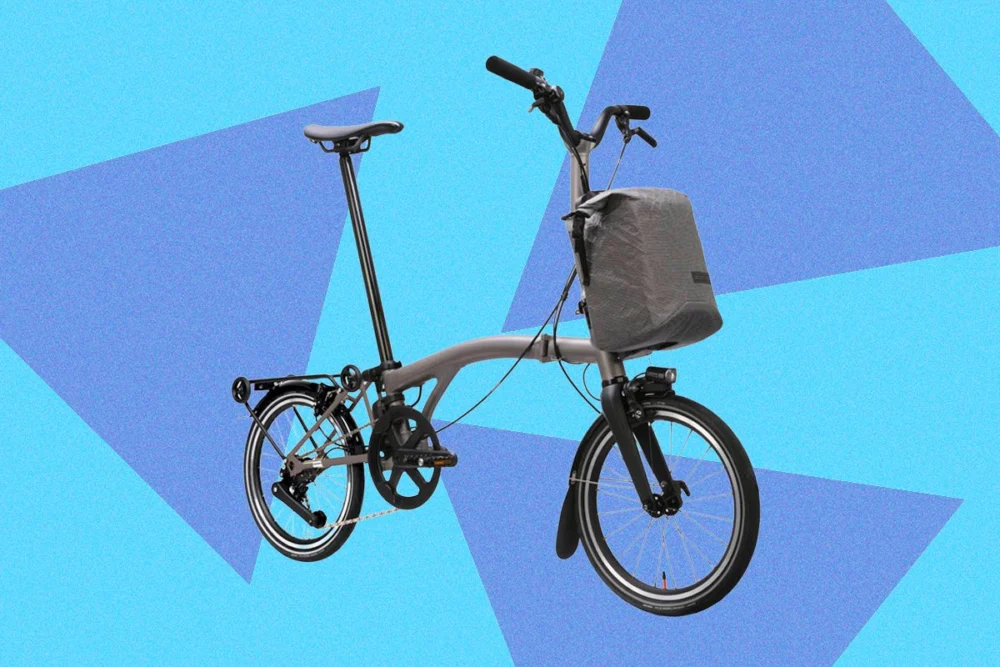
The Brompton T Line Electric, a highly anticipated addition to the folding bike market, has been lauded for its advanced e-Motiq system and remarkable lightweight design. However, a notable point of contention for potential buyers in the United States is its speed limitation. Disappointingly, Brompton has not equipped the T Line Electric with an increased speed capacity for US-based riders, meaning it adheres to the UK’s electric bike speed limit of 15.5 mph. This contrasts sharply with the Class 1 pedal-assist maximum of 20 mph typically permitted for e-bikes in the United States, potentially limiting its appeal for some American commuters seeking higher speeds.
The core of the T Line Electric’s performance lies in its sophisticated e-Motiq system. This innovative electric assist technology first made an impression during testing of the larger 20-inch Brompton G Line in 2024. The e-Motiq system distinguishes itself with a powerful rear-mounted motor, a design choice that offers significant advantages over traditional front-mounted systems. This rear-mounted configuration provides a more stable riding experience, with the sensation of being "pushed" along feeling inherently more natural and intuitive than being "pulled." Furthermore, strategically placing the motor at the rear helps maintain the delicate balance of the folding mechanism, ensuring the bike’s renowned compact fold remains unaffected and user-friendly.
Beyond its motor placement, the e-Motiq system offers a highly adaptive and personalized riding experience. Riders have access to three distinct power-assist levels, augmented by a unique "Push Assist" feature, which will be detailed further. Crucially, the system is designed to learn and adjust to individual riding styles. It continuously monitors key metrics such as pedal force and cadence, observing how frequently a rider stops and starts. Over the initial 62 miles of use, the system intelligently tweaks how power is deployed, not primarily to extend battery range, but to refine and smooth out the ride, making the electric assistance feel incredibly natural and seamless. During extensive testing, the reviewer noted that these subtle adjustments were barely perceptible as the miles accumulated, yet the overall impression was one of a remarkably "normal" feeling bike. While acknowledging the inherent slight wobbliness of an upright design with small 16-inch wheels, the initial acceleration provided a controlled surge of power. The sensation was less like having a motor strapped to the bike and more akin to possessing "supercharged legs," highlighting the system’s ability to augment human effort rather than overpower it.
The test model was a single-speed variant, though a four-speed option is also available for purchase. For urban environments like London, the single-speed configuration proved entirely adequate, as the motor effortlessly tackled any inclines, negating the need for multiple gears. The perpetual traffic in a bustling city also means that exceeding the 15.5 mph top speed for extended periods is rarely feasible. However, when open stretches of road presented themselves, the bike’s ability to smoothly transition between providing assistance and subtly backing off power to maintain the 15.5 mph limit was impressive. The reviewer speculated that for the larger roads and varied terrains often found in America, a four-speed option would likely be preferred to optimize riding efficiency. Concurrently, the desire for a higher speed assist limit for the US market was strongly reiterated, making the decision by Brompton to only offer the additional gearing, but not the increased speed, a regrettable omission for American consumers.

A significant strength of the Brompton T Line Electric is its exceptional portability, even with the added components of an e-bike. The reviewer was pleasantly surprised by its performance without the battery pack, noting that it weighed less than an old steel Brompton and felt considerably nicer to carry. This lightweight characteristic proved invaluable in real-world urban scenarios. The Electric T Line e-Motiq was effortlessly hauled up countless flights of stairs, transported onto the London Underground, and easily stowed in the trunk of a taxi in the early hours of the morning. Its compact size and minimal weight meant it could be carried almost anywhere, with the reviewer only leaving it in a restaurant cloakroom on a single occasion. This extreme portability also addresses a crucial aspect of e-bike ownership: security. Given its premium price point, the T Line Electric’s design encourages riders to keep it with them, eliminating the need to lock it up and leave it exposed on the street, thereby significantly reducing theft risk.
For comparison, the reviewer also experienced the non-electric titanium Brompton T-Line, which, at an astonishing 17.64 pounds (approximately 8 kg), was described as "almost laughably light." This non-electric counterpart stands as the ideal commuter bike for those who do not require power assistance, underscoring Brompton’s mastery of lightweight, foldable design.
Control, Extras, and Competition
Despite its compact size, the handlebar-mounted controller on the Brompton T Line Electric integrates several useful functionalities. A standout feature is the "start-assist button." This ingenious control, when pressed just before setting off from traffic lights or confronting an incline, provides a powerful initial push to get the rider moving. It is important to clarify that this is not a throttle; it functions purely as a momentary assist that only engages when the bike is stationary, offering a crucial boost when starting from a standstill or tackling challenging gradients. This thoughtful addition further enhances the bike’s user-friendliness in demanding urban environments.
In summary, the Brompton T Line Electric with its e-Motiq system represents a significant leap forward in folding e-bike technology, offering an incredibly natural-feeling power assist, exceptional portability, and a refined riding experience. Its adaptive system and rear-mounted motor deliver stability and intuitive power delivery, while its lightweight titanium frame makes it genuinely easy to carry and integrate into multi-modal commutes. While the 15.5 mph speed limit for US riders remains a point of contention given local e-bike regulations, the bike’s overall design, performance, and practical advantages position it as a premium option for urban commuters prioritizing convenience, agility, and a sophisticated electric assist.