 11
11
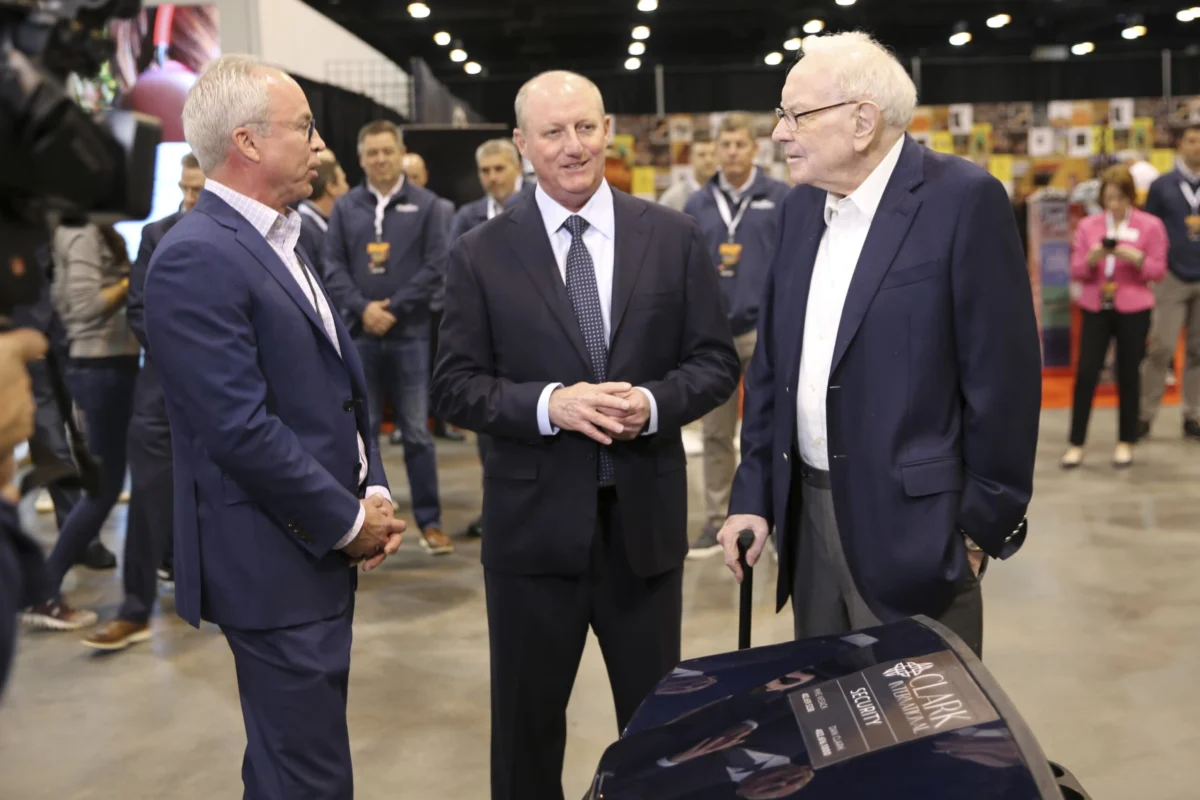
Greg Abel, the newly appointed CEO of Berkshire Hathaway, has revealed that he continues to communicate with his predecessor, Warren Buffett, on a near-daily basis, highlighting the enduring presence and influence of the legendary investor at the sprawling conglomerate. Buffett, who officially stepped down as CEO at the beginning of the year after helming the company for over six decades, remains the chairman and continues to be an active participant at the Omaha, Nebraska-based company, visiting the office regularly.
Speaking on CNBC’s "Squawk Box," Abel stated, "He’s in the office every day, so we’re talking every day if I’m in Omaha, we’re always connecting." He further elaborated on the frequency of their conversations, noting, "If I’m traveling, like I was yesterday, I often check in just to catch up on what he’s seeing, what he’s hearing, what am I feeling. So if it’s not every day, it’s every couple days." This consistent dialogue underscores Buffett’s ongoing role in guiding the company, even with Abel now at the helm.
Abel also candidly addressed the significant challenge of assuming Buffett’s role as Berkshire’s primary communicator to shareholders, particularly in the context of penning his inaugural annual letter to investors. "The shoes to fill are tough on all fronts, but Warren is an exceptional communicator," Abel remarked. "It was not easy. I’ve told Warren, ‘listen, the responsibilities transferred are great, but as far as the work and the task I had to do, that was the toughest.’" This statement acknowledges the immense legacy and communication prowess that Buffett brought to the role, a benchmark that Abel recognizes as exceptionally difficult to match.

In his first letter to shareholders, Abel laid out a clear framework of foundational values, emphasizing financial strength and disciplined investing. This approach is designed to preserve the core principles and investment blueprint that Buffett meticulously cultivated since the 1960s. Abel’s commitment to these established tenets signals a desire to maintain the continuity of Berkshire Hathaway’s successful operating philosophy. Adding a touch of humor to the discussion about the letter-writing process, Abel recalled Buffett’s pragmatic, yet unvarnished, advice: "When we were discussing it, he said, ‘the second letter doesn’t get any easier.’" This anecdote illustrates the ongoing, albeit sometimes wry, interaction between the former and current CEOs.
Regarding investment strategy, Abel reiterated Berkshire’s long-standing skepticism towards cryptocurrencies, echoing Buffett’s well-known reservations about the asset class. "I don’t think you’ll see crypto … I just don’t see it," Abel stated definitively. This stance aligns with Berkshire’s historically conservative and value-driven investment approach, which has largely eschewed speculative and volatile digital assets.
However, Abel left the door open to potential investments in technology, indicating a forward-looking perspective on innovation. "What I do see is that when it comes to technology, even from an operational perspective, where we’re seeing how we use it, the impact it’s having, it does allow us to develop strong views and a better knowledge base around certain companies that are technology companies, or how we’re using the technology," Abel explained. He concluded this point by asserting, "So technology will always be on the table." This suggests that while Berkshire may not venture into areas like cryptocurrency, it remains open to strategically investing in and leveraging technological advancements that align with its core investment philosophy and operational needs.
The continuity of communication between Abel and Buffett, coupled with Abel’s commitment to preserving Berkshire’s established values while remaining open to technological evolution, paints a picture of a carefully managed leadership transition. Buffett’s continued involvement, even in an advisory capacity, provides a crucial link to the company’s storied past, while Abel’s leadership signals a commitment to navigating the future with a blend of tested principles and a pragmatic embrace of innovation. The relationship between the two leaders appears to be one of mutual respect and ongoing collaboration, ensuring a stable and strategic path forward for Berkshire Hathaway. The conglomerate’s future direction, as articulated by Abel, will likely be characterized by the same disciplined financial management and strategic foresight that have defined its success under Warren Buffett’s stewardship. The emphasis on daily check-ins with Buffett suggests that the wisdom and experience of the Oracle of Omaha will continue to inform key decisions at Berkshire Hathaway for the foreseeable future. This ongoing dialogue is not just a personal connection but a vital mechanism for knowledge transfer and strategic alignment, ensuring that the company’s foundational principles remain at the forefront of its operations and investment choices. Abel’s acknowledgment of the difficulty in filling Buffett’s communication role also speaks to the unique public profile and investor trust that Buffett has cultivated over decades. As Abel steps into this role, his efforts to maintain transparency and communicate Berkshire’s strategy will be closely watched by the investment community. His commitment to preserving Buffett’s legacy while charting his own course is a delicate balance, and the ongoing daily discussions with Buffett are a testament to the importance of that legacy in shaping Berkshire’s future. The clear stance against cryptocurrencies, while potentially disappointing to some, reinforces Berkshire’s identity as a value-oriented investment powerhouse rather than a speculative trading firm. The openness to technology, however, demonstrates an understanding that the business landscape is constantly evolving, and that strategic investments in forward-looking sectors are necessary for sustained growth. This nuanced approach to future investments reflects a thoughtful consideration of both tradition and progress, a hallmark of successful long-term business strategy. The continued presence of Buffett, even in a non-executive capacity, provides a unique continuity that few companies experience during major leadership changes. This continuity is likely to be a significant stabilizing factor for Berkshire Hathaway’s shareholders and its vast portfolio of businesses. The daily conversations are more than just updates; they are likely strategic planning sessions, risk assessments, and a continuous reinforcement of the Berkshire Hathaway ethos. Abel’s candidness about the challenges of his new role, and his acknowledgment of Buffett’s enduring influence, underscores the profound impact Buffett has had and continues to have on the company. The transition, therefore, is not a complete break but an evolution, guided by the enduring wisdom of its founder and led by a successor committed to its core values.