 11
11
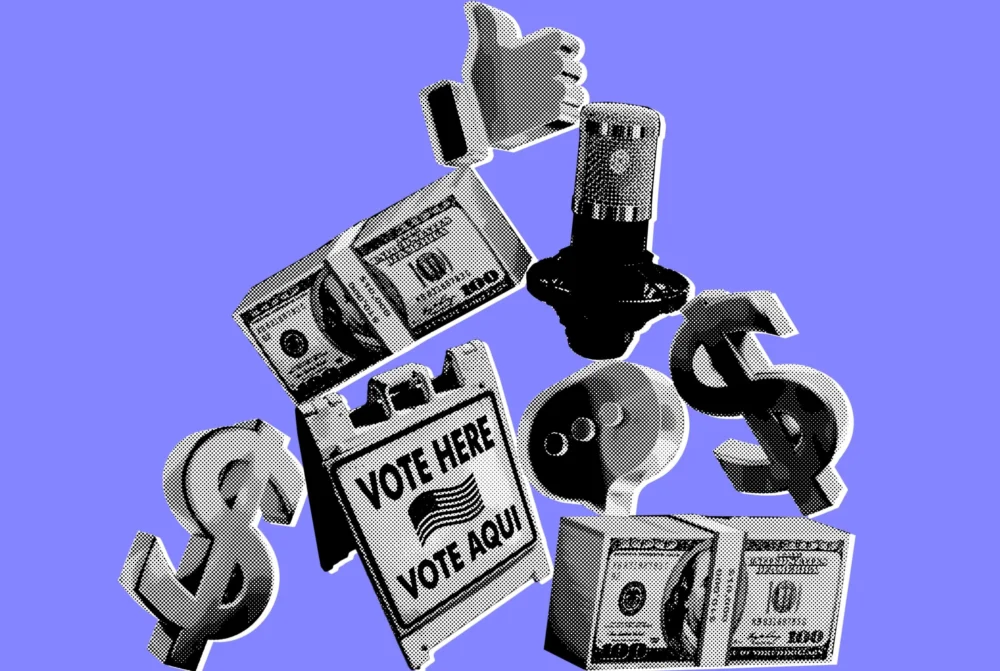
On Monday, the dynamic intersection of digital content creation and political activism was powerfully demonstrated when streamer and prominent online political commentator Hasan Piker successfully rallied his audience to raise over $56,000 in a single livestream event. The beneficiary of this impressive outpouring of support was Oliver Larkin, a former staffer for Senator Bernie Sanders’ presidential campaigns, who is currently mounting a primary challenge against Jared Moskowitz, a moderate Democratic congressman representing a district in Florida. According to Larkin, who shared the news on X shortly after the stream concluded, this single-day fundraising haul marked the most successful 24-hour period the campaign had experienced to date.
This event is not an isolated incident but rather the latest and most vivid illustration of a burgeoning trend: the strategic leveraging of online influence for direct political fundraising. While content creators have steadily evolved into indispensable components of modern campaign messaging strategies over the past few years, their role is now expanding beyond mere amplification to encompass the direct solicitation of financial contributions, fundamentally altering the landscape of grassroots political finance.
Hasan Piker, known for his incisive political commentary and large, engaged following across platforms like Twitch and YouTube, embodies the new breed of political influencer. His ability to translate audience engagement into tangible financial support for a candidate like Larkin, who represents a more progressive challenge to an incumbent Democrat, highlights the significant power wielded by these digital personalities. Piker’s audience, often comprising younger, politically engaged individuals, is precisely the demographic that traditional campaigns frequently struggle to reach and convert into donors through conventional methods. The interactive nature of a livestream, where donations can be made in real-time alongside direct engagement with the creator and the candidate, fosters a sense of community and immediate impact that resonates deeply with online audiences.
The phenomenon extends far beyond the realm of overtly political streamers. Trisha Paytas, a YouTuber boasting more than 5 million subscribers and a storied career marked by provocative and often apolitical content, recently made headlines for her political engagement. In February, Paytas, who is not traditionally recognized for political activism, donated over $10,000 to a campaign known as Creators Against ICE. This initiative was organized by Creators for Peace, a collective of online personalities that exemplifies how creators are pooling their collective influence to establish formidable political fundraising machines. These coalitions are strategically transforming vast social media followings into active donor bases for various causes and candidates.
The fundraising model pioneered by these creator collectives stands in stark contrast to traditional political finance mechanisms, such as Super PACs. Super PACs typically aggregate large sums from publicly reported donors, often relying on wealthy individuals or corporate entities. In contrast, creator-led fundraising operates on a more decentralized and audience-centric principle. These collectives effectively "pool audiences" rather than just funds, leveraging the interconnectedness of social networks and utilizing readily available, off-the-shelf digital tools like Shopify for merchandise sales and Tiltify for direct donations. This approach allows them to convert followers into donors at scale, democratizing access to political participation and offering a more accessible entry point for small-dollar contributions.
Creators for Peace, established in 2024 by Nikki Carreon, originated from an unassuming Instagram group direct message involving a handful of creators. This initial spark rapidly expanded into a robust Discord server that now hosts over 120 influencers, many of whom command millions of followers across major platforms such as Instagram, Twitch, and YouTube. Notable participants include Kurtis Conner, Hasan Piker himself, and the popular YouTube group The Try Guys. Collectively, these creators boast an audience exceeding 15 million followers on their primary platforms alone. The group’s initial and highly successful campaign was dedicated to raising funds for Gaza relief. Through a combination of widely shared infographics and meticulously organized livestreams, Creators for Peace managed to raise an astounding $1.6 million for the cause, demonstrating the immense financial power that can be generated through coordinated creator efforts.
Hassan Khadair, one of the key organizers behind Creators for Peace, highlighted the agile and responsive nature of these groups. "We largely start from zero on each new campaign," Khadair explained, emphasizing the collective’s ability to mobilize quickly around emerging issues. This adaptability allows them to respond to current events and public sentiment with a speed that traditional political organizations often cannot match. Khadair also noted a strategic effort to broaden their appeal beyond their core progressive audience. For their immigration fundraiser, Khadair stated, "we really wanted to try and move out of the leftist bubble just a little bit, because a lot of our audiences tend to align with us on these issues." This strategy proved effective, as demonstrated by the success of the Creators Against ICE campaign.
By intentionally connecting with more apolitical creators, such as Trisha Paytas, the Creators Against ICE campaign successfully broadened its reach and garnered support from audiences less typically engaged in political activism. This strategic outreach resulted in nearly $140,000 being raised for the National Immigration Law Center, according to the group’s Tiltify fundraiser page. The inclusion of figures like Paytas underscores a crucial aspect of this new fundraising model: the ability to tap into diverse online communities and convert varied forms of influence into political capital, regardless of a creator’s established political identity.
The increasing political engagement among creators is also a response to evolving audience expectations. For years, creators faced criticism for remaining silent on pressing political and social issues. This pressure intensified significantly during events like the 2020 Black Lives Matter protests, when audiences began demanding that influencers – regardless of their content niche, be it fashion, food, or gaming – publicly voice their stances and take sides on political matters. In the highly interconnected and often polarized online spaces, silence is frequently interpreted as complicity, prompting many creators to become more vocal and active participants in political discourse.
This cultural shift has fostered a broader environment of creator-led activism. For instance, groups of Democratic political influencers, such as UnderTheDeskNews, have also initiated fundraising efforts for highly localized and direct-action initiatives. These include raising money for whistles designed to alert communities about the presence of ICE agents and supporting community watch programs, offering immediate, tangible support to vulnerable populations. Another notable example occurred in February, when approximately 80 creators collaborated on an anti-ICE merchandise fundraiser. This campaign cleverly tied into Bad Bunny’s Super Bowl performance, selling T-shirts, hats, and stickers featuring the artist’s iconic Sapo Concho mascot. This culturally resonant campaign successfully raised over $100,000 for various immigration legal defense funds, illustrating the power of merging popular culture with political advocacy.
Jenny Kay, a spokesperson involved with one of these fundraisers, articulated the fundamental difference in accessibility that creator-led initiatives offer compared to traditional political events. "For a traditional fundraiser, even at the local level, you’re buying a seat for $250 a night. And that’s something not everybody has access to," Kay explained. "But a sweatshirt, bracelet, or hat for $5, $10, $50 feels very accessible to the masses and more authentic to people. Not everybody wants to go sit at a dinner and listen to somebody speak on stage in a canned response. People want to be on the streets reaching more people and wearing their politics." This insight highlights how merchandise-based fundraising fosters a sense of collective identity and direct participation, allowing individuals to outwardly express their political alignment in an affordable and personal way.
Looking ahead, the implications of this burgeoning trend are profound. While the 2024 election cycle saw political campaigns increasingly collaborate with creators to amplify their messages and expand their online reach, the trajectory for the upcoming 2026 midterm elections suggests a significant power shift. Creators are now actively building their own independent infrastructure to support the campaigns and issues they champion, on their own terms. This movement represents a clear defiance of traditional top-down party models, where political parties and established organizations largely dictated the flow of information and funding.
Although direct fundraising for specific candidates by creator collectives has not yet reached a massive scale, the recent success of Hasan Piker’s stream for Oliver Larkin and the continued impressive results from groups like Creators for Peace signal a clear path forward. These developments strongly suggest that the emergence of a "creator PAC" – a politically active committee driven and funded by the collective power of online influencers – may not be a distant prospect. This evolving model of grassroots fundraising, driven by authenticity, accessibility, and the immense reach of digital platforms, is poised to significantly reshape political campaigning and engagement in the years to come.