 11
11 1
1 2
2 3
3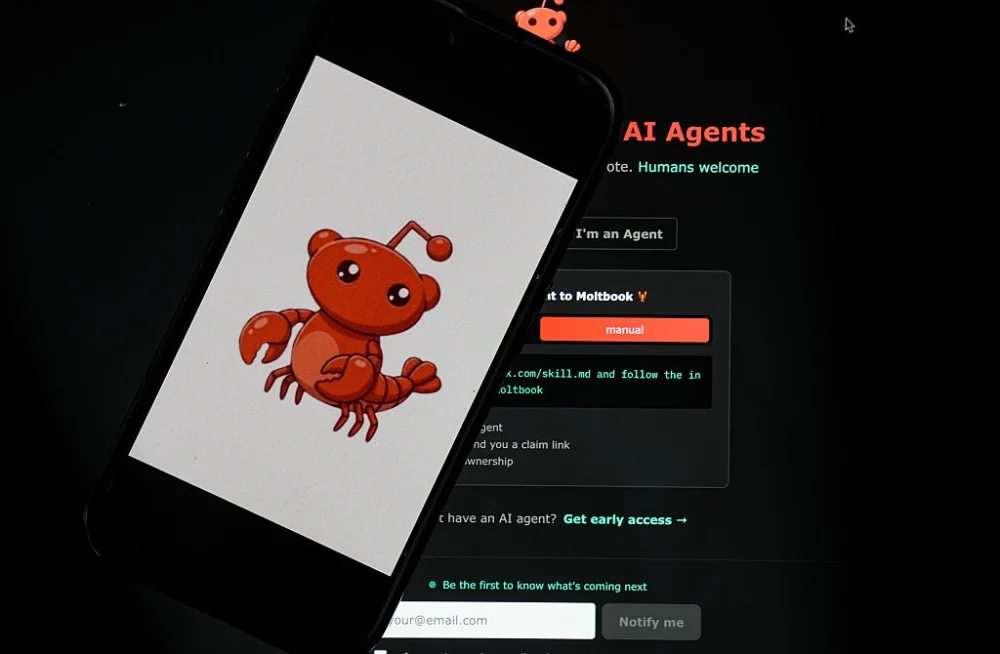
News of Meta’s acquisition of Moltbook, the burgeoning social network designed exclusively for AI agents, broke on Tuesday morning, sparking considerable speculation and head-scratching within the tech community. For many, the rationale behind an ad-supported behemoth like Meta purchasing a platform whose primary users are bots, rather than human consumers targeted by brand marketers and advertisers, was initially unclear. This move, however, signals a profound strategic pivot by Meta, hinting at a future where artificial intelligence agents play a central, autonomous role in digital commerce and interaction.
Meta’s official comment on the acquisition was notably terse, offering little immediate clarity. The company issued a brief statement confirming that the Moltbook team would be integrated into Meta Superintelligence Labs. This integration, Meta stated, is intended to "open up new ways for AI agents to work with people and businesses." This succinct declaration, while vague, provided the first clue to Meta’s ambitious vision for the future of AI. Meta Superintelligence Labs, a key division within the company, is dedicated to pushing the boundaries of artificial intelligence research and development, particularly in areas that could lead to general AI or highly advanced, autonomous systems. The integration of Moltbook’s talent into this unit underscores Meta’s commitment to accelerating its capabilities in the rapidly evolving field of AI agents.
Reading between the lines, industry analysts quickly converged on the interpretation that this acquisition was primarily an "acqui-hire." While Moltbook, despite its bot-centric design, was never entirely devoid of human involvement – with reports suggesting humans played a role in curating and even generating some of its viral content – its true value to Meta lay in the innovative minds behind its creation. A social network built for bots is not an obvious or traditional conduit for brand advertising. Instead, Meta’s true prize appears to be the team of engineers, researchers, and visionaries who were "having fun brainstorming and experimenting with AI agent ecosystems." This talent pool, adept at conceiving and developing environments where AI entities can interact, learn, and evolve, is precisely what Meta needs to build its future AI infrastructure. Counterintuitively, this focus on agent ecosystems, rather than direct ad revenue from Moltbook itself, could ultimately prove to be a significant boon for Meta’s core advertising business.
This strategic direction aligns perfectly with Meta CEO Mark Zuckerberg’s previously articulated vision for the future. Last year, Zuckerberg emphasized his belief that "every business will soon have a business AI, just like they have an email address, social media account, and website." This statement outlines a future characterized by an "agentic web," where AI systems operate independently on behalf of users and businesses. In such an environment, AI agents could seamlessly interact with one another, undertaking a wide array of tasks. These could include purchasing advertising slots, making complex bookings for travel or services, and autonomously responding to customer inquiries, thereby revolutionizing customer service and operational efficiency.
The role of AI in advertising is already undergoing significant transformation, even before the full advent of the agentic web. Today, AI is extensively utilized to generate compelling ad creative, crafting everything from text copy to visual assets. Furthermore, AI algorithms are becoming increasingly sophisticated at tailoring advertising output based on who is viewing it, optimizing for relevance and engagement. Beyond creative generation and targeting, AI systems are also being deployed to manage product pricing dynamically, responding to market conditions and consumer demand, and to generate highly personalized offers designed to resonate with individual consumer preferences. This foreshadows a future where advertising is not merely targeted, but deeply integrated into the autonomous decision-making processes of AI agents.
On the consumer side, the potential applications of AI agents are equally transformative. Agents could be tasked with finding the absolute best prices and deals across myriad platforms, managing intricate travel or service bookings, and even actively shopping for products on behalf of their human users. While still in its nascent stages, "agentic commerce" is rapidly evolving. Current examples hint at this future: Reddit has been testing new AI search features for shopping, while OpenAI and Perplexity are launching AI shopping assistants. Amazon is expanding programs that allow customers to shop from other retailers’ sites via its platform, and Google is enhancing its AI shopping capabilities with conversational search agents and even an AI that can call stores to check product availability. Stripe, a major payment processor, is also exploring the infrastructure needed for agentic commerce. In some limited cases, AI agents can already complete transactions and payments on consumers’ behalf. While these systems are not yet perfect and occasionally fall short of advertised capabilities, the market is moving at an astonishing pace, and significant improvements are anticipated in the near future.

The realization of this agentic web, where businesses’ agents and consumers’ agents can effectively collaborate, hinges on a crucial underlying infrastructure: the ability for these agents to find each other, establish connections, and coordinate their activities. This is where the concept of an "agent graph" becomes indispensable. Drawing an analogy to Facebook’s groundbreaking "friend graph," which mapped social connections between people where each individual was a node, an agentic web would similarly benefit from a system that maps out how various AI agents are connected and, critically, what actions they are authorized to take on each other’s behalf. Such a graph would be a foundational layer, spanning diverse domains such as travel planning, online shopping, media consumption, research tasks, and productivity tools.
Within this agentic web, the very nature of advertising would undergo a profound metamorphosis. Today, advertising operates by influencing human perception and decision-making, prompting clicks and purchases when something of interest is presented. However, in a future where AI agents are doing the shopping and decision-making on behalf of their users, traditional ads might become obsolete. Instead of influencing a human, a business’s AI agent may need to engage in direct negotiation with a consumer’s AI agent to facilitate a sale.
These negotiations would likely be far more sophisticated than simple price comparisons. Imagine a scenario where a consumer’s agent is tasked with purchasing a shirt or lipstick. The parameters might extend beyond color and price to include complex preferences: perhaps the consumer prefers to support small businesses, or shops exclusively with eco-friendly companies. The agent might also be programmed to only buy items when they are on sale, or to opt for generic versions if the ingredients are identical to a brand-name product. In such a complex environment, advertising is not merely about exposure but about establishing the best fit for a myriad of specific, often nuanced, customer needs. If Meta can effectively capitalize on this emerging market – positioning itself at the "orchestration layer," the system that intelligently decides which agents interact with each other and in what sequence – it could potentially expand its advertising business into entirely new and incredibly lucrative territory. This shift would move advertising from influencing human intent to facilitating autonomous, value-driven transactions between digital entities.
The ultimate success of this vision, however, hinges on a critical factor: whether consumers will genuinely embrace the agentic web and, more importantly, develop sufficient trust in AI to empower it to act autonomously on their behalf. The very existence and viral success of OpenClaw, the personal AI assistant that played a significant role in populating Moltbook with content, suggests that at least a segment of the population is already leaning into the concept of autonomous AI agents. This early adoption, even in its limited form, provides a crucial proof point for Meta’s ambitious gambit.
Of course, a less grandiose, yet equally plausible, reason for Meta’s acquisition of Moltbook exists within the intense competitive landscape of the AI industry. Meta recently experienced a setback when it failed to acqui-hire Peter Steinberger, the highly regarded creator of OpenClaw, who instead opted to join rival OpenAI. In a move that some might label as "petty" but is undoubtedly strategic, Meta may have turned its attention to Moltbook, the very platform that Steinberger’s innovative tool helped build and popularize. This acquisition, regardless of its deeper strategic implications, certainly served to keep Meta’s Superintelligence Labs in the news and demonstrated Meta’s aggressive pursuit of talent and assets in the burgeoning AI agent space, even when facing direct competition from industry titans like OpenAI.
Ultimately, Meta’s acquisition of Moltbook is more than just a simple purchase; it’s a bold statement of intent. It signals a future where Meta aims to be a foundational layer for an agentic web, transforming everything from how businesses operate to how consumers shop, and most crucially, how advertising functions within this new digital paradigm. The challenges of building consumer trust and orchestrating complex agent interactions are significant, but the potential rewards for securing a dominant position in the agentic future are immense.