 11
11
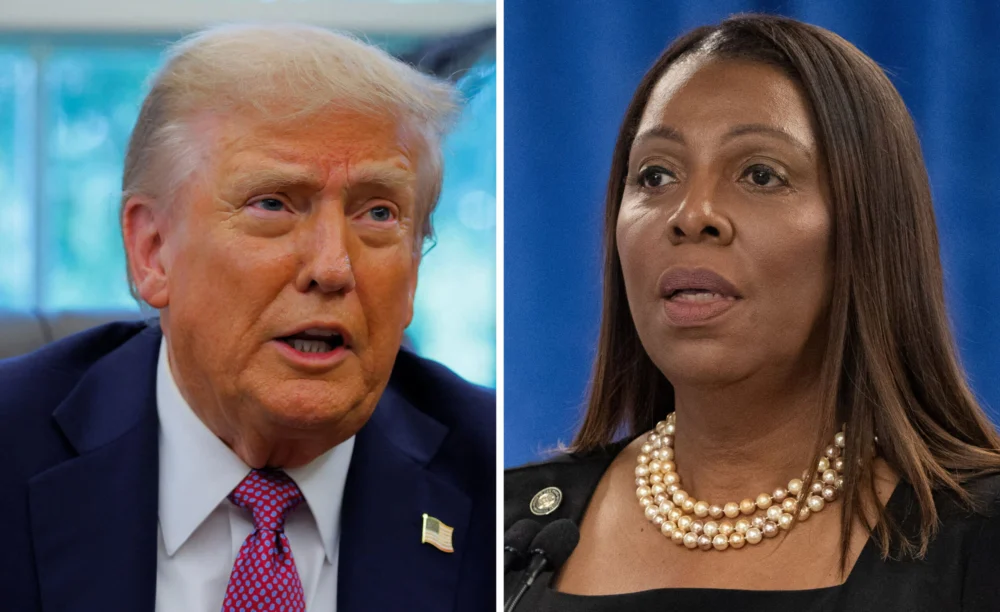
New York Attorney General Letitia James, alongside top prosecutors from 23 other states, has once again initiated legal action to challenge President Donald Trump’s global tariff regime. This latest lawsuit, filed in the Court of International Trade on Thursday, comes mere days after a significant Supreme Court decision invalidated his previous attempt to impose sweeping tariffs. The states are seeking to have Trump’s newest tariffs declared illegal and are demanding refunds for the financial impact on their respective jurisdictions.
The Supreme Court’s landmark ruling last month struck down the majority of Trump’s "Liberation Day" tariffs, which were implemented the previous year. The Court found that the President’s utilization of the International Emergency Economic Powers Act (IEEPA) to enact these duties was improper. However, in a swift move to maintain his signature economic policy, President Trump immediately announced a new series of tariffs. These are being implemented under a different legal framework: Section 122 of the Trade Act of 1974. While the current global tariff rate under this provision stands at 10%, the Trump administration has indicated its intention to escalate this to 15%.
Attorney General James expressed strong criticism of the President’s actions, stating in a press release provided to CNBC, "After the Supreme Court rejected his first attempt to impose sweeping tariffs, the president is causing more economic chaos and expecting Americans to foot the bill." She further asserted, "President Trump is ignoring the law and the Constitution to effectively raise taxes on consumers and small businesses."
This renewed legal challenge from the coalition of state attorneys general, many of whom were instrumental in the successful prior effort to block Trump’s original tariffs, intensifies the ongoing international economic uncertainty fueled by the President’s tariff policies. Adding to the legal ramifications, a federal court ruled on Wednesday that companies which had paid the tariffs struck down by the Supreme Court last month are now entitled to billions of dollars in refunds.
Defending the President’s actions, White House spokesman Kush Desai stated, "The President is using his authority granted by Congress to address fundamental international payments problems and to deal with our country’s large and serious balance-of-payments deficits. The Administration will vigorously defend the President’s action in court."
Misuse of Law Alleged in New Lawsuit

The core of the lawsuit filed by Attorney General James and the coalition of states centers on the argument that President Trump is misapplying Section 122 of the 1974 Trade Act. They contend that this specific provision was originally intended to address discrete monetary imbalances that were relevant when the U.S. was operating under the gold standard, rather than being a tool to combat broader trade imbalances.
Furthermore, the attorneys general argue that the imposition of these tariffs infringes upon the Constitution’s principle of separation of powers, which vests Congress with the authority to levy duties. They also maintain that Trump’s tariffs violate the explicit requirements of the 1974 Trade Act, which mandates that such levies be applied uniformly across all countries.
Attorney General James characterized the administration’s latest move as "a clear attempt to escape the Supreme Court’s ruling in the case against the tariffs imposed under IEEPA."
This is not the first time Attorney General James and other states have challenged the Trump administration’s tariff policies. Last year, James, along with 11 other states, filed a lawsuit to halt the initial round of tariffs. That legal effort was ultimately consolidated with challenges brought by small businesses affected by the tariffs, culminating in the Supreme Court case that resulted in a significant legal setback for President Trump during his second term.
It is noteworthy that President Trump and Attorney General James have a history of their own legal entanglements. In October, the Trump administration’s Justice Department indicted James on charges of bank fraud and making false statements to a financial institution. However, James faced no further charges after a judge dismissed her indictment, and two subsequent grand juries declined to revive the case.
Correction: A previous version of this story contained an inaccuracy regarding the timing of the lawsuit filed by Attorney General James and other state attorneys general.