 11

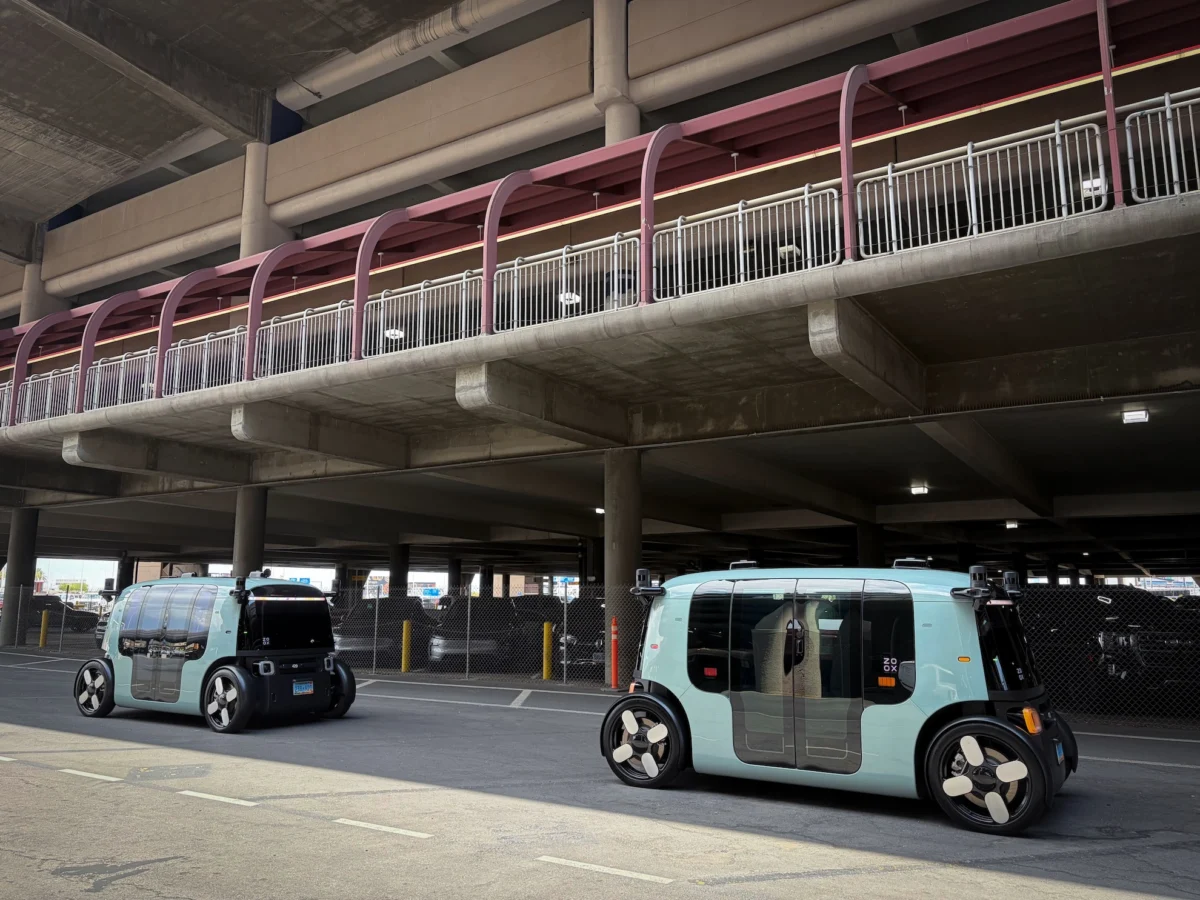
Zoox, the Amazon-owned autonomous vehicle technology company, is rapidly accelerating its commercial operations, announcing the extension of its robotaxi service in Las Vegas to include rides to and from Harry Reid International Airport. This strategic expansion, which began on Thursday, unlocks a critical and highly lucrative ride-hailing destination, marking a significant milestone in the company’s journey toward widespread commercial deployment. The move builds upon a series of recent regulatory and operational victories for Zoox, positioning it uniquely in the burgeoning robotaxi market.
The company’s custom-built robotaxi, engineered without traditional driver controls like a steering wheel or pedals, represents over a decade of intensive research and development by the Silicon Valley-based firm. While Zoox has been providing rides to customers in Las Vegas for a year, these operations were largely in a testing phase, not fully authorized as a true commercial ride-hailing service. The distinction between offering free rides for testing and operating a paid, commercial service is pivotal for autonomous vehicle companies, as it signifies a transition from development to market entry and revenue generation.
A pivotal moment arrived in August when federal safety regulators granted Zoox a temporary exemption from certain motor vehicle safety standards. This exemption was crucial because Zoox’s innovative vehicle design, intentionally devoid of human driving interfaces, does not conform to regulations originally crafted for human-operated automobiles. The two-year commercial exemption allows Zoox to deploy up to 2,500 vehicles and specifically addresses eight federal motor vehicle standards. These include critical areas such as windshield defrosting and light vehicle braking systems, standards that would otherwise be impossible or irrelevant for a vehicle designed to be fully autonomous and to operate without a human driver. This federal clearance represented the final major hurdle for Zoox to officially launch its paid robotaxi service, validating years of technological advancement and regulatory engagement.
Following this landmark regulatory approval, Zoox’s business expansion has shifted into high gear. The company commenced charging for rides in Las Vegas on August 10, transforming its pilot program into a revenue-generating commercial service. This financial transition is a crucial step towards proving the economic viability of autonomous ride-hailing. Furthermore, Zoox announced plans to expand its testing operations to new major urban centers, San Diego and Houston, indicating a strategic intent to gather more diverse real-world data and prepare for future market entries beyond Las Vegas. Simultaneously, the company released its comprehensive safety framework, a transparent document outlining its rigorous approach to safety, testing protocols, and operational procedures. The public dissemination of such a framework is vital for building public trust and demonstrating accountability, especially in a nascent and often scrutinized industry like autonomous vehicles. These concerted actions underscore a company aggressively ramping up its operations and laying the groundwork for broader market penetration.

Zoox’s expansion to Harry Reid International Airport appears to grant it a notable competitive advantage over established ride-hailing giants like Uber and Lyft, particularly concerning the critical service of airport pick-ups. According to Zoox, its robotaxis will offer seamless pick-up and drop-off services directly at both airport terminals, conveniently located near baggage claim areas. This direct access provides a significant user experience enhancement compared to the current arrangements for traditional ride-hailing services. Uber and Lyft, while permitted to drop off passengers at the terminal curbside, typically require passengers to walk a considerable distance—estimated at five to ten minutes—from baggage claim to an upper floor of a nearby parking garage for pick-ups. This logistical inconvenience, especially for travelers with luggage or those seeking immediate departure, positions Zoox’s direct terminal service as a compelling alternative, potentially capturing a substantial share of the lucrative airport ride market.
Currently, Zoox stands as the sole robotaxi company offering commercial service to the Las Vegas airport, providing it with an early mover advantage in this specific high-demand segment. However, this competitive landscape is poised for rapid transformation. Las Vegas has long served as a strategic testing ground for numerous autonomous vehicle companies, owing to its predictable grid system, high tourist volume, and supportive regulatory environment. The city is now anticipated to become a vibrant hub for commercial robotaxi operators within the next year. Evidence of this impending competition emerged last month when Tesla, Uber (operating through its partnership with Hyundai subsidiary Motional), and Waymo all secured permits from the Nevada Transportation Authority. These permits authorize the companies to operate commercial robotaxi services across Clark County, the home of Las Vegas.
Collectively, these newly issued permits signal a massive influx of autonomous vehicles into the region’s transportation ecosystem. The authorizations allow for the deployment of up to 8,000 robotaxis across Clark County over the next 12 months. This impending surge in autonomous vehicle services underscores Las Vegas’s role as a proving ground and an early adopter market for the future of mobility. For Zoox, this means that while it currently enjoys a unique position at the airport, it must continue to innovate and scale efficiently to maintain its competitive edge as the market becomes increasingly crowded. The entry of major players like Waymo, a pioneer in autonomous driving, and Tesla, with its vast manufacturing capabilities and existing user base, will intensify competition for market share, talent, and public acceptance.
The broader implications of these developments for the autonomous vehicle industry are profound. Zoox’s ability to navigate complex federal regulations and secure a commercial exemption provides a potential blueprint for other companies developing vehicles that diverge from conventional designs. The shift from free pilot programs to paid commercial services marks a critical inflection point for the industry, moving it closer to economic sustainability. Furthermore, the concentration of commercial robotaxi deployments in a major tourist destination like Las Vegas will offer invaluable data on consumer behavior, operational efficiency, and the integration of autonomous services into existing urban transportation networks. Amazon’s ownership of Zoox also highlights the strategic interest of tech giants in the future of transportation, potentially linking autonomous ride-hailing to broader logistics and service ecosystems. The rapid expansion and increasing competition in Las Vegas exemplify the dynamic and accelerating pace of innovation in the autonomous vehicle sector, signaling a future where robotaxis are an increasingly common sight in urban landscapes.






