 11

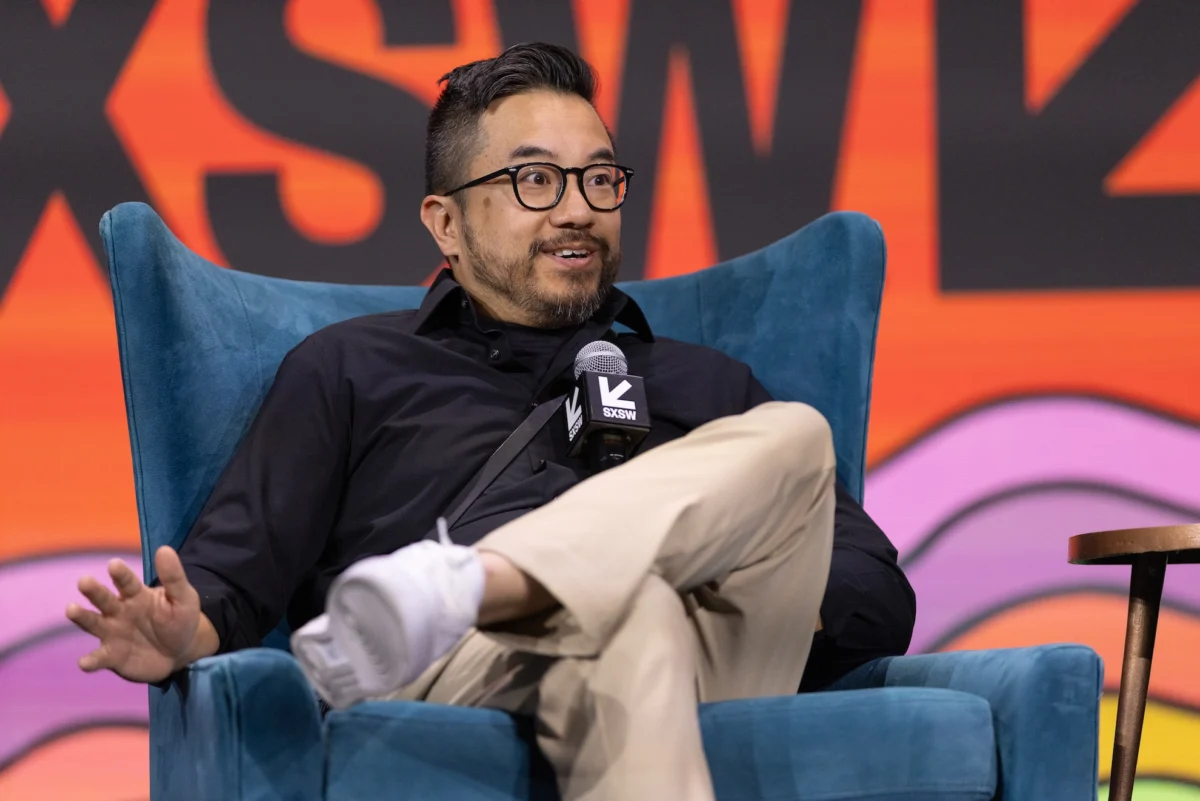
In a significant divergence from calls for stricter oversight, Garry Tan, CEO of the influential startup accelerator Y Combinator, has expressed his belief that regulators should refrain from intervening in the practice of AI distillation. This technique, increasingly utilized by artificial intelligence laboratories, particularly those in China, involves extracting knowledge from advanced "frontier" models. Tan not only advocates for a hands-off approach to regulation but goes further, suggesting that U.S. AI labs should actively embrace and implement a similar strategy, effectively creating an "American distillation regime."
"I would do nothing," Tan stated emphatically in an interview with CNBC earlier this week, referring to the prospect of regulatory action against distillation. He continued, outlining his vision, "We could argue that there should be an American distillation regime." This position places him in direct opposition to prominent figures like Anthropic CEO Dario Amodei, who has publicly urged U.S. regulators to crack down on certain forms of distillation, particularly those deemed illicit.
Elaborating on his proposal to TechCrunch, Tan clarified that an "American distillation regime" would empower smaller, American open-weight AI labs. These labs would be encouraged to employ distillation techniques on models developed by larger American frontier AI labs. The primary objective, according to Tan, is to foster a more robust and diverse ecosystem of open-weight AI options within the United States, thereby reducing reliance on foreign, specifically Chinese, alternatives. This strategic move, he suggests, would not only bolster American technological independence but also democratize access to advanced AI capabilities.
To understand the crux of this debate, it’s essential to define "distillation" within the context of artificial intelligence. Distillation is a legitimate and commonly used training technique where a "student" model extensively queries or prompts a more sophisticated "teacher" model. Through this iterative process of observation and interaction, the student model learns the underlying logic, reasoning capabilities, and knowledge representations of the teacher model. This allows for the creation of new models that can be smaller, more efficient, or specialized, while still retaining much of the performance characteristics of the larger, original model. AI labs frequently employ distillation to optimize models for specific tasks or to make them more accessible for deployment on devices with limited computational resources.
However, the legitimacy of distillation has been challenged by some, notably Anthropic. The AI research company recently released its second report detailing allegations of what it termed "illicit distillation attacks." According to Anthropic, these attacks, purportedly originating from Chinese labs, involve clandestine operations where the distillers hide their true identities, bypass permissions, and resort to fraudulent means or stolen credentials to access and extract knowledge from frontier models. Anthropic CEO Dario Amodei has been a vocal proponent of regulatory intervention, previously making public calls for U.S. authorities to address and curb such practices, which he views as a threat to intellectual property and fair competition.
It is particularly noteworthy that the head of Y Combinator, often considered the preeminent and most prolific startup accelerator in Silicon Valley, holds a view that starkly contrasts with those advocating for regulation. Y Combinator’s influence on the startup ecosystem is immense, shaping the trajectory of countless technology companies, including many in the AI sector. Garry Tan’s stance, therefore, carries significant weight and reflects a segment of the industry that prioritizes open access and competition over restrictive measures.
Crucially, Tan’s advocacy for an "American distillation regime" is not an endorsement of the illicit activities described by Anthropic. He explicitly clarified that he is not advocating for American AI labs to use stolen credentials or fraudulent methods. Instead, his vision is for these labs to have the freedom to engage in legitimate distillation, to "come in the front door" without regulatory hindrance. His argument is fundamentally twofold, challenging both the control exerted by proprietary AI labs and the historical practices of these very same entities.
Firstly, Tan contends that it constitutes an "overreach" for frontier AI labs to dictate or restrict what their customers can do with the information and capabilities their models provide. He views the output of these models, accessed via APIs, as information that, once shared with a user, should not be subject to overly restrictive terms of service that prevent further legitimate use, such as distillation for new model development. This perspective champions user autonomy and the unfettered flow of information within the AI ecosystem.
Secondly, Tan highlights what he perceives as a historical double standard. He points out that proprietary AI labs, in their initial training phases, extensively "vacuumed up" vast quantities of human knowledge. This process famously involved the ingestion of substantial amounts of copyrighted material, often without explicit permission or compensation to the intellectual property holders. Tan’s argument implies a degree of hypocrisy in these labs now seeking to restrict how others can utilize the knowledge derived from their models, especially given their own precedent of broad data acquisition. The landmark copyright settlements involving AI companies further underscore the ongoing debate surrounding data provenance and intellectual property in AI training.
Further elaborating on his rationale, Tan told TechCrunch, "Controlling what users and customers do with API calls to closed-weight models feels constraining, and there’s a role government can play here to normalize the fact that access to intelligence that was trained on broad public access data should itself also be more a form of a public good than something locked away behind restrictive terms of service." This statement encapsulates his core philosophy: intelligence derived from publicly accessible data should, by extension, be treated as a public good, rather than being confined behind proprietary walls and stringent usage agreements. He sees government intervention not as a means to restrict, but to enable this open access, fostering an environment where innovation can flourish beyond the confines of a few dominant players.
Tan, himself an exceptionally avid AI user who once humorously described his intense engagement as "cyber psychosis," firmly believes in the necessity of a dynamic equilibrium between open-weight AI labs and frontier labs. He recognizes the invaluable role of frontier labs in pushing the boundaries of AI research and development. "They are at the frontier and driving it forward. We want that to be fundable, and be a great business model ongoing," he acknowledged in his CNBC interview. This underscores his understanding that innovation requires viable business models for cutting-edge research.
However, he simultaneously champions the critical importance of open-weight models. "You want open-weight models to give people freedom and access," he added. For Tan, the existence of robust open-weight alternatives is crucial for democratizing AI and ensuring that its immense power does not become concentrated in too few hands.
Indeed, Tan views the concentration of AI power as the ultimate "doomer scenario" for the future of artificial intelligence. His "nightmare scenario" envisions a future where "there’s just one company." He elaborates on the potential dangers: "It has the best access to capital. It has the best AI researchers. It runs away with it and suddenly there’s one company that’s monolithic. And that would be bad." Such a monolithic entity, he warns, would stifle competition, limit diverse perspectives in AI development, and potentially wield unprecedented control over global information and capabilities. By advocating for an "American distillation regime" and resisting regulatory crackdowns on legitimate distillation, Tan aims to prevent this outcome, promoting a decentralized and competitive AI landscape where innovation and access are prioritized. This ongoing debate highlights fundamental tensions between intellectual property rights, open access, national security, and the future trajectory of AI development.






