 11

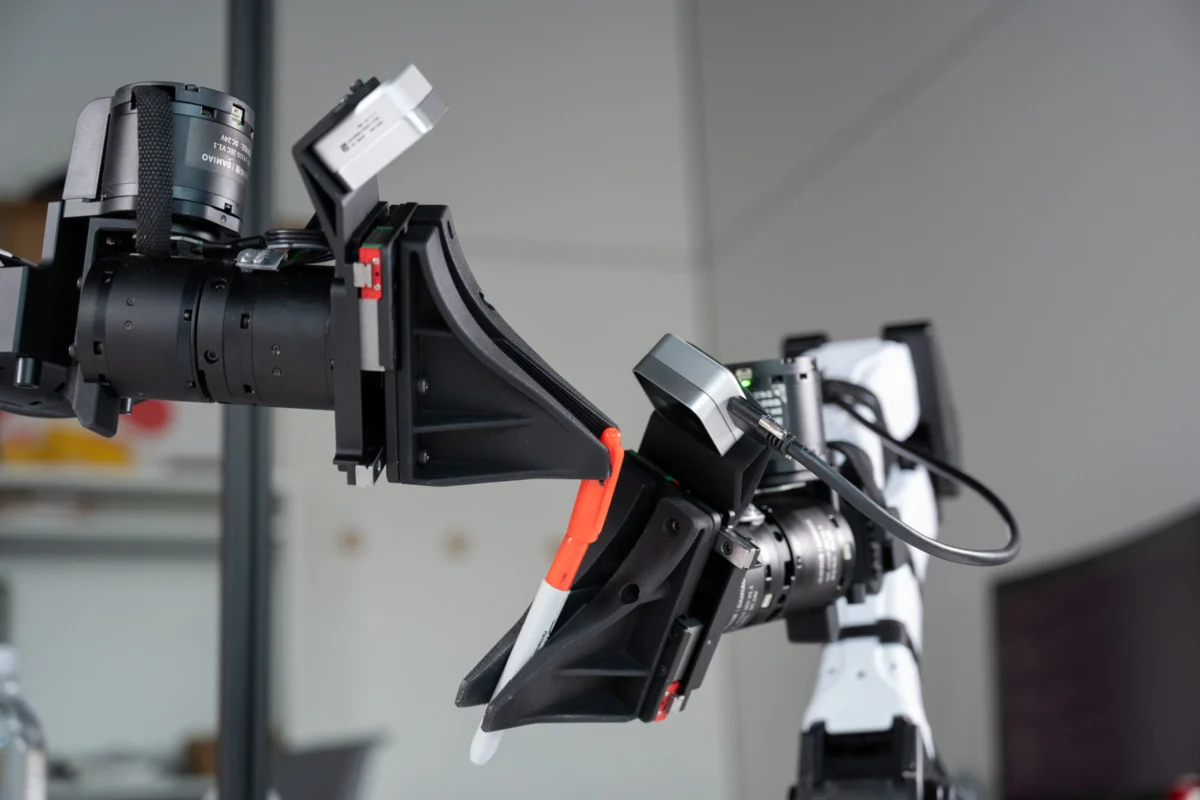
Less than three months after emerging from stealth, XDOF, a pioneering startup focused on collecting real-world teleoperation data crucial for training general-purpose robots, is reportedly in advanced discussions to secure a Series B funding round. Sources close to the deal indicate that the potential investment, spearheaded by venture capital firm 8VC, would value the nascent company at approximately $1.2 billion, signaling immense investor confidence in its innovative approach to addressing a critical bottleneck in the burgeoning robotics industry.
Founded in 2024 by UC Berkeley researchers Philipp Wu, who serves as CEO, and Fred Shentu, the Chief Technology Officer, XDOF has experienced an extraordinarily rapid ascent in the venture capital landscape. The company’s previous funding round, a $70 million Series A, was reported by TechCrunch in June, with notable participation from prominent investors including Thrive Capital, Andreessen Horowitz, Lux, and Spark Capital. At the time, XDOF had not anticipated raising additional capital so soon after its initial significant raise. However, the company’s exceptional growth trajectory, with annualized revenue swiftly approaching $50 million, has attracted unsolicited interest from various venture capital firms, prompting the current Series B discussions.
While the exact total capital being sought in the Series B round remains undisclosed, and it is yet unclear whether the reported valuation incorporates this new funding, the rapid progression of these talks underscores the urgency and perceived value of XDOF’s mission. The terms of the potential deal are still in flux and could be subject to change as negotiations finalize. Representatives for both XDOF and 8VC have not yet responded to requests for comment regarding the ongoing discussions, maintaining the confidentiality typical of late-stage funding rounds.
At its core, XDOF aims to establish itself as the essential outsourced data-supply chain for the robotics sector. The startup specializes in developing the intricate data pipelines, sophisticated collection tools, and advanced annotation systems that frontier AI labs and established robotics companies often struggle to build efficiently in-house. This strategic focus positions XDOF as a critical enabler for the next generation of robotics, providing the foundational data infrastructure necessary for advanced machine learning.
The genesis of XDOF can be traced back to CEO Philipp Wu’s academic pursuits as a PhD student at UC Berkeley. His research centered on understanding how robots could learn effectively from large-scale datasets. A significant impediment to his groundbreaking work, as he shared with TechCrunch in June, was the conspicuous absence of "large-scale data to work with." This fundamental challenge highlighted a glaring gap in the robotics research and development ecosystem.
To overcome this hurdle, Wu collaborated with Fred Shentu on a project known as GELLO. GELLO was conceived as a low-cost teleoperation system, meticulously designed to enable a human operator to remotely control a robotic arm. The primary objective was to systematically generate high-quality training data, simulating real-world interactions and tasks that robots would eventually need to master autonomously. Their collaborative efforts and subsequent research culminated in an influential academic paper that garnered significant attention within the robotics community, laying the intellectual groundwork for XDOF.
This foundational research and the practical insights gained from the GELLO project directly informed the creation of XDOF. Investors and industry observers have since drawn parallels between XDOF and data-labeling behemoths like Scale AI and Mercor, companies that played pivotal roles in fueling the generative AI boom by providing essential data services for large language models (LLMs). The analogy is particularly apt because, unlike LLMs, which could initially leverage the vast and readily available textual data of the entire internet for training, physical robots lack an equivalent, pre-existing real-world dataset of their own. This critical disparity makes the systematic collection and annotation of real-world interaction data an indispensable and often underestimated bottleneck in the quest to build truly general-purpose robotic machines.
To address this profound data deficit, XDOF has developed a sophisticated and multi-faceted approach to data capture. The company innovatively combines remote robot teleoperation, where human experts guide robots through various tasks from a distance, with a unique method involving human collectors. These human operators wear specialized sensors to record their own movements and interactions while performing everyday tasks, such as folding laundry or flattening cardboard boxes. This "egocentric" data provides invaluable insight into human motor control and task execution, which can then be used to train robots.
In a significant move to accelerate the availability of high-quality robotics data, XDOF has partnered with UC Berkeley’s renowned AI Research lab. This collaboration aims to release what is anticipated to be the largest collection of high-quality robot training data ever assembled, dubbed "ABC" (Advanced Bi-directional Control, based on related research and project names). The ABC dataset is expected to be a game-changer for robotics research and development, providing an unprecedented resource for training and validating new robotic capabilities.
Looking ahead, XDOF has ambitious plans to significantly scale its data collection operations. The startup intends to hire and rigorously train diverse teams of data collectors across the globe. These teams will include specialized teleoperators, who will remotely steer and guide robots through complex environments and tasks, and egocentric operators, who will continue to wear body sensors to meticulously capture human movement data in a wide array of real-world scenarios. This global expansion is crucial for generating the sheer volume and diversity of data required for robust general-purpose robot training.
The immediate demand for XDOF’s specialized services is evident in its existing client base. The company previously disclosed to TechCrunch that it is already actively collaborating with 20 customers, a roster that includes several leading frontier AI labs. These partnerships underscore the critical need for XDOF’s offerings in an industry racing to develop more capable and autonomous robotic systems.
The burgeoning field of real-world data collection for robot training is attracting increasing attention and competition. Other notable startups in this space include Mecka AI, which is also working on similar data collection initiatives. Furthermore, established human-data platforms that initially focused on large language models are now expanding their scope to encompass robotics data. Companies like Scale AI, a prominent player in data labeling and annotation, and Micro1, another competitor in the data services market, are increasingly venturing into the realm of physical robotics data, signaling a broader industry recognition of this burgeoning market need.
The rapid trajectory of XDOF, from stealth to a potential unicorn valuation in a matter of months, highlights not only the company’s execution and innovative solutions but also the immense investor appetite for foundational technologies that promise to unlock the next wave of AI and robotics innovation. As the pursuit of general-purpose robots intensifies, companies like XDOF, which are systematically addressing the fundamental challenge of data scarcity, are poised to play a transformative role in shaping the future of automation and artificial intelligence.
When you purchase through links in our articles, we may earn a small commission. This doesn’t affect our editorial independence.
Marina Temkin is a venture capital and startups reporter at TechCrunch. Prior to joining TechCrunch, she wrote about VC for PitchBook and Venture Capital Journal. Earlier in her career, Marina was a financial analyst and earned a CFA charterholder designation. You can contact or verify outreach from Marina by emailing [email protected] or via encrypted message at +1 347-683-3909 on Signal.






