 11
11
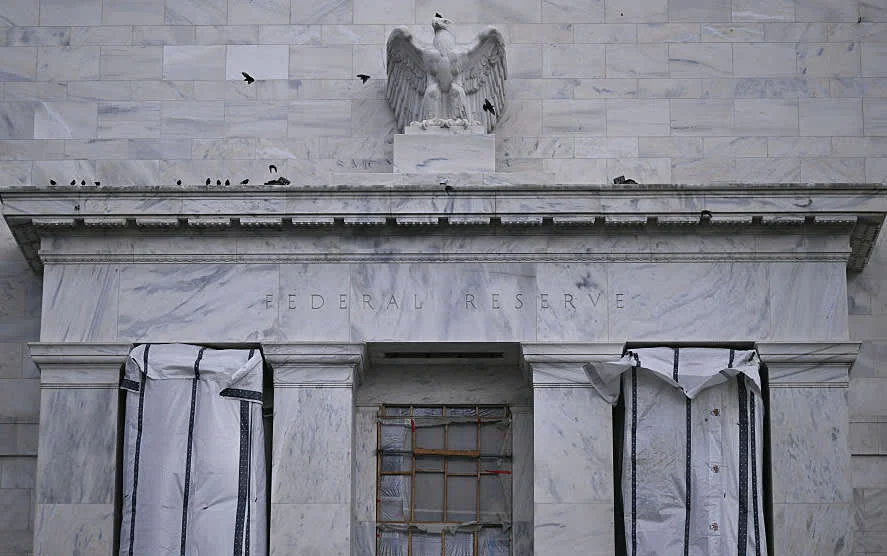
Washington D.C. – Construction continues at the Marriner S. Eccles Federal Reserve building in Washington, DC, on Dec. 30, 2025. The Federal Reserve building, a symbol of monetary policy, now faces a landscape of heightened uncertainty following a hotter-than-expected wholesale inflation report for February. This development has significantly altered market expectations, pushing the possibility of interest rate cuts further into the future, with some traders now contemplating the scenario where no cuts occur at all in 2026.
The Bureau of Labor Statistics released data indicating that the producer price index (PPI) experienced its largest monthly increase in a year. This surge in wholesale prices has led futures markets to effectively remove any realistic chance of a rate reduction until at least December of 2026. Even then, the probability of a cut at the Federal Reserve’s final policy meeting of the year has diminished to approximately 60%. This recalibration of market sentiment is attributed to a confluence of factors contributing to persistently elevated inflation, including the impact of tariffs, the ongoing Iran war, and rising costs within the services sector. The PPI report was released mere hours before the Federal Open Market Committee (FOMC) was scheduled to announce its latest interest rate decision.
Eugenio Aleman, chief economist at Raymond James, commented on the implications of the inflation data. "The wholesale inflation reading likely reinforces a hold decision by the Federal Reserve later today but tilts the risk toward a more hawkish tone in today’s FOMC statement," Aleman stated. He further elaborated that "Even if rates are left unchanged and we see multiple dissents, the messaging may lean toward ‘higher for longer,’ especially with energy inflation set to re-enter the picture in coming months."
Prior to the outbreak of the war, which commenced on February 28th, market participants had been anticipating interest rate cuts in both June and September. There was also a marginal possibility of an additional reduction in December. This outlook was predicated on the Federal Reserve’s efforts to strike a delicate balance between its dual mandate of maintaining price stability and fostering low unemployment.
However, the recent inflation data has dramatically reshaped these expectations. According to the CME’s FedWatch tool, which calculates probabilities based on 30-day fed funds futures contracts, the odds of a June rate cut have plummeted to a mere 18.4%. Similarly, the probability of a July reduction has fallen to 31.5%, and the likelihood of a September cut now stands at 43.6%.
Low Conviction in Future Easing
The chances for a December reduction, while still the most likely scenario for a cut, are now at 60.5%. This figure suggests that traders are leaning towards a rate cut occurring by the end of the year, but with a relatively low level of conviction. Historically, probabilities at or above the 60% threshold have been associated with significant shifts in Federal Reserve policy, either in the direction of easing or tightening.
The current pricing in fed funds futures implies a fed funds rate of 3.43% by the close of 2026. This represents a decrease from the current prevailing rate of 3.64%. This narrowing of the expected range for the benchmark interest rate underscores the market’s revised assessment of the Federal Reserve’s trajectory.
It is important to acknowledge that trading in fed funds futures is inherently volatile. Furthermore, the Federal Reserve’s policy stance could be influenced to pivot back towards an easing approach should the labor market exhibit further signs of weakening. Federal Reserve Governors Stephen Miran and Christopher Waller have been vocal proponents of immediate interest rate cuts, citing recent economic indicators that they believe support such a move. However, the prevailing sentiment among the broader committee appears to favor maintaining current interest rate levels until a clearer picture of the economic landscape emerges.
The economic environment in early 2026 has been shaped by a complex interplay of factors. The global geopolitical landscape, marked by the Iran war, has introduced significant supply chain disruptions and energy price volatility. Domestically, the persistent rise in services inflation, a component of the economy less sensitive to traditional goods price fluctuations, has presented a unique challenge for policymakers. Tariffs, while intended to bolster domestic industries, have also contributed to higher input costs for businesses, which are often passed on to consumers.
The producer price index measures the average change over time in the selling prices received by domestic producers of goods and services. A substantial increase in this index signals that businesses are facing higher costs for raw materials, intermediate goods, and labor. These increased costs can then translate into higher prices for consumers, leading to a broader acceleration in inflation. The Federal Reserve closely monitors the PPI as a leading indicator of consumer price inflation, as it provides insights into the pressures building within the production process.
The FOMC’s decision-making process involves a careful consideration of a wide range of economic data, including inflation figures, employment reports, consumer spending, and global economic developments. The dual mandate of the Federal Reserve requires policymakers to simultaneously pursue maximum employment and price stability. When inflation is elevated, the Federal Reserve typically tightens monetary policy by raising interest rates to curb demand and cool down the economy. Conversely, when inflation is below target and unemployment is high, the Fed may lower interest rates to stimulate economic activity.
In the current environment, the Federal Reserve finds itself in a difficult balancing act. While inflation remains above its desired target, there are concerns about the potential for an economic slowdown if interest rates remain too high for too long. The recent surge in wholesale inflation has complicated this assessment, suggesting that the inflationary pressures may be more entrenched than previously anticipated.
The minutes of the FOMC meetings are closely scrutinized by market participants for any clues about the committee’s thinking and future policy intentions. The language used in the FOMC statement, as well as any dissenting votes, can provide valuable insights into the internal debates and the evolving consensus within the Federal Reserve. The expectation of a more hawkish tone suggests that the Federal Reserve may emphasize its commitment to fighting inflation, even at the risk of a short-term economic slowdown.
The volatility of the fed funds futures market reflects the inherent uncertainty surrounding economic forecasting. Unexpected events, such as geopolitical crises or significant shifts in consumer behavior, can rapidly alter the economic outlook and necessitate a reassessment of monetary policy. The Federal Reserve’s ability to effectively navigate these challenges will be crucial in guiding the economy towards sustainable growth and price stability in the coming years. The continued construction at the Federal Reserve building serves as a physical reminder of the ongoing work required to maintain the health of the nation’s economy.
Correction: The Iran war began Feb. 28, 2026. A previous version misstated the country’s name.