11

David Jiang, cofounder and CEO of the smart glasses company Viture, recently shared a deeply personal anecdote about how his company’s newest wearable technology has fundamentally reshaped his approach to parenting. Jiang, whose 10-year-old son plays competitive tennis, admitted to a long-standing habit of shouting criticisms and applying intense pressure during tournaments, believing it was a necessary strategy for success—a parenting style he himself had experienced. However, an unsolicited intervention from the AI assistant embedded in his yet-to-be-released Vonder smart glasses provided an unexpected course correction, highlighting the device’s potential to act as a personal coach for self-improvement.
The AI, designed to analyze user behavior patterns, recognized Jiang’s coaching style as unhelpful. It promptly messaged him, advising him to cease shouting and criticizing, and instead to simply "be there, be present, and show that you support your son." Jiang credits this direct, unbiased feedback with transforming his parenting and significantly improving his relationship with his child. He confessed, "I didn’t know this until Vonder could find my pattern. This is not only a tool that can summarize your life, but also a tool that can help yourself to be a better person." This powerful testimony underscores Vonder’s ambition to transcend mere technological utility, aiming to foster personal growth and enhance human relationships through intelligent, contextual feedback.
Viture, a company with co-headquarters in San Francisco and Beijing, has historically carved out a niche in the smart glasses market with its virtual display products. Known for devices like the Viture One and the Viture Beast, these earlier offerings were essentially wearable face computers. They connected via USB-C to a host device, projecting its screen directly before the wearer’s eyes. These products primarily targeted gamers and enthusiasts seeking large-screen entertainment on the go. While effective for their intended purpose, their somewhat bulky design often compromised on comfort and fashion, limiting their appeal for everyday wear.
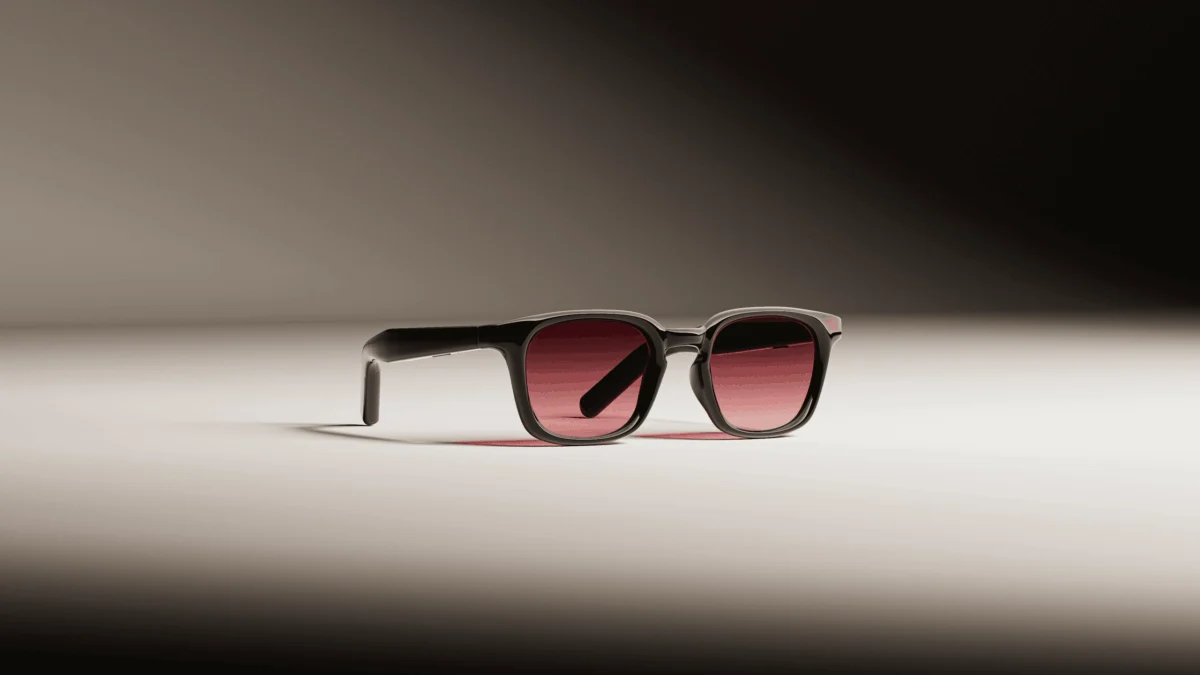
The introduction of Vonder marks a significant strategic pivot for Viture. Unlike its predecessors, the Vonder glasses conspicuously lack a virtual display. Instead, they are engineered to resemble conventional eyeglasses, prioritizing aesthetics and subtlety. The name "Vonder," a phonetic play on "wonder," encapsulates the device’s core mission: to help users map out their memories, ideas, and goals onto a digital vision board, all without the use of embedded cameras, a crucial distinction in the privacy-sensitive smart tech landscape.
Functionally, Vonder glasses are packed with advanced features designed for seamless integration into daily life. The arms of the glasses house discreet microphones and speakers, enabling wearers to listen to music, receive dictated map directions, and make phone calls with ease. At the heart of Vonder is its sophisticated AI assistant, which boasts a unique capability: it dynamically combines the strengths of multiple leading large language models (LLMs). This means Vonder AI can intelligently leverage OpenAI’s ChatGPT, Anthropic’s Claude, Google’s Gemini, or even DeepSeek, depending on the specific task. The AI assesses the complexity of the query and sources the answer from whichever model is determined to be the quickest and most economical, ensuring efficient and accurate responses.

From a commercial standpoint, the Vonder glasses are priced competitively at $299. They offer extensive customization options, including compatibility with prescription lenses, a variety of frame shapes and colors, and choices for clear, transition, or shaded sunglass lenses. Preorders for Vonder are set to launch on September 28, with shipments expected to commence in November.
A key differentiator for Viture in the burgeoning smart glasses market is its emphatic stance on user privacy. The company is keen to distance itself from the controversies surrounding Meta’s Ray-Ban smart glasses, which have drawn criticism for their camera-enabled, privacy-encroaching features. Viture asserts that its primary goal is to create "a good pair of glasses" that operate with utmost privacy, ensuring users can wear them without fear of being labeled a "creep."
To uphold this commitment, Vonder glasses feature no embedded cameras. When recording audio, a small blue indicator light illuminates on the arms of the glasses, providing a clear visual cue to others that audio is being captured. This indicator is less central and therefore less immediately noticeable than those found on some competitor products, striking a balance between user transparency and discreet design.
Crucially, Vonder’s data collection methodology is largely passive and privacy-centric. Most of the time, the glasses collect data only when the wearer is speaking. They achieve this through bone-conduction sensors integrated into the frames, which passively pick up the audio vibrations of the person wearing them throughout the day. This innovative approach allows the glasses to process the wearer’s thoughts and conversations without indiscriminately recording ambient sounds. For specific scenarios, such as meetings, a dedicated "meeting mode" can be activated, utilizing on-board microphones to record the surrounding environment. The Vonder glasses are designed for extended use, offering approximately 16 hours of battery life on a single charge.
Once information about the wearer’s day and conversations is collected, the AI assistant goes beyond simple transcription. It generates a "personal memory graph"—a sophisticated, interconnected web that tracks and organizes the wearer’s memories, ideas, and goals. This includes details like visited coffee shops, sports played, or any other information the user chooses to confide in the glasses. The AI interprets context from conversations to build a comprehensive, broader picture of the user’s activities and interests. This intricate network of connections is then visually displayed within a companion app, presenting a dynamic "mind web" of the user’s life.
During a demonstration, Jiang illustrated the power of this memory graph, showcasing how his Vonder glasses had meticulously tracked his life over the preceding three months. He could effortlessly query the device for coffee shop recommendations tailored to his caffeine preferences or seek assistance in understanding recent sources of stress. The technology also demonstrates a proactive intelligence; for instance, it had anticipated topics Jiang was contemplating, such as hiring decisions and the strategic timing for announcing his new smart glasses a day before Meta Connect. In a particularly striking example, the AI had even compiled a detailed dossier on the visiting reporter that morning, outlining their professional background and suggesting relevant topics for discussion.

Jiang articulated the core philosophy behind this innovative approach: "We just want to mimic the way your brain works. This is not a transcript or a summary. This is just how your memory organizes in your brain, even better than your memory." This statement highlights Viture’s ambition to create a cognitive extension, not merely a recording device.
The concept of a personal memory graph, while powerful, naturally raises questions about the inherent subjectivity and potential self-indulgence of collecting information solely from one’s own perspective. The data within the mind web primarily reflects the wearer’s thoughts and conversations. When asked about ensuring the memory web considers factors beyond the wearer’s own viewpoint, Jiang explained that in conversations, humans often repeat or rephrase what others have said, which allows the AI to capture a significant portion of the external dialogue. He estimated that even with a missing part, the AI’s understanding of a conversation might only be 10 to 15 percent incomplete, not 50 percent.
This discussion prompted Jiang to revisit his parenting anecdote. He posed a hypothetical scenario: if he and the reporter were arguing, and he later consulted his mind web to revisit the conversation, would it bias him if only his voice was recorded? His response circled back to his experience with his son, where the glasses had explicitly informed him that his behavior was "wrong." He elaborated, "The problem right now is that AI has really, really powerful somatic knowledge, but the missing part is the human episodic memory there. In the past three months I’ve used these glasses, I feel my life has been changed or improved." This suggests that Vonder aims to bridge the gap between AI’s vast factual knowledge and the nuanced, personal experiences of human memory, offering a tool that not only organizes information but also provides objective, pattern-based insights for personal betterment.
In a market increasingly saturated with smart wearables, Viture’s Vonder glasses stand out by prioritizing discretion, comprehensive personal AI assistance without cameras, and a steadfast commitment to user privacy. By focusing on an "AI for good" model that enhances memory, facilitates self-reflection, and even provides behavioral guidance, Viture is positioning Vonder as more than just a gadget—it’s a tool for a more organized, self-aware, and potentially improved human experience.