11

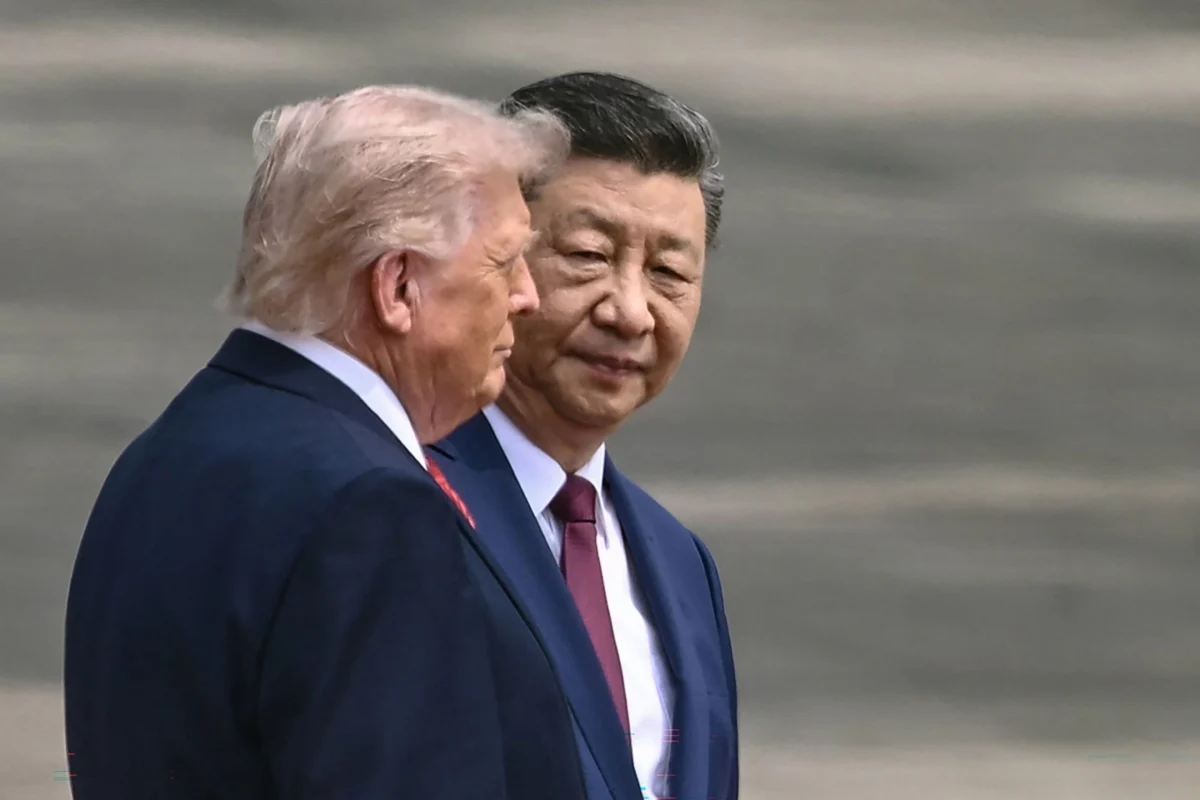
Of all the events unfolding during the United Nations General Assembly (UNGA) week, the most anticipated diplomatic engagement by far is the upcoming meeting between United States President Donald Trump and Chinese President Xi Jinping. While the majority of the UNGA’s diplomatic activities are centered in New York City, this crucial face-to-face summit between the leaders of the world’s two largest economies will take place at the White House in Washington D.C. President Trump is scheduled to personally welcome President Xi at Joint Base Andrews on Wednesday, September 23. This gesture is notably unusual in diplomatic protocol, as US presidents typically do not travel to airports to greet foreign heads of state upon their arrival, underscoring the perceived significance and urgency of this bilateral discussion.
Ahead of this high-stakes airport reunion and subsequent summit, a dedicated US delegation, spearheaded by Treasury Secretary Scott Bessent and Trade Representative Jamieson Greer, is engaged in preparatory meetings with He Lifeng, China’s Vice Premier of the State Council. The primary objective of these preliminary discussions is to meticulously set the agenda for the presidential summit, ensuring that all pressing matters are addressed. The World Economic Forum has provided an overview of some of the most critical topics expected to dominate the discussions. These include the persistent trade conflict that has defined much of the recent US-China relationship, vulnerabilities within the global supply chain exacerbated by recent geopolitical shifts, the escalating technological competition, and the ever-sensitive issue of Taiwan. These discussions occur against the complex backdrop of the United States’ ongoing involvement in a protracted conflict in the Middle East, a situation that consistently threatens to escalate and impacts global stability.
Trade Truce Expiring
A significant point of contention and negotiation is the trade truce that emerged from the last meeting between President Trump and President Xi in Busan, South Korea, approximately a year ago. This agreement is slated to expire on November 10, necessitating an immediate decision from both governments on whether to extend its terms. The Busan agreement was instrumental in de-escalating the trade war, as it led to a reduction in President Trump’s threatened tariffs on Chinese goods and a temporary pause in associated port fees.
Beyond merely extending the existing agreement, the leaders may delve into setting specific purchase targets for key trade items. These could encompass a range of sectors, including agricultural products, a critical export for American farmers; energy resources, where China’s demand offers significant opportunities for US producers; and orders for Boeing aircraft, an important barometer of bilateral trade health. Furthermore, negotiations are expected to continue regarding a package valued at approximately $30 billion in what are termed "non-sensitive" goods. This category reportedly includes around 10 distinct product categories, though a concrete agreement on their precise scope remains elusive.
A crucial component of the Busan agreement was China’s commitment to lifting export limits on rare earths and other vital minerals. These materials are indispensable for a wide array of modern industries, including the production of automobiles, advanced defense systems, and cutting-edge technology, particularly essential hardware for artificial intelligence. The United States has been actively seeking to establish a more stable and secure supply chain for these critical materials, as China currently holds a dominant position in the international market for rare earths. Beijing has skillfully leveraged this market dominance to exert influence and bring Washington back to the negotiating table in the broader context of the trade war, underscoring the strategic importance of these resources.
AI Competition
According to Scott Bessent, the US Treasury Secretary, the critical topic of AI safety is firmly on the agenda for the bilateral meeting. This discussion has been a consistent request from business leaders on both sides, although the industry itself holds mixed views on the desired outcomes. Beijing’s primary objective is to see the US ease some of the existing restrictions on Chinese technologies, particularly those that have impacted major tech companies. However, a growing chorus of voices, particularly within the US, advocates for a slowdown in AI development to ensure robust safety protocols are established. This perspective has created a paradoxical situation where some US businesses express concern about potentially being outpaced by China in AI innovation if development is intentionally decelerated.
The landscape surrounding AI competition remains highly uncertain. President Trump has historically dismissed calls for stringent AI regulation within the United States, which complicates the US’s negotiating position on international AI safety standards. Moreover, these intricate discussions on AI are fundamentally intertwined with broader trade talks, particularly concerning export controls on advanced computer chips and related materials, which are the backbone of modern AI development. The US has previously imposed restrictions on the sale of certain high-end chips to China, citing national security concerns, making this a particularly sensitive and complex aspect of the technological competition.
Iran, Taiwan, and Global Politics
The intricate trade talks between the US and China are inextricably linked with each country’s most sensitive geopolitical stances, creating a delicate balance. The issue of Taiwan, in particular, looms large over the summit. China has explicitly threatened to withdraw from the summit entirely if the United States proceeds with green-lighting new arms sales to Taiwan. Taiwan’s self-governing status is a deeply sensitive issue for Beijing, which views the island as an integral part of its territory and consistently opposes any actions that could be interpreted as supporting Taiwanese independence or bolstering its defensive capabilities. The potential sale of advanced drones and other military equipment to Taiwan, as has been previously discussed, is a significant flashpoint.
Despite these tensions, both countries are expected to engage in discussions regarding China’s economic ties with Iran. The US has maintained a robust sanctions regime against Iran, aiming to curb its nuclear program and regional influence. China, as a major global energy consumer, has historically maintained significant economic relationships with Iran, including oil imports, which often place it at odds with US foreign policy objectives. Additionally, the leaders are anticipated to discuss the sensitive issue of detained foreign nationals, a recurring point of bilateral friction where citizens from one country are held in the other, often on charges that are politically tinged. Both the United States and China are expected to tread lightly on these geopolitical issues, carefully navigating the discussions without overtly ceding influence or making fundamental shifts in their long-standing positions, making any significant breakthrough in these areas unlikely.
In summary, the United States arrives at the negotiating table pushing for greater access to Chinese products and markets, a more secure and diversified supply of critical minerals—especially rare earths, which are vital for technology and defense—and firm commitments on specific security issues. On the other side of the table, Beijing seeks relief from the existing tariffs and trade restrictions imposed by Washington. Each nation possesses its own unique leverage, operating multiple strategic pieces on various geopolitical chessboards, including their respective influence in regions such as Africa and Latin America. Simultaneously, both powers are acutely aware of the need to prevent deeply entrenched issues like Taiwan and other simmering geopolitical conflicts from irrevocably undermining their expansive and critically important economic relationship.
The last high-level meeting between the two leaders, held in Beijing this past May, was characterized by numerous symbolic gestures but ultimately yielded very few substantive concessions at the negotiating table. The pressing question now is whether the upcoming summit in Washington D.C. will produce a different, more concrete outcome. Anna Ashton, a respected China trade analyst and the founder of Ashton Intelligence, offered a cautious assessment to CNBC. "I think there will be some show of deliverables because of the fact that it’s a presidential summit coming, but I don’t feel like we’re on the verge of some sort of breakthrough," Ashton stated. She concluded, "I think status quo is probably both sides’ general best expectation," suggesting that while some progress may be publicly presented, the deep-seated structural issues in the US-China relationship are likely to persist beyond this highly anticipated summit.