11

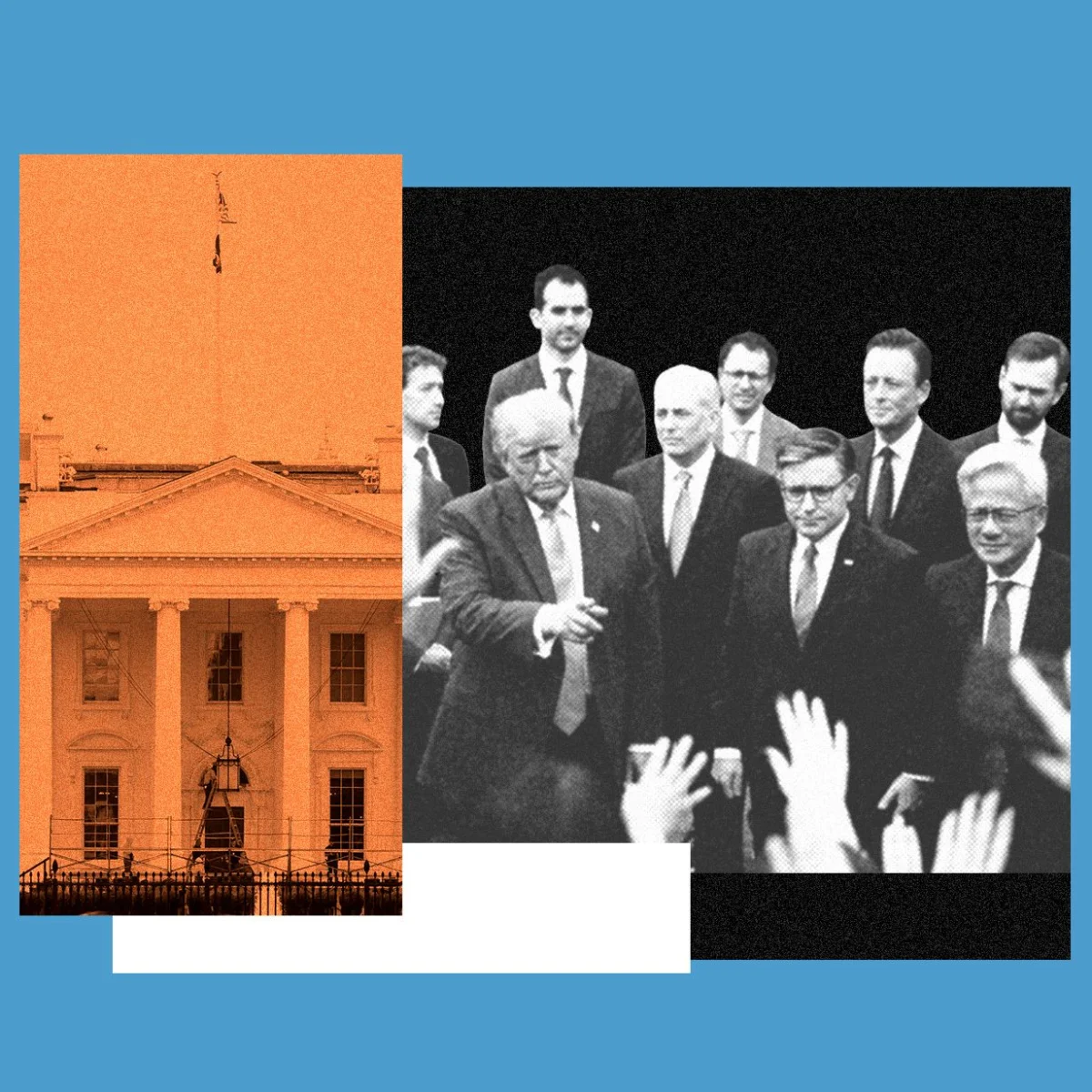
Multiple staffers from the America First Policy Institute (AFPI), a conservative think tank with deep ties to the Trump administration, have been embedded within the US Census Bureau, where they possess access to vast troves of sensitive data. Their presence and contributions to a public report that bolsters conspiracy theories about election integrity ahead of crucial midterms have sparked significant alarm among experts and current Census employees.
In August, the Census Bureau released an anonymously authored report titled “Noncitizen Voting in the 2020 Election: A Beginning Analysis.” This report controversially claimed that thousands of noncitizens cast ballots in the 2020 election, fueling narratives that undermine public trust in democratic processes. However, a subsequent investigation by WIRED revealed that the report appeared to rely on faulty methodology, thereby casting serious doubt on its conclusions. The investigation further identified two of its authors as employees of the America First Policy Institute. WIRED’s continuing probe has now uncovered that these two individuals are part of a larger team, composed almost entirely of AFPI members, who have been detailed to the Census Bureau and granted extensive access to its highly confidential data.
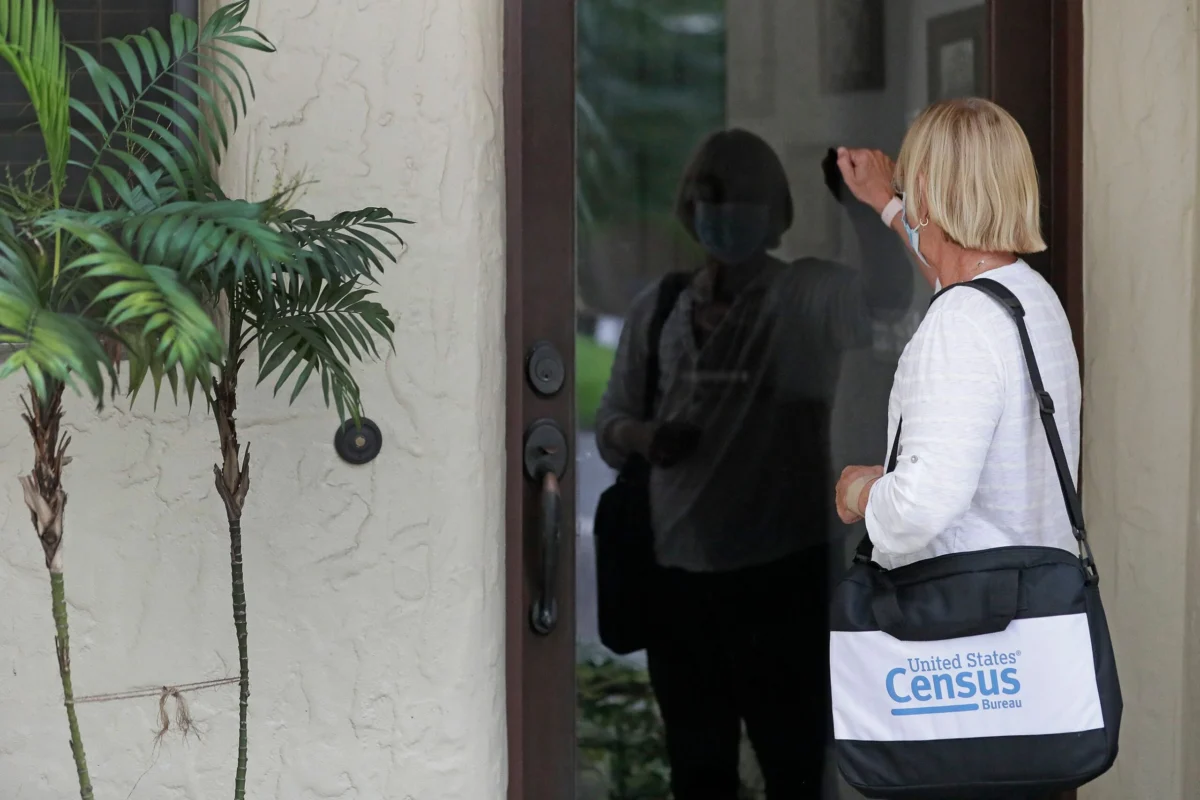
The US Census Bureau is an indispensable institution responsible for collecting comprehensive demographic data on nearly every person residing in the country. This data is fundamental to the nation’s democratic infrastructure, serving as the basis for apportioning congressional districts, redrawing electoral maps, and allocating billions of dollars in federal funding to states and localities based on their population sizes. The integrity and neutrality of Census data are paramount to ensuring fair representation and equitable distribution of resources. Consequently, experts and current Census employees who spoke to WIRED voiced profound concerns that the “Noncitizen Voting” report represents an initial maneuver in a broader strategy to potentially weaponize Census data. They fear this data could be misused to undermine the legitimacy of upcoming midterm elections or even the 2028 presidential election, thereby eroding foundational trust in the electoral system.
An anonymous Census employee, speaking to WIRED, emphasized the unprecedented nature of AFPI’s involvement, stating that there has historically been “nothing close” to this level of infiltration by an external, partisan organization. They described the situation as “disrespectful to the institution,” highlighting the perceived breach of the bureau’s non-partisan ethos and its mandate to serve the American public impartially.
The Trump administration has a documented history of attempting to influence and cast doubt on the accuracy of Census data with the explicit aim of reshaping electoral outcomes. Earlier this year, WIRED reported on a proposal circulating within the Department of Commerce, which oversees the Census Bureau, that sought to eliminate noncitizens from being counted in the Census. Such a move, if implemented, could drastically alter the demographic basis for drawing congressional districts, potentially shifting political power. Republicans have also targeted "differential privacy," a sophisticated statistical method employed by the Census Bureau to protect the privacy of individual respondents while still releasing aggregate data. Critics from the Republican side alleged that this method rendered the Census count inaccurate in ways that unfairly favored Democrats in congressional apportionment, further illustrating a pattern of challenging established Census methodologies for political gain.
The America First Policy Institute itself is a powerful and influential entity, described as "integral to shaping the Trump administration’s policies and makeup." Its deep connections to the former president’s inner circle are evident in its leadership and staffing. Brooke Rollins, AFPI’s inaugural CEO, subsequently served as Secretary of Agriculture. Linda McMahon, who was on AFPI’s board, later became Secretary of Education. Numerous other former AFPI staffers have ascended to high-ranking positions within the Trump administration, including former Attorney General Pam Bondi, Secretary of Veterans Affairs Doug Collins, Secretary of Housing and Urban Development Scott Turner, Environmental Protection Agency Administrator Lee Zeldin, US Permanent Representative to NATO Matthew Whitaker, Deputy Director of the White House Domestic Policy Council Heidi Overton, and National Economic Council of the United States Director Kevin Hassett. This extensive network underscores AFPI’s capacity to influence policy and personnel at the highest levels of government.
Beyond Matthew Jensen and Jeff McCrea, the two AFPI members previously identified by WIRED as authors of the controversial noncitizen voting report, at least five additional AFPI members have been or are currently detailed to the Census Bureau, according to sources and documents reviewed by WIRED. These sources confirmed that all AFPI members are assigned to the agency via the Intergovernmental Personnel Act (IPA). The IPA is a federal program designed to allow individuals with specialized skills from qualifying institutions, such as nonprofits and universities, to serve in government roles for temporary appointments of up to two years. While the IPA is intended to bring in specific expertise, the concentration of individuals from a single, overtly partisan organization like AFPI raises significant questions about the intent and execution of these appointments. John Abowd, a former associate director for research and methodology and chief scientist at the Census Bureau, characterized such a large contingent from one organization as “unusual.”
The Census Bureau and AFPI both declined to respond to requests for comment regarding these findings.
Among the additional AFPI members identified by WIRED are Max Kossek, a researcher at AFPI’s Office for Fiscal and Regulatory Analysis, and Ryan Montgomery, listed on AFPI’s website as a program assistant for the same office, though his LinkedIn profile identifies him as a “research engineer” at AFPI.
Perhaps most concerning is the presence of Thomas Lane, AFPI’s director for secure elections policy, among the employees detailed to the Census Bureau. Lane, a former Trump campaign staffer, is a known election denier who was subpoenaed by the Department of Justice in 2022 as part of its investigation into the former president’s attempts to overturn the results of the 2020 election. Although Lane was not ultimately charged by law enforcement, his documented actions raise serious questions about his suitability for a role involving sensitive election-related data. In a 2020 video posted by the Arizona Republican Party, in a context where a group of fake electors sought to illegally deliver Arizona’s electoral votes to Donald Trump, Politico identified a man wearing a jacket with the name “Lane” passing out documents for the electors to sign, asserting they were “duly elected” and “qualified.” Furthermore, CNN reported in 2024 that Lane was prepared to serve as a backup elector for this same group, underscoring his deep involvement in efforts to subvert the 2020 election results.
Earlier this year, Democracy Docket reported that Lane played a role in drafting an early version of the "Save America Act" while working for the Republican majority House Committee on House Administration. This specific legislation would mandate voter ID for voter registration. Parts of this original "Save Act" have also been incorporated into a separate legislative proposal, also named the "Save America Act," which, if enacted, would require proof of citizenship to vote. Experts warn that such a requirement could disenfranchise an estimated 20 million Americans, further highlighting the potential impact of policies advocated by individuals like Lane. Kossek, Montgomery, and Lane did not respond to requests for comment.
Other AFPI members identified as being detailed to the Census Bureau include David Peterson, whom AFPI lists as a research engineer with expertise in “computing, machine learning, and advanced software architecture,” and Jackson Mejia, an AFPI fellow who is also an assistant professor at the University of Texas at Austin with a PhD in economics from MIT, specializing in tax policy. Neither Peterson nor Mejia responded to requests for comment. An additional individual, Michael Corey, is also listed as an IPA from AFPI within the bureau. While AFPI’s website does not list Corey as a staff member, an AFPI email address associated with his name appears to exist, though the think tank did not confirm his current affiliation.
Danah Boyd, a professor at Cornell University who studies the census, acknowledged that mechanisms like the American Association for the Advancement of Science (AAAS) sometimes facilitate agencies like the Census Bureau in bringing in multiple IPA fellows. However, Boyd sharply differentiated AFPI from such organizations. She stated, “AFPI is not an institution that is set up to bring all the scientists in the world together or that has built this long-standing infrastructure of doing independent statistical research. This is a partisan group with an agenda.” This distinction underscores the core concern about the neutrality and scientific integrity of the bureau’s work.
All of the AFPI members at the Census Bureau are assigned to the same project, which is focused on conducting “ad hoc data analyses” to address questions posed by senior leaders at the Census Bureau and the Department of Commerce, according to documentation reviewed by WIRED. This project is reportedly led by Michael Lachanski, the bureau’s recently appointed deputy director for data, policy, and science. Lachanski is a political appointee and a former fellow at the Claremont Institute, another conservative think tank known for its connections to the Trump administration. Critically, all of the AFPI detailees appear to possess the "special sworn status" necessary to access the highly sensitive and confidential Census data.
Recent reporting by Talking Points Memo further revealed that the Census Bureau’s Data Stewardship Executive Policy charter underwent revisions in July. These updates notably removed stipulations that previously prevented political appointees from interfering with the bureau’s data, further exacerbating concerns about the politicization of data handling and analysis.
Another Census employee, who remained anonymous due to fear of reprisal, explained that access to Census data is typically granted only through approved “projects.” These projects require employees and researchers to clearly articulate how they intend to use the data and what specific outputs they will produce. While it is not unprecedented for multiple individuals from the same outside institution to work on a single project, the employee noted a conspicuous lack of career civil servants involved in this particular endeavor. The explicit reference within the project’s documentation to “answering questions of interest to political appointees” was particularly troubling to the employee, suggesting a deviation from standard, non-partisan research mandates.
Professor Boyd reiterated that this type of work represents a clear departure from the Census Bureau’s fundamental mandate, which does not include providing data specifically tailored to the interests of political appointees. She emphasized, “These are all part of culture norms and practices of how you make certain you run a transparent agency to ensure that you are doing good by the American people.” The current situation, according to Boyd, undermines these crucial norms.
There is a historical precedent for political pressure at the Census Bureau. In 2021, less than two weeks after the January 6 insurrection and at the conclusion of Trump’s first term, then-US Census Bureau Director Steven Dillingham announced his resignation. This decision followed a letter from the Office of the Inspector General, which detailed whistleblower allegations that Census workers had been pressured by political appointees to create a report revealing the citizenship status of every US resident. This past incident underscores the recurring concerns about attempts to politicize the bureau’s scientific and statistical work.
The extensive embedding of AFPI personnel, their access to sensitive data, and their involvement in reports that fuel election conspiracy theories represent a significant challenge to the Census Bureau’s long-standing reputation for independence, neutrality, and scientific rigor. The implications of this politicization for future elections and public trust in democratic institutions remain a grave concern.