 11

Today marks a potentially transformative moment for Tesla, as the company prepares to "launch" its highly anticipated Cybercab in its home city of Austin, Texas. This event is not merely a product unveiling; it represents a critical juncture for the electric vehicle manufacturer, testing its ambition to evolve from a leading automaker into a dominant artificial intelligence and robotics powerhouse. The success of the Cybercab could fundamentally redefine urban transportation, positioning Tesla at the forefront of the autonomous ride-hailing revolution.
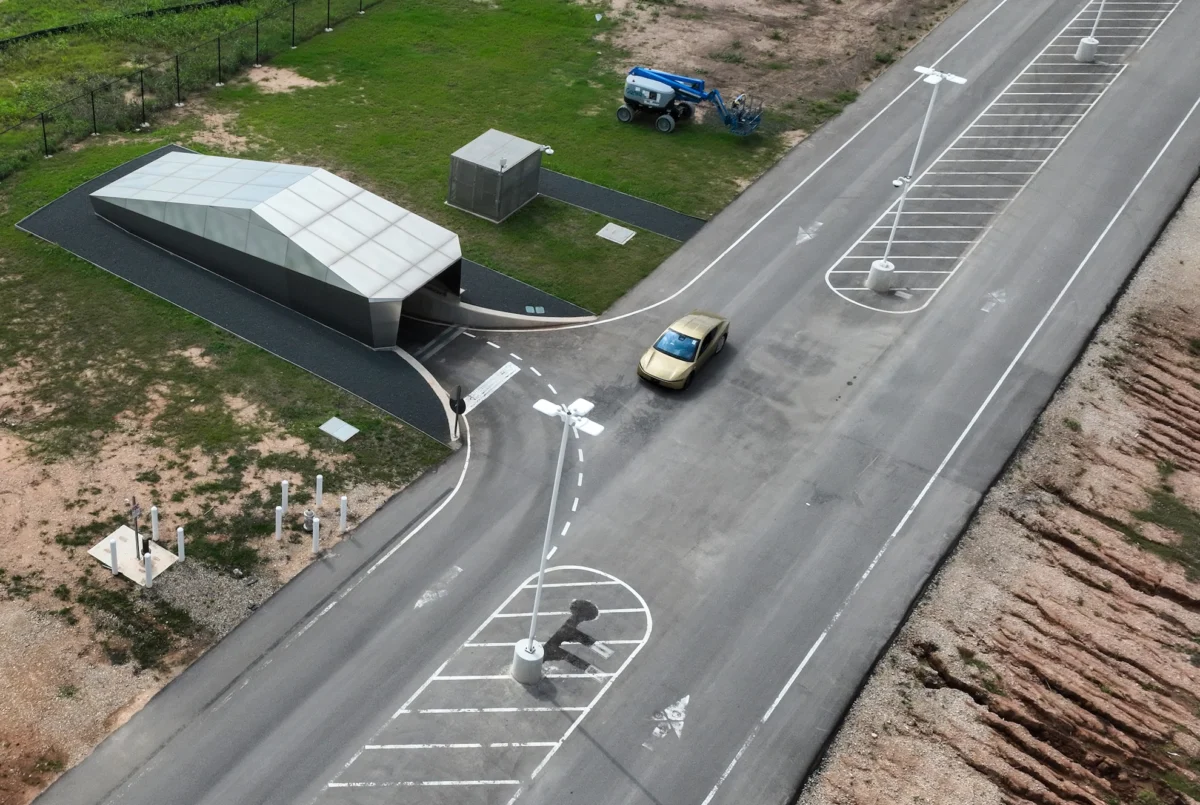
The Cybercab itself is described as a small, distinctive gold, two-seater sedan. Its radical design features no steering wheel or pedals, signifying a complete reliance on its advanced camera-based vision system and artificial intelligence to navigate the world. This design choice underscores Tesla’s commitment to achieving Level 5 autonomy, where the vehicle operates entirely without human intervention, contrasting sharply with traditional vehicles that still require driver oversight. The gold finish, a bold aesthetic departure, ensures the vehicle will be instantly recognizable, serving as a highly visible symbol of Tesla’s autonomous ambitions.
Details surrounding the launch event itself remain deliberately vague. The company has not specified the exact scope of the rollout, leaving open possibilities ranging from a limited number of Cybercabs offering rides within a confined downtown area to a far more expansive and ambitious deployment across a wider swathe of Austin. However, Tesla’s pre-launch activities strongly suggest it aims for the latter, signaling a grander vision for its autonomous future.
In the weeks leading up to the event, Tesla strategically deployed dozens, if not more, of its Cybercabs across Austin and several other U.S. cities. This widespread visual presence served as a potent marketing campaign, generating considerable buzz and anticipation. According to the state’s automated vehicle tracker, 420 autonomous vehicles were registered in Texas at the time this story was published, reflecting a significant scaling of Tesla’s autonomous fleet operations. The company’s executives and CEO Elon Musk have further amplified the excitement through social media. Ashok Elluswamy, head of Tesla AI, provocatively posted on X that the "streets won’t be the same anymore." When another user inquired about Tesla "flooding Austin," Musk directly replied, "Yes." On the eve of the launch, Musk even shared a seemingly AI-generated image depicting the Cybercab engulfing the city amidst a massive dust storm, humorously captioned "A Storm of Cybercabs."
These high-stakes, gravitas-laden pronouncements represent a notable shift from the company’s previously expressed "go-slow-and-safe" messaging regarding its robotaxi development. For months, Musk and other Tesla executives had emphasized a cautious, safety-first approach, often appearing more concerned with managing public perception of potential failures than with rapid deployment. The current, more aggressive rhetoric suggests a newfound confidence in the system’s readiness and a determination to make a significant impact from day one.
Ultimately, the actual success of the Cybercab launch, rather than the marketing strategy, will be the true measure of Tesla’s transformation. The ability to successfully build and operate a robust robotaxi network centered on the Cybercab would provide the first concrete evidence that Tesla has truly transitioned beyond being merely an automaker with ambitious side projects. It would validate its long-held claim of being a pioneering AI and robotics company, fundamentally altering its identity and market perception.

Elon Musk frequently employs the "fork in the road" metaphor to describe pivotal moments, and it is particularly apt for the Cybercab launch. He famously used it in a 2022 email to Twitter employees, presenting an ultimatum to commit or leave. He invoked it again in early 2025 during his tenure leading DOGE, encouraging federal government employees to depart before implementing significant changes. Musk’s affinity for this metaphor is so strong that he commissioned a 30-foot-tall sculpture of a literal fork on a literal road for Burning Man in 2022, which was later moved to a Tesla office. The Cybercab represents precisely such a fork for Tesla. This is the moment that will either signal the company’s successful initiation of a revolution in urban transportation, or it will reveal that, despite years of concerted effort and significant investment, Tesla remains, at its core, primarily an automaker.
Robotaxis: A Decade in the Making
The concept of the Cybercab, though only physically revealed by Musk in 2024 at a Hollywood movie lot, has been a cornerstone of his vision for over a decade. Since 2016, Musk has consistently promised that Tesla would achieve full autonomy, paving the way for a global network of robotaxis. He even made the bold assertion that every Tesla manufactured from that point forward possessed the necessary hardware for full autonomy, requiring only a software update to unlock its capabilities.
This claim, however, proved to be premature. Tesla has since undergone multiple hardware revisions in its vehicles, acknowledging that its initial sensor suite and computing power were insufficient for true self-driving. More recently, Musk himself admitted that millions of existing Teslas would require some form of hardware retrofit to achieve full autonomous functionality. Despite these setbacks and revisions, Tesla persistently continued its development of driving automation software. The company has steadily refined and released its primary offering, Full Self-Driving (Supervised), to a wide user base. While FSD (Supervised) has become increasingly capable, it remains a Level 2 driver-assistance system, meaning the responsibility and liability for the vehicle’s operation ultimately rest with the human driver, who must remain attentive and ready to intervene.
The Cybercab, however, is designed to transcend these limitations. It emerged from Tesla’s broader initiative to develop a next-generation electric vehicle platform aimed at significantly reducing manufacturing costs. The strategy was to leverage lessons learned from the highly successful Model 3 and Model Y, Tesla’s mass-market vehicles, to create a new platform that would cost roughly half as much to produce. This would enable Tesla to manufacture more affordable EVs and expand its market reach.
Years of investigative reporting and details from Musk’s own biography have revealed his unwavering commitment to achieving full autonomy. This singular focus led him to make a pivotal decision: to forgo building a manually drivable car on this new, cost-efficient platform. Instead, Musk directed all efforts towards using the platform exclusively to power the two-seater robotaxi now known as the Cybercab. This strategic pivot was dramatically underscored in April 2024, months before the Cybercab’s physical reveal, when Musk approved massive layoffs across Tesla. He justified these reductions as a necessary step to go "balls to the wall for autonomy," describing it as a "blindingly obvious move." In his view, "Everything else is like variations on a horse carriage," emphasizing the obsolescence of human-driven vehicles in an autonomous future.
Slowly, Then Quickly? The Robotaxi Pilot

Tesla initiated the first public testing of its Robotaxi program in June of the previous year, utilizing modified Model Y SUVs within a geofenced area of Austin. Initially, these pilot vehicles operated with an employee in the front seat—either behind the wheel or in the passenger seat—ready to take control should any issues arise. While the program has not been without incident, it has largely avoided catastrophic failures. Tesla has reported a few dozen minor incidents in Austin since the pilot’s inception, predominantly involving minor collisions with stationary objects. A number of these also necessitated intervention from teleoperators, who remotely guided the vehicles at low speeds.
The Model Y-based robotaxi system has since expanded to select areas in other cities across Texas and Florida. However, the network’s growth and impact over the past year have not entirely lived up to the significant hype generated at its June 2025 launch. In July, the company even disclosed that the number of paid miles facilitated by the network was, surprisingly, moving backward, indicating challenges in scaling or generating consistent demand.
Despite these early hurdles with the Model Y pilot, Tesla appears to believe that achieving true scale and profitability in its robotaxi network is contingent upon the purpose-built Cybercab. The Cybercab’s design is intrinsically linked to cost efficiency. It is smaller, lighter, and features a lower-capacity battery pack compared to any other Tesla vehicle. This design choice translates directly into reduced material costs, particularly for the battery components, making it significantly cheaper to manufacture. The underlying principle is simple: a lower production cost means Tesla can potentially achieve profitability much faster once the Cybercab network is fully deployed.
This economic advantage has ignited fervent enthusiasm among Tesla’s most ardent supporters. They highlight the company’s purported ability to produce dozens of Cybercabs for roughly the same investment that Waymo, a competitor, allocates to acquire and equip fewer than 10 of its newest "Ojai" vans. This stark cost differential is seen by many as compelling evidence that the robotaxi market competition is already decided in Tesla’s favor. Elon Musk himself appears to concur, remarking in response to a graphical representation of this argument, "this doesn’t even take into account the operational efficiency of Cybercab."
However, several critical caveats and challenges must be considered. To date, Tesla’s robotaxi network has operated strictly within geofenced areas in each city. While some of these operational zones are quite large and have seen expansion, Musk himself once famously stated, "If you need a geofenced area, you don’t have real self-driving." This implies that true autonomy, as envisioned for the Cybercab, must operate seamlessly anywhere, without geographical limitations.
Furthermore, the challenge of operating such a network at a truly global scale is immense. Tesla has, thus far, benefited from managing a relatively small fleet in a limited number of cities. This restricted environment naturally exposes its self-driving software to fewer "edge cases"—unusual or unpredictable scenarios that autonomous systems struggle to handle—compared to competitors like Waymo, which has thousands of robotaxis actively operating on public roads. Fewer trips and fewer edge cases also mean fewer opportunities for riders to encounter and report problems, whether on social media or to regulators and journalists.
Another factor is visibility. Tesla’s pilot fleet consisted of modified Model Y SUVs, which are relatively discreet and blend in with regular traffic. This low profile made individual autonomous incidents less conspicuous. The Cybercabs, with their distinctive gold finish and radical design, will be far more noticeable. If Tesla’s software proves insufficient for the complexities of real-world urban driving at scale, any failures or operational glitches will be significantly harder to overlook, drawing intensified public and regulatory scrutiny. The coming days will reveal whether Tesla can truly deliver on its ambitious promises and navigate this critical "fork in the road."






