11

In the field of software engineering, the "software factory" represents a mature, repeatable pipeline designed to transform raw inputs—requirements, source code, and test parameters—into high-quality, reliable software outputs. This methodology relies on a combination of standardized tools, curated configurations, and encoded expertise to ensure that every production run is predictable, consistent, and subject to continuous improvement. Historically, knowledge workers have operated with equivalent raw inputs, such as market signals, customer data, and internal reports, yet they have lacked a formalized "factory" to process these materials efficiently. This paradigm is currently shifting as the concept of the "work factory" emerges, promising to reorganize how professional tasks are executed through the integration of artificial intelligence and structured local workspaces.
Modern knowledge work is characterized by a high degree of structural repetition. While tasks may not be repetitive in a mechanical sense, such as simple data entry, they often follow consistent patterns of analysis, decision-making, and reporting. For instance, a sales professional evaluating a new opportunity typically applies a consistent mental checklist involving ideal customer profiles, solution mapping, competitive risk assessment, and resource allocation. Despite the recurring nature of these assessments, the process remains manually intensive, requiring the professional to retrieve context from various sources, maintain high cognitive loads, and produce outputs from scratch for every new instance. This manual approach is not only time-consuming but also prone to inconsistency, presenting a problem that the work factory model is specifically designed to address.
A work factory is defined as a structured local workspace—frequently organized as a specific directory on a user’s desktop—that aggregates the necessary data, context, and instructions for an AI agent to perform a specific category of work on demand. Under this model, the division of labor is clearly delineated: human workers set the overarching strategy, frameworks, and quality standards, while the AI agent manages the execution, including data retrieval, synthesis, formatting, and production. This structure mirrors the concept of software design patterns popularized by the "Gang of Four" in 1994. Just as design patterns provided a shared vocabulary and captured expertise for software architects, work factories provide a named, documented structure for AI-assisted work, allowing teams to review, share, and refine their operational processes.
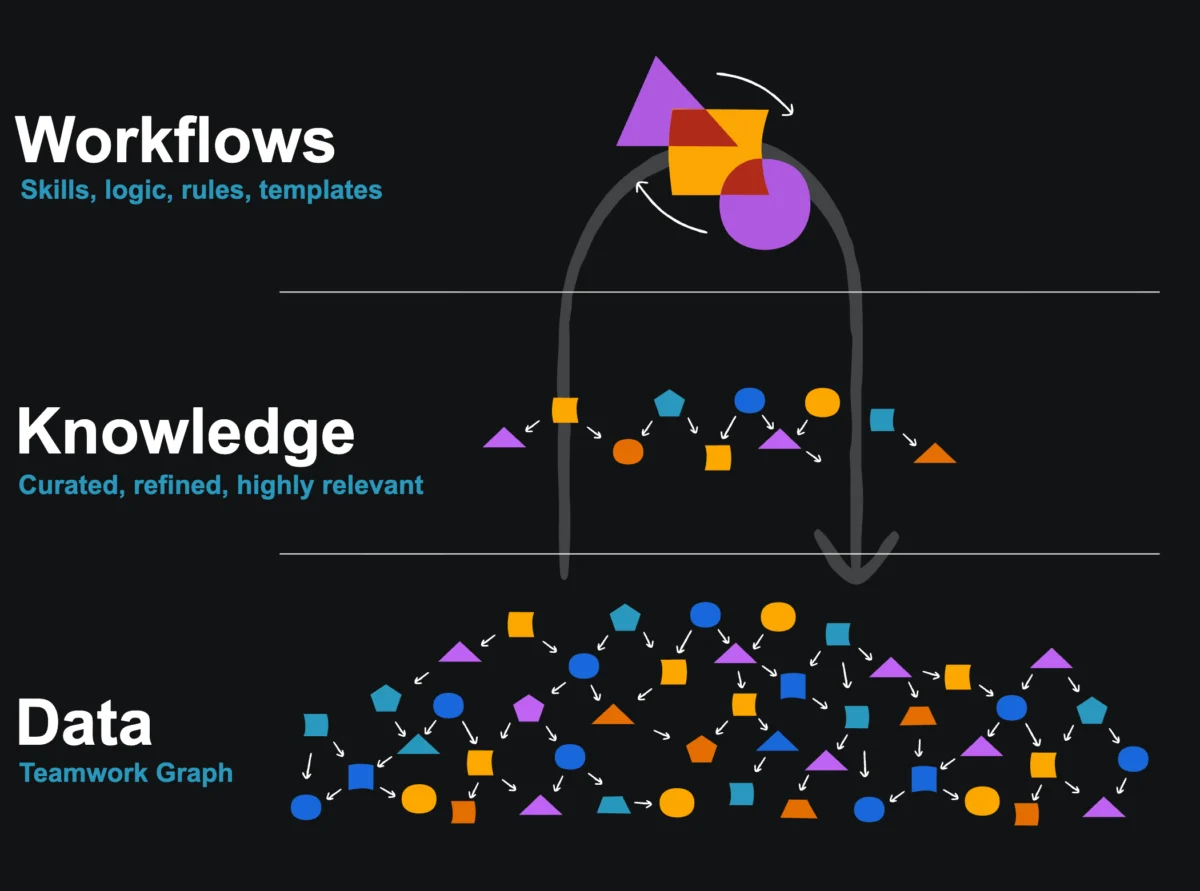
The architecture of a work factory is composed of three distinct layers: the Data Layer, the Knowledge Layer, and the Skills Layer. The Data Layer serves as the collection of live external sources that the factory can query, such as Jira, Confluence, Salesforce, and Google Drive. By utilizing AI tools connected via the Model Context Protocol (MCP), an agent can search these systems to find and filter relevant information. A critical feature of this layer is selectivity; rather than granting an AI access to an entire corporate data estate, the factory is configured to query only the specific systems relevant to the task at hand. This focused scope reduces noise, prevents the hallucination of unrelated information, and ensures the AI’s attention remains on the pertinent problem domain.
The Knowledge Layer functions as the local context for the factory, housing curated information that grounds the AI in the specific subject matter. This directory might include market context, project histories, scoring frameworks, and output templates. Unlike traditional data storage, the Knowledge Layer can be dynamic. An AI agent can be instructed to write to this layer, saving research summaries or logging run outcomes, thereby allowing the factory to accumulate institutional memory over time. This layer is strictly informational, providing the AI with an understanding of the environment without dictating specific actions.
The Skills Layer acts as the operational engine of the factory, consisting of structured instruction documents or "AI skills." These documents provide step-by-step guidance on how the AI should perform a task within the factory’s specific context. A skill might instruct the AI to retrieve account details from a CRM, apply a proprietary scoring framework found in the Knowledge Layer, and then format a brief according to a specific template. By encoding the tribal knowledge of high performers into these skill files, organizations can ensure that their best practices are accessible and executable by any team member. Many AI tools now look for these skills in standard locations, such as an ".agents/skills" directory, making them discoverable and portable.

The structural advantage of a work factory over ad-hoc AI interactions lies in intentional scoping and the creation of a feedback loop. Ad-hoc use of AI skills and MCP connections often leads to configuration drift and inconsistent results. In contrast, a work factory is designed for a specific job, ensuring that its data connections and instructions are perfectly aligned with the desired output. Furthermore, because the process is defined, users can systematically identify and fix errors. If a report’s scoring is inaccurate, the framework file is updated; if the format is incorrect, the template is modified. This transforms AI usage from a series of experimental prompts into a reliable, improvable operation.
To illustrate the practical application of this model, consider a "Sales Factory" designed for a mid-market software company. In a traditional workflow, a sales professional might spend several hours a week manually pulling CRM data and reviewing notes to produce opportunity assessments and weekly pipeline reports. By establishing a Sales Factory workspace, the professional can automate these tasks. The workspace would contain skill files for opportunity assessment and pipeline reporting, frameworks for customer profiling, and templates for the final outputs.
When a new opportunity arises, the sales professional can prompt the AI to "Assess the Acme Corp opportunity." Guided by the specific assessment skill, the AI retrieves CRM records, analyzes product capability pages in Confluence, applies the team’s proprietary scoring methodology, and produces a completed deal brief in minutes. The brief includes scores for dimensions such as problem-solution fit and competitive risk, along with recommended next steps. Similarly, the factory can generate a weekly pipeline report by identifying stage changes and at-risk deals over the previous seven days, delivering a consistent and predictable summary to management every Friday.
The efficacy of the work factory model is rooted in the principle of grounding. While general-purpose AI models possess broad knowledge, they lack specific understanding of a particular business’s terminology and standards. By providing local context through the Knowledge and Skills layers, the AI is transformed from a generalist into a domain expert that adheres to the organization’s specific methodology. This approach mirrors Retrieval-Augmented Generation (RAG) but is applied at the individual or team level without requiring extensive data engineering.
The value of the work factory compounds when applied to periodic work patterns, such as monthly reviews or quarterly audits. These tasks are ideal candidates for the factory model because they are high-value, occur on a known schedule, and rely on stable data sources. Implementing these factories requires a trigger, which can range from a simple calendar reminder to sophisticated automated scheduling using platforms like Zapier or Make. As the factory matures, it becomes a capability asset, encoding expert judgment and facilitating the onboarding of new employees by providing executable documentation of complex processes.
Getting started with a work factory involves identifying a single high-frequency, structured task. Practitioners should begin by creating a dedicated folder, defining a clear output template, and writing a step-by-step skill file. Through iterative refinement, the quality of the AI’s output eventually reaches a point where only light editorial adjustments are required. Once the initial factory is operational, additional factories can be built for other recurring job types, such as account planning or competitive research. Maintaining separate, focused factories is essential to prevent the dilution of focus that occurs in large, noisy contexts.
Ultimately, the development of individual work factories represents a fundamental shift in the human-AI relationship. It encourages knowledge workers to articulate and document the expertise that previously existed only as tacit knowledge. This documented expertise—comprising frameworks, skills, and templates—serves as a quality standard and a shared language for teams. Rather than replacing the knowledge worker, the work factory amplifies their capabilities, turning individual judgment into a scalable, repeatable process that enhances the productivity of the entire organization. These patterns are applicable across various AI tools that support local context and MCP server connections, including Claude Desktop and Cursor, and can be integrated with enterprise platforms like Jira and Confluence via specialized servers such as Atlassian Rovo.