11

The allure of a countertop kitchen composter is undeniable: a sleek appliance transforming food scraps into nutrient-rich garden compost, eliminating odors, fruit flies, and backyard rats. This vision of effortless sustainability, however, often clashes with the reality of what most popular electric kitchen composters actually deliver. While many are marketed as "composters" and come with instructions detailing the use of their output in gardening, the vast majority primarily function as sophisticated food waste grinders and dryers.
These devices excel at significantly reducing the volume of food waste and neutralizing unpleasant odors, making kitchen management cleaner and more convenient. Yet, consumers hoping to feed eggshells and banana peels into a machine and magically scoop out the biologically stable, fully decomposed humus found at a garden center will likely be disappointed. True composting involves a complex biological process of microbial decomposition, which most electric countertop units do not fully replicate.

That being said, the processed material, often referred to as "pre-compost" or "foodilizer," still holds value. It can be mixed in small ratios with potting soil or serve as an excellent feeder for a "real" backyard compost pile, accelerating the decomposition process there. The primary and legitimate goal of these machines is indeed to reduce household food waste volume. This objective is crucial given that food waste constitutes approximately 24 percent of municipal solid waste. When organic matter breaks down in landfills, it does so anaerobically, releasing methane, a potent and destructive greenhouse gas that contributes significantly to climate change. Therefore, any device that diverts food waste from landfills offers a tangible environmental benefit.
Furthermore, these appliances can render food grounds odor-free and shelf-stable, making them ideal for adding to municipal composting bins or traditional backyard compost systems. Despite criticisms of "greenwashing" and "corporate astroturfing" from some environmental groups, the utility of these devices is evident. They enhance user awareness of food waste habits, operate with relatively low power consumption (typically around 1 kilowatt-hour per cycle), and, in some cases, produce an output that comes remarkably close to actual compost.
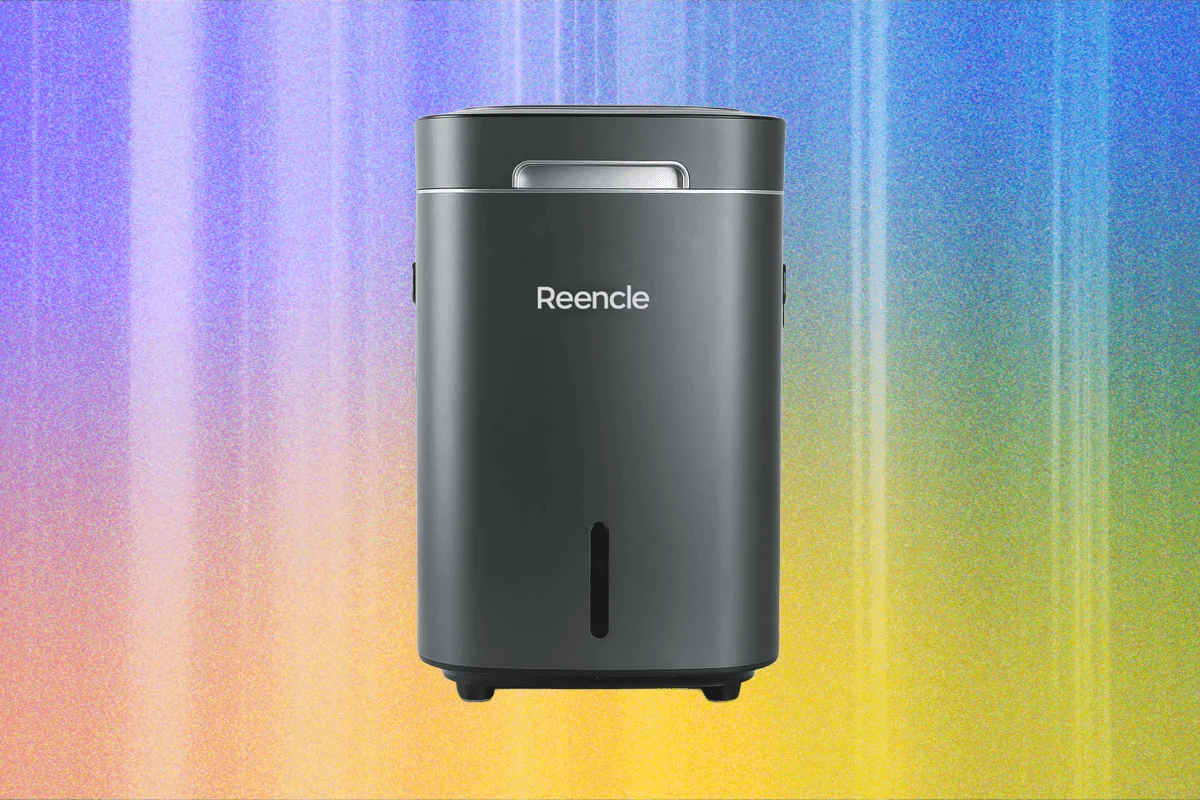
Best Overall: Reencle Prime Electric Composter

Among the electric options, the Reencle Prime stands out for producing an output closest to what one would expect from a traditional compost bin. Originating in South Korea, where it gained popularity years before its U.S. introduction, the Reencle system differentiates itself through its use of a specialized microbial starter. Each unit comes with a bag of Reencle Compost Starter 1.0, a blend of activated carbon, wood pellets, glucose, and patented thermophilic microbes designed to actively break down organic matter. A prefilled charcoal filter also ensures odor control.
While the Reencle Prime is too large for most kitchen counters, its operation is remarkably user-friendly, akin to a heated, intelligent trash can. The lid opens via a bottom sensor or control panel button, allowing users to simply deposit organic matter. There are no complicated cycles, proprietary tablets, or auxiliary buckets. The accompanying app is entirely optional, underscoring its intuitive design. Within hours to days, depending on the type of food, scraps are transformed into a material resembling a mix of dirt and sawdust.
Occasional unpleasant odors can arise, but these are generally mitigated by using the control panel’s Dry and Purify functions or by incorporating "browns"—dry, carbon-rich materials such as bread or shredded paper—to maintain microbial balance. The Reencle performs optimally when fed its recommended diet of approximately 1.5 pounds of scraps daily and uniquely, can also accept meat and dairy products, which are typically excluded from many composting methods.

For larger households, the Reencle Gravity model offers a greater capacity, handling up to 3.3 pounds of waste daily and operating with significantly less noise than the Prime (around 30 decibels for the Prime, nearly silent for the Gravity). However, testing indicated that the Gravity’s increased volume could lead to faster anaerobic (smelly) conditions due to moisture retention, necessitating more frequent additions of browns or manual stirring.
When the processed material reaches the unit’s fill line, it is ready for removal. This "pre-compost" can then be mixed with potting soil at a 1:4 ratio and allowed to cure for three weeks in a suitable location, such as a garage. The resulting mix has been shown to have positive effects on both indoor and outdoor plants.
An 18-month update revealed a common issue: the stainless steel stirring paddles can break off. Reencle addresses this by offering a free paddle repair kit for units within their warranty period (two years for units purchased on or after May 13, 2026; one year for earlier purchases). Outside of warranty, a kit costs $35. Despite this mechanical flaw, Reencle’s responsive customer service and the device’s superior performance in producing a compost-like output keep it as the top recommendation.

Best Grind-and-Dry Food Recycler: Lomi 3 Countertop Food Recycler
For those seeking an efficient grind-and-dry solution, the Lomi 3 countertop composter excels. Lomi has demonstrated responsiveness to user feedback, incorporating improvements over its discontinued Lomi 2 model. The Lomi 3 features a convenient 3-liter, 7.5-inch-tall countertop bucket, an easy push-button lid, and simplified Grow and Express modes, eliminating the need for multiple complex settings. While the Lomi 3 is marketed as smaller and quieter, testing found the decibel difference from its predecessor to be negligible. A notable change is the absence of the Lomi 2’s specific mode for breaking down approved bioplastics, including Lomi’s own packaging, which the new model no longer accepts.
User interaction is straightforward; the app is optional, and a simple button press initiates operation. Cycle lengths vary from three to sixteen hours, depending on the volume and moisture content of the food scraps. Upon completion, the machine signals with a chime, and the processed grounds, which are very fine and resemble coffee grounds, can be incorporated into an outdoor compost pile, used as a lawn top-dressing, or mixed with soil at a 1:10 ratio (or 1:15 if meat or dairy was included). The clear lid is a practical addition, allowing users to monitor the cycle’s progress.

While the Lomi 3 is a thoughtfully engineered and user-friendly option, its price point is high for what is essentially a grinder and dryer. However, for individuals primarily focused on reducing waste volume or those living in areas with composting fines, it represents an effective solution. A recurring issue noted in testing was the lid’s tendency to warp after several months, leading to odor escape and fruit fly attraction. Lomi attributed this to faulty plastic in an initial batch and provided a replacement lid, but the new lid also showed signs of warping over time.
Another Great Grind-and-Dry Recycler: FoodCycler Eco 3 Compact Kitchen Food Recycler
The FoodCycler Eco 3 is another commendable grind-and-dry option, distinguished by the company’s transparent marketing. FoodCycler explicitly states that its device is a "food-waste recycler," not a composter, clarifying that its output, termed "Foodilizer," is a "homemade soil amendment" rather than finished compost. This honesty aligns with the product’s function, which rapidly breaks down food without microbial involvement.

The Eco 3, launched in 2024, is a compact version of the Vitamix FoodCycler FC-50, offering a larger 3.5-liter capacity and improved grinding capabilities. Measuring 11 by 9 by 13 inches, it is suitable for countertop placement. Its design features an auxiliary pail—a sleek, 8-inch-tall lidded container—where scraps can be collected over several days. Once full, the pail is swapped into the machine, and a single button press starts the process.
The machine requires minimal setup, with no assembly beyond filling a carbon granule filter, no app, no account creation, and no reliance on pods or tablets. It only needs to be plugged in when in use. Cycles range from four to nine hours, yielding finely ground "Foodilizer" that resembles dirt. While its base sound is an audible whir (around 36 dB), the unit began emitting loud groaning and creaking noises after six months of regular use, making nighttime operation preferable. Initial challenges with seating the bucket correctly were resolved with practice.
For users requiring a larger capacity, FoodCycler’s XL Eco 5 model accommodates 5 liters of waste. However, for a grind-and-dry processor, the Eco 3 is generally considered a more space-efficient choice for most households.

A Decent Budget Grind-and-Dry Option: Airthereal Revive R800 Kitchen Composter
The Airthereal Revive R800 is a budget-friendly grind-and-dry processor that, like many of its counterparts, uses the term "composter" despite not producing true compost. It features a "Bio Compost" mode, which, with the addition of separately purchased Airthereal Revive Magic Compost Starter (thermophilic bacteria), initiates a breakdown process. However, the resulting material remains pre-compost and requires further curing with soil.
Despite the marketing discrepancies, the R800 effectively reduces kitchen scrap volume. It includes a digital screen for status updates and a clear lid for visibility. A significant drawback is the absence of a separate lid for the processing bucket, which is intended to sit within the machine. This design choice makes collecting scraps on the countertop inconvenient, requiring users to open the machine with dirty hands. An optional bucket-and-lid set is available for an additional $60.

The R800 operates at about 40 decibels, which is noticeable but not excessively loud. An app is available but not essential for operation. Its large footprint means it’s not ideal for countertops. Users should also note the carbon filter’s placement at the back, requiring the removal of protective stickers before use to prevent odors.
Largest Capacity: Mill Food Recycler
Most electric food waste processors create a byproduct that still requires further action, often involving mixing with soil or adding to a traditional compost pile. The Mill Food Recycler addresses this challenge by offering a unique solution: users can ship their processed grounds via USPS to a farm in Washington state, where they are repurposed as chicken feed, for an additional fee.

Initially, this shipping concept raised questions regarding its environmental efficiency and whether it negated the benefits of local food waste recycling. Early testing in 2024 also noted the coarse texture of the Mill’s grounds, which rehydrated easily, and its high price point. However, for those prioritizing ultimate ease of use and maximum food waste diversion without needing a garden or compost pile, the Mill offers a compelling option.
The Mill operates like a large, intelligent trash can, accepting various food scraps at any time. Its operation is managed via a comprehensive and user-friendly app, which includes an extensive directory of acceptable and non-acceptable items, alongside a tracker to monitor diverted waste. Its substantial capacity means it typically only needs to be emptied once a month, a claim validated during testing. The machine operates at around 60 dB, making it one of the louder options, so scheduling processing cycles for nighttime is advisable.
The Mill is available in two versions: the Plus, a 27-inch model with a stylish wood-veneer top and a convenient lid-opening foot pedal; and the Essential, which is $200 cheaper, 4 inches shorter, and lacks the foot pedal and premium finish. Both models offer the same large capacity.

The Analog OG: Bokashi Living Bokashi Bin Starter Kit
To fully appreciate the innovations of electric composters, understanding the traditional indoor method—the bokashi bin—is essential. Developed in Japan in the 1980s, bokashi is not traditional aerobic decomposition but rather anaerobic fermentation, a process akin to quick-pickling food waste. This method preps the food scraps for eventual decomposition and, unlike aerobic composting, retains nitrogen, a vital plant nutrient.
The process involves layering food scraps in the included bucket, followed by a sprinkling of microbe-infused bran (a 2-pound bag is part of the Bokashi Living kit). A plate inside the bucket is used to press down the contents, removing air. "Compost tea," a liquid byproduct of fermentation, can be drained from a bottom spigot every couple of days and used for outdoor plants. This liquid, however, has a distinctive, strong odor often described as a mix of kombucha, hot dumpster, diapers, and stale beer, requiring frequent rinsing of the collection cup.

Once the bin is full, it is sealed and left to ferment for two weeks. Afterward, the fermented food waste can be buried in a garden or added to a backyard compost pile for final decomposition. While initial observations might show little physical breakdown, Bokashi Living confirms that a pickle-like smell and the production of tea indicate a successful fermentation.
The bokashi method offers the advantages of being silent, requiring no electricity, and minimal maintenance. However, the user experience can be challenging. Constantly peeling off the lid with dirty hands to add refuse and then removing a weighted plate can be messy. The pungent, fermenting food waste odor rapidly permeates the kitchen and surrounding areas, a significant deterrent for many. While it has devoted adherents, the convenience and odor control of electric options are often preferred by those less accustomed to the sensory aspects of fermentation.
Other Kitchen Composters Evaluated

Several other kitchen composters were tested, each presenting its own set of features and limitations:
Clear Drop Organics Collector (OC) for $450: This device is a simple white box designed to store up to 3.5 gallons of food scraps in an enclosed container with a fan and carbon filter for odor control. It performs well as a storage unit, and its included paper-bag liners facilitate municipal compost drop-off. The sensor-activated sliding lid is a convenient feature. However, the OC emits a loud fan noise (40 dB) that proved disruptive to household members, and its high price point is questionable for a device that primarily stores waste, especially when basic carbon-filter compost canisters are available for under $30.
Vego Countertop Kitchen Composter for $360: This grind-and-dry processor is similar in size and function to the Lomi 2 but comes at a lower price. Its operational drawbacks include the necessity of adding scraps directly into the machine’s bucket, which lacks a separate lid and exposes internal metal mechanisms when removed. The lid itself is cumbersome to align and secure, requiring two hands and making scrap disposal challenging. Vego claims its "Vego mode," used with proprietary VegoTabs, creates a biologically active soil amendment. However, this mode, and all others, produces a loud, intermittent whirring noise that was found to be intrusive, even from 10 feet away.

GEME Terra II for $649: Marketed as an "AI-powered kitchen appliance" utilizing "industrial-grade microbes" to produce "living soil," the Terra II is a large and bulky unit (12 inches long, 22 inches high). It operates similarly to the Reencle, with a heated, enclosed container and proprietary starter microbes, using a metal-ion purification system instead of a carbon filter. It produces pre-compost, not ready-to-use compost. The "AI" functionality remains undefined on the product’s website or in its documentation. Furthermore, temperature probes revealed the internal pre-compost reached only 97 degrees Fahrenheit, insufficient to kill pathogens, contrary to claims of high-heat microbial resilience. The machine also emitted a constant, disruptive fan noise (46 dB), comparable to a range hood on medium setting.
FoodCycler Eco 5 for $549: A larger version of the Eco 3, this food recycler boasts a 5-liter capacity. It operates quietly, making its subtle blue light the only indicator of its operation. The processed output, while not compost, reduces food waste to fine bits after several cycles. Despite its effectiveness in waste reduction and odor control, its substantial size (14 by 14 by 10 inches), almost as bulky as a robot vacuum station, makes it less space-efficient for most kitchens compared to the Eco 3, unless a household consistently generates a very large volume of food scraps.
In conclusion, while the dream of instant, magical compost from a countertop device remains largely unfulfilled, modern electric kitchen composters and food recyclers offer valuable solutions for managing household food waste. They effectively reduce volume, eliminate odors, and can contribute to diverting organic matter from landfills, thereby mitigating greenhouse gas emissions. The choice of device ultimately depends on individual priorities, such as the desire for true pre-compost, quiet operation, capacity needs, budget, and the availability of municipal composting or backyard gardening options.