 11

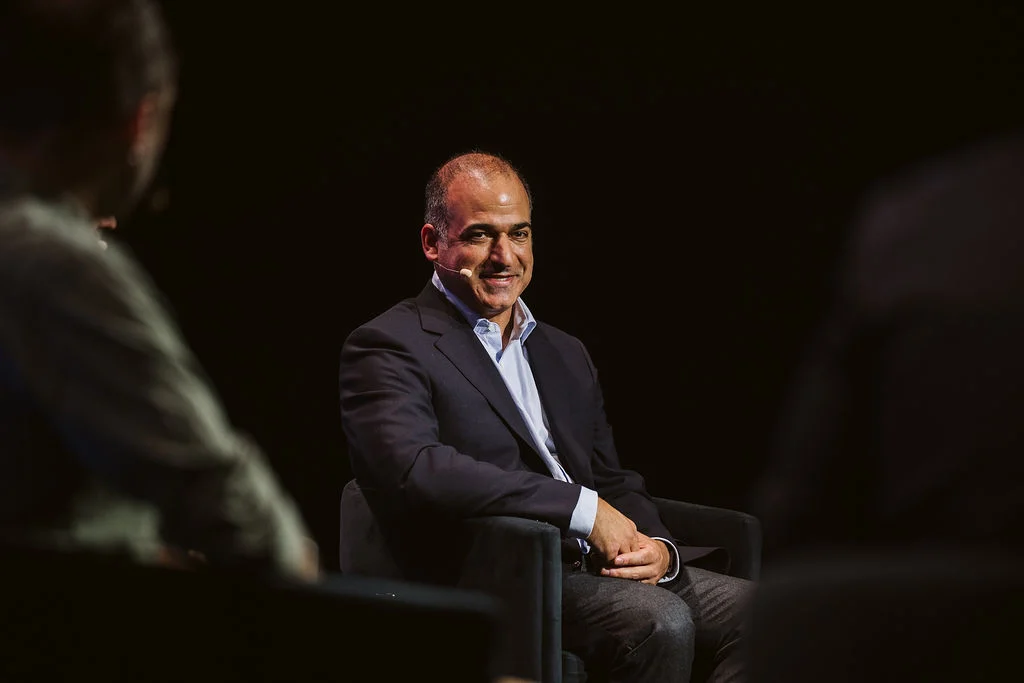
This week, the All In conference hosted a revealing panel discussion on the nascent field of AI world models, offering a rare glimpse into one of the most mysterious and heavily funded corners of artificial intelligence. Moderated by this reporter, the session sought to unravel the complexities and commercial prospects of a technology that, despite significant buzz and investment, remains largely shrouded in secrecy.
At the forefront of this burgeoning domain are two prominent entities: Yann LeCun’s AMI Labs and Fei-Fei Li’s World Labs. Both organizations have successfully attracted substantial funding and generated considerable excitement within the AI community. However, an analysis of their current operational transparency reveals a striking commonality: they rank notably low on the "trying-to-make-money scale," a metric increasingly used to gauge the commercial readiness and focus of AI ventures. This paradox—high investment coupled with a lack of clear commercial pathways—highlights the unique developmental stage of world models.
Fundamentally, world models are designed to automate spatial intelligence, a critical cognitive ability that allows systems to understand, navigate, and interact with the physical world. Unlike large language models (LLMs) that primarily process and generate text, world models aim to build an internal, predictive representation of reality. This includes understanding object permanence, physical laws, cause and effect, and the dynamics of environments. This capability holds immense promise, poised to revolutionize diverse and lucrative sectors. From enhancing the dexterity and adaptability of robotics to creating more immersive and interactive video content, and developing sophisticated, context-aware self-driving systems, the potential applications are vast and transformative.
However, the path to commercialization remains remarkably opaque. When pressed during the panel discussion about where this advanced technology would realistically manifest in commercially viable products, the responses were evasive. Michael Rabbat, a co-founder of AMI Labs and the company’s Vice President of World Models, exemplified this caginess. His direct answers about specific product roadmaps were non-existent, stating, "We’ll talk about it when we’re ready to talk about it." He later clarified via email that AMI is "still in a research and building phase," and therefore, they are "not talking publicly about any product plans or timeline."
This reticence, while perhaps understandable for a company less than a year old, appears to be a systemic characteristic of the entire world-modeling space. World Labs’ offering, "Marble," stands out as arguably the most developed product in this arena. Its demonstrations showcase impressive capabilities ranging from straightforward media creation and the construction of explorable environments for video games to advanced CGI effects. Robotics applications are also hinted at, yet the overall impression is that Marble, in its current form, serves more as a powerful demonstration platform of what the technology can do rather than a readily deployable commercial product.
The veil of secrecy extends even to the suppliers feeding these advanced AI labs. Alex de Vigan, CEO of Physicl, a company providing crucial data for the burgeoning world model business, shared his frustrations at the conference. While confident that Physicl’s data is proving invaluable, de Vigan admitted he remains largely in the dark about the specific end-uses of his company’s contributions. "I wish they would tell us more. We could build more useful data if we knew what they were working on," he expressed, underscoring a broader challenge in an ecosystem where foundational research is prioritized over transparent product development.
Part of the mystery surrounding world models stems from their inherent versatility. The simplest iteration might resemble a navigable digital map of the world, akin to the sophisticated AI models that empower self-driving vehicles like Waymo. However, the identical underlying modeling approach that enables a self-driving car to seamlessly weave through complex urban traffic could also be adapted to facilitate a humanoid robot in executing intricate tasks such as carrying boxes through a cluttered warehouse. Furthermore, it could transform a mere few minutes of video footage into an expansive, explorable virtual environment.
AMI Labs, under the guidance of AI luminary Yann LeCun—a recipient of the Turing Award and Meta’s Chief AI Scientist, known for his decades-long advocacy for robust AI world models—has already demonstrated an exceptionally broad range of interests. The lab has reportedly dipped its toes into diverse sectors including manufacturing, biomedicine, robotics, and even specialized AI software for doctors through its Nabia partnership. While it is highly improbable that AMI will pursue commercialization across all these disparate fields simultaneously, the current exploration highlights the foundational nature of their research and the vast array of potential applications. The question remains which one or two of these promising avenues will ultimately emerge as their primary focus.
It is widely accepted within the industry that numerous viable businesses can be constructed atop world model technology. As long as the current climate of easy fundraising persists, there is little immediate pressure on these labs to narrow their focus to a single application. In fact, there exists a compelling strategic rationale for this diversification and, more importantly, for maintaining a high degree of operational secrecy.
If, for instance, AMI Labs were to announce tomorrow that they had successfully developed a revolutionary humanoid robot—perhaps an "OpenClaw"—or unveiled a next-generation Hollywood rendering system, such an announcement would instantly galvanize significant interest across the industry. Suddenly, a multitude of other research labs and well-funded entities would converge on the space. This rapid influx of attention would inevitably lead to intense competition, not only from other dedicated world model companies but also from emerging "neolabs" and even established AI titans like OpenAI and Anthropic, all vying for market share and talent.
In many respects, this strategic secrecy is the inverse side of the abundant funding coin. While easy fundraising empowers these labs to conduct extensive research and development under the radar, it also fuels a growing cohort of potential rivals. Once a clear path to market is identified and validated, these rivals, equally well-resourced, will be poised to enter the fray. Therefore, while competition may be an inevitable outcome in the long run, delaying its onset for as long as possible becomes a critical strategic imperative. This necessitates maintaining an iron curtain of silence regarding specific product developments and timelines.
For aficionados of science fiction, particularly the works of Cixin Liu, this scenario immediately evokes the "dark forest hypothesis." In this theoretical construct, if you are unsure of who else inhabits the vast, unknown woods, the safest and most rational course of action is to avoid drawing any attention to yourself whatsoever. This principle, applied to the cutting-edge realm of AI world models, illuminates the cautious, secretive approach adopted by leading labs. They operate in a high-stakes environment where premature disclosure could invite overwhelming competition, potentially undermining years of foundational research and development. The current landscape suggests that these AI pioneers are content to remain hidden in the dark forest, building their future without revealing their presence until they are ready to emerge with fully formed, disruptive technologies.
This post was first published on September 18, 2026.






