 11

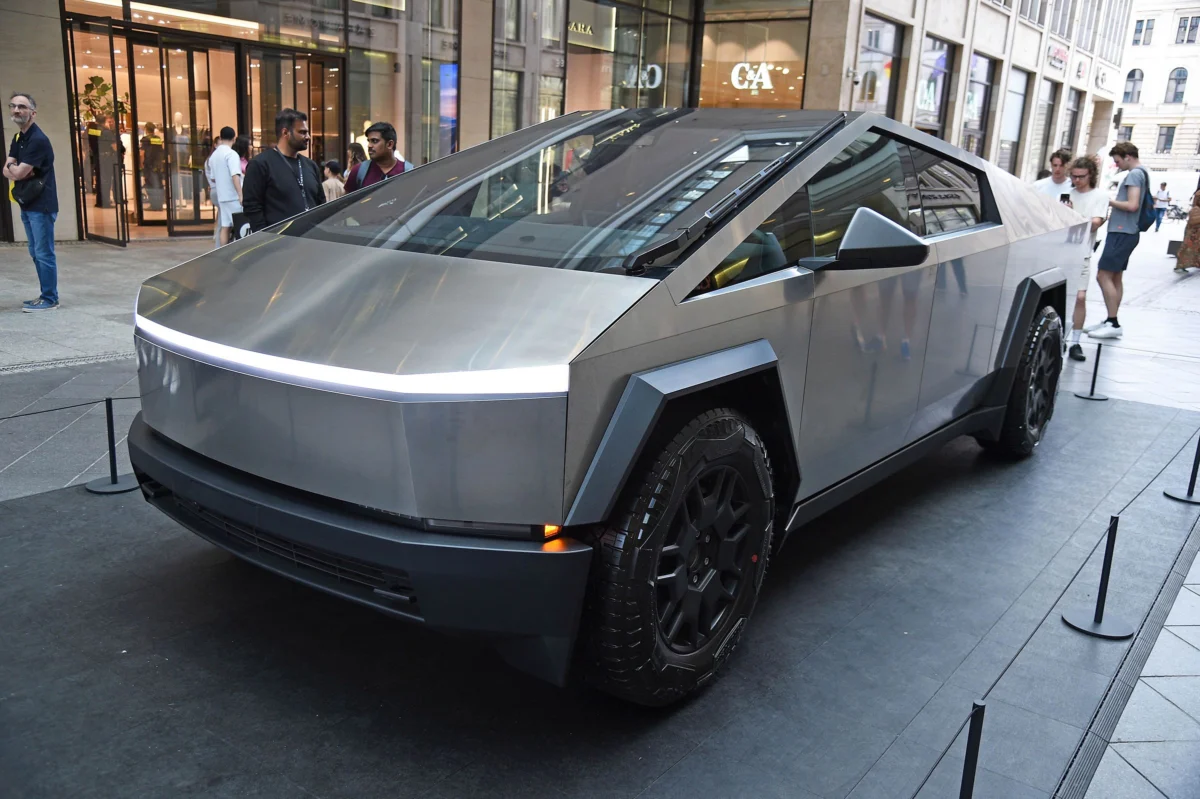
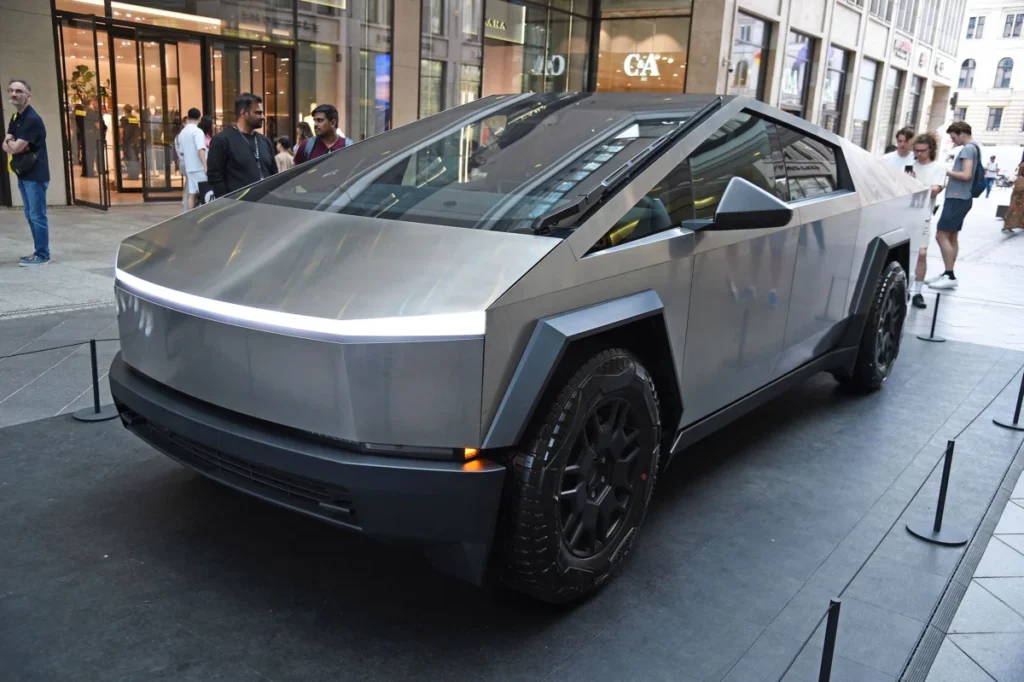
Tesla is set to discontinue production of its controversial Cybertruck at the Gigafactory Texas facility next year, marking a significant turn for the electric vehicle manufacturer. The decision to cease production of the angular, stainless-steel pickup truck comes amidst a challenging market reception, characterized by subpar sales and a series of recalls, notably one involving a faulty accelerator pedal. Beyond its operational challenges, the Cybertruck has been described as a "uniquely toxic electric vehicle," a label stemming from its highly divisive design and its close association with the often-controversial public persona of Tesla CEO, Elon Musk, whose various endeavors and pronouncements have frequently drawn both fervent support and strong criticism. This combination of design polarization, public relations issues, and product reliability concerns ultimately contributed to its underwhelming performance in the market.
However, the impending end of the Cybertruck’s production transcends the narrative of a single product’s failure. It emerges as a potent indicator of a broader shift within the automotive industry, signaling that the era dominated by large electric vehicles, particularly oversized trucks and SUVs, may be waning. This potential paradigm shift carries multifaceted implications, most notably for public safety and the global battery supply chain. For pedestrians and cyclists, a move away from massive, heavy EVs could be beneficial, as larger vehicles generally present increased risks in collisions due to their sheer mass and often greater blind spots. Furthermore, from an environmental and resource management perspective, a pivot towards smaller, more efficient electric vehicles would alleviate pressure on the finite supply chain for crucial battery components, enabling a more equitable distribution of battery capacity across a wider range of vehicles and making electric mobility accessible to a larger segment of the population.
The Cybertruck itself exemplifies the trend of large-format EVs, housing a colossal 123 kilowatt-hour battery pack that alone weighs approximately 1,600 pounds, constituting roughly a quarter of the vehicle’s overall mass. This substantial battery capacity was designed to provide extensive range, but at a considerable cost in terms of resources and vehicle weight. This approach mirrors that of other large electric trucks that have faced similar market corrections. For instance, Ford’s F-150 Lightning, another electric pickup designed to electrify an American icon, was canceled late last year. Its battery options ranged from 98 kilowatt-hours up to a formidable 131 kilowatt-hours, placing it in a similar category of resource intensity. In a related move, Ford also announced the cancellation of a planned three-row electric vehicle in 2024, further underscoring a strategic reassessment of its large EV offerings.
The cancellation of both the Cybertruck and the F-150 Lightning within a year of each other sends a clear message about evolving market preferences and manufacturing strategies. While these large electric trucks were initially met with considerable hype and pre-order interest, their real-world sales performance, coupled with production complexities and high costs, seems to have prompted a reevaluation by major automakers. Concurrently, there has been a noticeable surge in announcements for smaller, more practical electric vehicles, alongside conventional gas-powered automobiles incorporating advanced electric motors designed to extend range. This dual-pronged approach suggests a growing recognition that affordability, efficiency, and adaptability are becoming paramount for mainstream EV adoption.
Ford, for example, is actively pivoting its strategy. The company is reportedly planning to launch the "Fathom" next year, an electric pickup truck expected to be priced under $30,000. Significantly, the Fathom is anticipated to be comparable in size to Ford’s compact, gas-powered Maverick pickup, a model celebrated for its practicality and affordability. While specific battery sizes for various Fathom trims have not yet been disclosed, it is highly probable that they will be substantially smaller than those found in the F-150 Lightning or the Cybertruck, reflecting a conscious effort to reduce cost and resource consumption. Furthermore, Ford is also planning to reintroduce the F-150 Lightning, but as an extended-range model, potentially indicating a shift towards hybrid or range-extended electric powertrains that offer flexibility without requiring prohibitively large battery packs.
Beyond established automakers, startup companies are also tapping into this emerging demand for compact electric utility vehicles. Slate, for instance, is introducing a tiny electric pickup truck that boasts the unique capability of converting into an SUV. Its base model is slated to start below $25,000 and features a notably svelte battery pack, contributing to its lower cost and lighter footprint. This innovative design and accessible pricing have reportedly led to a massive surge in preorders, though it serves as a cautious reminder that high preorder numbers do not always translate into sustained market success, as evidenced by the Cybertruck’s initial impressive preorder figures.
Rivian, a prominent player in the electric truck and SUV market, also introduced the R2 this year. While not as diminutive or inexpensive as the forthcoming Ford Fathom or Slate models, the R2 represents a strategic move towards a more moderately sized offering. Its battery boasts 88 kilowatt-hours of capacity and weighs approximately 1,200 pounds, making it a smaller and lighter option compared to the company’s flagship R1S SUV. Rivian has further teased the upcoming R3, an even more streamlined and compact SUV, signaling a continued commitment to diversifying its portfolio with smaller, more efficient electric vehicles in the years to come.
Despite these clear indicators of a shift, it would be premature to declare the demise of large electric vehicles entirely. Certain models continue to demonstrate strong market appeal. The Kia EV9, a large electric SUV, consistently ranks among the top 10 EVs by sales in the US, as does Rivian’s R1S. Interestingly, there is also a robust resale market for the Ford F-150 Lightning, suggesting that while new sales might have been challenging for Ford, a segment of consumers still values its capabilities and is willing to purchase it pre-owned. However, a closer look at the broader top 10 new EV sales reveals that the majority are crossovers, sedans, or mid-sized SUVs, all equipped with moderately sized batteries. Furthermore, a growing number of newly announced electric vehicles are trending towards smaller dimensions or incorporating extended-range capabilities, solidifying the impression that the market is indeed undergoing a significant recalibration.
The pivot towards building smaller vehicles offers compelling economic advantages. Reducing the overall weight of an EV directly allows for the use of a smaller battery pack. Given that the battery remains the single most costly component of an electric vehicle, a reduction in its size and capacity directly translates into a lower manufacturing cost. This crucial cost saving empowers automakers to offer more affordable vehicles, a critical factor in an economic climate where the price of numerous consumer goods, including new cars, has been steadily increasing. According to data from Cox Automotive, the average transaction price for a new EV model currently stands at $55,800, a figure that remains a barrier for many potential buyers. By focusing on smaller, more efficient designs, manufacturers can broaden the accessibility of electric vehicles.
Beyond cost reduction, a strategy of "going small"—or at least smaller—is also essential for optimizing the utilization of a limited global battery supply chain. The reality is that the vast majority of drivers, regardless of the vehicle they own, utilize their cars for routine daily tasks: commuting, running errands like grocery shopping, and transporting family members to activities such as soccer games. A Cybertruck driver, with its massive 123 kWh battery, performs these same functions as a Hyundai Ioniq 5 driver, whose standard range model operates with a battery pack approximately half the size. This disparity highlights the inefficiency of deploying excessively large batteries for common usage patterns, suggesting that a more judicious allocation of battery resources could accelerate overall EV adoption and sustainability goals.
The broader political and economic landscape has also played a significant role in shaping EV market dynamics. Following the Trump administration’s decision to discontinue federal EV incentives last year, sales experienced a notable downturn. More recently, geopolitical events, such as the Iran War, and the resulting surge in gas prices, have rekindled consumer interest in electric vehicles. Despite this renewed interest, overall EV sales in the US continue to lag behind the global average. The pain felt at the pump has also driven a considerable uptick in used hybrid sales, indicating that many consumers are seeking more immediate and affordable solutions to fuel price volatility. Looking ahead, the return of robust federal EV incentives under a potential future administration that prioritizes environmental policies and green initiatives could significantly stimulate demand. Should a Democratic-controlled White House emerge in 2028, support for prospective EV buyers would become much more probable. Automakers that have proactively shifted their focus towards smaller, more affordable electric cars would be ideally positioned to meet this pent-up demand, simultaneously mitigating risks associated with production delays and supply chain constraints that often plague larger, more complex EV projects.
Even Tesla CEO Elon Musk’s own explanation for ending Cybertruck production points directly to the future direction of the market. He asserts that the company is discontinuing the Cybertruck to free up production capacity for the "Cybercab." These anticipated robotaxis are designed for urban mobility and shared services, and notably, are expected to feature significantly smaller battery packs, estimated at just 48 kilowatt-hours. This strategic pivot within Tesla itself underscores the broader industry trend: a move away from oversized, resource-intensive personal vehicles towards more efficient, purpose-built electric solutions, whether for individual ownership or fleet operations.
Additional reporting by Aarian Marshall.