 11

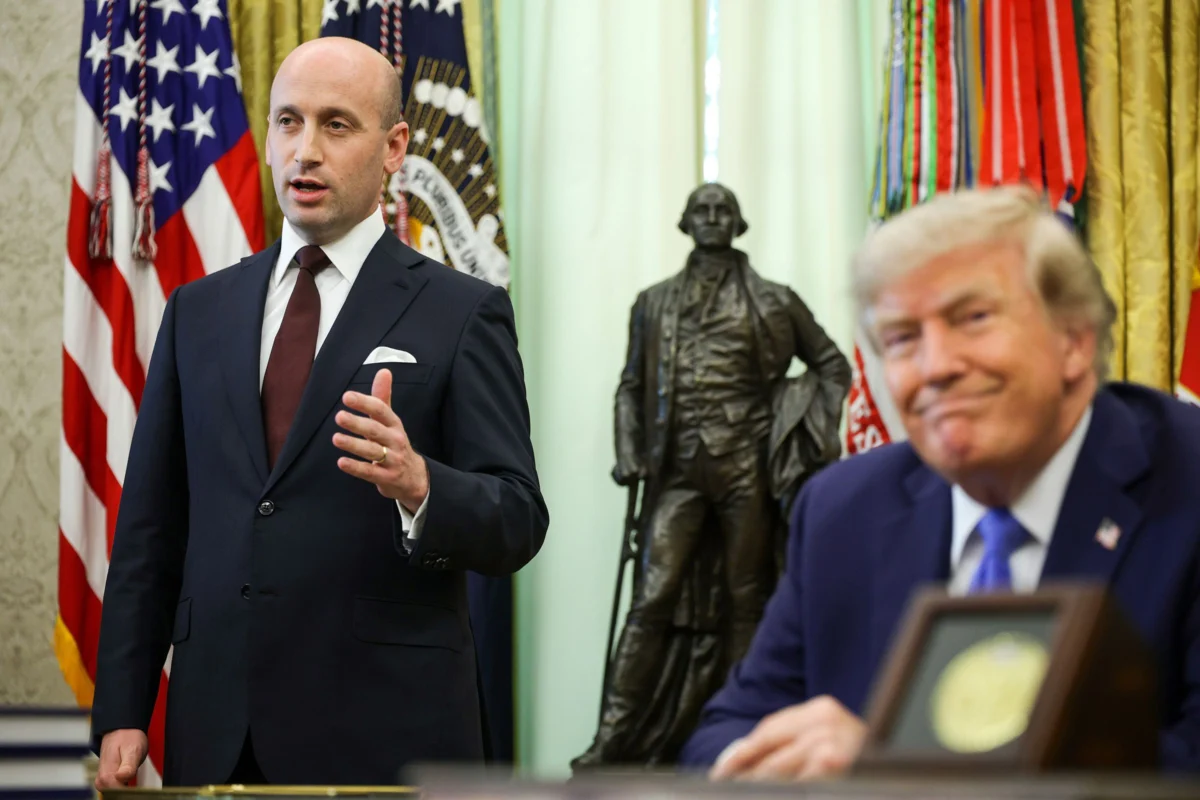
President Donald Trump on Friday announced the appointment of Stephen Miller, one of his most influential and politically aggressive aides, as his next White House chief of staff. The move follows a period of intense scrutiny and disastrous electoral results for Republicans in the recent midterm elections, which saw the party lose control of both the House and Senate in a searing rebuke of Trump’s policy agenda.
Miller, who previously served as deputy chief of staff for policy and homeland security adviser, is widely recognized as the architect behind some of the most polarizing policies of Trump’s second term. His tenure has been marked by a particularly brutal crackdown on immigration, a cornerstone of the administration’s "America First" platform, which has drawn widespread criticism and, controversially, has been linked to incidents that claimed the lives of US citizens. His appointment signals a clear doubling down on the president’s hardline stance as the administration navigates a challenging political landscape.
The announcement was made public by President Trump himself via a statement posted on his preferred communication platform, Truth Social. In his message, Trump confirmed that Miller would officially assume the role on Monday, less than a week after the Republicans suffered their most significant midterm performance decline in decades. This electoral defeat has prompted a rapid and decisive restructuring within the administration’s highest ranks.
Sources familiar with the internal dynamics of the White House revealed that President Trump had privately attributed the Republicans’ poor midterm showing to outgoing chief of staff Susie Wiles. According to these sources, Wiles, who had held the influential position since the start of Trump’s second presidential campaign in 2021, submitted her resignation on Thursday. Her departure marks a pivotal moment in an administration known for its frequent personnel changes, particularly in the critical chief of staff role.
The search for Wiles’s replacement reportedly involved a concise list of three principal candidates. Beyond Miller, the president also considered special envoy Steve Witkoff and director of national intelligence Jay Clayton for the demanding role. However, faced with the looming specter of extensive congressional investigations anticipated to commence next year with the new legislative session, Trump ultimately opted for Miller. His decision was reportedly driven by Miller’s demonstrated zeal in defending the president and his unwavering, deep-seated loyalty. Miller has been a steadfast presence in Trump’s political orbit since his initial presidential campaign and remained a close confidant throughout Trump’s period of political exile in 2021.
Miller’s aspiration for the top White House staff position had been an open secret within the West Wing for several weeks. His interest became particularly pronounced after Wiles began weathering a series of negative media stories preceding the midterms, which strongly suggested her position was precarious. These reports, combined with internal shifts, created an environment ripe for change at the highest levels of the White House.
In the months leading up to the midterms, President Trump had also begun to incrementally exclude Wiles from certain key decision-making processes. This gradual marginalization further fueled the perception among her detractors that her standing was on shaky ground. An illustrative example cited by sources was Trump’s reported decision to hire Katie Zacharia as press secretary without consulting Wiles. While the White House publicly pushed back on this specific claim, the incident highlighted a growing disconnect and a challenge to Wiles’s authority within the administration.
With Wiles’s departure, White House aides are now bracing for a broader wave of personnel changes. Among those widely considered vulnerable to dismissal by the incoming chief of staff, Miller, are Wiles’s deputies James Blair and Richard Walters. Blair was instrumental in crafting the Republican midterm strategy, which ultimately failed to deliver the desired results. Sources indicate that these officials may choose to resign preemptively rather than face potential termination under Miller’s new leadership.
The changing of the guard is also expected to bring a measure of relief and renewed influence to Defense Secretary Pete Hegseth. Hegseth, who had reportedly endured a strained relationship with Susie Wiles in recent months, is viewed as ideologically aligned with Stephen Miller. This alignment suggests a more harmonious working dynamic and potentially a unified approach to defense and foreign policy matters. Hegseth and Miller had previously collaborated closely on significant policy initiatives, notably last year’s campaign of strikes against boats around Venezuela. Miller, who also leads the Homeland Security Council within the White House, was instrumental in orchestrating this campaign through the Pentagon, underscoring his deep involvement in both domestic and international security policies.
Despite the abrupt end to her tenure, Susie Wiles leaves the White House having arguably served as one of President Trump’s most successful chiefs of staff. Trump’s first term was notoriously characterized by a high turnover rate in the chief of staff position, with several individuals cycling through the demanding role. In stark contrast, Wiles managed to maintain Trump’s confidence consistently from the very outset of his second presidential campaign in 2021, a testament to her political acumen and close working relationship with the president.
Nevertheless, Wiles’s final months in the White House were not without significant challenges. She successfully underwent a course of chemotherapy, demonstrating her resilience amidst intense professional demands. Concurrently, she faced accusations, publicly reported, that her daughter had secured lucrative contracts partly due to the family’s close connections to the president. Both the White House and her daughter’s firm vehemently pushed back against these claims, asserting their groundlessness.
In her public farewell, Wiles expressed pride in her service and the administration’s achievements. "Serving President Trump in the White House has been the honor of a lifetime," Wiles wrote in a statement posted on X. "I’m so proud to have been a part of what we’ve accomplished together from securing our border and cutting taxes to strengthening our economy and putting America First." Her statement reflects a continued endorsement of the administration’s core policy tenets even as she departs from its highest ranks.
Stephen Miller’s elevation to White House chief of staff signals a potential intensification of the Trump administration’s hardline policies, particularly in areas of immigration and national security. His proven loyalty and ideological fervor are clearly seen by President Trump as essential assets in the face of escalating political opposition and forthcoming congressional scrutiny. The reshuffle is poised to redefine the internal dynamics of the White House and potentially reshape the administration’s strategy as it navigates the remaining term and prepares for future political battles.