 11


The "Bottom Line Up Front" (BLUF) communication principle, a cornerstone of U.S. Army writing regulations, is proving increasingly vital in the age of artificial intelligence, mirroring how both humans and AI prioritize information at the beginning of a text. The core tenet of BLUF is to present the main point, conclusion, or key finding in the very first sentence, followed by actionable details, and then background information only if necessary. This approach, born from the military’s need for rapid comprehension and execution of orders, is now a powerful tool for optimizing content for AI search and ensuring messages resonate with busy readers.
The U.S. Army’s directive, as outlined in its writing regulation AR 25-50, explicitly instructs soldiers to place "the main point at the beginning of the correspondence." This was a critical necessity in military operations where orders had to be read and acted upon with utmost speed, making the immediate delivery of the conclusion paramount. Today, this principle has found a new and significant application in how we interact with AI-powered search tools and information retrieval systems. AI, much like a hurried soldier or a time-pressed executive, dedicates the most processing power and attention to the initial segments of a text. Consequently, content structured with BLUF is inherently more likely to be understood, prioritized, and surfaced by these intelligent systems.
The practical application of BLUF can be observed across various communication formats, demonstrating its efficacy in distilling complex information into easily digestible and actionable insights.
In the realm of email communication, the contrast between traditional and BLUF-formatted messages is stark. A conventional email might begin with a preamble like, "Hi Mark, as you know we’ve been looking at options for our webinar platform… Would you be able to approve the annual plan?" This approach buries the core request amidst introductory remarks. In contrast, a BLUF-formatted email immediately states the objective: "Hi Mark, can you approve the Livestorm annual plan ($2,400) by Friday? It was the cheapest of the three tools I tested and the only one that connects to HubSpot. Comparison attached if you want the detail." This revised version clearly articulates the request, provides the necessary justification and context (cost-effectiveness and integration capabilities), and offers supplementary information for those who require it, all within the opening sentences.
Similarly, blog post introductions benefit immensely from the BLUF structure. An introductory paragraph that meanders through the history of a topic, such as "Email marketing has been around for decades, and in that time it’s changed a lot… So, what’s the best time to send an email?" fails to immediately engage the reader with the core information they seek. A BLUF-optimized introduction, however, cuts straight to the chase: "The best time to send a marketing email is Tuesday morning, around 10 am in your subscriber’s time zone. That said, your own list may behave differently, so here’s how to test it." This directly answers the implicit question, provides a nuanced qualification, and immediately offers a path for further exploration, respecting the reader’s time and attention.
LinkedIn posts, often designed for quick consumption and engagement, also gain clarity and impact through BLUF. A typical, less direct post might start with introspection: "I’ve been thinking a lot about SEO reporting lately. Over the past year, I’ve sat in a lot of meetings with stakeholders and noticed something interesting…" A BLUF-enhanced version, however, makes a bold statement that immediately captures attention and provokes thought: "Most SEO reports answer the wrong question. Stakeholders don’t care about rankings. They want to know what changed and what you’re doing about it." This assertion challenges conventional wisdom and directly addresses a common pain point, setting a clear agenda for the rest of the post.
The effectiveness of BLUF is rooted in a fundamental understanding of how both humans and AI process information. The principle acknowledges that attention spans are limited and that information overload is a pervasive challenge.
For human readers, the initial lines of text are critical decision-making points. Extensive eye-tracking research, notably by the Nielsen Norman Group, has consistently shown that users scan web content in an "F-shaped pattern." This means they meticulously read the first few lines, their eyes then tend to drift down the left edge of the page, and subsequent content receives significantly less attention. The busier a reader is, the more pronounced this effect becomes. A manager reviewing a report on their mobile device between meetings, for instance, is unlikely to sift through multiple paragraphs to locate the essential information. The first line or two acts as a gatekeeper, determining whether the reader will invest further time in the content.
AI systems, in parallel, demonstrate a similar bias towards the beginning of a text. SEO researcher Dan Petrovic has posited that content optimized for human readability, particularly through the application of BLUF, is inherently AI-friendly because both prioritize the initial elements of a document. This aligns with findings from analysis of AI model behavior. Kevin Indig’s examination of over 1.2 million ChatGPT responses revealed that a substantial 44.2% of citations originated from the first 30% of a given page. This suggests that AI models, like human readers, are more likely to draw information and attribute it to sources that present key data early on.
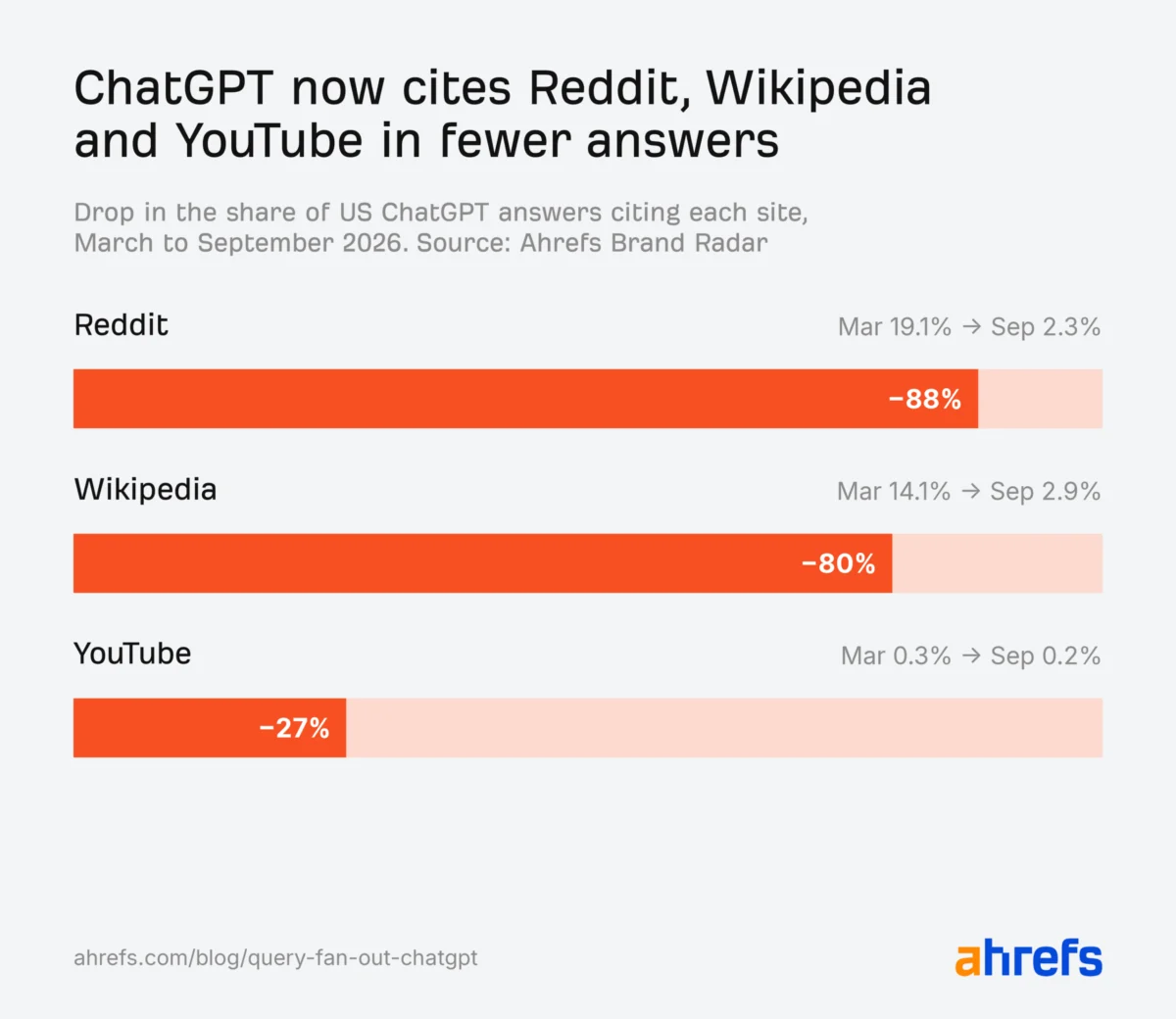
Further empirical evidence supports this observation. A study conducted by Letaido, analyzing questions posed to Google’s AI Overviews, ChatGPT, and Perplexity, compared the pages cited by these AI tools with those they examined but ultimately disregarded. The most significant differentiator was whether a page comprehensively addressed the user’s query. In ChatGPT, 58% of cited pages were fully on-topic, compared to only 24% of pages that were reviewed but not selected. Perplexity (80% vs. 65%) and Google’s AI Overviews (94% vs. 85%) exhibited a similar trend. Crucially, when a page was already on-topic, answering the question upfront could further tip the scales towards its citation, especially for AI Overviews. For these on-topic pages, 42% of those cited by Google answered the question immediately, compared to 34% of those left out. While ChatGPT (42% vs. 42%) and Perplexity (37% vs. 35%) showed no substantial difference in this specific regard, the overall pattern indicates that immediate answers are advantageous. By opening with the answer, BLUF swiftly signals to both human readers and AI systems that the content is relevant and directly addresses the inquiry. This strategy, combined with a title that closely matches the search query—as indicated by Ahrefs’ query fan-out study showing ChatGPT’s preference for such titles—enhances the likelihood of a page being prioritized and cited.
Implementing the BLUF strategy involves a methodical approach to content creation:
1. Identify the Core Message: The fundamental step is to determine the single most important piece of information you want the reader to absorb or act upon. This "bottom line" is the sentence that encapsulates the essence of your communication, even if the reader were to comprehend nothing else. Typically, this will manifest as a request ("Can you approve this by Friday?"), a decision ("We’re pausing the campaign"), or a key finding ("Traffic dropped because of the site migration"). If the initial formulation feels too complex, the process involves iteratively refining and condensing the message until a single, potent sentence emerges. For instance, if the objective is to explain a drop in signups, an initial, more detailed explanation might be broken down. The reader’s actual need is the primary cause and the proposed solution. Secondary factors like seasonality or the impact of onboarding emails can be relegated to supporting details, with the pricing page identified as the starting point of the decline. This distilled insight forms the opening sentence, with supporting context following.
2. Place the Bottom Line First: This involves consciously eschewing conventional pleasantries or lengthy introductory paragraphs. Messages should commence directly with the main point. For emails, this principle extends to the subject line, which should encapsulate the core message. A subject line like "Approval needed: Q4 budget by Friday" immediately informs the recipient of the urgency and nature of the request, a far more effective approach than a vague "Quick question."
3. Include Only Essential Actionable Context: The subsequent details provided should be strictly limited to what is necessary for the reader to understand and act upon the primary point. Information regarding the historical development or the intricate process leading to the conclusion is generally extraneous unless specifically requested. Returning to the signup example, if a manager needs to approve a rollback of the pricing page, the necessary information would focus on the impact and the proposed action, rather than a lengthy narrative of the problem’s genesis. The manager needs to know the cause, the proposed solution, and the required action, not a detailed timeline of events. This focused approach results in a concise and impactful communication.
4. Conclude with a Clear Next Step: The communication should end by clearly defining responsibilities, deadlines, and required actions. A directive like "Can you send me the login by Thursday?" is more effective than a passive request such as "Let me know your thoughts." This ensures clarity on who is responsible for what and by when.
A simple yet effective method to assess the adherence to BLUF is to read only the first sentence under each heading within an article. If these initial sentences collectively convey the entire argument or narrative, the BLUF structure has been successfully implemented. This exercise can be applied to one’s own drafts to identify areas where the main point might be obscured. By pasting text into a BLUF rewriter tool, one can pinpoint where their core message is buried and subsequently restructure it for maximum impact and clarity. The overarching lesson is that in an era of information saturation and sophisticated AI, clarity, conciseness, and a direct approach, epitomized by the BLUF strategy, are not just beneficial but essential for effective communication.