 11

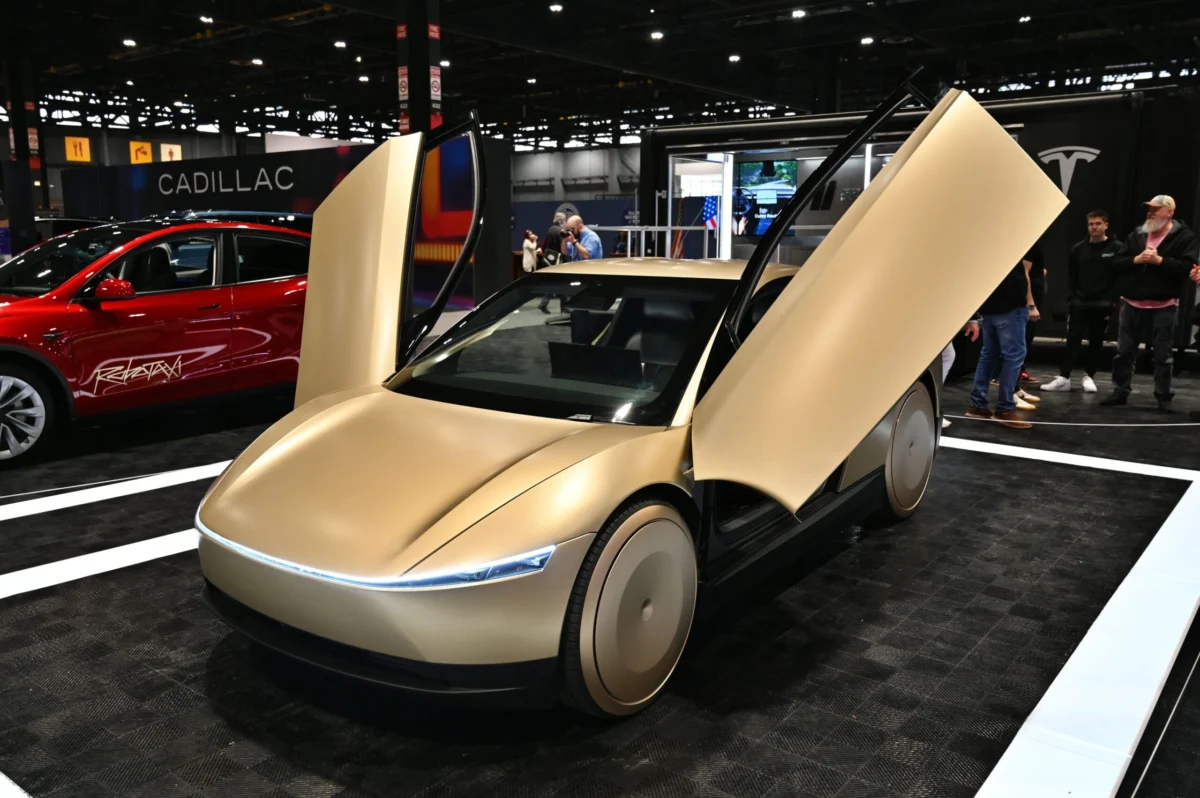
Austin, Texas – Tesla is poised to make a significant statement in the autonomous vehicle sector this Thursday, hosting an eagerly anticipated event at its Austin, Texas, headquarters. The centerpiece of this unveiling will be the Tesla Cybercab, a distinctive, matte gold, sloped vehicle notably devoid of a steering wheel. Designed to capture immediate attention, the Cybercab’s official introduction is expected to mark a pivotal moment for the electric-auto maker’s burgeoning ride-hail service, potentially ushering in a new era of urban transportation.
The Cybercab first made a public appearance as a prototype at a high-profile event on the Warner Bros. lot in 2024. This week’s presentation, however, is anticipated to solidify its role within Tesla’s commercial operations. The company has been actively building its ride-hail infrastructure, initiating a pilot program in Austin last summer. Since then, the service has expanded its footprint to a handful of other cities across Texas and Florida, demonstrating Tesla’s strategic push into the robotaxi market. Furthermore, the company has secured the necessary permits to launch operations in Arizona and Nevada, indicating a clear trajectory for broader regional deployment. It is important to note that, unlike these expansion areas, a "robotaxi" service in the San Francisco Bay Area currently lacks legal permission to operate without human drivers behind the wheel, highlighting the varied regulatory landscape across different states.
In preparation for this week’s event and the anticipated expansion, Tesla has significantly bolstered its operational fleet in Texas. Records show the addition of 51 Cybercabs, specifically designed for autonomous ride-hail, alongside 263 Model Y vehicles, which are also registered to operate within the state. This increase signals Tesla’s intent to rapidly scale its service in areas where regulatory approval has been obtained.
The excitement surrounding the Cybercab’s potential impact has been amplified by statements from Tesla’s top executives. Last month, Ashok Elluswamy, Tesla’s head of AI software, posted on X (formerly Twitter), declaring, "The streets won’t be the same anymore." Echoing this sentiment and true to his characteristic inclination towards hyperbole, Tesla CEO Elon Musk responded with a simple "Yes" when an X user inquired whether the Cybercabs would "flood Austin." Such pronouncements underscore the company’s ambitious vision for transforming urban mobility.
While the exact details of the Thursday event remain sparse, a fundamental question continues to loom over the Cybercab’s business model: will these advanced autonomous vehicles be exclusively for ride-hail operations, or will they eventually be sold directly to individual consumers? State regulations governing autonomous vehicles vary significantly, with some jurisdictions imposing stringent controls on permits and data collection, adding layers of complexity to market entry and operation. Despite these regulatory intricacies, Elon Musk has publicly maintained his projection that Tesla will indeed sell Cybercabs directly to consumers before the end of 2026, signaling a dual-pronged strategy for market penetration.
Developing and manufacturing the physical Cybercab, as innovative as its design may be, represents perhaps the most straightforward component of Tesla’s deeply ambitious strategy. The company is actively working to transition from primarily being a car manufacturer to a diversified enterprise focused entirely on autonomous vehicles and advanced robotics. This shift presents monumental challenges, as successfully running a functional autonomous vehicle service at scale and building the sophisticated software required to power it are endeavors that Tesla has yet to fully prove its capability in.
Seth Goldstein, a senior equity analyst for Morningstar who closely monitors Tesla, emphasized the criticality of software in this transition. "Longer term, the software is the most important piece," Goldstein stated. "This is a very important step, to put the Cybercab in production, but ultimately, it only matters if the software can allow a car to navigate safely." His assessment highlights the core challenge: the hardware is merely a vessel; the intelligence and safety of the autonomous system are paramount.
Tesla’s journey toward full autonomy has been marked by a decade of promises from Musk, who has consistently suggested that Teslas sold to everyday consumers are merely a software update away from acquiring driverless capabilities. While this vision has yet to fully materialize, Musk did concede earlier this year that some vehicles would require a hardware upgrade to achieve full autonomy. The company’s critical technological thesis hinges on the belief that a vehicle can safely navigate complex, chaotic public roads using only inexpensive cameras. This camera-centric approach, if successful, could enable Tesla to deploy self-driving robots far more cheaply than its competitors.
However, this strategy faces scrutiny from industry leaders. Waymo, widely recognized as the US industry leader in autonomous driving, subtly critiqued Tesla’s camera-only stance last month. In a blog post, Waymo stated, "cameras are incredible, but they aren’t enough," advocating for its more expensive, multi-sensor setup that integrates lidar and radar alongside cameras. Lidar (light detection and ranging) and radar offer distinct advantages, providing precise 3D mapping and robust performance in adverse weather conditions, which proponents argue are crucial for comprehensive autonomous safety.
Tesla’s current advanced driver-assistance system, Full Self-Driving (Supervised), is available to drivers for a $99 monthly fee. This system performs numerous driving tasks, including changing lanes, navigating intersections, and stopping at red lights. Despite its capabilities, Tesla explicitly warns in its manuals that drivers "must pay attention" and be prepared to intervene at all times, underscoring that it is an assistance system, not a fully autonomous one. The National Highway Traffic Safety Administration (NHTSA), the leading US auto safety regulator, initiated an investigation into crashes involving FSD in 2024. This probe followed concerns that the system might falter in situations with poor visibility, and it remains ongoing, adding a layer of regulatory oversight to Tesla’s autonomous aspirations.
The operational testing of the Cybercab, which began on Austin streets in late June 2026, offers a glimpse into the current state of Tesla’s autonomous technology. Videos posted online frequently depict much of this testing occurring with a safety monitor positioned in the front passenger seat, poised to intervene should any unforeseen issues arise. This practice is standard for autonomous vehicle testing at this stage, indicating that while the technology is advanced, it is still under active development and supervision.
Beyond the technological hurdles, success in the robotaxi sector also hinges significantly on financial management, investment, and operational efficiency. J. D. Alexander, the founder of AVFleetTech, a consultancy specializing in autonomous vehicle fleet operations, highlighted this crucial aspect: "These AV companies are spending so much money getting this technology in place, but in order to scale up the business, the economics come down to utilization." For an autonomous fleet to be economically viable, companies must maximize the time their vehicles spend on the road, picking up passengers, and generating revenue. This requires meticulous attention to operational factors such as how, when, and where robots are charged, cleaned, and maintained. Furthermore, ensuring that the human teams responsible for these tasks are well-trained and motivated is equally vital to maintaining high utilization rates.
In contrast to Tesla’s vertically integrated approach, many other firms with robotaxi services and ambitions have forged strategic partnerships to manage the complex logistics of fleet operations. For instance, in Dallas, the rental company Avis manages fleet logistics, maintenance, charging, and depots for Waymo. Similarly, Hertz is slated to provide comparable services for Uber’s self-driving cars. Waymo has also extended its partnership model, collaborating with fleet manager Moove in Arizona, Florida, and soon, London, and working with Lyft’s Flexdrive service in Nashville. These collaborations allow companies to leverage existing infrastructure and expertise, potentially reducing upfront capital expenditure and accelerating deployment.
Tesla, however, has historically favored doing everything in-house, a philosophy that extends to its robotaxi operations. The company has clearly begun to strategize on the staging and management of its autonomous fleet. In new markets, Cybercabs are likely to initially operate out of existing Tesla service centers, where employees are already trained in the repair and cleaning of its electric vehicles. Tesla is also innovating on the maintenance front; a Texas state architectural permit application filed in June 2025 indicated that the company’s main robotaxi hub would feature a "cleaning robot" on the premises. While details on this specific technology remain limited, a promotional video released last year provided a glimpse into Tesla’s automated cleaning solutions.
Ultimately, the physical Cybercab, with its striking design and advanced features, represents just the initial phase of Tesla’s ambitious autonomous future. As more of these distinctive, gilded cars potentially "flood" urban streets, their presence will be undeniably visible, allowing observers to easily track the progress and impact of Tesla’s transformative vision for transportation. The true measure of success will lie not only in their eye-catching appearance but in the seamless, safe, and scalable operation of the underlying autonomous software and the intricate logistical ecosystem that supports it.






