11

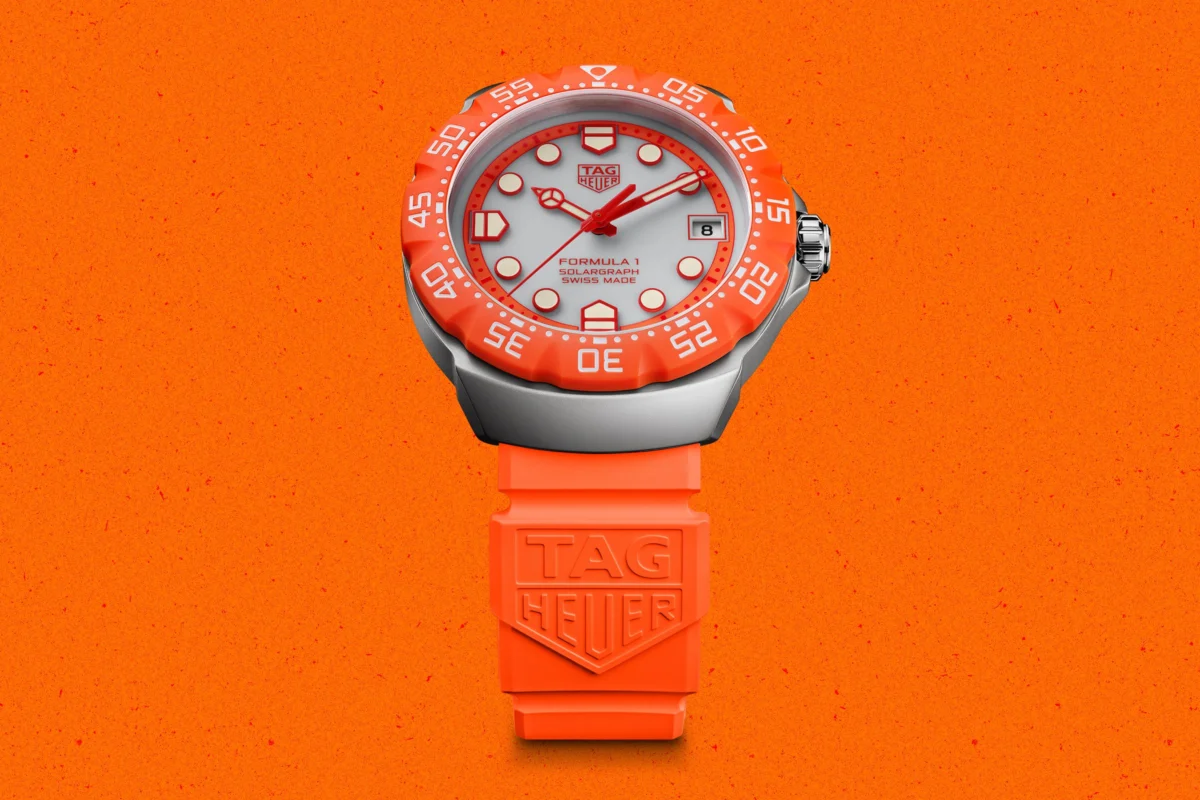
After extensive anticipation following reports last year detailing TAG Heuer’s comprehensive revamp of its revered Formula 1 watch series, the horological world is now witnessing the return of one of its most distinctive models. The iconic bright orange 373.513, later known by the model number WA1213, is making a celebrated comeback, reimagined with contemporary features including a larger case, solar-powered movement, and sustainable materials. This highly anticipated release joins TAG Heuer’s broader 2025 relaunch of the Formula 1 collection, poised to captivate both long-standing enthusiasts and a new generation of watch collectors.
The original 373.513 holds a special place in the history of the Formula 1 series, though it wasn’t part of the very first trio of watches unveiled in 1986. It quickly followed that initial launch, standing out alongside green, black, and blue counterparts as one of the pioneering models to feature a robust metal case for the F1 line. This marked a subtle yet significant evolution from the initial releases, broadening the series’ aesthetic appeal and structural integrity.

In a move that has already sparked conversation within watch circles, the revitalized 373.513, now integrated into the Solargraph F1 collection, has garnered an unofficial yet potent designation: "the Zandvoort." This moniker, while not officially bestowed by TAG Heuer, is widely understood to commemorate the upcoming final Dutch Grand Prix scheduled to take place at the historic Zandvoort circuit. Reports indicate that the renowned racing venue will conclude its tenure on the Formula 1 calendar after the 2026 season, making this watch a timely and poignant tribute to a beloved racing landmark and its enduring legacy in motorsport. The Zandvoort circuit, famed for its undulating layout and challenging corners, has hosted Grand Prix races since 1952, embodying a rich tapestry of racing history and national pride. The watch, therefore, becomes a tangible piece of that fading era, appealing to racing aficionados and watch collectors alike.
The new "Zandvoort" Solargraph F1 model measures a contemporary 38mm, representing a noticeable increase from the original 28mm and 35mm versions. This sizing adjustment aligns with modern watch trends, offering a more prominent wrist presence while still maintaining a comfortable and versatile profile. As with its predecessors, the new model offers versatility in strap options: an vibrant orange rubber strap, priced at $2,150, or a refined steel bracelet, available for $2,250. A notable update to the bracelet is its design; this 2026 version features a three-row, sand-blasted construction, a departure from the original’s five-row arrangement, providing a subtle yet distinct contemporary aesthetic.
Despite these updates, TAG Heuer has meticulously preserved much of the original’s charm and design language. The gray opalin dial, for instance, faithfully mirrors the distinct hue of the 1980s models, evoking a sense of nostalgic authenticity. Similarly, the iconic design on the orange rubber strap, featuring the distinctive TAG logo pattern on either side of the metal case, has been thoughtfully retained. These elements ensure that the new "Zandvoort" remains instantly recognizable as a direct descendant of its legendary forebear, connecting it deeply to its vibrant heritage.

However, not every detail from the original 1980s F1 rubber straps has been carried over to the new collection. The V-shaped grooves that adorned the bottom portion of the vintage straps, originally designed to allow surfers and divers to easily cut them down to a desired length for wear over wetsuits or directly on the wrist, are conspicuously absent. This deliberate omission suggests TAG Heuer’s intent for the new rubber straps to be worn as-is, emphasizing a more refined and less customizable approach to modern wearability.
The genesis of the original Formula 1 series reveals a fascinating insight into TAG Heuer’s strategic diversification. Eddy Burgener, the visionary designer behind the 1980s TAG F1, explicitly stated that the collection’s bright, "popping" colors were paramount. Crucially, Burgener clarified that the initial conception of these models was not primarily linked to driving or motorsport, but rather to watersports. In an interview with watch site Hodinkee last year, Burgener recounted how TAG Heuer was "trying to create a new style of watches for American surfers, divers, and other young folks heading for the beach." The core brief was to develop a new watch that exuded fun, vibrancy, and youthfulness, mirroring the bold colors prevalent in surfboards and the contemporary attire worn by surfers of the era. This strategic pivot allowed TAG Heuer, traditionally known for its motorsport-inspired chronographs, to tap into a broader, more youthful demographic with an accessible yet stylish offering.
To achieve the desired vivid colors, Burgener’s team opted for a synthetic case material. This choice, however, presented a significant engineering challenge: crafting a diver’s watch using synthetic materials, which was remarkably difficult with the technologies available at the time. After considerable development, they ultimately settled on a robust composite of fiberglass and plastic as the base material, chosen for its enhanced hardness and stability, ensuring the watches could withstand the rigors of an active, watersports-oriented lifestyle.

Fast forward to the present, TAG Heuer’s new solar-powered F1s incorporate a modern, more eco-conscious approach to materials. The traditional "Arnite" thermoplastic has been replaced with TH-Polylight, a form of bioplastic derived from castor oil-based polyamide. This innovative material, like its predecessor, is molded over a sturdy steel inner core, resulting in a sports watch that is not only lighter and more comfortable but also significantly more robust than most entirely plastic-cased equivalents. This commitment to sustainable materials underscores TAG Heuer’s forward-thinking ethos, blending heritage design with environmental responsibility.
By the time this "young" and vibrant watch series was formally introduced in 1986, TAG Heuer had solidified its presence in the competitive world of motor racing. Consequently, the collection officially adopted the evocative name "Formula 1." This branding decision was strategically conceived to appeal to a dual audience: the rugged durability and bold aesthetics would resonate with young divers, while the association with the pinnacle of motorsport would captivate driving enthusiasts. This dual appeal proved immensely successful, propelling the Formula 1 line to staggering commercial heights, with over 3 million units sold before the series was eventually shelved. Its return now, blending nostalgic design with cutting-edge solar technology and sustainable materials, highlights its enduring legacy and continued relevance.
The new F1 Solargraph orange rubber strap model is a limited edition, with only 1,500 pieces available worldwide, adding an element of exclusivity and collector appeal. For those preferring the steel bracelet, an even more exclusive offering awaits: only 1,000 units will be produced, and these will be available exclusively online, not in physical retail stores. This tiered availability strategy further enhances the collectibility of these pieces, creating a sense of urgency for potential buyers. Both variants are slated to be available for order next week, and interested individuals can sign up now to receive timely notifications regarding their official release. This strategic relaunch underscores TAG Heuer’s commitment to honoring its past while innovating for the future, offering a blend of nostalgic design, modern technology, and sustainable craftsmanship in a highly desirable package.